
Egg in Bread Dough: What It Does, When to Use It, and How to Get It Right

Egg can transform bread dough in subtle but important ways. It can soften the crumb, enrich the flavor, deepen the crust color, and change how the dough feels in your hands. But it can also make a formula heavier, stickier, or harder to balance if you add it without adjusting the rest of the recipe.

That’s why egg belongs in the “understand before you add” category of bread ingredients. In lean dough, it can feel like a big change. In enriched dough, it often feels natural. Once you know what each part of the egg contributes, you can decide whether it belongs in your loaf at all — and if it does, how to use it without throwing off the structure.
What Egg Does in Bread Dough
Egg brings three things to bread dough: water, protein, and fat. Each one changes the dough in a different way.
The water contributes to hydration, so the dough can be softer and more extensible. The protein helps the dough set as it bakes, which can influence the final crumb. The fat, mostly from the yolk, tenderizes the dough by interfering with gluten formation. That’s one reason egg-enriched dough often bakes into a softer, richer loaf than lean bread.
A useful way to think about egg is this: it does not just “add richness.” It changes the balance between strength and tenderness. In a lean loaf, gluten is doing most of the structural work. In an enriched loaf, egg joins butter, milk, and sugar in softening that structure.
That softening is a trade-off. You may get a more tender crumb and a more luxurious bite, but you may also lose some of the chew and open structure you’d expect in a crusty country loaf.
Egg can also affect the crust. The proteins and natural sugars in egg encourage browning, so bread with egg often darkens faster and develops a richer color. If you’re baking a loaf that already contains sugar or milk, watch the crust closely so it doesn’t color too quickly.
For a practical contrast, compare a standard lean sandwich bread with a brioche-style dough. The lean bread aims for strength and clean structure. The brioche aims for softness, flavor, and a fine, tender crumb. Egg fits naturally into the second formula, not because it “improves” every bread, but because it supports the style you want.
When Egg Helps and When It Hurts Bread Dough
Egg is most useful in enriched breads: brioche, challah, dinner rolls, cinnamon rolls, soft sandwich loaves, and similar doughs where tenderness matters as much as lift. In those formulas, egg supports a soft crumb and a more golden crust.
It is less helpful in breads where you want a chewy, open, crust-forward result. Think rustic sourdough, ciabatta, or a lean hearth loaf. You can add egg there, but you are changing the style of bread, not just improving it.
A simple decision rule helps:
- If you want soft, rich, and slightly more tender: egg is a good fit.
- If you want chewy, crusty, and lean: egg usually works against that goal.
- If the recipe already has a lot of fat and sugar: egg may push the dough too far into “heavy and soft” territory unless the formula is balanced carefully.
This is why enriched doughs often handle egg better than lean doughs. The other rich ingredients are already shaping the dough toward tenderness, so egg feels like part of the system rather than a surprise addition.
There’s also a fermentation trade-off. More enrichment can make dough feel slower and less lively, so timing based only on the clock can lead you astray. The dough may need more patience, but the real cue is the dough itself: volume, aeration, and feel. Egg can make a loaf look more expanded or feel softer, but that does not mean it has stronger fermentation. Apparent rise and tenderness are not the same thing as fermentation strength.
Whole Egg vs Egg Yolk vs Egg White
Not all egg parts do the same job. If you want to control the result, it helps to choose the part that matches your goal.
| Egg form | Main effect in dough | Best for | Trade-off |
|---|---|---|---|
| Whole egg | Balanced richness, color, moisture, and structure | Brioche, challah, soft rolls | Less control than separating yolk and white |
| Egg yolk | More richness, tenderness, color, and a softer crumb | Rich doughs, sweeter breads, softer texture | Can make dough feel heavier or looser |
| Egg white | More water and protein with no fat | Lighter enrichment, added structure without much richness | Less flavor and less tenderness than yolk |
The yolk is the richer, softer choice. The fat in the yolk can weaken gluten development a bit, which can loosen the dough and support a more tender crumb. That can be useful when you want a softer, more delicate texture. The white behaves differently: it adds water and protein but no fat, so it can help structure the dough while also contributing to a drier, firmer, or more bouncy texture as it bakes.
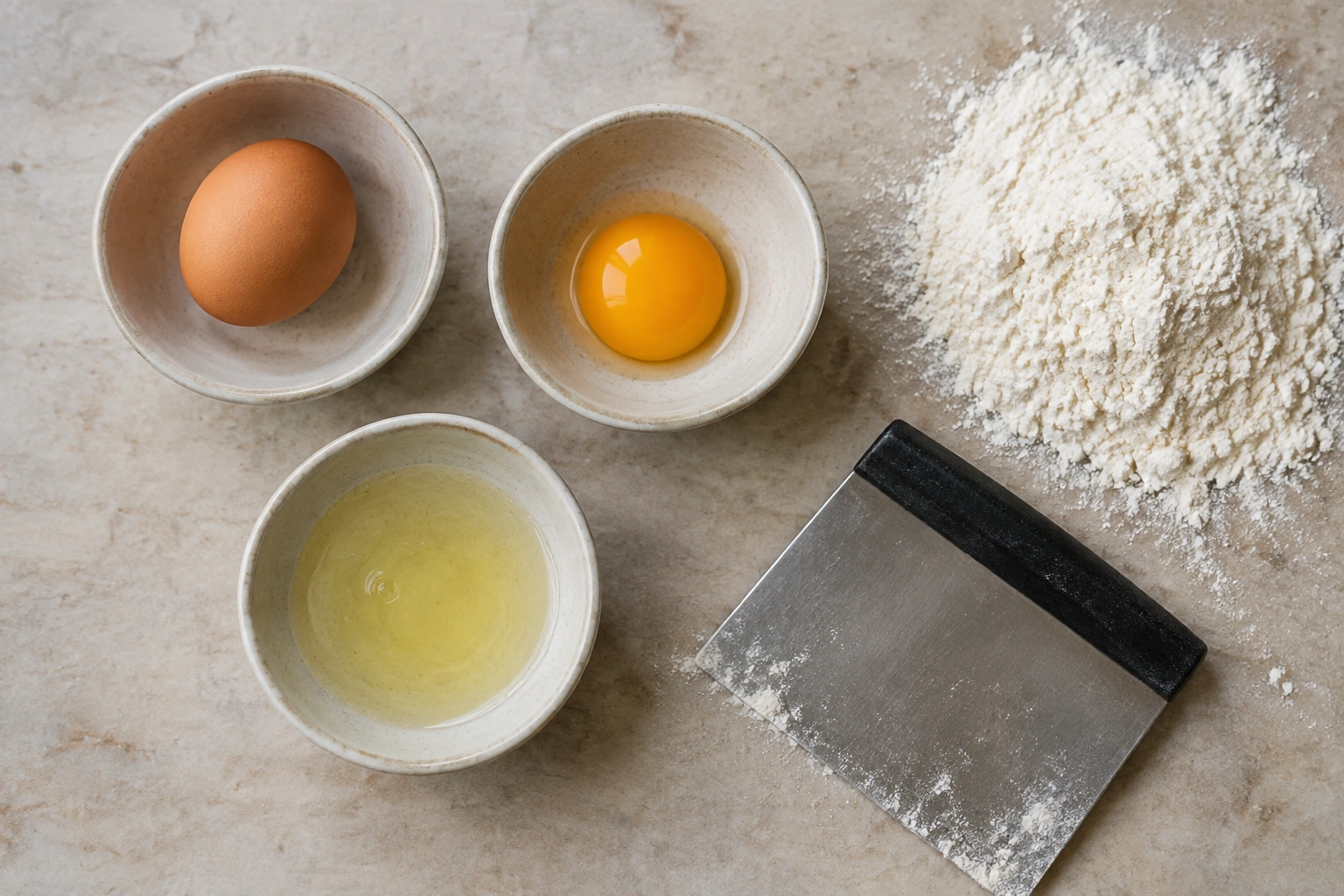
That difference matters when you’re designing a formula.
If you want a bread with a buttery, soft bite, yolk leans you in that direction. If you want some structure without as much richness, white gives you that narrower effect. Whole egg is the middle ground and is the most practical choice for many home bakers.
For a deeper look at crust finishing, you may also find our guide to egg wash for bread useful, since the same ingredient can affect both dough and surface color.
Ingredients and Tools You’ll Need
You do not need special equipment to mix egg into bread dough, but a few basics make the process smoother:
- A digital scale, if you want consistent results
- A mixing bowl large enough to handle richer dough
- A whisk or fork for beating the egg before adding it
- A bench scraper for sticky dough
- A thermometer if you like to track dough temperature
- Your usual bread ingredients: flour, yeast, salt, and the rest of the liquid in the formula
The scale matters more than people think. Eggs vary in size, and in enriched dough that variation can change hydration enough to be noticeable. If you’re baking from a formula rather than improvising, weighing the egg is the cleanest way to stay consistent.
How to Add Egg to Bread Dough Step by Step
The best time to add egg is early, not after the dough is already fully developed. You want the egg distributed evenly before the dough gets too strong.
Here’s a practical method:
-
Beat the egg first.
A quick whisk helps distribute the yolk and white so the dough doesn’t get streaky. -
Count the egg as part of the liquid.
This is a key formulation habit. The egg is not “extra” liquid on top of the recipe; it is part of the hydration. -
Combine the egg with the main liquid before mixing.
If your recipe uses milk or water, blend the egg into that liquid so it disperses evenly. -
Mix until the dough starts to come together.
Rich dough can look messy at first. Give it time to hydrate before deciding it is too wet or too dry. -
Develop gluten gradually.
Because egg adds fat and protein, the dough may need a little more mixing to become smooth and elastic. -
Check the dough rather than the clock.
Enriched dough often behaves differently from lean dough. The feel of the dough matters more than a fixed mixing time.
A common mistake is adding egg after the dough is already nearly finished. That makes incorporation harder and can leave you with uneven patches of wet dough. Early integration is cleaner and usually gives a better crumb.
How Much Egg to Add and How to Adjust Hydration
There is no universal egg amount that fits every bread recipe. The right quantity depends on the style of bread and what else is in the formula.
A good practical rule is this: if you add egg, treat it as part of the formula’s total liquid and then adjust the remaining water or milk as needed. A whole egg is mostly liquid but not all water, so it should usually replace some of the recipe’s liquid rather than sit on top of it. Yolks are more concentrated and richer, while whites are mostly water and protein, so they affect hydration differently.
In practical terms, that means you should not simply add an egg on top of the recipe’s usual liquid without thinking about balance. If you do, the dough may become too loose, sticky, or difficult to shape.
A few decision points help:
- If the dough already feels soft and enriched, reduce the other liquid slightly.
- If the dough feels tight after adding egg, let it rest before adding more liquid.
- If you’re using yolks only, expect more richness and less water than with whole egg.
- If you’re using whites only, expect less richness but still count the moisture.
The key is balance, not blindly adding more liquid. The dough should feel supple, not soupy.
A simple hydration mindset
If a formula was designed without egg, adding one usually changes the dough in one of two directions:
- It may feel stiffer at first because the proteins and fat alter how the flour hydrates.
- Or it may feel softer and stickier once the liquid fully absorbs.
That’s why rest periods matter. Give the dough a few minutes to hydrate before making a final call on whether it needs more liquid.
A practical rule of thumb: think of a whole egg as part liquid, part enrichment. In a home-baking formula, it usually makes more sense to subtract some water or milk when you add a whole egg than to add the egg and keep the original liquid unchanged. If you are working with yolks, expect a smaller liquid contribution and a stronger richness effect; if you are using whites, expect more hydration contribution but less tenderness. Because egg size varies, the safest adjustment is to start with slightly less of the other liquid, then add only if the dough feels too tight after resting.
Practical Formula Examples
Brioche
Brioche is a classic example of egg-enriched dough. It usually relies on whole eggs, butter, and often sugar. Here, egg is not a minor addition — it is part of the bread’s identity.
What egg gives brioche:
– a tender crumb
– a rich flavor
– a golden crust
– a soft, almost cake-like interior without becoming cake
This is the kind of dough where egg feels completely natural. The formula is built to support it.
Challah
Challah also benefits from egg, especially when the goal is a soft, slightly sweet loaf with a beautiful color and a fine crumb.
What egg gives challah:
– a richer flavor than lean bread
– a supple dough that shapes well
– a deep, attractive crust color
Because challah is often braided, the dough needs enough strength to hold shape while still staying tender. Egg helps balance those goals.
Lean sandwich bread with added egg
Now compare that with a standard sandwich bread formula that was not designed for egg. If you add a whole egg without adjusting anything else, the dough may become softer and stickier than expected.
What changes:
– the crumb may become softer
– the crust may brown more quickly
– the dough may feel less chewy and more delicate
That can be pleasant if you want a softer loaf. It can be frustrating if you were expecting a firmer, more classic sandwich texture.
Common Mistakes When Using Egg in Bread Dough
The most common mistake is assuming egg is a simple add-on. It isn’t. It changes the formula.
Here are the errors I see most often:
- Adding egg without reducing or rebalancing the liquid
- Using egg in a lean dough and expecting the same texture
- Overdoing yolk and making the dough feel heavy
- Assuming egg automatically improves rise
- Not mixing thoroughly, which leaves uneven texture
- Letting enriched dough proof by the clock instead of by volume
The biggest misconception is about rise. Egg can make a bread seem lighter or puffier because the crumb is softer and the dough is more enriched, but that is not the same as a dramatic increase in fermentation power. In some formulas, the opposite is true: the dough may feel slower and need more patience.
Troubleshooting Sticky, Heavy, or Dense Dough
If your dough turns sticky after adding egg, don’t panic. First, let it rest. Flour needs time to absorb the extra moisture. A short rest can change the dough dramatically.
If it still feels too wet:
– hold back on extra liquid next time
– mix a little longer before deciding it needs more flour
– use a light dusting of flour only for handling, not to fix the whole formula
If the dough feels heavy or dense:
– check whether you added too much egg for the amount of flour
– make sure the dough was mixed enough to develop strength
– give it enough proofing time, since enriched dough often moves more slowly
If the bread bakes up dense, one likely cause is imbalance. Too much egg, too little hydration, or under-proofing can all produce a tight crumb. The answer is usually not “more kneading” alone. It is better formula balance and better proofing judgment.
How Egg Changes Proofing, Browning, and Final Texture
Egg can make the dough feel slower during proofing, especially in richer formulas. That does not necessarily mean something is wrong. It may just mean the dough is more enriched and needs more time to expand.
The crust usually browns more deeply because egg contributes proteins and natural sugars. That gives you a richer color, but it can also mean the loaf darkens faster than expected. If your oven runs hot, watch the final stage of baking carefully.
In the finished bread, egg usually pushes texture in a softer direction:
– finer crumb
– more tenderness
– less chew than a lean loaf
– a richer mouthfeel
That soft texture is exactly what many breads want. It is not a flaw. It is a style choice.
Egg Substitutions and When to Skip Egg
Sometimes the best decision is not to use egg at all. If the bread is meant to be rustic, crusty, or lean, leaving it out may preserve the style better than forcing enrichment into the formula.
If you want a softer result without egg, you can often get partway there with other enrichments such as milk, butter, or a small amount of sugar, depending on the recipe. But those are not identical substitutes. Egg brings its own protein structure and browning behavior, so expect a different result.
Skip egg when:
– the bread is meant to be lean and chewy
– the formula is already rich enough
– you want a cleaner, more open crumb
– the recipe was developed without room for extra enrichment
If you do omit egg from an egg-based formula, the dough may need rebalancing. The loaf may be drier, less colored, and less tender than intended.
When to Consult a Master Baker
If you are redesigning a formula rather than following one, or if you’re trying to convert a lean dough into an enriched one, that is the moment to slow down and think like a formula builder. Egg changes hydration, structure, browning, and proofing behavior all at once. In a professional kitchen, those changes are usually handled with careful testing rather than guesswork.
For home bakers and culinary students, the safest path is to make one adjustment at a time. Change the egg amount, note the dough feel, and record the result. That is how you build real intuition.
FAQ
Does egg make bread softer?
Yes, usually. Egg tends to soften the crumb and make the bread feel more tender and rich.
Does egg make bread rise more?
Not necessarily. Egg can make bread seem lighter because of the texture it creates, but it does not automatically increase rise in every formula.
Should I use whole egg or yolk for bread?
Use whole egg when you want balanced richness and structure. Use yolk for a richer, softer, more tender result. Use white when you want more structure with less richness.
Do I need to reduce liquid if I add egg?
Often, yes. The egg should be counted as part of the liquid in the formula, so the rest of the hydration may need adjustment.
Can I add egg to any bread recipe?
You can, but it changes the bread style. Egg works best in enriched doughs and may not suit rustic lean breads.
Why did my dough get sticky after adding egg?
It may simply need time to hydrate, or the formula may have too much total liquid. Let it rest first before adding more flour.
Final Takeaway
Egg is a formula ingredient, not just a flavor booster. It can soften the crumb, deepen browning, and change how dough handles, but the result depends on how much egg you use, whether you choose whole egg, yolk, or white, and how you rebalance the rest of the liquid.
The practical takeaway is simple: count egg in the hydration, match the egg part to the bread style, and judge proofing by the dough’s actual expansion rather than by how soft or puffy it looks.