
Does Baking Soda Kill Ants and How Does It Work

Baking soda may disturb a few ants, but it usually does not eliminate the colony. For lasting control, focus on cleaning, sealing entry points, and using targeted ant baits if needed.
If you are wondering does baking soda kill ants, the short answer is that it may help in limited situations, but it is not a reliable stand-alone solution. It can be worth trying as a low-cost DIY step, yet it usually works best as part of a broader ant-control plan.
- Short answer: Baking soda is not a dependable stand-alone ant killer.
- Main limitation: It may affect a few ants, but colonies usually survive.
- Better strategy: Remove food, moisture, and entry points first.
- Most effective DIY step: Use baking soda only as a temporary test while planning a stronger fix.
Does Baking Soda Kill Ants, or Is It Mostly a Myth?
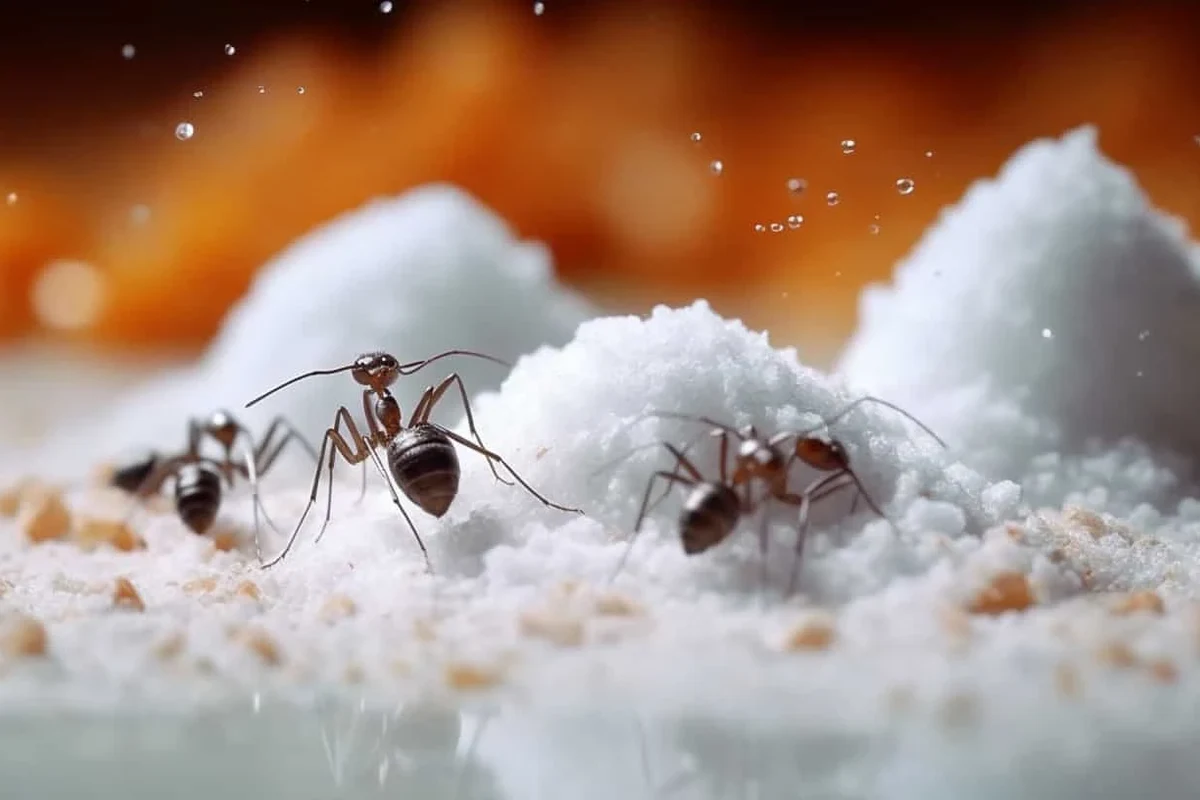
The idea comes up often because baking soda is a familiar pantry ingredient, and people naturally look for a simple home remedy before buying pest products. In practice, though, the results are inconsistent, and that is why baking soda is often described as more of a myth than a dependable ant killer.
For a baking-focused site like Baking Pastry Schools, the interesting part is the chemistry: baking soda is a mild alkaline powder that reacts under certain conditions, but ants are not a baking project. Their bodies, behavior, and colony structure make pest control much more complicated than a quick surface treatment.
What people mean when they ask if baking soda works on ants
Most people are asking whether sprinkling baking soda on a trail will stop ants from coming inside or eliminate the nest. Some are also asking whether mixing it with sugar makes it act like bait.
Those are two different goals. Killing a few visible ants is not the same as controlling the colony, and most persistent infestations require the latter.
Why this question keeps trending in 2026 home-care searches
Homeowners keep searching for low-cost, low-toxicity solutions, especially for kitchens, pantries, and entryways. Baking soda feels appealing because it is already in the house and is often associated with cleaning and deodorizing.
That said, search popularity does not equal effectiveness. Many DIY pest ideas trend because they are easy to try, not because they solve the problem well.
Baking soda is sodium bicarbonate, a compound that is useful in baking because it helps create carbon dioxide when paired with an acid. That same property does not automatically make it an effective ant control product.
How Baking Soda Is Supposed to Affect Ants
The common theory is that ants ingest the powder, it reacts inside their bodies, and the result is fatal. Another version says it dries them out or disrupts their gut.
These ideas sound plausible at first glance, but they depend on ants eating enough of the powder and keeping it in a useful form long enough to matter. That is where the theory starts to weaken.
The science behind ingestion, dehydration, and gut disruption claims
Baking soda does not behave like a targeted insecticide. It is not designed to attack an ant’s nervous system the way many commercial pest products do.
Some DIY claims suggest it kills through gas production, dehydration, or internal imbalance. The problem is that ants are tiny, but they are also selective, social, and efficient at avoiding substances that do not help them reach food.
Why baking soda is different from commercial ant baits
Commercial ant baits are formulated to attract ants and be carried back to the colony. The active ingredient is chosen so the ant does not die immediately, which helps the bait spread through the nest.
Baking soda usually does not work that way. It may sit on the surface, get ignored, or affect only a few ants that happen to contact or ingest it.
Commercial ant bait labels matter. Follow the manufacturer’s directions carefully, especially around food-prep areas, and keep products away from children and pets as directed on the package.
When the theory sounds plausible but breaks down in real use
In a kitchen, a powder can look promising for a day or two because it interrupts traffic on the floor or near a crack. But if the nest is still active, new ants usually replace the ones you saw.
That is why a temporary drop in visible ants can be misleading. It may mean the trail was disturbed, not that the colony was eliminated.
What Actually Happens When Ants Encounter Baking Soda
Ants are very good at detecting food and very good at avoiding unfamiliar or unpleasant textures. Dry powder barriers often fail because ants simply route around them.
Even when ants do cross the powder, that does not guarantee enough contact or ingestion for meaningful control.
Ant behavior around dry powders and why they often avoid them
Dry powders can cling to antennae and legs, which may discourage ants from walking through a treated area. But ants are persistent, and if the food source is strong enough, they may still find another path.
In a busy kitchen, crumbs, grease, or moisture can also change ant behavior. A powder barrier is easy to disturb with sweeping, mopping, or normal foot traffic.
Limitations of mixing baking soda with sugar or other attractants
Many DIY recipes mix baking soda with sugar to lure ants. The idea is that the sugar attracts them while the baking soda does the work afterward.
The limitation is that ants may prefer the sugar and leave the baking soda behind, or the mixture may clump and become less appealing. If the ratio is off, the bait is either unattractive or too weak to matter.
If you are treating an area near food, dishes, or pet bowls, do not leave loose powders exposed. Any pest-control product or DIY mixture should be kept out of reach and cleaned up promptly after use.
Why colony-level control is harder than killing a few visible ants
Ants you see on the counter are usually workers, not the whole problem. The colony may be hidden in a wall void, under flooring, outdoors near the foundation, or somewhere else entirely.
To solve the issue, you need to reduce the colony’s access to food and water and interrupt the nest’s ability to keep sending workers indoors. That is much harder than wiping up a trail.
Common Baking Soda Ant Treatments and Where They Fall Short
Most baking soda ant remedies fall into one of a few patterns: dry sprinkling, paste-style mixtures, or bait-like combinations with sugar. All of them can seem sensible, but each has clear limits.
If you try one, treat it as a short experiment rather than a guaranteed fix.
Dry sprinkling along trails, entry points, and cracks
This is the simplest approach: sprinkle baking soda where ants are entering or traveling. It may temporarily disrupt movement, especially in a narrow crack or along a protected edge.
The downside is that it is easy to sweep away, blow away, or dampen. Once it clumps or disappears, the barrier is gone.
Paste or bait-style mixtures and the problem of inconsistent results
Some people mix baking soda with syrup, sugar water, or another sticky ingredient to make a bait. The hope is that ants will eat it and carry the effect back to the nest.
In reality, these mixtures can dry out, separate, or become less attractive very quickly. If the ants are feeding on a better source elsewhere, they may ignore the mix completely.
Examples of where homeowners report temporary success
Some homeowners report seeing fewer ants for a short time after placing baking soda near a trail or entry crack. That can happen if the ants are disturbed, the scent trail is interrupted, or the area becomes less appealing.
Temporary success is still not the same as lasting control. If the food source, moisture, or entry point remains, the ants often return.
Frequent mistakes that reduce effectiveness
One common mistake is using too much powder and assuming more is better. Another is applying it after the ants have already found another route.
People also often forget to clean the trail first. If crumbs, grease, or sugary residue remain, the ants may keep coming even if the powder is present.
- Clean up food residue before testing any DIY ant treatment
- Watch where ants are actually entering, not just where you see them
- Use baking soda only as a short-term experiment
- Assuming one sprinkle will eliminate the colony
- Leaving powders near food-prep surfaces
- Ignoring moisture or open cracks that keep attracting ants
Safety, Surface Damage, and Cleanup Considerations
Baking soda is common in kitchens, but that does not mean it is harmless on every surface. It can leave residue, scratch delicate finishes if rubbed aggressively, and clump when exposed to moisture.
As with any powder used around food areas, cleanup matters as much as the application.
How baking soda affects countertops, grout, fabrics, and flooring
On many hard surfaces, baking soda is mild, but it can still leave a gritty film if not wiped away well. On grout, porous stone, or textured flooring, residue can settle into small spaces and become harder to remove.
On fabrics, a damp baking soda mixture may leave a mark or dull the appearance until fully rinsed. Always spot-check if you are using it near upholstery, rugs, or specialty finishes.
Pets, children, and food-prep area precautions
Keep any ant treatment out of reach of pets and children. Even pantry-safe ingredients should not be treated casually when they are being used for pest control rather than cooking.
If you are working near counters, sinks, or pantry shelves, remove exposed food and utensils first. For broader food safety guidance, follow recognized official recommendations and product labels rather than relying on internet shortcuts.
Do not use pest-control mixtures on surfaces that directly contact food unless the product label specifically allows it. If you are unsure, clean the area thoroughly and choose a method approved for indoor use around food spaces.
Moisture, clumping, and residue issues after application
Baking soda absorbs moisture and can clump quickly in humid areas, under sinks, or near leaks. Once clumped, it is less likely to work as a barrier or bait-like mixture.
Residual powder can also attract attention from cleaning tools and end up spread around rather than removed. That creates more cleanup without solving the ant problem.
Better Ways to Control Ants Than Baking Soda Alone
If the goal is lasting control, the best approach usually starts with prevention and source reduction. Baking soda may be a side experiment, but it should not be the main plan for a real infestation.
Think in terms of entry, food, water, and nest location.
Finding and sealing entry points before treating the infestation
Look for cracks around baseboards, gaps near windows, spaces under doors, and openings around pipes. Sealing these entry points can reduce new traffic even before you choose a treatment.
In a kitchen, even a tiny gap can matter because ants follow scent trails and can fit through very small openings.
Using ant baits, sanitation, and moisture control for longer-term results
Ant baits are often more effective because they are designed to be carried back to the colony. Sanitation helps too: wipe up sticky spills, store sweets in sealed containers, and empty trash regularly.
Moisture control matters as well. Fix leaks, dry sink areas, and do not leave standing water in or near the kitchen if you want to make the space less attractive.
Best for a small, newly noticed trail when you want a low-cost test and do not expect guaranteed results.
Best for ongoing activity because it is designed to reach the colony instead of only the ants you can see.
Best for reducing repeat visits by removing food, water, and access points.
When natural methods are enough and when they are not
Natural methods can be enough if you are dealing with a very small number of ants and you can identify the source quickly. In those cases, cleaning, sealing, and removing food may stop the problem.
If the ants keep returning, spread into multiple rooms, or appear in large numbers, natural methods alone are usually not enough.
Signs the infestation may require professional pest control
If you see ants repeatedly after cleaning and sealing, or if you notice them coming from wall voids, baseboards, or hidden moisture areas, the infestation may be established. Large or persistent activity often means the colony is larger than a DIY approach can handle.
Professional pest control can help identify the species and choose a treatment strategy that matches the nesting behavior. That is especially useful when the ants are coming from hard-to-reach areas.
How to Decide Whether Baking Soda Is Worth Trying in Your Home
Baking soda is worth trying only if you treat it as a temporary, low-cost test and not a cure. It may help disrupt a small trail, but it is unlikely to solve a deeper infestation on its own.
If you want a practical answer to does baking soda kill ants, the honest version is: sometimes a few, rarely the colony, and not reliably enough to depend on.
Best use cases for testing baking soda as a short-term, low-cost option
It makes the most sense when you have a small number of ants, a visible trail, and no immediate access to a better product. It can also be used as a stopgap while you clean, seal gaps, and plan a more effective treatment.
Use it in a controlled area, and watch whether ant activity actually drops over the next day or two.
Situations where it is unlikely to solve the problem
If ants are coming from multiple locations, if you see them daily despite cleaning, or if the area is damp and food-rich, baking soda alone is unlikely to work. It is also a weak choice if you need fast, dependable colony control.
In those cases, a bait-based strategy and better sanitation usually make more sense.
A practical recap for choosing between DIY fixes and proven ant control
Start with the basics: remove food sources, dry out the area, and block entry points. Then decide whether a baking soda experiment is worth a brief try before moving to a more targeted ant treatment.
For most homes, that balanced approach is better than relying on a pantry remedy alone. Baking soda can be part of the plan, but it should not be the whole plan.
- Cheap and easy to find
- May disrupt a small visible trail
- Useful as a short-term DIY test
- Unreliable against colonies
- Can clump, scatter, or leave residue
- Usually weaker than ant baits and prevention
If ant activity is heavy, recurring, or near structural gaps and moisture problems, do not keep repeating the same DIY treatment. Address the source or bring in professional help so the infestation does not continue spreading.
Frequently Asked Questions
Usually no. It may disturb a few ants or interrupt a trail, but it does not act like a fast, reliable ant killer.
Sometimes the sugar attracts ants, but the mix is still inconsistent. Ants may ignore it, eat around it, or find a better food source.
It can be used carefully, but keep it away from food-contact surfaces unless you clean it up thoroughly afterward. Always follow product labels if you switch to a commercial bait.
Because baking soda usually does not eliminate the nest. If food, water, or entry points remain, the colony can keep sending workers inside.
Ant baits, sanitation, sealing cracks, and moisture control are usually more effective. These methods target the source instead of only the ants you see.
Call for help if the ants keep returning, spread across multiple rooms, or appear to come from walls or hidden spaces. Persistent infestations often need a more targeted treatment plan.