
Baking Soda for Plants Safe Uses and Benefits

Baking soda for plants can help with mild powdery mildew and simple cleanup when it is diluted and used carefully. It is not a cure-all, and overuse can burn leaves or build up salt in the soil.
Baking soda for plants can be helpful in small, careful doses, especially for mild fungal issues and simple garden cleanup. It is not a cure-all, and using too much can stress leaves, raise salt levels, and do more harm than good.
- Best use: Mild, early-stage fungal issues and light surface treatment.
- Safety first: Start weak, test one small area, and avoid hot sun.
- Main risk: Too much baking soda can scorch leaves and raise salt levels.
- Not a fix for: Severe disease, root problems, or nutrient deficiencies.
What Baking Soda Does for Plants in 2026: The Science Behind Its Uses
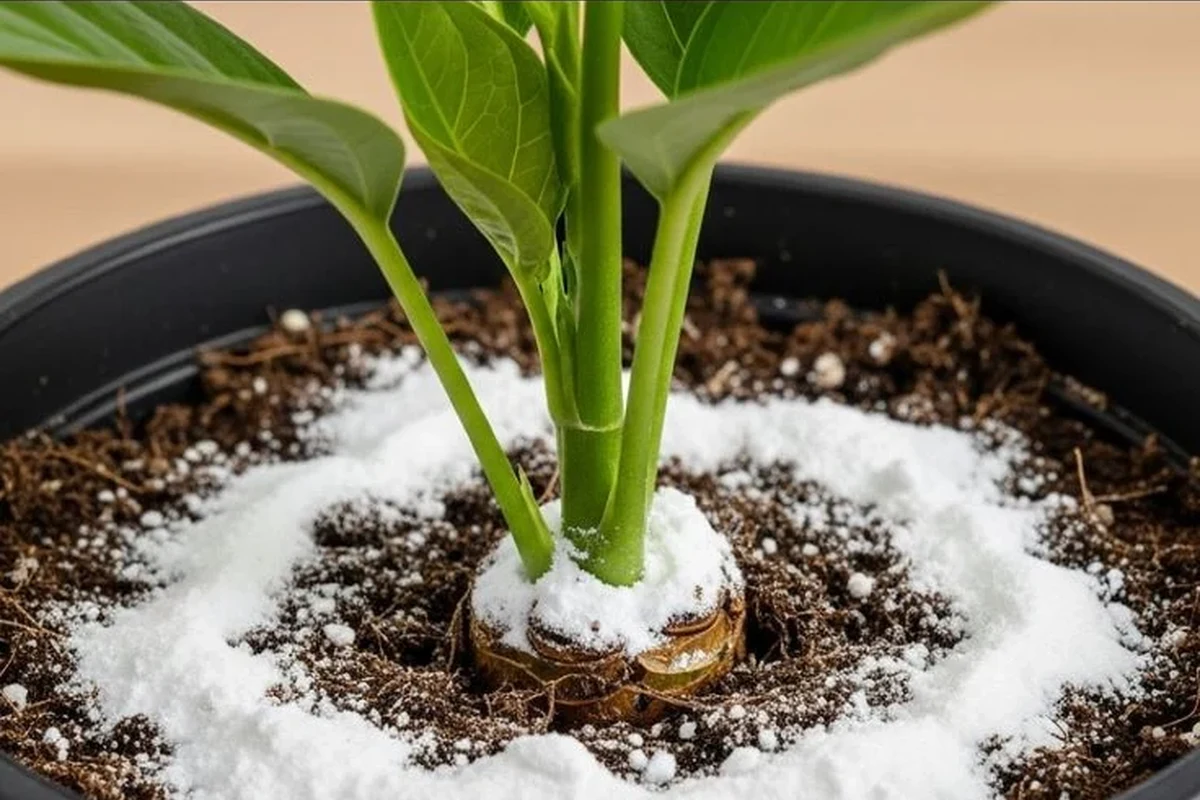
Baking soda is sodium bicarbonate, a mild alkaline compound that changes the surface environment where it is sprayed. On leaves, it can make conditions less friendly for some fungi, but it does not magically “feed” the plant or fix deeper soil problems.
Gardeners still reach for it because it is inexpensive, easy to find, and useful for low-level maintenance. For many home growers, it is a practical first step before moving to stronger products, much like choosing a simple method before a more specialized one in baking.
How sodium bicarbonate works on leaf surfaces and soil pH
When mixed with water and sprayed lightly, baking soda leaves a thin alkaline residue on the leaf surface. That residue can interfere with some fungal growth, especially on diseases that prefer a more neutral or slightly acidic surface.
In soil, the effect is much less predictable. A small amount usually does not change pH much in a meaningful way, but repeated use can add sodium and create buildup, especially in containers where drainage is limited.
Baking soda works best as a surface treatment. It is far less reliable as a long-term soil fix because soil chemistry is buffered by moisture, minerals, and organic matter.
Why gardeners still use it for mildew, odor, and minor pest control
The biggest reason is convenience. Baking soda may help reduce the look and spread of powdery mildew on leaves, and it can also help with mild odors around damp pots, bins, and garden edges.
Some gardeners also use it as a light deterrent for very minor pest pressure, but it is not a strong insecticide. If a plant has a real infestation, baking soda alone will usually be too weak to solve it.
Safe Ways to Use Baking Soda on Plants Without Causing Damage
The safest approach is to start with the lowest effective concentration and test a small area first. Plants vary a lot in leaf thickness, waxiness, and sensitivity, so a spray that works on one plant may scorch another.
Correct dilution ranges for foliar sprays and soil applications
For foliar sprays, many home-garden recipes stay in a very mild range, often around 1 teaspoon per quart of water, though some gardeners use even less for sensitive plants. If soap is added as a spreader, it should be only a tiny amount, because too much soap can also burn leaves.
For soil use, caution matters even more. Light, occasional use around the soil surface is less risky than frequent drenching, but repeated applications can contribute to salt buildup, especially in pots and raised beds.
Do not treat baking soda like a general fertilizer or a routine soil amendment. It is not a nutrient source, and overuse can disturb the root zone instead of improving it.
Best times to apply and when to avoid hot sun or stressed plants
Apply early in the morning or later in the evening when the sun is softer and leaves dry more slowly. This reduces the chance of scorch and gives the spray time to work on the leaf surface.
Avoid applying during hot, windy weather or when the plant is already stressed from drought, transplant shock, or recent pruning. A weak plant is more likely to show leaf burn or drop after any spray, even a mild one.
Signs of overuse: leaf burn, salt buildup, and slowed growth
Watch for pale patches, crispy edges, or a dull coated look on the leaves. Those are early signs that the solution may be too strong or applied too often.
In containers, slowed growth and a crusty white residue on the soil surface can point to salt buildup. If that happens, stop spraying, flush the pot with clean water if appropriate for the plant, and let the container dry with good airflow.
If you mix a spray in a kitchen or utility area, label it clearly and keep it away from food-prep surfaces, children, and pets. Never reuse a container that held a cleaner or chemical product.
Common Baking Soda Garden Treatments and Their Realistic Benefits
Baking soda is most useful for visible, surface-level problems. It can improve the look of leaves, help reduce mild fungal pressure, and make garden areas feel cleaner, but it is not a replacement for good airflow, watering habits, and plant selection.
Powdery mildew control on roses, squash, and ornamentals
Powdery mildew is one of the most common reasons people try baking soda on plants. A mild spray may slow the spread on roses, squash, zinnias, and other ornamentals when the disease is caught early.
Results are usually partial, not perfect. If the plant already has heavy white coating, curled leaves, or repeated new infections, baking soda may help a little but will not fully reverse the problem.
Good airflow, spacing, and watering at the soil line often matter more than any spray. Baking soda works best as one part of a broader plant-care routine.
Spot-treating fungus-prone leaves and improving surface cleanliness
For a few affected leaves, spot treatment can be a reasonable, low-cost option. It may help clean up the visible film left by some fungal problems and make it easier to monitor whether the issue is spreading.
Use a light mist, not a dripping soak. Heavy wetting can leave more residue behind and increase the chance of leaf spotting, especially on plants with thin foliage.
Using baking soda around containers, patios, and garden edges
Baking soda can also be useful around the garden, not just on plants. A small amount may help with odor control near compost bins, potting areas, or damp patio corners where plant debris collects.
That said, avoid scattering it broadly into beds as if it were a universal garden powder. The goal is controlled use, not blanket coverage.
How to Mix Baking Soda for Plants: Ratios, Add-Ins, and Application Methods
The best mix is usually the simplest one that still coats the leaf evenly. More ingredients do not always mean better results, and extra additives can create new problems with leaf burn or residue.
Simple spray formulas for beginners
A common beginner formula is 1 teaspoon baking soda per quart of water, shaken until dissolved. If you choose to add soap, use only a very small amount so the spray spreads across the leaf without becoming harsh.
For especially sensitive plants, many gardeners start weaker than that and watch for reaction over 24 to 48 hours. That small test is often more useful than following a stronger “one-size-fits-all” recipe.
Why soap, oil, or water quality can change results
Soap can help the spray cling to leaves instead of beading up and rolling off. But too much soap can damage leaf tissue, so the goal is coverage, not foam.
Oil add-ins are more complicated and can increase scorch risk in sun or heat. Water quality matters too: hard water, very alkaline water, or water with lots of minerals can affect how the spray behaves and how much residue it leaves behind.
Mix only what you plan to use soon, and shake the sprayer again before each application. Baking soda can settle, and uneven mixing leads to uneven coverage.
Sprayer choice, coverage tips, and how often to reapply
A fine mist sprayer is usually better than a heavy stream because it gives more even leaf coverage. Aim for the upper and lower leaf surfaces if the plant is not too dense to reach safely.
Reapply only as needed, not on a fixed daily schedule. Over-spraying is one of the fastest ways to turn a simple home remedy into a plant stress problem.
Common Mistakes Gardeners Make With Baking Soda
Most problems come from using too much, using the wrong product, or expecting baking soda to do jobs it cannot do. Careful measurement matters here more than people often think.
Confusing baking soda with baking powder or other household cleaners
Baking soda is sodium bicarbonate. Baking powder is not the same thing, and household cleaners may contain fragrances, bleach, ammonia, or other ingredients that are unsafe for plants.
If a product is not plain baking soda, do not assume it is plant-safe. Read the label first and avoid anything designed for deep cleaning, whitening, or disinfecting.
Using too much concentration or spraying too frequently
More is not better. Stronger mixes can leave more salt on the leaf and in the soil, which increases the chance of scorch and buildup.
Frequent spraying can also create a cycle of residue without solving the underlying issue. If the plant keeps getting mildew, the real fix may be pruning, spacing, or changing watering habits rather than increasing the spray strength.
Applying to the wrong plant types or during peak heat
Thin-leaved plants, seedlings, and plants already under stress are more likely to react badly. Peak heat makes that risk worse because moisture evaporates quickly and concentrates residue on the leaf surface.
When in doubt, treat a small section first. If the leaf stays healthy after a day or two, that is a better sign than assuming the whole plant will respond the same way.
Which Plants Tolerate Baking Soda Best and Which Ones Need Extra Caution
Plant tolerance depends on leaf texture, growth stage, and overall health. Thick, established plants usually handle mild sprays better than delicate seedlings or drought-stressed specimens.
Examples of hardy ornamentals, vegetables, and container plants
Many gardeners have better luck with established roses, squash, cucumbers, and some hardy ornamentals when the spray is mild and used early. Container plants can also respond well if drainage is good and the mix is not repeated too often.
Even among these plants, results vary by cultivar, weather, and how heavily the leaves were coated. A spray that looks gentle on one plant may still be too much for another.
Plants more likely to show leaf scorch or residue sensitivity
Seedlings, herbs with tender foliage, and plants with fuzzy or very thin leaves often need extra caution. These plants can hold residue differently and may show spotting sooner.
Plants already suffering from heat, underwatering, poor drainage, or disease stress are also more sensitive. In those cases, the spray can become one more stressor instead of a helpful treatment.
Testing a small area before treating an entire plant
Test one leaf or one small section first, then wait at least a day or two. Look for curling, spotting, dulling, or edge burn before treating the rest of the plant.
This is one of the simplest ways to avoid wasting time and damaging a plant. A small test patch gives you real feedback instead of guesswork.
- Low-cost and easy to mix
- May help with mild powdery mildew
- Useful for spot treatments and cleanup
- Can burn leaves if overused
- Not a cure for severe disease
- May cause salt buildup in containers
When Baking Soda Is Helpful and When a Different Garden Solution Works Better
Baking soda is best treated as a light-duty tool. It is useful when the problem is mild, visible, and surface-based, but not when the plant is already in serious decline.
Situations where baking soda is a low-cost, practical option
It makes sense when powdery mildew is just starting, when you want a simple spot treatment, or when you need a low-cost option for a few plants. It can also be handy for small cleanup tasks around pots, benches, and garden edges.
For gardeners who like practical, budget-friendly tools, it is a reasonable item to keep on hand. It is similar to choosing a basic baking ingredient for a narrow job rather than a specialty product for every situation.
Limits for severe fungal outbreaks, nutrient issues, and soil problems
If disease is widespread, baking soda is usually too weak. Severe fungal outbreaks often need pruning, better airflow, and in some cases a product labeled for the specific disease and plant.
Baking soda also will not correct nutrient deficiencies, compacted soil, poor drainage, or root rot. Those issues need root-zone care, not a surface spray.
Safer alternatives for persistent disease or repeated plant stress
For persistent disease, focus first on sanitation, spacing, and watering at the base of the plant. If a labeled fungicide is needed, follow the product directions carefully and check that it is approved for the plant and problem you are treating.
For repeated plant stress, review light, irrigation, pot size, and soil mix before adding more sprays. In many cases, the best solution is not a stronger treatment but a better growing environment.
Final Verdict: Is Baking Soda Safe for Plants and Worth Using?
Baking soda for plants can be safe when it is diluted, used sparingly, and applied to the right problem. It is most useful for mild powdery mildew, light surface cleanup, and a few low-risk garden tasks, but it can damage plants if overapplied or used on sensitive foliage.
For home gardeners, the decision is simple: try it only when the issue is minor, test one small area first, and stop if the plant shows burn or residue buildup. If the problem is serious, repeated, or tied to soil health, choose a different solution and treat baking soda as a backup tool rather than the main fix.
Baking soda is worth trying for mild, early-stage garden issues, especially when you want a low-cost option with clear limits. It is not the best choice for severe disease, stressed plants, or ongoing soil problems, so use it carefully and keep expectations realistic.
Frequently Asked Questions
It can be safe when diluted and used sparingly, but some plants are more sensitive than others. Always test a small area first and stop if you see leaf burn or spotting.
Use it only as needed, not on a daily schedule. Too-frequent spraying can leave residue and increase the risk of salt buildup or leaf damage.
It may help slow mild powdery mildew, especially when caught early, but it is not a cure for severe outbreaks. Good airflow, spacing, and proper watering matter just as much.
Soil use is less reliable than leaf spraying and can create sodium buildup over time. Light, occasional use is safer than frequent drenching, especially in containers.
Too much can cause leaf burn, residue, slowed growth, and salt buildup in the soil. If that happens, stop treatment and flush the container only if the plant type can handle it.
A tiny amount of mild soap can help the spray spread, but too much soap or added oil can increase scorch risk. Keep the mix simple and follow a small-area test before treating the whole plant.