
Baking Soda for Tea Stains Easy Ways to Remove Them
Baking soda can help remove tea stains by loosening residue and gently scrubbing away the film. It works best on mugs, cups, teapots, and other durable kitchen surfaces when you rinse well and avoid heavy pressure.
Tea stains are common, especially on white mugs, porcelain cups, and teapots that get used every day. Baking soda for tea stains is a simple, low-cost cleaning option that can lift discoloration without harsh scrubbing in many cases.
- Best first step: Use baking soda on common tea-stained mugs, cups, and teapots before trying harsher cleaners.
- Why it works: Its mild alkalinity and gentle abrasion help lift tannin residue.
- Use carefully: Avoid hard scrubbing on scratched, coated, or decorative surfaces.
- Rinse fully: Leftover powder can affect taste and leave a chalky film.
Why Baking Soda Works on Tea Stains
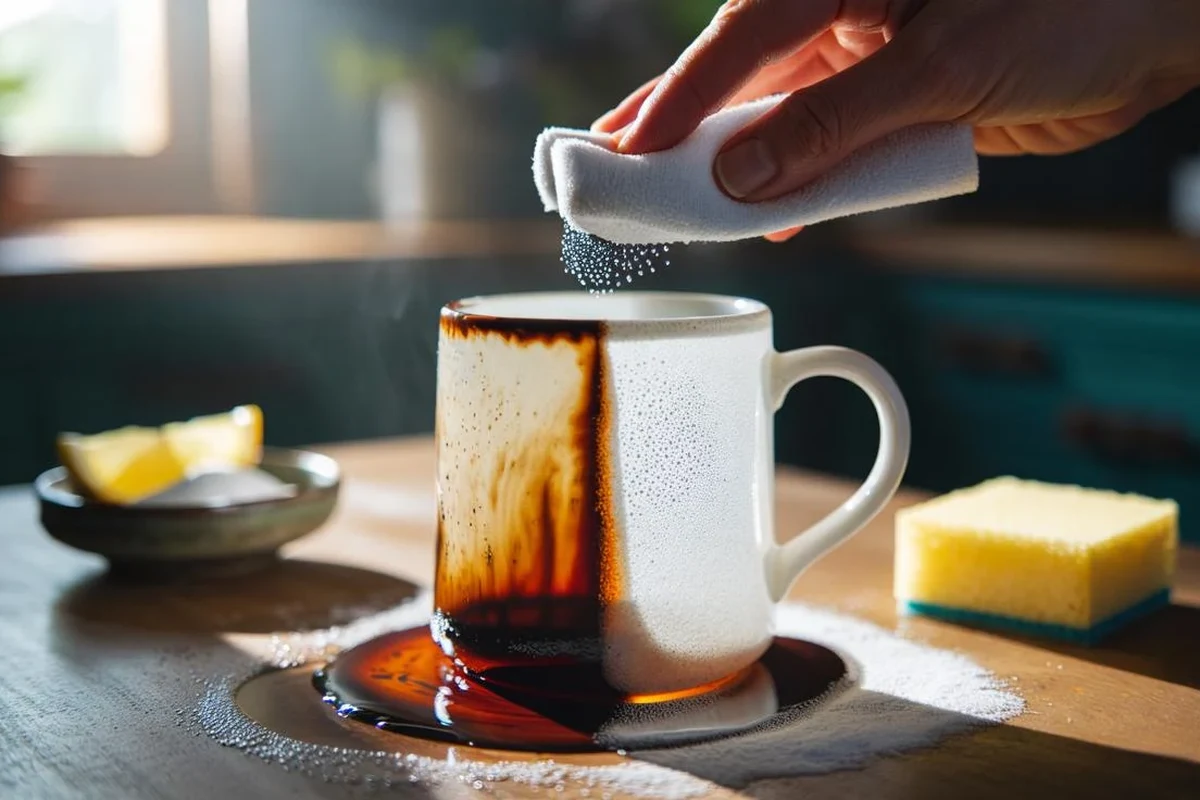
Tea stains usually come from tannins, the natural compounds in tea that can cling to porous or lightly textured surfaces. Over time, those tannins can build up into a brown ring or dull film, especially when the cup dries before it is fully rinsed.
The chemistry of tannins, acidity, and gentle abrasion
Baking soda is mildly alkaline, so it helps loosen acidic residue and break the bond between the stain and the surface. It also acts as a very gentle abrasive, which means it can help scrub away the film without the roughness of stronger powders.
That combination makes it useful for stains that are stuck on but not deeply embedded. It is not a bleach, so it works best by loosening and lifting rather than by chemically whitening everything in one step.
Tea stains often look darker after drying because leftover moisture lets tannins settle into tiny surface pores and mineral deposits.
Why this method is popular for mugs, cups, and teapots
Most kitchen tea stains are cosmetic, not dangerous, which makes baking soda a practical first try. It is inexpensive, easy to find, and usually safe for common kitchen materials when used with light pressure and a good rinse.
It is also a familiar pantry cleaner. For readers who already keep baking soda in the kitchen, it can handle tea rings, cup bottoms, and teapot staining without needing a special product.
Best Surfaces to Clean with Baking Soda for Tea Stains
Baking soda works best on hard, nonporous, or lightly porous kitchen surfaces. The key is to match the cleaning method to the material so you remove the stain without scratching the finish.
Ceramic mugs and porcelain cups
Ceramic and porcelain are the most common places to use baking soda for tea stains. A soft sponge or cloth with a baking soda paste can usually lift the brown film from the inside bottom and around the rim.
Glazed mugs and cups are generally sturdy, but hand-painted details and metallic trim need more care. If the finish is decorative, test a small hidden area first.
Glass teaware, stainless steel, and travel tumblers
Glass teapots, stainless steel infusers, and many reusable travel tumblers can also respond well to baking soda. These surfaces often show tea residue clearly, so a paste or soak can make a visible difference.
For insulated tumblers, check the manufacturer’s care instructions before cleaning. Some lids, seals, or vacuum-sealed bodies have parts that should not be scrubbed aggressively or soaked for too long.
When to avoid baking soda on delicate finishes or coated surfaces
Avoid baking soda on soft, scratched, or specialty-coated finishes where even mild abrasion may dull the surface. This includes some nonstick coatings, printed designs, antique glaze, gold trim, and certain matte finishes.
If a surface is already cracked, crazed, or flaking, scrubbing can make the damage worse. In that case, use only the gentlest cleaning method recommended by the item’s maker.
How to Use Baking Soda for Tea Stains Step by Step
There are two easy ways to clean tea stains with baking soda: a paste for targeted spots and a soak-and-scrub method for heavier buildup. Both work best when you start with warm water and a soft tool.
Simple paste method for fresh and set-in stains
Mix a small amount of baking soda with just enough water to make a spreadable paste. Apply it to the tea stain, let it sit for a few minutes, then wipe or rub gently in small circles.
For fresh stains, this may be enough to remove the discoloration in one pass. For older stains, repeat the paste once more rather than pressing harder the first time.
Rinse the mug or teapot with warm water so the surface is damp, not dripping.
Spread a thin layer of baking soda paste over the stain using your fingers, a soft cloth, or a sponge.
Wait a few minutes so the paste can loosen the residue before you scrub.
Rinse thoroughly until the surface feels clean and no powder remains.
Soak-and-scrub method for stubborn rings and buildup
For rings at the waterline or dark buildup at the bottom of a cup, fill the item with warm water and add a spoonful of baking soda. Let it sit for a short time, then scrub gently with a sponge or bottle brush if the shape allows.
This method works well when the stain is spread over a larger area. It is especially useful in teapots, thermoses, and travel mugs where a paste is hard to spread evenly.
If the stain is stubborn, a second round of soaking is usually safer than more force. Repeated light cleaning is less likely to mark the surface than one aggressive scrub.
How much baking soda to use and what tools work best
For a single mug or cup, start with a small spoonful and add water as needed. For a soak, use enough to lightly cloud the water rather than create a thick slurry.
Soft sponges, microfiber cloths, and bottle brushes are usually the best tools. Avoid steel wool or harsh scouring pads unless the item is uncoated and the manufacturer says abrasion is acceptable.
- Check the surface for cracks, metallic trim, or printed decoration.
- Use a soft tool first and save stronger scrubbing for plain, durable items only.
- Rinse completely after cleaning so no powder or taste remains.
Common Mistakes That Make Tea Stains Harder to Remove
Tea stains can linger when the wrong cleaning approach scratches the surface or lets residue settle deeper. A careful method usually works better than a stronger one.
Using too much pressure on scratched surfaces
If a mug already has tiny scratches, heavy pressure can push residue into those marks or make the finish look dull. That is why a soft sponge and repeated light passes are better than hard scrubbing.
Once a surface is worn, it may stain more quickly in the future because tannins have more places to cling. Gentle care can slow that cycle down.
Mixing baking soda with the wrong cleaners
Do not mix baking soda with cleaners unless the product label says it is safe to do so. In general kitchen use, it is best to keep cleaning steps simple and separate rather than combining random products.
If you switch to another cleaner, rinse the item first. That helps avoid unwanted reactions, residue, or strange tastes in cups and teaware.
Waiting too long before treating dark tea residue
Fresh tea stains are easier to remove than old, dried-on rings. The longer tea residue sits, the more likely it is to bond with mineral deposits and become harder to lift.
A quick rinse after each use makes a big difference. Even a fast wash with dish soap can prevent the stain from setting in the first place.
If you are cleaning a thermos, flask, or insulated mug, make sure the item is cool before adding warm water. Sudden temperature changes can stress some materials and seals.
How Baking Soda Compares with Other Tea-Stain Cleaning Methods
Baking soda is not the only way to remove tea stains, but it is often one of the safest starting points. The best cleaner depends on the stain, the surface, and how much scrubbing the item can handle.
Vinegar, lemon, salt, and dish soap compared
Vinegar and lemon are acidic, so they can help with mineral buildup and some discoloration. Dish soap is best for greasy residue, while salt adds abrasion but can be rougher than baking soda on delicate finishes.
Baking soda sits in the middle: it is gentle, easy to control, and useful for everyday kitchen cleanup. For readers interested in other household cleaning comparisons, our guide on are air fryer baskets dishwasher safe shows how material care changes the right cleaning method.
- Gentle on many common kitchen surfaces
- Easy to measure and rinse away
- Good for routine stain removal
- May need repeat applications for old stains
- Not ideal for every coated or decorative surface
- Does not bleach deeply embedded discoloration
When baking soda is the safer choice
Baking soda is often the safer choice when you want to avoid harsh fumes, strong acids, or heavy abrasion. It is especially useful for daily cleaning in shared kitchens where you want a simple method that rinses clean.
It is also a sensible first step when you are not sure how a cup or teapot will react. Starting mild reduces the chance of damaging the item.
When another cleaner may work faster
If the stain is mostly mineral scale or hard water buildup, a vinegar-based cleaner may work faster than baking soda. If the item has greasy residue along with tea stains, dish soap may help first.
For very old stains, you may need a longer soak or a cleaner made for the specific material. Always check the care instructions for insulated drinkware and specialty finishes before changing methods.
Cleaning Different Tea-Stained Items Around the Kitchen
Tea stains show up in more places than just a breakfast mug. The cleaning approach should change slightly depending on whether you are working with a cup, a strainer, or a countertop.
Cups, mugs, and thermoses
For everyday cups and mugs, the paste method is usually the easiest. For thermoses and tall travel mugs, a soak with warm water and baking soda can reach the lower walls where stains often collect.
If the opening is narrow, use a bottle brush with soft bristles. That helps you reach the stained line without gouging the interior.
Teapots, strainers, and infusers
Teapots can develop staining inside the body, around the spout, and near the lid. A short soak followed by a gentle scrub is often the best way to reach these curves and corners.
Small strainers and infusers can usually be cleaned by making a baking soda solution and brushing through the tiny openings. Rinse carefully so no powder remains in the mesh.
Countertops, sinks, and reusable tea accessories
Baking soda can also help remove tea drips from sinks, counters, and reusable accessories like stir spoons or tea scoops. On these surfaces, a damp cloth with a little baking soda is usually enough.
Be careful around polished stone, painted surfaces, or anything with a special coating. When in doubt, test in a hidden spot first or follow the surface manufacturer’s guidance.
Soft Cleaning Tools for Tea Stains
A soft sponge, microfiber cloth, or non-scratch brush gives you more control than an abrasive pad. That matters because tea stains often sit in thin surface films, and the goal is to lift the film without dulling the finish.
Safety Tips, Storage, and Surface Care After Cleaning
Good cleaning does not end when the stain disappears. Rinsing, drying, and storage all matter if you want to keep tea stains from coming back quickly.
Rinsing thoroughly to avoid residue and taste issues
Always rinse thoroughly after using baking soda for tea stains. Leftover powder can leave a chalky feel or a slightly salty taste, especially in cups and travel mugs.
After rinsing, dry the item completely with a clean towel or let it air-dry. That reduces water spots and makes it easier to see whether the stain is fully gone.
Protecting decorative finishes and printed designs
Printed logos, gold edges, and hand-painted details need extra care. Use the least abrasive tool possible and keep the cleaning time short.
If the decoration begins to fade, stop using baking soda on that area and switch to a gentler wash with dish soap and water. Preserving the finish is often more important than removing every trace of color.
How to store baking soda for regular kitchen cleaning use
Keep baking soda in a sealed container in a cool, dry cabinet. Moisture can make it clump, which makes measuring and spreading it less convenient.
It is helpful to keep one box for cooking and another for cleaning if you use it often. That makes it easier to avoid cross-use confusion and keeps your kitchen routine organized.
- Use a soft sponge or cloth first
- Rinse well after cleaning
- Test delicate surfaces in a hidden spot
- Scrubbing hard on scratched or coated items
- Mixing cleaners without checking labels
- Leaving powder or paste behind on drinkware
Practical Recap: When Baking Soda Is the Right Fix for Tea Stains
Baking soda for tea stains is a smart first choice when you are cleaning mugs, cups, teapots, or stainless steel items with ordinary buildup. It is gentle, affordable, and effective for many everyday stains when you use light pressure and rinse well.
Best-use scenarios for quick daily cleanup and deeper stain removal
Use baking soda when the stain is fresh, the surface is durable, or you want a low-risk cleaning method before trying something stronger. It is especially helpful for brown tea rings, cup bottoms, and lightly stained teaware that just needs a refresh.
Signs a stain needs a stronger method or replacement item
If the stain does not improve after a couple of gentle tries, or if the item is scratched, cracked, or heavily coated with mineral scale, a different cleaner may be needed. In some cases, the finish may simply be worn enough that the discoloration will keep returning.
For most kitchen users, the best approach is simple: start with baking soda, keep the pressure light, and choose the method that fits the material. That gives you a practical way to remove tea stains without risking the mug, cup, or teapot itself.
Baking soda is one of the easiest and safest first-line options for tea stains on common kitchen items. Use it for routine cleanup and light to moderate buildup, then switch methods only if the stain is stubborn or the surface needs special care.
Frequently Asked Questions
Start with a small spoonful and add just enough water to make a spreadable paste. For a soak, use a little baking soda in warm water rather than making a thick mixture.
It can often reduce old stains, especially with a soak-and-scrub method. Very dark or long-set stains may need repeated treatment or a different cleaner.
Usually yes, as long as the porcelain is glazed and not heavily decorated with delicate trim. Use a soft sponge and test a hidden spot if you are unsure.
You can use them separately, but mixing them is not always necessary for routine tea stains. Baking soda alone is often enough for common mug and cup cleanup.
It is mild, but it can still dull delicate finishes if you scrub too hard. Use light pressure and avoid abrasive pads on coated or decorative surfaces.
Rinse cups and teapots soon after use and wash them before residue dries. Regular cleaning with dish soap and warm water helps prevent tannin buildup.

