
Are Air Fryers Cancer-Causing? What the Evidence Actually Says
If you’ve seen alarming headlines or viral posts about air fryers, the short answer is this: air fryers themselves are not known to cause cancer. The concern is not the appliance running hot air through a basket. The concern is high-heat cooking, especially when foods are browned, overcooked, or burned.
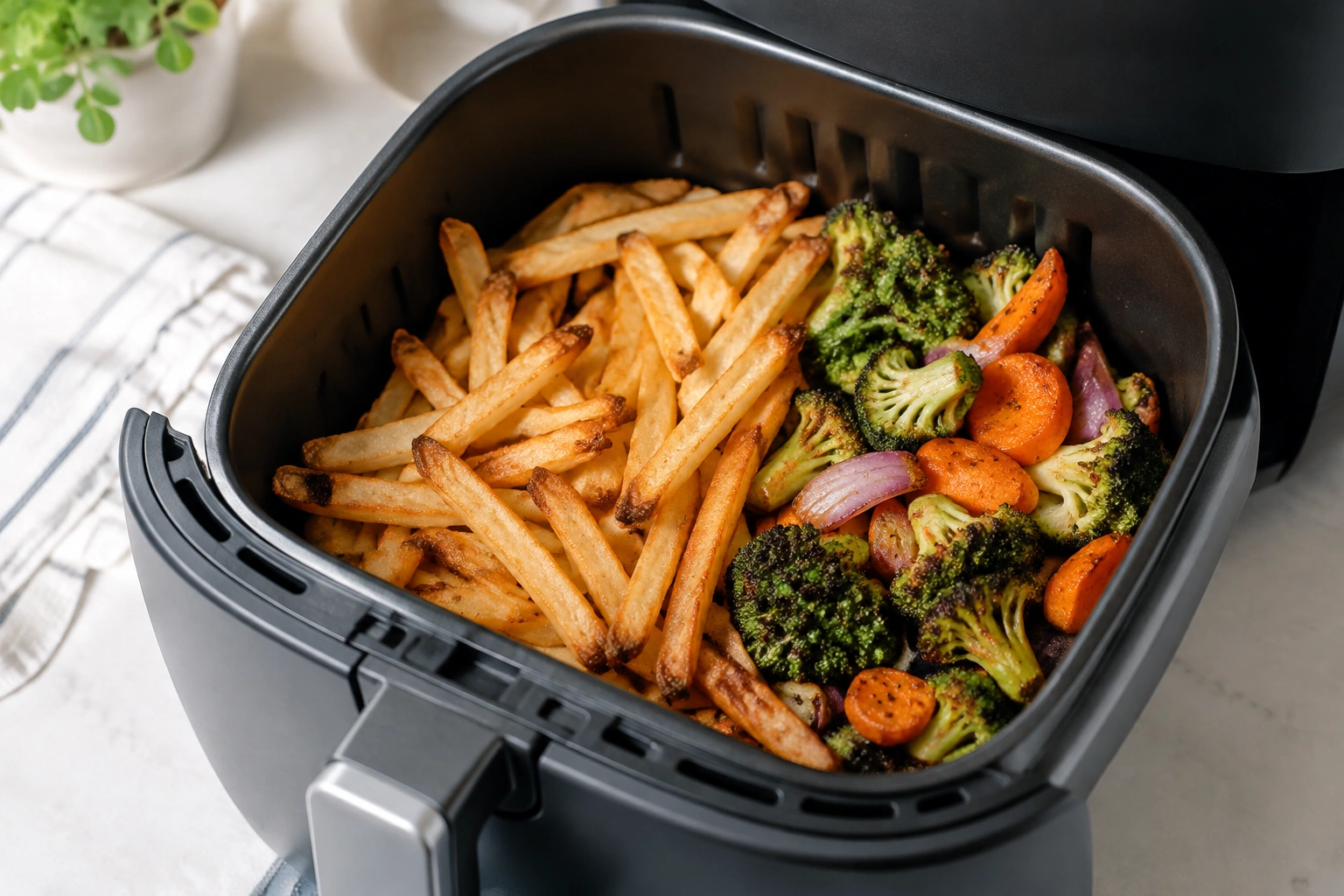
That matters because some foods can form compounds linked to cancer risk when cooked at high temperatures. The best-known one is acrylamide, which forms mainly in starchy foods such as potatoes and breaded items. Poison Control notes that acrylamide can form when foods are heated above 120°C (250°F) and that it is classified as a probable human carcinogen. That does not mean every air-fried meal is dangerous. It means the cooking method, temperature, and food type all matter.
For most home cooks, the practical takeaway is simple: use your air fryer normally, but don’t push foods into heavy browning or burning. If you mainly cook vegetables, chicken, fish, or reheated leftovers, the cancer concern is usually low. If you regularly air fry fries, chips, potato wedges, or breaded foods until they are very dark, it makes sense to adjust your habits.

Why People Think Air Fryers Might Be Cancer-Causing
A lot of the fear comes from a real issue being oversimplified.
Air fryers cook food at high heat, and high heat can create unwanted compounds in some foods. From there, the internet often jumps to “air fryers cause cancer.” That leap is too broad. The appliance is not the problem by itself. The food chemistry happening during cooking is what deserves attention.
This is where acrylamide gets pulled into the conversation. Acrylamide forms during the browning reaction in certain foods, especially those rich in starch. That’s why the topic comes up most often with fries, potato chips, and breaded items. WebMD notes that air fryers themselves don’t cause cancer, but air frying certain carbohydrate-rich foods can form acrylamide, although air frying may also lower the amount compared with traditional frying.
So the real question is not “Is an air fryer toxic?” It’s “What happens when I cook this specific food this way?”
A useful comparison is to think about toast. Lightly toasted bread is one thing; burnt toast is another. The appliance didn’t become dangerous when the toast turned black. The risk comes from overheating the food.
What the Main Risk Actually Is: Acrylamide and Other High-Heat Byproducts
Acrylamide is the main chemical people worry about in this discussion. In plain language, it is a compound that can form when certain foods are cooked at high temperatures, especially when they brown.
It forms most readily in starchy foods such as:
- Potatoes
- Fries
- Potato wedges
- Breaded chicken or fish
- Breaded frozen snacks
- Some baked goods cooked until very dark
The reason these foods matter is that starch and certain amino acids react under heat. That reaction is part of what gives browned food its flavor and color, but it can also produce acrylamide.
Other high-heat byproducts sometimes mentioned include HCAs and PAHs, especially in heavily charred meats or food exposed to smoke. Those are more often discussed with grilling, pan-frying, or direct flame cooking than with typical air fryer use. Still, if food is smoked, burnt, or blackened in an air fryer, the same general rule applies: the more extreme the browning, the more you should pay attention.
The important distinction is this: air frying does not automatically create a cancer risk. The risk rises when cooking conditions encourage excessive browning or burning.
Which Foods Are Most Likely to Form Harmful Compounds in an Air Fryer
Some foods are simply more relevant to the acrylamide conversation than others.
Higher-risk foods
These are the ones I’d watch most closely:
- French fries
- Potato wedges
- Hash browns
- Breaded chicken nuggets
- Breaded fish fillets
- Breaded frozen snacks
- Toasted or baked dough products cooked very dark
These foods tend to brown quickly, and it’s easy to let them go from crisp to overdone.
Lower-concern foods
These are less likely to raise the same issue:
- Plain chicken breasts
- Fish fillets without heavy breading
- Vegetables like broccoli, zucchini, or Brussels sprouts
- Reheated leftovers
- Sausages or meats cooked without charring
That doesn’t mean these foods are risk-free in every sense, but they are not the main acrylamide concern.
A practical example: if you’re making frozen fries for your kids, the goal is usually golden and crisp, not deep brown. If you’re cooking breaded chicken for dinner, a light, even crust is a better target than a very dark shell. The difference may seem cosmetic, but in this case doneness matters.
Air Fryer vs Deep Fryer, Oven Baking, and Roasting
Here’s the comparison most readers want to see at a glance.
| Cooking method | Acrylamide risk in starchy foods | Browning control | Oil use | Practical safety note |
|---|---|---|---|---|
| Air fryer | Can form in starchy foods at high heat | Good, but easy to overbrown if left too long | Low | Watch fries, breaded foods, and dark edges |
| Deep fryer | Can also form; often higher oil exposure | Moderate | High | Oil temperature and reuse matter |
| Oven baking | Can form, especially with long cook times | Good | Low to moderate | Large batches can dry out and darken unevenly |
| Roasting | Can form if food is cooked very dark | Good | Low | Edges can char if temperature is too high |
The key point is that air frying is not uniquely risky. In many cases, it may be similar to or better than other dry-heat methods, depending on time, temperature, and the food itself.
For example, oven-baked potato wedges can get just as dark as air-fried wedges if they sit in the oven too long. Roasted vegetables can also overbrown around the edges. Deep frying adds a different set of concerns because of the oil, but it does not eliminate acrylamide risk either.
Does Air Frying Create Less Acrylamide Than Traditional Frying?
Often, yes — but not always, and not for every food.
WebMD notes that air frying may lower acrylamide compared with traditional frying. That makes sense because air frying usually uses less oil and often cooks food differently. But “less” is not the same as “none.”
What matters most is how dark the food gets and how long it stays in the heat. If you use an air fryer to produce very dark fries, you can still create more acrylamide than you intended. If you stop at a light golden color, you usually reduce that concern.
A helpful rule in everyday cooking: golden is better than deep brown for starchy foods. That’s especially true for potatoes and breaded items. If you like extra crunch, you can often get it by preheating the air fryer properly, spacing food out, and shaking the basket once or twice instead of simply extending the cook time.
Other Safety Concerns: Burning, Smoke, and Overbrowning
A lot of the real-world risk comes from overdoing food, not from the machine itself.
When food smokes in an air fryer, a few things may be happening:
- The food is too close to the heating element
- There is too much oil or fatty residue in the basket
- The food is cooking too long
- The temperature is higher than it needs to be
Smoke is a sign to pay attention. It does not automatically mean the food is dangerous, but it does mean you are probably pushing the cooking past the point of good control.
This is one reason I prefer checking food a few minutes early rather than relying on a single long timer. For fries, that might mean opening the basket near the end and looking for even color instead of waiting until the basket smells toasted. For breaded foods, it may mean reducing the temperature slightly so the coating cooks through without turning overly dark.
The practical goal is not pale food. It’s evenly cooked food without blackened spots.
Are Nonstick Baskets or Coatings a Cancer Risk?
This is a separate question from acrylamide, and it deserves its own answer.
Some air fryer baskets use nonstick coatings, and concerns sometimes come up about “forever chemicals” or PFAS. That is a material-safety concern, not the same thing as the food chemistry issue of acrylamide.
For typical use, a normal intact nonstick basket is not the main cancer concern. The bigger issue for most users is still what happens to the food during cooking, especially overbrowning or burning. If a coating becomes badly scratched, flaking, or otherwise damaged, follow the manufacturer’s guidance and consider replacing the basket.
If you’re shopping for a new model, it’s worth looking for clear manufacturer information about materials and care instructions rather than assuming all nonstick baskets are identical.
What Food Safety Authorities and Experts Say
The broad takeaway from food safety and health sources is straightforward: air fryers are not known to cause cancer by themselves, and the main concern is overcooked starchy food rather than the appliance itself.
In other words, the consensus is not “avoid air fryers.” It’s “use them in a way that avoids excessive browning, especially with potatoes and breaded foods.”
That’s why food safety guidance focuses on cooking conditions, not on banning air fryers. The FDA’s guidance on acrylamide in foods is a useful official reference point: FDA’s guidance on acrylamide in foods. The general message is consistent: reduce excessive browning, avoid overcooking, and use sensible cooking practices.
For readers who want a broader overview of health effects and cooking trade-offs, I also cover related concerns in Are Air Fryers Harmful to Health? Risks, Benefits & Safer Use and Can Air Fryers Cause Health Problems?.
How to Use an Air Fryer More Safely
You do not need to stop using your air fryer. A few habits go a long way.
Keep starchy foods from getting too dark
For fries, potato wedges, and breaded foods, aim for golden brown rather than deep brown. If the food is already crisp and cooked through, stop there.
Use the temperature the recipe actually needs
Higher is not always better. If food is browning too fast on the outside and still underdone inside, lower the temperature a little and give it more time.
Shake or turn food during cooking
This helps food brown more evenly, which reduces the chance of one side becoming overly dark while the rest is still pale.
Don’t crowd the basket
When food is piled up, some pieces overcook while others steam. That can lead to uneven browning and more temptation to keep cooking until everything looks “done.”
Watch for smoke
If the air fryer starts smoking, pause and check the food. Smoke is a clue that the heat is too aggressive, the basket has residue, or the food is getting too dark.
Be especially careful with frozen breaded foods
These are easy to overcook because the outside can brown quickly while the inside still needs time. A slightly lower temperature often gives a better result than trying to force crispness with extra heat.
These small adjustments usually preserve the texture people want while reducing the chance of heavy browning.
When to Replace an Old Air Fryer or Stop Using It
If your air fryer is old, damaged, or repeatedly smoking, replacement may make sense.
Consider replacing it if:
- The basket coating is flaking or badly scratched
- The unit smokes even after cleaning
- Food burns unevenly no matter how you adjust time and temperature
- The manufacturer says the basket or coating should not be used once damaged
You do not need to replace a normal, functioning air fryer just because of viral warnings. But if the basket is worn out or the appliance no longer cooks predictably, that is a good reason to move on.
A practical decision rule: if the issue is the way the food is cooking, adjust your method. If the issue is the condition of the basket or appliance, consider replacement.
Bottom Line: Should You Keep Using an Air Fryer?
Yes — for most households, air fryers are still a reasonable and practical cooking tool.
The evidence does not show that air fryers themselves cause cancer. The real concern is high-heat cooking of certain foods, especially starchy foods that are browned too much or burned. That risk is not unique to air fryers, and it can happen with baking, roasting, and frying too.
If you use your air fryer for normal everyday meals, keep an eye on browning, and avoid pushing food into blackened territory, you are already doing the most important thing. In other words: the appliance is not the enemy; overcooking is.
FAQ
Do air fryers cause cancer?
No. Air fryers themselves are not known to cause cancer. The main concern is overbrowning or burning certain foods, especially starchy ones.
Is the nonstick coating on an air fryer basket dangerous?
A normal intact basket is not the main cancer concern for most users. If the coating is badly scratched, flaking, or damaged, follow the manufacturer’s guidance and consider replacing it.
Can air frying reduce acrylamide compared with deep frying?
It can, depending on the food and cooking time. Air frying often uses less oil and may produce less acrylamide than deep frying, but heavily browned food can still form it.
Which foods should I watch most closely?
Potatoes, fries, breaded foods, and other starchy items are the main ones to monitor because they brown quickly and are more likely to form acrylamide.
What’s the safest color for air-fried starchy foods?
Golden brown is a better target than deep brown or blackened edges.

