
Are Silicone Air Fryer Baskets Safe? What Home Cooks Should Know
If you’re asking are silicone air fryer baskets safe, the short answer is: usually yes, if the basket is truly food-grade silicone and rated for the temperatures you use.
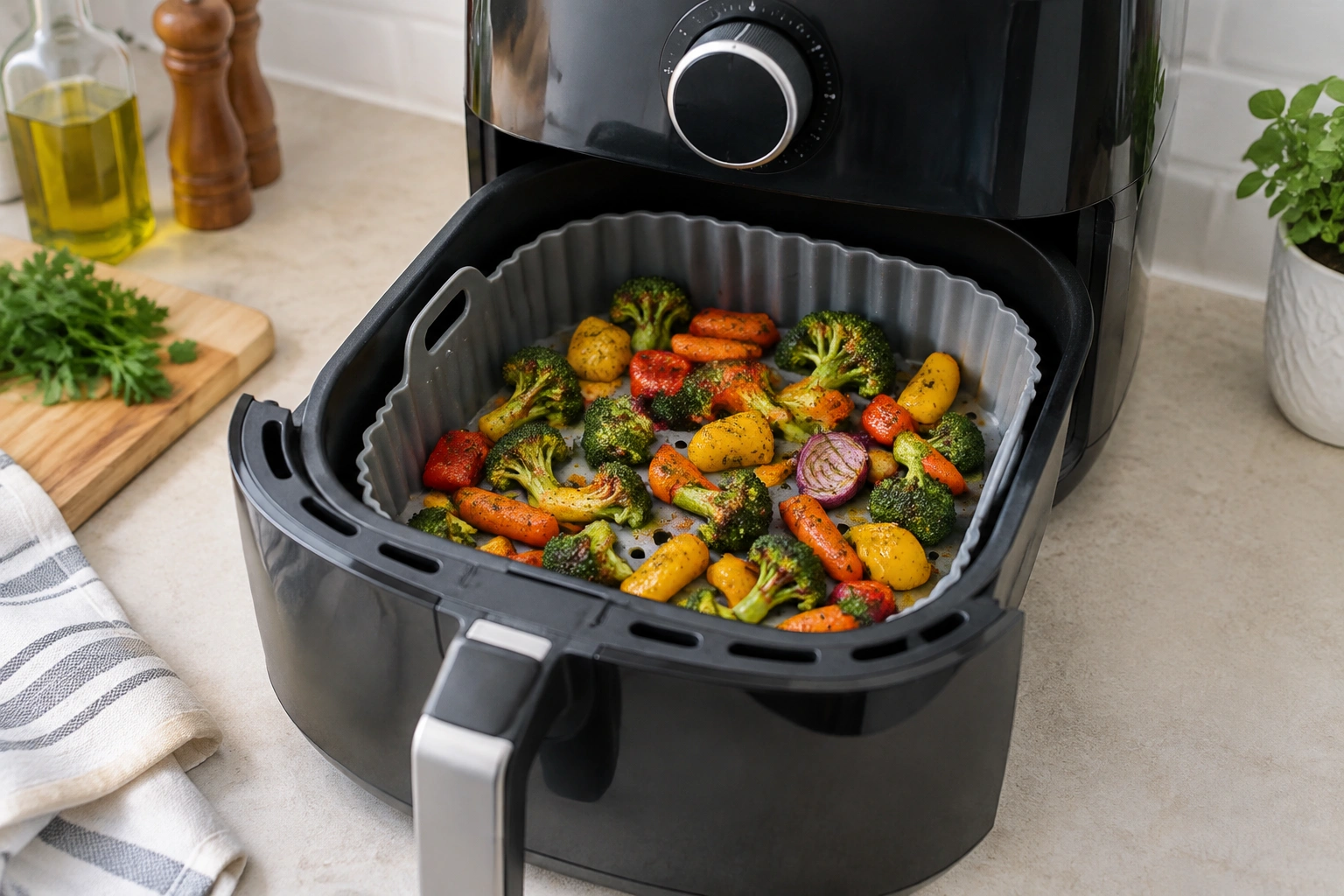
That caveat matters. Silicone is not automatically safe just because it looks like a kitchen accessory. A good silicone basket should clearly state that it is food-grade, designed for food contact, and safe at temperatures above your usual air fryer settings. If the product doesn’t give you that information, I’d be cautious.
For everyday air frying, a quality silicone basket can be a practical choice, depending on its design, fit, and temperature rating. It’s reusable, easy to clean, and can help keep food from sticking. But it is not the best choice in every situation. If you want the strongest browning and crisp edges, a metal basket usually performs better because it allows more direct airflow.
What Silicone Air Fryer Baskets Are Made Of
A silicone air fryer basket is usually a flexible, reusable liner or insert made to sit inside the fryer basket and hold food. The key detail is not just “silicone,” but what kind of silicone.
Food-grade silicone is made for contact with food and is the type you want in kitchen tools. Some products also say they are BPA-free, which is a common label shoppers look for, though BPA is not the main issue with silicone itself. The more useful question is whether the product is actually intended for high-heat food use and whether the maker gives clear care and temperature instructions.
That’s why brand transparency matters. A reputable product page should tell you:
– what the basket is made of,
– the temperature limit,
– whether it is oven-safe or dishwasher-safe,
– and how it should be cleaned.
The kind of detail you want is a clear material description, a stated heat limit, and enough manufacturer information to verify the claim if needed.
How Hot Can Silicone Air Fryer Baskets Get Before They Become Unsafe?
This is the part that matters most for safety. A silicone basket is only safe up to its rated temperature. If you exceed that limit, the basket can soften, warp, discolor, or start to smell off.
The deciding limit is the basket’s stated maximum temperature, not the air fryer’s maximum setting. If your air fryer can run hotter than the accessory is rated for, the accessory rating wins.
A practical rule of thumb: for typical home air frying in the 300°F to 400°F range, choose a basket with a maximum temperature rating that gives you a buffer above your usual cooking temperature. As a conservative safety margin, I’d want at least 25°F to 50°F below the basket’s stated maximum during normal use. So if a basket is rated to 450°F, it is better suited to regular cooking around 400°F or below than to repeated use right at the limit.
If the product page does not list a temperature rating, I would not assume it can handle high-heat air frying.
What happens when silicone is pushed too far?
– It can lose its shape.
– It may get sticky or tacky.
– It may discolor after repeated heat exposure.
– In a low-quality product, it may give off odors that were not present at normal temperatures.
That does not mean every smell means danger, but it does mean something is wrong enough to stop using it until you check the product details. If a basket is repeatedly exposed to heat beyond its rating, replacement is the safer move.
What Can Go Wrong: Melting, Warping, Odors, and Wear
A good silicone basket should hold up well under normal use. A poor one may show warning signs quickly.
Here are the main red flags I watch for:
– Warping or collapsing while cooking
– Sticky or gummy spots after washing
– Strong chemical smell during heating
– Cracking, tearing, or rough edges
– Permanent discoloration that keeps getting worse
If you notice any of these, don’t keep using the basket just because it still “sort of works.” Damage can mean the material is breaking down, and once that happens, the basket is no longer a reliable food-contact surface.
A related mistake is assuming all silicone products are equally safe. They’re not. A low-cost basket with vague labeling and no temperature information is much harder to trust than one from a brand that clearly states the material and care instructions.
Do Silicone Baskets Affect Airflow, Crispiness, and Cooking Time?
Yes, they can.
Air fryers work best when hot air can move freely around the food. A silicone basket adds another layer between the food and the air fryer basket, and that can slightly reduce airflow compared with cooking directly on the metal basket.
In practical terms, that means:
– food may brown a little less aggressively,
– very wet batters or heavily piled food may cook less evenly,
– and some foods may need a little extra time or a shake halfway through.
That doesn’t make silicone unusable. It just means it’s a trade-off. If you’re cooking vegetables, reheating leftovers, or making something where easy cleanup matters more than maximum crunch, silicone can be a smart choice. If you’re cooking fries, chicken wings, or anything where crispness is the main goal, bare metal usually wins.
A quick example
If I’m cooking vegetables at 375°F and want an easy cleanup, a silicone basket can make sense. If I’m cooking frozen fries and want the driest, crispest exterior possible, I’d usually skip the silicone insert and use the basket directly.
Silicone vs Metal vs Parchment Liners
Here’s the practical comparison most home cooks need.
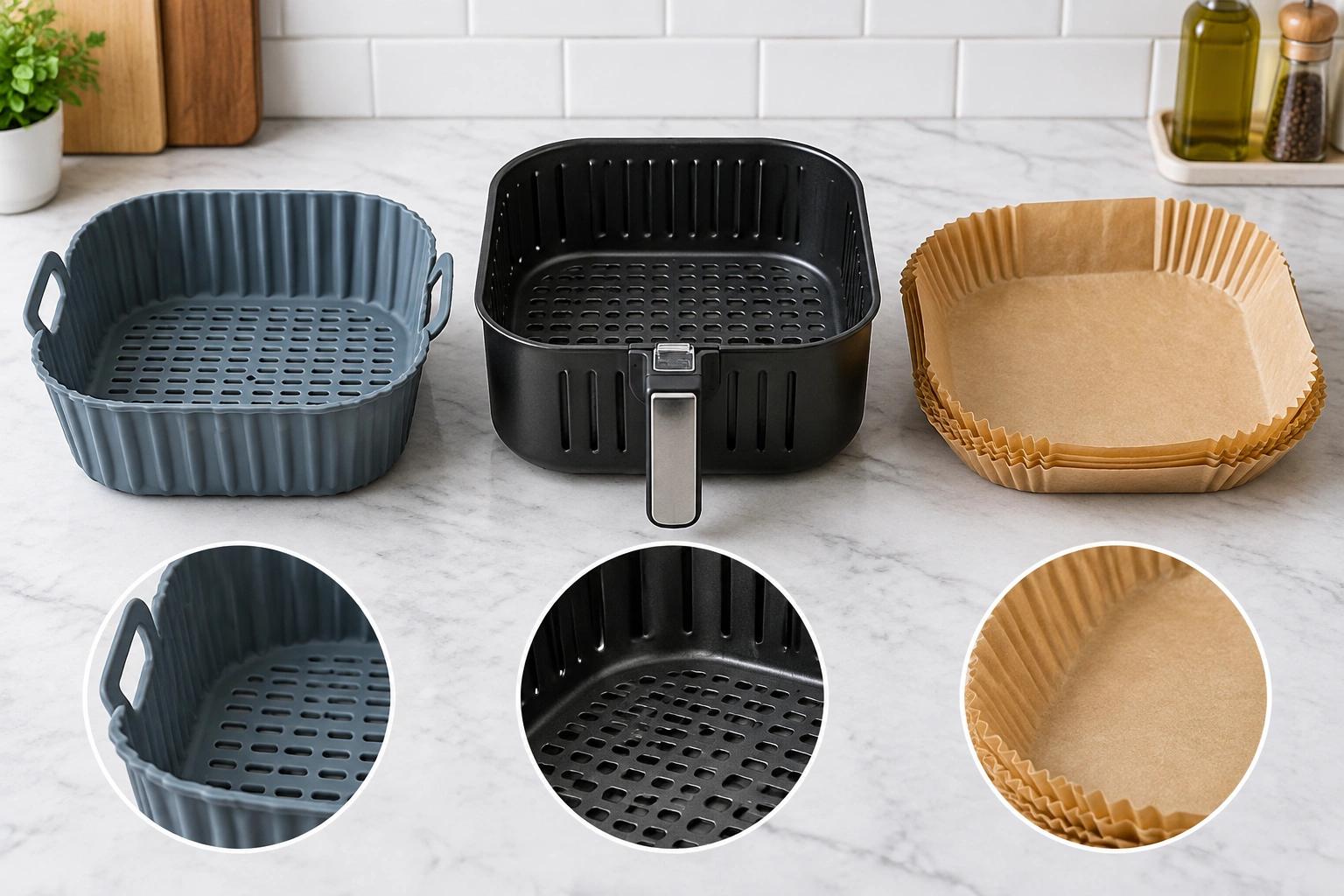
| Option | Heat Safety | Airflow | Crisping | Cleanup | Reusability | Best Use Case |
|---|---|---|---|---|---|---|
| Silicone basket | Safe if food-grade and rated for your temperature | Moderate | Usually less crisp than bare metal | Easy | Reusable | Easy cleanup, sticky foods, moderate-heat cooking |
| Metal basket | Very good for high heat | Best | Best browning and crisping | More scrubbing | Reusable | Fries, wings, roasted vegetables |
| Parchment liner | Good if used correctly and within fryer limits | Can reduce airflow if oversized | Decent, but not as crisp as bare metal | Very easy | Disposable | Quick cleanup for messy foods |
A few practical takeaways:
– Silicone is best when you want convenience and reuse.
– Metal is best when you want the crispiest finish.
– Parchment is best when you want the easiest cleanup for one-off use.
One important distinction: silicone baskets, silicone liners, and silicone molds or insert trays are not always the same product type. A basket or liner is usually a flexible insert meant to hold food inside the fryer basket. A mold or tray may be thicker, more rigid, or shaped for a specific food. Safety advice still depends on the same basics—material quality, fit, airflow, and temperature rating—but the shape and intended use can affect performance.
If you’re deciding between silicone and parchment, the biggest difference is reuse. Silicone costs more up front but can last much longer if it’s well made. Parchment is simpler, but it’s disposable and can be a poor fit if it blocks too much airflow or shifts around in the basket. Parchment can also be unsafe if it touches heating elements or is used above its rated temperature.
How to Tell If a Silicone Air Fryer Basket Is Actually Safe to Buy
Before buying, I’d check these points in order:
1) Look for food-grade silicone
The product should clearly say food-grade silicone or food-contact safe. If the listing only says “silicone” and gives no further detail, that’s not enough for me.
2) Find the temperature rating
This is non-negotiable. You need a clear maximum temperature, especially if you cook at 375°F or higher. If the product doesn’t list one, I’d pass.
3) Verify the claim beyond the product page
If the listing uses terms like food-grade or BPA-free, look for something more concrete:
– third-party testing or certification claims,
– LFGB, FDA-related, or other compliance documentation if provided,
– a real manufacturer name and contact information,
– and a product manual or spec sheet with temperature and care details.
A vague claim without supporting information is weaker than a product page that gives you documentation or a way to ask follow-up questions.
4) Check for clear care instructions
A trustworthy product should say whether it is:
– dishwasher-safe,
– oven-safe,
– microwave-safe,
– or freezer-safe.
5) Prefer transparent brands over vague listings
A reputable brand usually explains the material, the intended use, and the limitations. If the listing is full of marketing language but thin on actual specs, that’s a warning sign.
6) Make sure it fits your air fryer properly
A basket that is too large can block airflow or sit awkwardly. A basket that is too small may not be useful at all. Fit matters as much as material.
Best Practices for Using a Silicone Air Fryer Basket Safely
Once you own one, safe use is mostly about staying within the product’s limits.
Keep the temperature within the rating
This is the simplest and most important rule. If your air fryer can reach a higher temperature than the silicone basket is rated for, the basket rating wins.
Don’t overload it
Overfilling can trap steam and weaken browning. It can also make the basket harder to handle once hot. Give food room when you can.
Use it for the right foods
Silicone works well for foods that are sticky, saucy, or likely to leave residue. It’s less ideal when your main goal is a very crisp finish.
Watch for wear over time
A basket that starts to smell, warp, or turn tacky should be replaced. Don’t keep using a damaged accessory just because it still looks mostly intact.
Avoid improvising with untested combinations
Don’t assume silicone plus foil, or silicone plus an oversized parchment sheet, will be safe in your specific fryer. Accessories can change airflow and heat behavior in ways that aren’t obvious at first glance.
Keep it away from the heating element and airflow path
Silicone is generally safe only when it is used as intended and not touching the heating element. It also should not obstruct airflow in a way your air fryer manual prohibits. If the manufacturer warns against certain inserts or sizes, follow that guidance.
Cleaning and Care: Dishwasher Safety, Stains, and Maintenance
Many silicone baskets are marketed as easy to clean, and that can be true. Still, I’d follow the manufacturer’s instructions rather than assuming every silicone basket belongs in the dishwasher.
Cleaning tips that help the basket last longer
- Let it cool before washing.
- Use mild dish soap and warm water for routine cleaning.
- Avoid harsh scrubbing pads that can rough up the surface.
- Dry it fully before storing.
- If the product says dishwasher-safe, place it where it won’t get bent or trapped under heavier items.
About stains and odors
Light staining is usually cosmetic and not, by itself, a safety problem. What matters more is whether the basket has become sticky, warped, cracked, or persistently odorous after normal washing. Those changes can suggest wear, overheating, or material breakdown.
If a basket only has discoloration but still feels smooth, flexible, and odor-free, that is different from a basket that has changed texture or smell. In the second case, replacement is the safer choice.
When Silicone Is a Good Choice—and When It Is Not
Silicone is a good choice if you want:
– easier cleanup,
– a reusable accessory,
– a nonstick surface for sticky foods,
– and you’re cooking within moderate temperatures.
Silicone is not the best choice if you want:
– the most aggressive crisping,
– the fastest browning,
– or you’re using a product with unclear labeling or no temperature rating.
If I were choosing for my own kitchen, I’d use silicone for convenience-focused meals and keep the metal basket for foods where texture matters most. That gives you the flexibility to match the tool to the job instead of forcing one accessory to do everything.
A Practical Final Answer
So, are silicone air fryer baskets safe? Yes—when they are food-grade, clearly temperature-rated, and used within the manufacturer’s instructions.
That’s the real standard. Not all silicone products are equal, and not every basket on the market is worth trusting. If the product gives you clear material details, a safe heat rating, and proper care instructions, it can be a useful and generally safe air fryer accessory.
If you want more background on silicone accessories in general, I also cover that in Is Silicone Safe in an Air Fryer? What Home Cooks Should Know. For other accessory safety questions, you may also find Is Aluminum Foil Safe in an Air Fryer? A Practical Guide for Home Cooks and Is Ceramic Safe in an Air Fryer? A Practical Guide for Home Cooks helpful.
If you’re ever unsure about a product’s food-contact safety, follow the manufacturer’s instructions and check trusted food-safety guidance from sources like the FDA’s food contact materials information and USDA food safety resources.
Frequently Asked Questions
Can silicone air fryer baskets melt?
They can if they are used above their rated temperature. A quality basket should not melt under normal use within its safe heat range, though poorly made or mislabeled products may warp, deform, or smell before true melting happens.
Do silicone baskets make food less crispy?
Usually, yes, at least a little. Silicone can slightly reduce airflow compared with bare metal, so it is not the best option when maximum crisping is the goal.
Are all silicone air fryer baskets BPA-free?
No. Some are labeled BPA-free, but that doesn’t automatically mean the product is food-grade or heat-safe. Always check the full material and temperature details.
Can I put a silicone air fryer basket in the dishwasher?
Only if the manufacturer says it is dishwasher-safe. Many are, but you should verify that for the specific product you own.
Is food-grade silicone safe for hot food?
Food-grade silicone is designed for food contact, but the basket still needs a temperature rating that matches your air fryer use. Material quality and heat limit both matter.
Should I choose silicone or metal?
Choose silicone if you want easier cleanup and reuse. Choose metal if you care most about crisping and airflow.
How do I know when to replace a silicone basket?
Replace it if it becomes sticky, warped, cracked, badly discolored, or develops persistent odors after normal washing.
Is it safe to use parchment paper and silicone together?
Only if both products are approved for the temperatures and use conditions you plan to cook under. If in doubt, keep the setup simple and follow the manufacturer’s guidance.

