
Is Ceramic Safe in an Air Fryer? A Practical Guide for Home Cooks
Quick Answer: Is Ceramic Safe in an Air Fryer?
Yes, ceramic can be safe in an air fryer — but only if the specific item is rated for high heat and fits the basket without blocking airflow. That is the part people miss. “Ceramic” by itself is not a safety guarantee.
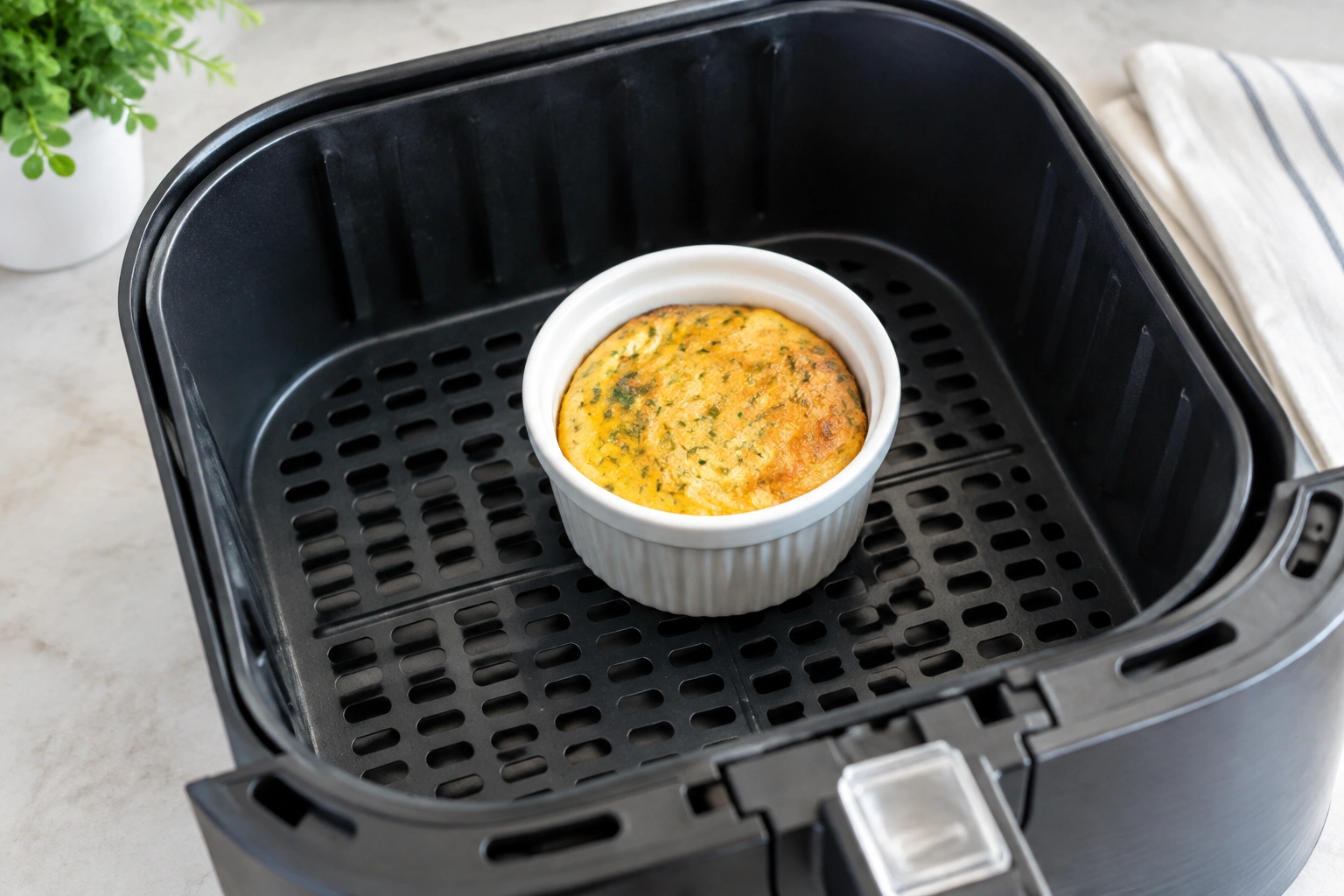
A sturdy ceramic bowl, ramekin, or baking dish may work well for small portions, custards, dips, or reheating leftovers. But a decorative plate, a chipped dish, or a piece with no clear heat rating is a different story. If you cannot confirm the item is oven-safe and built for cooking temperatures, do not assume it belongs in the air fryer.
One useful rule: if the manufacturer says the dish is oven-safe at the temperature you plan to use, that is a good sign. If it does not say that, treat it as unverified.
What Makes Ceramic Safe or Unsafe in an Air Fryer
Ceramic is a broad category, not one single material. In cookware, the most common types are stoneware, porcelain, and earthenware, and they do not all handle heat the same way. The difference matters because an air fryer heats food with strong, fast-moving hot air. That can be harder on cookware than people expect.
A ceramic item is more likely to be safe when it has:
- A clear oven-safe or heat-safe rating
- No cracks, chips, or glaze damage
- A thickness and construction meant for cooking
- A size that leaves room for air to circulate
It is more likely to be unsafe when it is:
- Decorative rather than cookware
- Thin, brittle, or heavily painted
- Damaged in any way
- Missing manufacturer guidance
Stoneware and porcelain are generally the better candidates for air fryer use because they are more commonly made for baking and high heat. Earthenware is the riskier comparison because it is often lower-fired and can be more prone to cracking or thermal shock unless the manufacturer specifically says otherwise.
The glaze also matters. A well-made glaze helps protect the surface, but it does not make an unsuitable ceramic dish suddenly safe. If the piece was not designed for cooking, the glaze is not the deciding factor.
Oven-Safe vs. Air-Fryer-Safe: Why the Labels Are Not the Same
This is the most important distinction in the whole topic.
“Oven-safe” is helpful, but it does not automatically mean “air-fryer-safe.” A conventional oven heats more gradually and more evenly. An air fryer pushes hot air around a smaller space, often with more concentrated heat and faster cycling. That means a dish can survive in one appliance and still be a poor fit in another.
For example, a stoneware ramekin marked oven-safe may work fine in an air fryer if it fits comfortably and the temperature stays within the rating. But a large ceramic casserole dish that technically tolerates oven heat may still be a bad choice if it crowds the basket and blocks airflow.
Microwave-safe or dishwasher-safe also does not mean air-fryer-safe. Those labels describe different conditions, and neither one confirms that the dish can handle dry, concentrated heat in a small appliance.
So use the label as a starting point, not the final answer.
Types of Ceramic: Stoneware, Porcelain, Glazed, and Unglazed
Not all ceramic cookware behaves the same way.
Stoneware
Stoneware is often thick and durable, which makes it a popular choice for baking dishes and ramekins. High-fire stoneware is often the better candidate for air fryer use because it is built for cooking temperatures. Still, thickness does not eliminate cracking risk if the piece is moved from a cold counter into a very hot appliance too quickly.
Porcelain
Porcelain is usually smoother and denser than generic ceramic. Many porcelain dishes are oven-safe, and some work well in air fryers if the manufacturer approves them. The main concern is not the name alone, but the actual temperature rating and the condition of the piece.
Glazed ceramic
A good food-safe glaze is common on cookware, and it often helps with cleanup. But a glaze can also hide hairline damage. If the glaze is cracked, crazed, or chipped, skip the dish. Damage can weaken the piece and make it more likely to fail under heat stress.
Unglazed ceramic
Unglazed pieces are less common for everyday cooking and may absorb moisture more easily. That can be a problem if the item has been sitting in water or if it heats unevenly. Unless the manufacturer clearly says it is safe for cooking, unglazed ceramic is not the first thing I would reach for in an air fryer.
Temperature Limits and Thermal Shock Risks
Ceramic failure in an air fryer usually comes down to two things: heat rating and thermal shock.
A dish must tolerate the cooking temperature you plan to use. Look for a label or product page that gives a maximum temperature, such as 400°F, 450°F, or another specific limit. If your air fryer setting is at or above that number, do not use the dish. If there is no temperature rating, that is a warning sign.
Thermal shock is the other big risk. That happens when a material changes temperature too quickly. A cold ceramic dish placed into a preheated air fryer can be stressed fast, especially if it is thick or already has tiny flaws. The same issue can happen in reverse if a hot dish is put on a cold, wet countertop or washed immediately with cold water.
A practical example: if you keep a ceramic ramekin in the refrigerator, let it sit out briefly before using it in the air fryer. You are not trying to warm it fully — just reducing the temperature gap so the material is not hit with an abrupt change.
How to Check Whether Your Ceramic Item Is Safe to Use
When a ceramic dish has a clear label, the decision is straightforward. When it does not, use a simple checklist.
1. Look for the manufacturer’s marking
Check the bottom of the dish, box, or product page for words like:
- Oven-safe
- Heat-safe
- Maximum temperature
- Microwave-safe or dishwasher-safe labels that may appear alongside oven-safe guidance
Be careful: microwave-safe and dishwasher-safe do not guarantee air-fryer-safe.
2. Find the temperature rating
If the manufacturer gives a maximum temperature, compare it with your air fryer setting. If you cannot verify the number, do not guess.
3. Inspect the condition closely
Do not use the dish if you see:
- Chips
- Cracks
- Crazing in the glaze
- Loose paint or decoration
- Warping or visible wear
A damaged ceramic piece is more likely to fail when heated.
4. Judge the fit in the basket
The dish should sit securely without forcing the basket closed or touching the heating element. A heat-safe item that is too large is still a bad choice.
5. Ask one final question
Is this item meant for cooking, or just serving? If it was sold as décor or tableware only, leave it out of the air fryer.
If the item has no markings, the choice is usually simple: test cautiously only if it is clearly a sturdy cooking vessel with a known brand or product listing that can be verified; otherwise, do not use it.
Fit, Airflow, and Placement Inside the Air Fryer Basket

Even when ceramic is heat-safe, fit matters just as much.
Air fryers rely on circulation. If a dish fills the basket too tightly, the food may cook unevenly and the appliance may work harder than it should. A ceramic casserole dish that nearly touches the walls can block the hot air that helps the food cook properly.
A smaller ramekin or bowl usually works better than a wide, deep dish. Leave space around the sides whenever possible. That space helps the air move and reduces hot spots.
Placement matters too. Center the dish so it sits flat and stable. If it wobbles, tilts, or slides, it can crack from uneven heating or create a mess inside the basket.
One easy test: if you have to force the dish into the basket, it is probably the wrong dish.
When Ceramic Should Not Be Used
There are a few clear red flags where I would not use ceramic in an air fryer.
Avoid it if the item is:
- Cracked or chipped
- Missing a clear heat rating
- Decorative rather than cookware
- Too large for the basket
- Covered in damaged glaze or flaking paint
- Likely to touch the heating element
- Taken straight from the fridge or freezer and placed into a very hot air fryer without any temperature adjustment
If you are unsure whether the piece is food-safe, that is another reason to skip it. A dish can look sturdy and still not be designed for high-heat cooking.
Ceramic vs. Metal vs. Glass in an Air Fryer
Ceramic is not the only option, and sometimes it is not the best one.
Ceramic vs. metal
Metal is usually the most air-fryer-friendly material because it tends to be slimmer, lighter, and better for airflow. It often heats more quickly and takes up less basket space. Ceramic, on the other hand, can be better if you want to serve straight from the dish or if you need a non-metal option.
Ceramic vs. glass
Glass can be safe in some cases, but it is also vulnerable to sudden temperature changes. Ceramic and glass both need careful handling, but ceramic cookware designed for baking is often a more familiar everyday choice for many home cooks. Still, the manufacturer’s rating matters more than the material name.
Stoneware vs. porcelain vs. generic ceramic
Stoneware is often the strongest candidate when you are comparing common ceramic types, especially if it is clearly labeled for baking. Porcelain can also work well if it is approved for high heat. Generic ceramic is the least useful label because it tells you very little about how the item was made.
If you already own a metal pan that fits better and leaves more airflow, that may be the safer, easier choice.
Safe Tips for Using Ceramic in an Air Fryer
A few habits can lower the risk of cracking or poor cooking results.
- Let very cold ceramic sit out briefly before heating
- Do not preheat the air fryer with an empty ceramic dish unless the manufacturer says that is fine
- Avoid sudden moves from hot to cold surfaces
- Use moderate temperatures when possible
- Keep the dish away from the heating element
- Handle hot ceramic with dry, secure mitts or tongs if needed
- Let the dish cool gradually before washing it
These are small steps, but they matter because ceramic does not forgive rough treatment the way some metal cookware does.
If you are using liners or accessories alongside ceramic, it can help to compare your options with this guide to parchment paper in an air fryer and this guide to silicone in an air fryer.
Can Ceramic-Coated Accessories Be Used the Same Way?
No — solid ceramic cookware and ceramic-coated accessories are not the same thing.
A ceramic-coated basket or tray has a base material underneath the coating, so the safety rules depend on the full product design, not just the coating. If the maker approves it for air fryer use, follow that guidance. If the instructions are unclear, do not assume it works the same way as a ceramic baking dish.
The key point is simple: the accessory maker’s instructions decide whether a ceramic-coated basket or tray is safe to use in that specific air fryer. The appliance manual may not cover third-party accessories in detail.
Final Verdict: How to Decide If Your Ceramic Dish Is Air-Fryer-Safe
Use this quick decision flow:
- Does it say oven-safe or heat-safe with a temperature limit?
- Yes: move to step 2.
-
No: skip it.
-
Is it stoneware or porcelain, or another clearly cookware-grade ceramic?
- Yes: move to step 3.
-
No or unknown: be cautious, especially with earthenware or decorative pieces.
-
Is it undamaged and sized to leave airflow in the basket?
- Yes: it is a reasonable candidate.
-
No: do not use it.
-
Is it a ceramic-coated accessory rather than solid ceramic cookware?
- Yes: follow the accessory maker’s instructions.
- No: use the cookware rating and fit as your guide.
That is the simplest way to think about it: ceramic can be safe in an air fryer, but only the right ceramic, used the right way.
Frequently Asked Questions
Can I put any ceramic bowl in an air fryer?
No. Only bowls that are clearly heat-safe or oven-safe and that fit the basket properly are worth using. A random ceramic bowl with no marking is too much of a gamble.
Will ceramic crack in an air fryer?
It can, especially if it has hidden damage or is exposed to sudden temperature changes. Thermal shock is the main concern.
Is glazed ceramic safe?
Sometimes. A good glaze is normal on cookware, but a damaged glaze, chips, or cracks are warning signs.
Is stoneware safer than porcelain?
Not automatically. Both can work if they are built for high heat and approved by the manufacturer. The label matters more than the category alone.
What if my ceramic dish has no label?
If you cannot verify the temperature rating or food-use status, do not use it in the air fryer.

