
Baking Soda and Vinegar Down Drain Does It Really Work

Baking soda and vinegar can help with light drain odors and minor surface buildup, but they usually do not clear a real clog. For standing water, recurring clogs, or multiple slow drains, a plunger, drain snake, or plumber is the better choice.
If you have ever searched for baking soda and vinegar down drain, you have probably wanted a fast, simple fix for a slow sink or bad smell. The method is popular for a reason, but it is not a magic drain cleaner, and it works best only in limited situations.
- Best use: Good for mild odor control and light maintenance.
- Main limit: Not strong enough for most real clogs.
- Safety first: Do not mix it with other drain chemicals.
- Better tools: Use a plunger or snake for hair and blockage.
- Call help: Recurring or multi-drain issues need a plumber.
What “Baking Soda and Vinegar Down Drain” Actually Means for Clogs and Odors
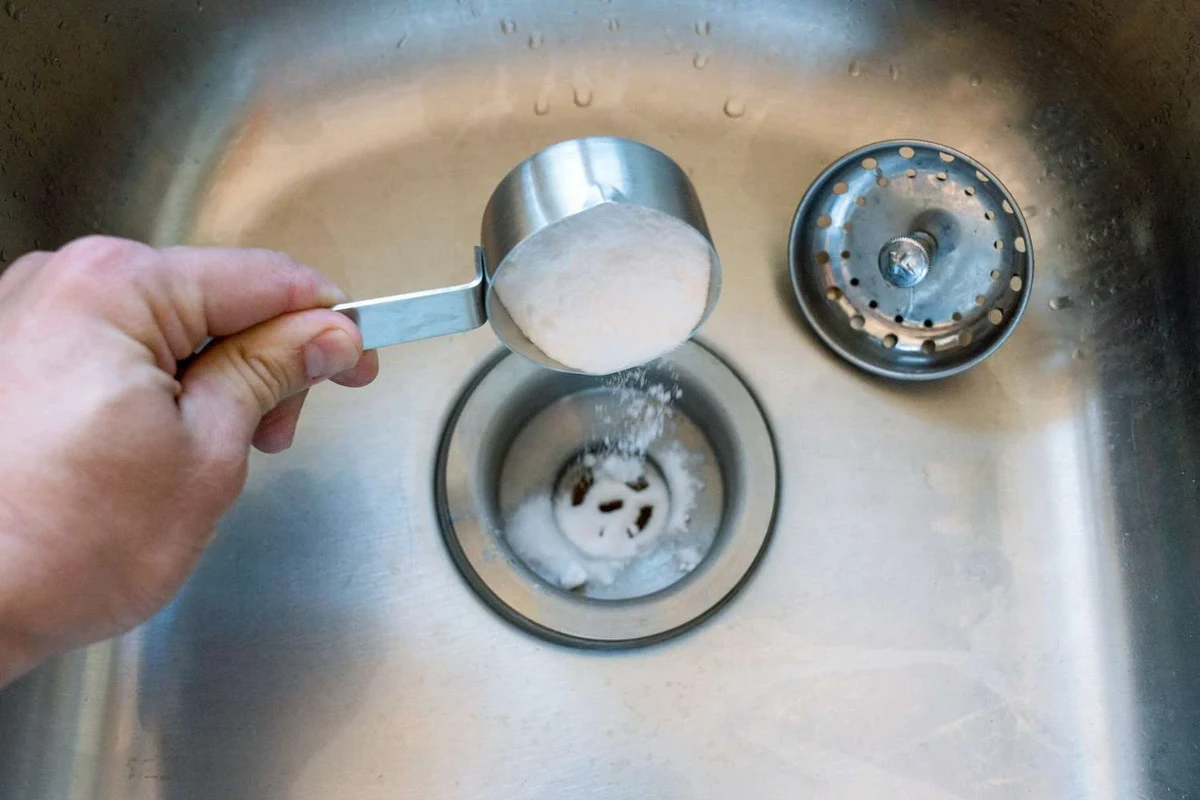
This DIY method usually means pouring baking soda into the drain, following it with vinegar, letting the mixture fizz, and then flushing with water. People use it as a low-cost home remedy for mild odors, greasy residue, and very light buildup.
In practice, it is more of a maintenance trick than a true clog remover. It may help loosen some soft debris near the drain opening, but it does not replace mechanical cleaning when the blockage is dense or deep.
Why this DIY drain method became so popular
The appeal is easy to understand. Baking soda is common in kitchens, vinegar is inexpensive, and the fizzing reaction gives the impression that something powerful is happening inside the pipe.
It also fits the way many home cooks think about cleaning: simple ingredients, quick action, and a familiar pantry item on hand. For readers who already trust baking soda in the kitchen, the jump to drain care feels natural.
What kinds of drain problems people hope it solves
Most people try it for slow drainage, sour smells, or a sink that seems a little sticky inside. They may also hope it will break up grease, soap scum, toothpaste residue, or food particles clinging to the pipe walls.
That hope is reasonable for mild maintenance, but less realistic for a true clog. A drain that is fully blocked usually needs physical removal of the obstruction.
Where the method is most often used in kitchens, bathrooms, and laundry areas
Kitchen sinks are the most common place because grease and food residue are frequent concerns. Bathroom sinks and tub drains are another common target because soap scum, hair, and toothpaste buildup can make water move slowly.
Some people also use it in laundry areas to reduce odors near utility drains. The results vary a lot depending on what is actually inside the pipe.
A drain can smell bad without being clogged, and it can clog without smelling bad. Odor control and clog removal are related, but they are not the same problem.
The Science Behind the Reaction: What Baking Soda and Vinegar Do in a Drain
Baking soda is sodium bicarbonate, and vinegar is acetic acid. When they meet, they react and release carbon dioxide gas, which creates the fizzing people notice right away.
That fizz looks active, but visible bubbling is not the same as deep cleaning power. The reaction is brief, and once it settles, the cleaning effect is usually limited to surface contact.
How the fizzing reaction works and why it looks effective
The foam can help lift loose grime near the drain opening, especially if the pipe already has a thin layer of residue. It can also help dislodge a bit of odor-causing buildup that is not strongly attached.
Because the reaction is dramatic, it is easy to assume it is scrubbing the whole pipe. In reality, the gas escapes quickly and does not create enough force to break apart a stubborn clog.
Why the reaction is not the same as true drain cleaning power
True drain cleaning usually depends on either physical removal, strong dissolving action, or enzyme activity over time. Baking soda and vinegar do not reliably deliver any of those in a blocked pipe.
They can neutralize some odors and shift a small amount of loose material, but they do not reliably cut through compacted grease or a mat of hair. That is why the method often feels promising but falls short on real obstructions.
How grease, soap scum, hair, and food waste respond differently
Grease can soften a little with hot water, but once it cools, it can re-solidify and cling to the pipe. Soap scum is stubborn because it forms a sticky film that does not always respond well to a short fizzing reaction.
Hair is usually the least responsive because it tangles and traps other debris. Food waste may loosen if it is close to the drain opening, but compacted particles deeper in the line usually need a snake or another mechanical tool.
The fizzing reaction between baking soda and vinegar does not create a lasting cleaner. Once the acid and base are used up, the reaction stops quickly.
Does Baking Soda and Vinegar Down Drain Really Work?
The honest answer is: sometimes, but only for limited problems. It can help with light odor control and a small amount of soft residue, especially when used as part of regular maintenance.
If you expect it to clear a slow or fully blocked drain on its own, the results are usually disappointing. It is best thought of as a mild cleaning step, not a rescue method.
What it can realistically do for light odor control and minor buildup
When a drain has a faint smell, the method may help reduce the sour or stale note coming from residue near the opening. It can also help freshen a drain that is used often but not heavily clogged.
For minor buildup, the combination may loosen some soft film so that a flush of water carries it away. That is useful, but only if the buildup is truly light.
When it may seem to work but only gives a temporary result
Sometimes a drain improves right after treatment because the fizz and flush move a little loose debris. The sink may drain faster for a day or two, then slow down again once the underlying blockage remains in place.
That temporary improvement can make the method seem stronger than it is. In many homes, the real cause is deeper in the trap or line, where the mixture cannot reach effectively.
Common situations where it is unlikely to clear a real clog
If water is standing in the sink, if the drain is fully blocked, or if multiple fixtures are slow at once, baking soda and vinegar is unlikely to solve the problem. The same is true for old grease buildup, heavy hair clogs, or objects stuck in the pipe.
In those cases, a plunger, drain snake, or professional cleaning is usually more effective. Waiting for a fizzing reaction alone can waste time and let the problem get worse.
- Low-cost and easy to try for mild odor control
- Common pantry ingredients
- Can help with light surface residue
- Weak on real clogs
- Often only temporary
- Not a substitute for mechanical cleaning
How to Use Baking Soda and Vinegar in a Drain the Right Way
If you want to try this method, keep the goal modest. Use it for maintenance or mild odor control, not as the only fix for a serious blockage.
Basic method, timing, and amount used in most DIY guides
Many DIY guides use about half a cup of baking soda followed by about one cup of vinegar, though exact amounts vary by drain size and the source you follow. Pour the baking soda into the drain first, then add the vinegar slowly so the mixture stays in the pipe as much as possible.
Let it sit for a short period, then flush with hot water. If the sink is already very slow, do not expect a dramatic change from the reaction alone.
Why hot water, waiting time, and flushing matter
Hot water can help dissolve soft grease and carry loosened residue away. Waiting gives the ingredients time to contact the drain walls instead of disappearing immediately down the line.
The final flush matters because it moves out what the reaction may have loosened. Without that rinse, you may only leave behind damp residue and a lingering smell.
Do not use this method on a drain if you have already added a commercial cleaner, bleach, or any unknown chemical. Mixing products can create dangerous fumes or heat, and you should follow the product label and official safety guidance.
What not to mix with this method for safety reasons
Avoid combining vinegar, baking soda, and other drain chemicals in the same drain. If a commercial product was used recently, stop and flush thoroughly according to the label before trying anything else.
Also be careful with very hot water in older sinks, plastic pipes, or weak seals. Hotter is not always better if the plumbing material cannot handle it well.
Common Mistakes People Make with the Baking Soda and Vinegar Drain Method
Most failures come from expectation, not from the ingredients themselves. People often assume that more fizz means more cleaning, but drain care does not work that way.
- Use the method for mild odor control or light maintenance
- Flush with water after waiting
- Choose a plunger or snake for real clogs
- Assuming more powder or more vinegar means a stronger fix
- Using it on a fully blocked drain and waiting for a miracle
- Repeating it endlessly instead of finding the cause
Using too much of either ingredient and expecting stronger results
Extra baking soda or vinegar does not create a stronger chemical cleaner. It mostly creates more foam and more mess, while the actual cleaning benefit stays limited.
Too much powder can also leave residue behind if it does not rinse away well. That can create the impression that the drain is dirtier than before.
Pouring it into a fully blocked drain and causing more frustration
If water cannot move through the drain at all, the mixture may sit on top of standing water or spill back up. That is not a sign the method is failing dramatically; it is a sign the clog is too serious for this approach.
In that situation, mechanical removal is usually the next practical step. Waiting longer rarely changes the outcome.
Repeating the method too often instead of addressing the cause
Some people keep using the same method every few days because the drain smells better for a short time. That can delay a real fix and allow grease, hair, or food debris to keep building up.
If the same drain keeps slowing down, look for the underlying issue. Recurring problems usually need a different tool or a plumber’s inspection.
Safer and More Effective Alternatives for Different Drain Problems
The best solution depends on the type of drain problem. A kitchen grease issue is not the same as a bathroom hair clog, and each one responds differently.
When a plunger, drain snake, or cleaning brush is the better choice
A plunger can help move a soft blockage near the trap, especially in sinks with enough water to create suction. A drain snake or zip-style hair tool is often more effective for hair clogs in bathroom sinks and tubs.
A small cleaning brush can help remove grime from the visible drain opening and stopper. That is often where the smell starts, even when the deeper pipe is not the main problem.
When enzyme cleaners or professional drain cleaning make more sense
Enzyme cleaners can be a better maintenance choice for organic buildup because they are designed to break down certain residues over time. They are not instant fixes, but they can be more targeted than a fizzing reaction.
If the clog is persistent, professional drain cleaning may be the safest and most efficient option. That is especially true when the problem keeps returning after you clear it.
How to handle grease-heavy kitchen drains versus hair-clogged bathroom drains
For kitchen drains, scrape plates well, avoid pouring grease down the sink, and flush with plenty of water after normal use. Grease clings to pipe walls and can trap other particles, so prevention matters more than a quick reaction.
For bathroom drains, remove hair regularly from the stopper or strainer. Hair clogs are usually physical tangles, so a drain snake or brush is often more effective than vinegar and baking soda.
If you have frequent clogs in more than one fixture, the issue may be deeper than a single sink. That can point to a venting problem, a main line issue, or another plumbing concern that DIY cleaning will not solve.
When to Stop DIY and Call a Plumber
DIY methods are useful for light maintenance, but they should not become a substitute for diagnosing a real plumbing problem. Some warning signs mean it is time to stop experimenting.
Warning signs of deeper plumbing issues or recurring clogs
If the same drain clogs again soon after cleaning, something is likely still trapped in the line. Repeated backups can also suggest buildup farther from the sink than household tools can reach.
Gurgling sounds, slow drainage after every use, or water backing up into another fixture are all signs that the issue may be beyond surface cleaning.
Situations involving standing water, bad smells, or multiple slow drains
Standing water that does not move after plunging or snaking is a stronger warning sign than a mild slowdown. Strong sewer-like smells can also point to venting or trap issues rather than simple residue.
If several drains are slow at the same time, the problem may be in a shared line. In that case, a home remedy will not be enough.
Why older pipes and certain plumbing materials need extra caution
Older plumbing can be more fragile, and some materials do not tolerate repeated heat or aggressive DIY treatment well. A cautious approach matters because an inexpensive fix is not worth damaging a pipe or seal.
If you are unsure what your plumbing is made of, or if the system has a history of repairs, it is safer to verify before using hot water or repeated treatments. When in doubt, a plumber can assess the condition more reliably.
- Confirm the drain is only mildly slow, not fully blocked
- Make sure no other cleaners were used recently
- Have a plunger or snake ready if the drain does not improve
- Use the method as maintenance, not as the only fix
Final Verdict: Is Baking Soda and Vinegar Down Drain Worth Trying?
Yes, it is worth trying for light odor control and minor maintenance, especially in a sink that is still draining and only needs a small refresh. It is simple, inexpensive, and easy to use when you keep expectations realistic.
No, it is not the best choice for a true clog, standing water, or recurring plumbing problems. In those cases, a plunger, snake, enzyme cleaner, or plumber will usually give a better result.
Best use cases for this method in a home cleaning routine
The method makes the most sense as a periodic freshness step for lightly used drains or as part of a broader cleaning routine. It can also be useful after you have already removed visible debris from the drain opening.
Think of it as maintenance for a clean-but-not-perfect drain, not as emergency repair.
What results to expect in 2026 from a realistic, safety-first approach
The basic science has not changed, so the method still offers only limited cleaning power. In 2026, the smartest approach is still to use it carefully, avoid unsafe chemical mixing, and choose a stronger tool when the problem calls for one.
That safety-first mindset saves time and reduces frustration. It also helps you avoid making a small drain issue into a bigger plumbing problem.
Practical recap for choosing between DIY, maintenance, and professional help
If the drain only smells a little off, the baking soda and vinegar method may be enough for a quick refresh. If the drain is slow, a plunger or snake is usually the next better step.
If the clog keeps coming back, or if multiple drains are affected, call a plumber. The best result comes from matching the method to the problem instead of hoping one pantry trick can do everything.
Baking soda and vinegar can help with mild odors and light maintenance, but it is not a reliable fix for real clogs. Use it carefully, expect limited results, and move to a stronger solution when the drain problem is more than surface-deep.
Frequently Asked Questions
Many DIY guides use about half a cup of baking soda followed by about one cup of vinegar, but amounts can vary. The key is to use it for light maintenance, not to force a major clog to clear.
It may help with very light buildup or odors, but it usually will not clear a real clog. A plunger or drain snake is often more effective for slow or blocked sinks.
No, not until you are sure the previous cleaner is fully flushed and the label says it is safe. Mixing products can create fumes, heat, or other hazards.
The method may only clean the surface of the drain and not the deeper buildup causing the smell. If the odor returns quickly, the problem may be in the trap or farther down the line.
A drain snake, hair removal tool, or cleaning brush is usually better for hair clogs. Hair tangles are physical blockages, so they respond best to mechanical removal.
Call a plumber if the drain keeps clogging, multiple fixtures are slow, or standing water will not clear. Those signs can point to a deeper plumbing issue that DIY methods will not fix.