
Can You Use All-Purpose Flour for Bread? A Practical Baker’s Guide

Yes — you absolutely can use all-purpose flour for bread.
The honest version, though, is that the loaf will not behave exactly like one made with bread flour. All-purpose flour usually has less protein, which means less gluten strength, so the dough may feel a little softer, rise a little less, and bake into a loaf with a more tender crumb and less chew. That is not a failure; in many breads, it is actually a feature.

If you are baking at home and all-purpose flour is what you have, you are still in good shape. In fact, many breads are perfectly happy with it. The real question is not “Can I use it?” but “What kind of bread am I making, and what result do I want?”
Can You Use All-Purpose Flour for Bread?
You can use all-purpose flour for many bread recipes, and in some cases it is the better choice.
What changes is the character of the loaf. Bread flour is usually chosen when a recipe needs more strength, more structure, or a chewier bite. All-purpose flour gives you a softer result and often a slightly less lofty loaf. That trade-off is acceptable for plenty of home-baked breads, especially everyday sandwich loaves, dinner rolls, and quick yeast breads.
A useful way to think about it:
- If you want maximum structure and chew, bread flour is usually the better fit.
- If you want a softer crumb and a reliable loaf, all-purpose flour is often fine.
- If the recipe is already designed to be tender, all-purpose flour may be exactly what you want.
That’s why a recipe written for a specific flour is worth respecting. Recipes are often developed around a particular flour because the protein level and liquid amount are balanced for the intended dough and final texture. King Arthur Baking explains why recipe flour matters.
All-Purpose Flour vs. Bread Flour: What Changes in the Dough
The biggest difference is protein.
Bread flour typically has more protein than all-purpose flour, which helps form gluten and gives dough more strength, stretch, and gas-holding ability.
Here’s the practical effect:
- More protein usually means a stronger dough and more chew.
- Less protein usually means a softer dough and a more tender crumb.
- Stronger gluten can support taller loaves and more open structure.
- Weaker gluten can still rise well, but it may not hold as much volume.
That does not mean all-purpose flour is “bad” for bread. It just means the dough has a different job to do. In a rustic artisan loaf or bagel, gluten strength is a major part of the final texture. In a dinner roll or sandwich bread, softness may be more desirable than chew.
Also, all-purpose flour is not one fixed thing. Some AP flours behave more like a lower-protein flour, while higher-protein AP flours act closer to bread flour. That is why one brand may give you a sturdier loaf than another, even when the label says the same thing.
Best Bread Types to Make with All-Purpose Flour
Some breads welcome all-purpose flour with very little drama. Others are more demanding.
Best matches for all-purpose flour
These styles usually tolerate all-purpose flour well:
- Sandwich bread
- Dinner rolls
- Burger buns
- Soft sandwich buns
- Irish soda bread
- Many quick yeast breads
- Simple country-style loaves
- Enriched breads with butter, milk, or eggs
Why these work: they do not always rely on a very strong, chewy structure. Enrichment ingredients and shorter shaping goals often make a softer flour a good fit.
Less ideal for a straight swap
These breads are more likely to miss the mark if you use all-purpose flour without adjusting expectations:
- Bagels
- Very chewy pizza dough
- High-hydration artisan loaves
- Bread styles that depend on a strong, elastic gluten network
- Some sourdough loaves designed for dramatic oven spring and open crumb
That does not mean you cannot make them. It means the final texture may be noticeably different.
Tools, Ingredients, and Prerequisites
Before you bake, make sure you have the basics in place. A good flour substitute cannot rescue weak technique.
Useful tools
- Mixing bowl
- Kitchen scale, if possible
- Measuring cups and spoons
- Dough scraper
- Loaf pan or baking sheet
- Clean towel or plastic wrap for proofing
- Oven thermometer, if your oven runs hot or cool
A scale is especially helpful because flour is easy to overpack in cups. If your measurements are inconsistent, your dough hydration will be inconsistent too.
Ingredients
- All-purpose flour
- Yeast
- Salt
- Water or milk, depending on the recipe
- Optional enrichments like butter, oil, sugar, or eggs
Basic dough skills that help
You do not need advanced bread training, but you do need a feel for:
- Proper mixing
- Kneading until the dough becomes smoother
- Recognizing when dough is underproofed or overproofed
- Shaping without tearing the surface
If you want a refresher on flour measurement, a reliable starting point helps a lot. This guide on how to measure flour without a measuring cup can help keep your dough consistent from the first mix.
How to Substitute All-Purpose Flour for Bread Flour
In many recipes, a 1:1 substitution is acceptable. That means if the recipe calls for bread flour, you can use the same amount of all-purpose flour.
But “acceptable” is not the same as “identical.”
Quick substitution chart
| Recipe type | All-purpose flour as a swap | What to expect | Best adjustment |
|---|---|---|---|
| Soft sandwich bread, dinner rolls, buns | Direct 1:1 swap | Usually works well with little or no change | Keep the recipe as written, then judge dough by feel |
| Standard yeast bread, simple country loaf | Direct 1:1 swap | Usually workable, but a bit softer and slightly less lofty | If the dough feels loose, hold back 1 to 2 tablespoons of water per cup of flour and add only as needed |
| High-hydration doughs, chewy pizza, artisan loaves, bagels | Possible, but not ideal | Less chew, less structure, or a flatter result | Bread flour is strongly preferred |
Use a direct swap when:
- The recipe is for sandwich bread, rolls, or buns
- You are okay with a slightly softer crumb
- The dough is not extremely wet
- The recipe is not depending on a very chewy finish
Be more cautious when:
- The dough is already high hydration
- The bread depends on a strong rise and open structure
- You want a very chewy crust or crumb
- The recipe is for bagels or pizza with serious bite
My practical rule
If the bread is meant to be soft, tender, or everyday-friendly, all-purpose flour is usually a safe place to begin. If the bread is meant to be strong, chewy, and highly structured, expect a compromise.
Do not assume you need to add more flour just because the dough feels softer than you expected. Sometimes all-purpose flour simply makes a softer dough. The better question is whether the dough still feels cohesive, elastic, and capable of holding shape after kneading.
Step-by-Step: How to Make Bread with All-Purpose Flour
1) Mix the dough until no dry flour remains
Combine the ingredients and mix until the flour is hydrated. With all-purpose flour, the dough may feel slightly less robust at this stage than a bread flour dough. That is normal.
2) Let the dough rest briefly
A short rest gives the flour time to absorb water. This can make the dough easier to knead and can improve gluten development without extra effort.
3) Knead until the dough becomes smoother
Because all-purpose flour has less protein, you may need a little more attention here. Knead until the dough becomes elastic and less ragged. You are looking for cohesion, not perfection.
If you stop too early, the dough may spread instead of springing upward.
4) Proof until puffy, not just doubled by the clock
Time is a guide, not the boss. Proofing depends on temperature, flour, yeast, and dough strength. A softer flour may ferment into a delicate dough that needs careful handling.
5) Shape with enough tension
Surface tension matters more when the flour is softer. Shape the loaf or rolls firmly enough to create structure, but not so aggressively that you tear the dough.
6) Bake fully and let the crust set
A bread made with all-purpose flour may brown a little differently and can seem softer when it first comes out of the oven. Give it enough time to finish baking through so the crumb sets properly.
Hydration, Kneading, and Handling Adjustments
This is where all-purpose flour baking gets practical.
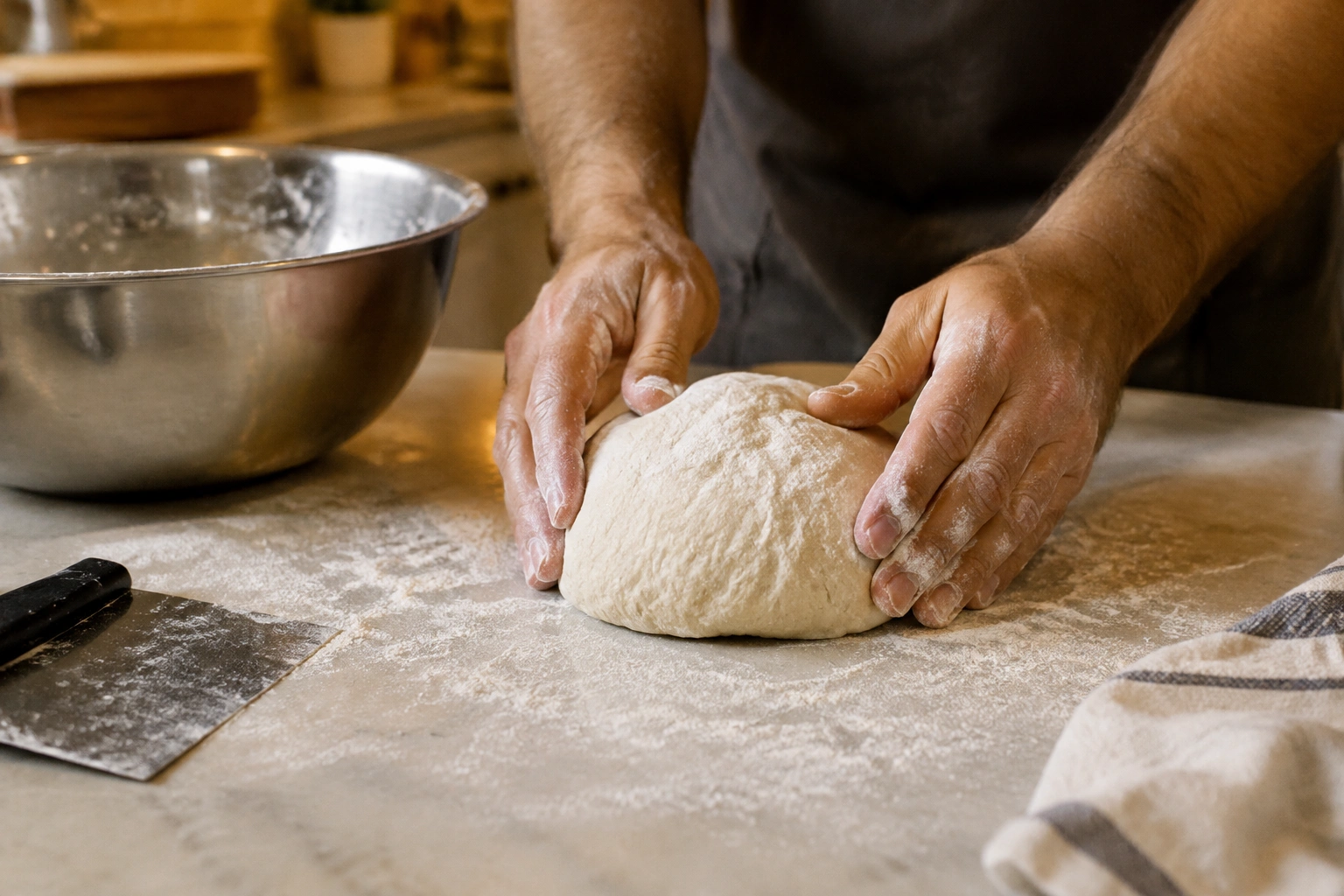
Hydration
All-purpose flour often behaves best with a slightly more conservative water approach than a strong bread flour dough. If a recipe already feels loose, do not rush to add more liquid. Start by holding back about 1 to 2 tablespoons of water per cup of flour in some doughs, then add only if the dough still feels dry after mixing and resting.
A dough that is too wet can spread, stick, and lose structure. A dough that is too dry can feel stiff and resist gluten development. The goal is a dough that is soft but still holds together.
Kneading
Because the gluten network is weaker, kneading matters. You may need a little more kneading than the recipe writer expected if the formula was developed with bread flour. The dough should become smoother, more elastic, and less sticky as it develops.
If you prefer folds over aggressive kneading, that can help too. Gentle stretch-and-folds during bulk fermentation can strengthen dough without overworking it. For example, a dough that feels slack after mixing may benefit from 2 to 3 stretch-and-fold rounds during the first hour of fermentation.
Handling
Use a light touch when shaping. Overhandling can flatten the gas the dough has worked hard to build. On the other hand, under-shaping can leave you with a loaf that spreads instead of rising.
A good balance is firm enough to build tension, gentle enough to preserve air.
Practical Examples: What to Expect in Common Recipes
Sandwich bread
This is one of the best places to use all-purpose flour. Expect a softer, more tender slice and a loaf that may be a little less lofty than bread flour versions. For toast or sandwiches, that is often a good trade.
Dinner rolls
All-purpose flour can be excellent here. Rolls are often improved by a softer crumb, and you usually do not need the same chew you would want in artisan bread.
Pizza dough
You can use all-purpose flour, but the crust may be less chewy and less resilient. If you like a softer crust, that may be fine. If you want a strong, bready chew, bread flour is usually better.
Simple yeast loaves
A basic white loaf or country loaf often works well with all-purpose flour, especially if you are not chasing a dramatic open crumb. Expect a bread that is pleasant, familiar, and slightly softer.
Sourdough
All-purpose flour can work, but the result is usually softer and less chewy than a bread flour sourdough. Some bakers prefer that. If you want a very strong, lofty sourdough with a bold chew, bread flour is usually the easier path.
Common Mistakes When Using All-Purpose Flour for Bread
Expecting bread-flour results
This is the biggest one. If you want the exact same chew, volume, and structure, you may be disappointed. All-purpose flour can make excellent bread, but it will not always make the same bread.
Adding too much water too quickly
A softer flour can make the dough feel different early on. Resist the urge to keep pouring in water. Too much hydration can leave you with a weak, sticky dough that is hard to shape.
Underdeveloping the dough
A weaker flour needs good technique. If you under-knead or under-fold, the loaf may spread, tear, or bake up dense.
Overworking the dough
Trying to force bread-flour behavior can backfire. If the dough is already soft, rough handling can make it slack and hard to shape.
Choosing the wrong recipe
If the formula depends on strong gluten, all-purpose flour may not be the best match. That is especially true for bagels and very chewy crusty breads.
If you want a deeper look at kneading mistakes and how dough behaves when pushed too far, this guide on can you over-knead bread dough is a helpful companion.
Troubleshooting: Fixing Dense, Weak, or Sticky Dough
If the dough is dense
Check whether you under-proofed, under-kneaded, or used too much flour during mixing. Dense bread is often a process issue, not just a flour issue.
If the dough is weak and spreads out
That usually means the gluten structure is not strong enough. Try more kneading, a longer rest, or a few stretch-and-folds during bulk fermentation. Next time, choose a recipe with a lower hydration or a stronger shaping structure.
If the dough is too sticky
Sticky dough can happen with all-purpose flour, especially in wetter recipes. Instead of dumping in lots of extra flour, dust lightly, rest the dough, and see whether the gluten improves. Sometimes the dough just needs time.
If the loaf lacks volume
The flour may simply be less supportive than bread flour, but proofing and shaping also matter. A loaf with poor surface tension or overproofing will lose height even if the flour is fine.
If the crumb is too tight
That can happen when the dough was too dry, too heavily floured, or not fermented enough. A slightly softer dough and better proofing usually help.
When to Use Bread Flour Instead
Choose bread flour when the bread really depends on strength.
That includes:
- Bagels
- Chewy pizza crust
- High-rise artisan loaves
- Breads where an open, elastic structure is a major goal
If the recipe was written to showcase chew, loft, or a very strong gluten network, bread flour is usually the safer choice. All-purpose flour can still produce a workable loaf for some of these breads, but the result is more likely to be acceptable than ideal. For bagels and very chewy artisan or pizza doughs, bread flour is strongly preferred.
FAQ
Can I substitute all-purpose flour for bread flour 1:1?
Yes, in many recipes you can. It is usually a good direct swap for sandwich bread, rolls, buns, and other softer breads. For chewier breads, the texture will usually change.
Should I add more water when using all-purpose flour?
Not always. If the dough already feels loose, start by holding back a little water and add only if needed. In some doughs, 1 to 2 tablespoons less water per cup of flour can help keep the dough manageable.
Will all-purpose flour make bread less chewy?
Usually, yes. It often makes a softer loaf with a more tender crumb and less chew than bread flour.
What breads are best with all-purpose flour?
Soft sandwich bread, dinner rolls, burger buns, soft buns, and many everyday yeast breads are good candidates.
When should I choose bread flour instead?
Use bread flour when you want strong structure, a chewy crust or crumb, or a loaf that needs more lift and elasticity, such as bagels or chewy pizza dough.
Final Takeaway
So, can you use all-purpose flour for bread? Yes — and in many breads, it works very well.
The key is to match the flour to the loaf you want. All-purpose flour is a strong choice for soft sandwich bread, rolls, buns, and many everyday yeast breads. It is less ideal when the recipe depends on extra chew and structure. If you understand that trade-off, you can bake confidently with what is already in your pantry and still get a loaf worth serving.