
Can You Over-Knead Bread Dough? A Practical Guide for Better Bread at Home

Yes — you absolutely can over-knead bread dough. It happens more often in a stand mixer than by hand, but it is possible either way.
That matters because kneading is supposed to build gluten strength and structure, not push the dough past its useful limit. When dough is overworked, it can become too tight, too elastic, and eventually too fragile to trap gas well.
Quick decision box:
– Yes, over-kneading is possible.
– Slightly over-kneaded dough can often still be baked successfully, especially as rolls, pan bread, focaccia, or pizza.
– Severely overworked dough is often better repurposed than forced into a tall loaf.
If you’ve ever watched dough go from smooth and promising to oddly sticky, warm, and slack after a long mix, you may have seen this happen in real time.
The good news: most home bakers can avoid over-kneading once they learn what dough should look and feel like at each stage. And if you do push it too far, there are still ways to salvage the batch.
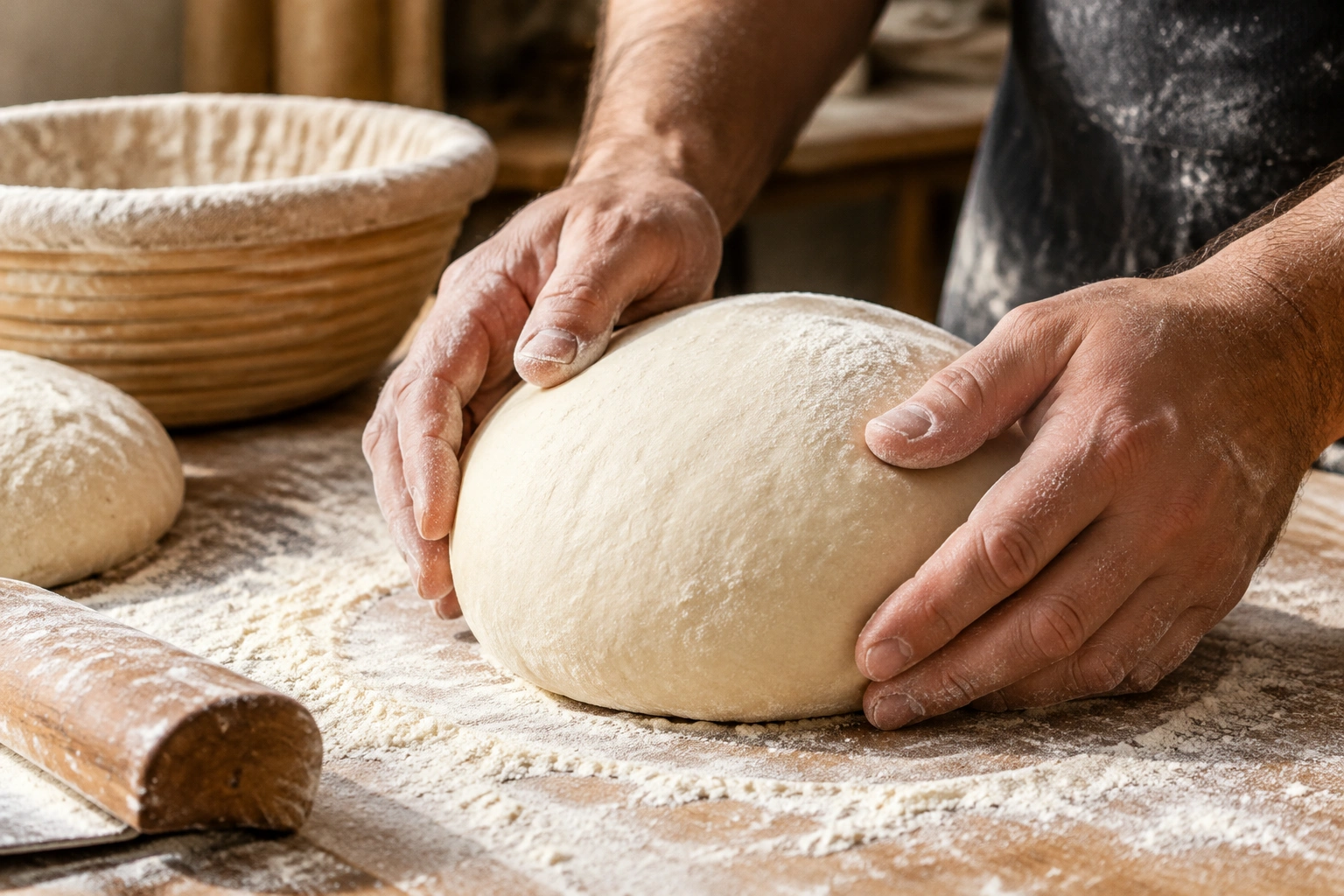
What Over-Kneaded Dough Actually Is
Kneading is a balancing act. At first, the dough feels rough and shaggy. As you knead, gluten proteins line up and form a network that gives bread its stretch and structure. That network needs enough development to hold gas, but not so much mixing that it becomes overly tight or starts breaking down.
Over-kneaded dough is dough that has been worked beyond the point of healthy gluten development. In practice, that often means the dough has been mixed or kneaded too long, especially in a stand mixer, even if it looked smooth partway through.
That distinction matters: overmixing is often the broader problem, while over-kneading is the end result you notice in the dough. With a mixer, the dough can be overworked before it ever feels obviously “done.”
Over-kneaded dough often becomes:
- too tight to stretch easily
- rubbery or springy to the touch
- prone to tearing in odd ways
- warm from friction, especially in a mixer
- less extensible, meaning it resists shaping and expansion
A useful mental model: properly kneaded dough is elastic and extensible. Over-kneaded dough may still be elastic, but it loses the relaxed stretch that lets it rise into a light loaf.
What Over-Kneaded Dough Looks, Feels, and Stretches Like
You do not need special equipment to spot trouble. Your hands and eyes tell you a lot.
Sensory signs to watch for
Over-kneaded dough often feels:
- very tight, almost like a rubber ball
- unusually smooth and shiny
- resistant when you try to stretch it
- warm from mixing
- springy in a way that fights your hands instead of following them
Visually, it may look deceptively “perfect” at first — smooth, polished, and well formed. That is one reason people miss it. Smoothness alone is not proof of proper kneading.
The stretch test gives a better clue. If the dough tears quickly after a few seconds of stretching, that can mean it is underdeveloped. If it stretches a little, then snaps back hard and refuses to relax, that can point to overdevelopment, or simply a dough that is too tight from mixing and needs a rest.
Under-kneaded vs over-kneaded: a sharper contrast
Beginners often confuse these two because both can behave badly.
- Under-kneaded dough: rough, uneven, and weak; it tears easily and tends to slump or spread.
- Over-kneaded dough: smooth but tight; it resists stretching, snaps back hard, and may feel warm or rubbery.
A simple example: if you stretch a small piece and it rips almost immediately, the dough is usually underdeveloped. If it stretches a little, then recoils like a rubber band and never really relaxes, it may be overworked or simply too tense right now.
What the windowpane test can and cannot tell you
The windowpane test is useful, but it is easy to misuse. A well-developed dough should stretch thin enough to let light through without tearing immediately. If the dough tears too soon, it probably needs more kneading or more rest.
But chasing a “perfect” translucent windowpane can lead you to keep kneading long after the dough is already ready. That is especially risky in a mixer. Once the dough passes the test and feels smooth, stop. More kneading is not automatically better.
Over-Kneaded vs Properly Kneaded vs Under-Kneaded Dough
Here’s a practical comparison you can use at the bench.
| Dough state | Feel | Stretch | Shape | Likely result |
|---|---|---|---|---|
| Under-kneaded | Rough, uneven, weak | Tears easily, little resistance | Slumps or spreads | Dense loaf, poor rise |
| Properly kneaded | Smooth but supple | Stretches thin, then holds | Elastic and cooperative | Good rise, even crumb |
| Over-kneaded | Tight, rubbery, warm | Snaps back hard or tears after fighting you | Very resistant | Tougher crumb, reduced oven spring |
The biggest difference is not just strength. It is balance. Proper dough can stretch and hold shape. Over-kneaded dough may have strength, but it lacks the relaxed extensibility needed for a lofty loaf.
Tools and Setup That Affect Kneading Results
Before you knead, a few practical details make a real difference.
Basic tools
- mixing bowl with enough room for the dough to move
- bench scraper or spatula
- clean hands for hand kneading
- stand mixer with dough hook, if using a machine
- kitchen scale if you want consistent flour and water measurements
Setup checks that matter
Mixer speed: Low speed is usually safer. High speed builds heat quickly and can overwork the dough.
Bowl size: A cramped bowl forces the dough to drag and twist more than it should.
Flour strength: Higher-protein flour generally develops stronger gluten and can handle more kneading than weaker flour, but that does not make it immune to overworking.
Hydration: A drier dough often feels stiffer and may tempt you to knead longer than necessary. A wetter dough can seem slack early on, then develop quickly.
Dough temperature: Warm dough is a warning sign in a mixer. Friction from the machine can raise the temperature enough to change how the dough behaves.
If you want a deeper guide to hydration and how it changes handling, this site’s bread dough hydration guide is a helpful companion piece.
How to Tell When Dough Is Kneaded Enough
This is the part that saves most bakers from trouble: stop using time as your main signal.
A recipe may say “knead 8 to 10 minutes,” but that is only a rough guide. The real cue is dough behavior.
Look for these signs of proper development
- the dough is smooth and cohesive
- it feels elastic but not stiff
- it stretches without tearing immediately
- it no longer looks shaggy or uneven
- it pulls away from the bowl more cleanly, though some doughs will still cling a bit
A simple decision rule
If the dough stretches thin, holds together, and feels supple, it is probably ready.
If it fights every movement and feels like a taut rubber band, stop and let it rest for a few minutes before deciding whether it truly needs more kneading. Sometimes dough only needs a short rest to relax, not more force.
How Long to Knead by Hand vs in a Stand Mixer
There is no universal minute count that works for every dough, but the method matters.
Hand kneading
Hand kneading usually gives you more tactile control. You feel resistance building, you notice when the dough smooths out, and you are less likely to overheat it. That is why over-kneading by hand is possible, but generally less common.
Practical check-in point: start checking after a few minutes, then every minute or two after the dough begins to smooth out. If it already feels elastic and passes a gentle stretch test, stop and let it rest before adding more kneading.
Stand mixer kneading
A stand mixer is faster and more efficient, but it can push dough past the ideal point more easily. The dough hook keeps working even after the dough has already developed enough strength, and friction can warm it quickly.
Practical check-in point: begin checking early, often after a few minutes of mixing, then continue in short intervals rather than letting the mixer run unattended. If the dough looks smooth and elastic, pause the mixer and test it instead of trusting the clock alone.
Practical takeaway
- Hand kneading: easier to sense when to stop
- Mixer kneading: easier to overdo, especially at higher speeds
- Both methods: use the clock only as a rough guide, not a command
How Different Dough Types Change the Risk
Not every dough behaves the same way.
Lean doughs
Lean doughs — the kind made mainly from flour, water, yeast, and salt — often tolerate kneading better than enriched doughs. They usually need enough work to build a strong gluten network, especially for sandwich loaves or artisan-style breads.
Enriched doughs
Doughs with butter, eggs, milk, or sugar behave differently. Fat and sugar can slow gluten development and make the dough feel smoother or softer even before it is fully ready. In a mixer, enriched doughs can go from underdeveloped to overworked faster than many bakers expect.
Brioche is a good example: it can seem sticky, then suddenly become glossy and firm if mixed too long.
Whole wheat doughs
Whole wheat flour brings bran and germ into the mix, and bran can interfere with gluten formation. That means whole wheat dough may not behave like white dough. It can feel rougher, need more rest, and tear sooner during stretching. Sometimes what looks like “not enough kneading” is really bran getting in the way, not true underdevelopment.
High-hydration and no-knead doughs
Very wet doughs are often handled with folds and rests instead of long kneading. For these doughs, the risk is usually not traditional kneading so much as overmixing or excessive folding.
No-knead dough is also a different process, not a true kneading style. In other words, it is designed to develop gluten with time and folds rather than repeated kneading, so the over-kneading concern is mostly about accidentally overmixing it at the start or handling it too aggressively later.
What Happens When Dough Is Over-Kneaded
When dough is overworked, the gluten network becomes too tight and less cooperative. The practical effects show up in the finished loaf.
In the dough
- reduced extensibility
- more resistance during shaping
- a warm, overmixed feel
- possible tearing instead of smooth stretch
In the baked bread
- less oven spring
- tighter crumb
- tougher chew
- a loaf that may slice poorly
- a crust that can feel hard relative to the interior
Bob’s Red Mill notes that over-kneaded dough can still be baked, but the result may be different than expected. It also points out that overworked dough can be repurposed into croutons or breadcrumbs: Bob’s Red Mill on over-kneaded bread dough.
That is the key trade-off: the dough may still be usable, but it may no longer be the right dough for the loaf you planned.
What to Do If You Think You’ve Over-Kneaded It
If the dough seems overworked, do not keep kneading while hoping it will magically improve. Use a simple decision path.
-
Stop the mixer or stop kneading immediately.
More mixing rarely helps a dough that already feels tight and warm. -
Let the dough rest briefly.
A short rest can help the gluten relax. Sometimes what feels over-kneaded is partly just a tense dough that needs a pause. -
Test the dough again with a gentle stretch.
If it now stretches more easily, it may simply have been tightened by mixing. -
If it still feels very tight, choose a lower-risk shape.
Smaller loaves, rolls, or pan bread are often more forgiving than a tall free-form loaf. -
If the dough is only slightly overworked, continue with proofing.
A modestly overmixed dough may still bake into acceptable bread, even if the crumb is less open than you wanted. -
If the dough is clearly damaged, repurpose it.
Focaccia, pizza, rolls, or breadcrumbs may be smarter than trying to force a lofty sandwich loaf.
When salvage is not worth it
If the dough stays very tight after a rest, tears badly when stretched, feels hot and greasy from overmixing, or seems so weak that it cannot hold shape at all, it is usually better to stop trying to rescue a tall loaf. At that point, repurposing is the practical choice.
Practical Rescue Options for Slightly Over-Kneaded Dough
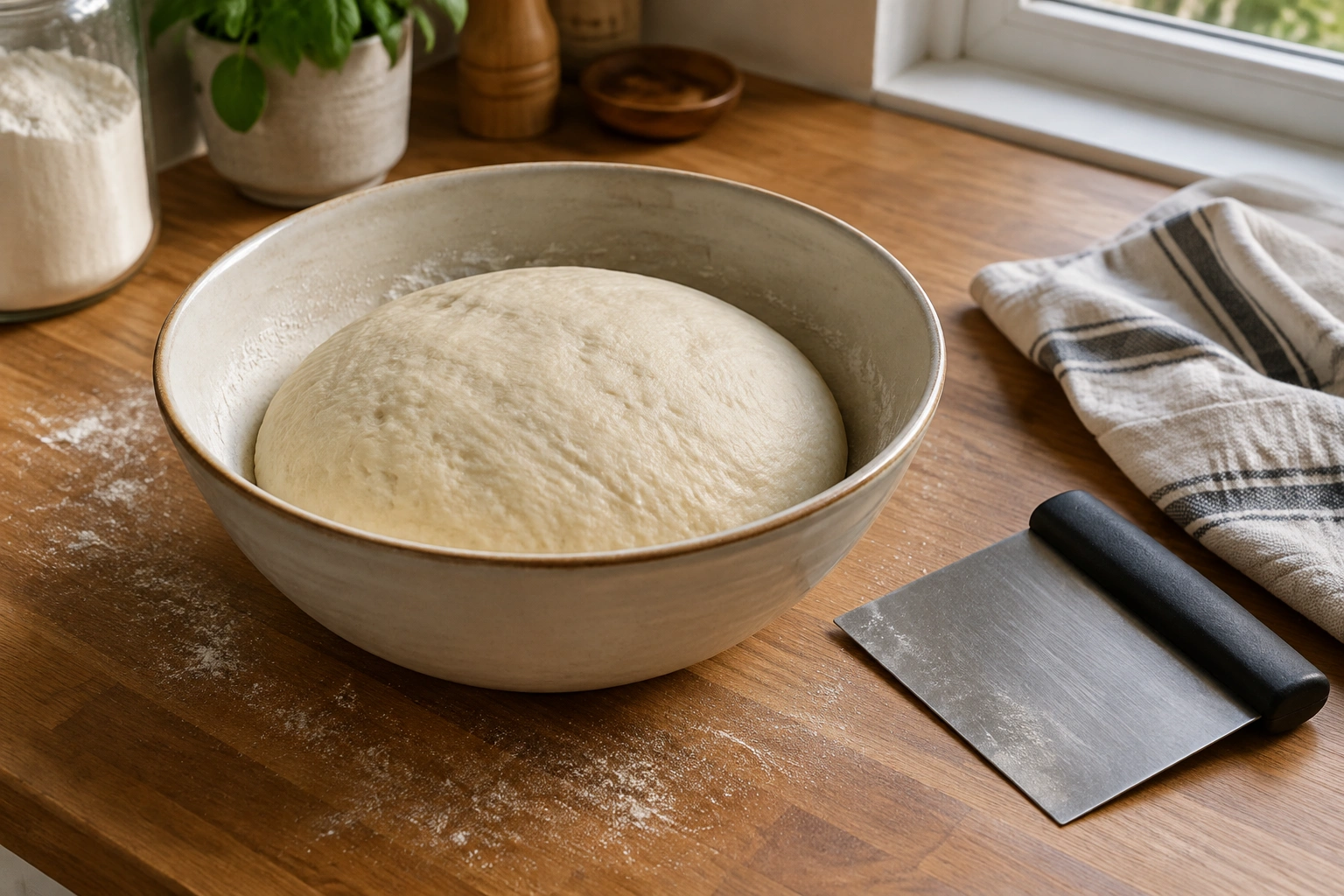
If the dough is only a little too tight, these are your best bets:
-
Let it rest, then shape gently.
Resting can reduce tension enough to make shaping easier. -
Make rolls instead of one large loaf.
Smaller pieces need less dramatic oven spring and are more forgiving. -
Bake it in a pan.
Pan support helps a less extensible dough hold its shape. -
Turn it into focaccia or pizza.
Flat breads tolerate a tighter dough better than tall sandwich loaves. -
Use it for breadcrumbs or croutons if the crumb is truly disappointing.
That is not failure; it is smart repurposing.
The goal is to match the dough’s current condition to a format it can still handle.
Common Mistakes That Lead to Over-Kneading
A few habits cause most of the trouble.
Relying on time alone
A recipe timer is a guide, not a guarantee. Dough temperature, flour strength, hydration, and mixer speed all change the kneading timeline.
Mixing on high speed
Higher speed increases friction and heat. That can accelerate gluten development but also push the dough past its best point.
Chasing a perfect windowpane
The windowpane test is useful, but some bakers keep kneading long after the dough is already ready because they want a dramatic result. The dough does not need to be ultra-thin if it is already elastic and well developed.
Ignoring dough temperature
Warm dough is often a sign that the mixer has done enough work for now. If the bowl and dough feel noticeably warmer than when you started, take that seriously.
Applying one kneading rule to every dough
A lean sandwich dough, a brioche, and a whole wheat loaf do not need the same treatment. That is where many home bakers get tripped up.
Troubleshooting: Symptom, Likely Cause, and Next Step
| Symptom | Likely cause | Best next step |
|---|---|---|
| Dough tears immediately and feels rough | Under-kneaded | Knead a little longer, then recheck |
| Dough is smooth but very tight and springy | Possibly over-kneaded or over-tightened from mixing | Rest briefly and retest |
| Dough feels warm and sticky after mixer use | Friction and overmixing | Stop mixing, cool briefly, then assess |
| Dough stretches a bit, then snaps back hard | Excessive gluten tension | Rest the dough before shaping |
| Dough seems sticky but has no real strength | Overmixed in a machine or poorly developed | Stop mixing and evaluate whether to reshape or repurpose |
This table is especially useful when the dough is confusing. Many doughs are not obviously “bad”; they are just caught between stages.
How to Prevent Over-Kneading Next Time
A few habits make the biggest difference:
- knead on lower mixer speeds
- check the dough earlier than you think you need to
- use the windowpane test as a checkpoint, not a finish line
- let the dough rest if it feels tense
- pay attention to warmth in the bowl
- adjust expectations for enriched, whole wheat, and high-hydration doughs
If you want a fuller breakdown of proper hand and mixer technique, this guide on how to knead bread dough pairs well with this article.
Real-World Examples: What This Looks Like in Practice
Sandwich bread in a stand mixer
A home baker mixes white sandwich dough for “just a few extra minutes” after it already looks smooth. The dough becomes very tight and warm. It may still rise, but the loaf is more likely to bake up dense and less airy than planned. In that case, a pan loaf or rolls are safer than a tall free-form loaf.
Brioche that turns rubbery
An enriched dough may seem sticky at first, then become glossy and firm after long mixing. If the dough starts resisting stretch instead of relaxing, it may be overmixed. Resting helps, but if the structure is already strained, smaller shapes or pan baking are often the wiser move.
Whole wheat dough that seems “off”
A whole wheat dough may tear sooner than expected because bran is interfering with gluten, not because it is over-kneaded. The fix may be a rest, not more force. This is where many bakers accidentally make the problem worse by kneading harder instead of pausing.
When to Consult a Master Baker
If you are making dough for a class, a bake sale, or a professional kitchen and the texture is consistently confusing, a second set of experienced hands helps. A master baker can tell the difference between a dough that needs more development, a dough that needs rest, and a dough that has already gone too far.
That kind of judgment comes from seeing many doughs behave under different flour, mixer, and temperature conditions. When the stakes are high, that perspective is worth having.
Final Thought
So, can you over-knead bread dough? Yes — and the risk is real, especially in a stand mixer. But the fix is not to fear kneading. It is to learn what properly developed dough feels like, stop when the dough tells you it is ready, and use rest as a tool instead of forcing more mixing.
Once you can read dough by touch, stretch, and temperature, kneading stops feeling like a guessing game and starts feeling like craft.