How to Bake Successfully in a Humid Climate: Practical Fixes for Better Texture and Consistency
Humidity changes more than comfort in the kitchen. It changes how flour behaves, how sugar clumps, how butter softens, and how quickly dough or batter reaches the point where it should stop being mixed. If you bake in a coastal climate, a rainy season, or a kitchen that stays warm and damp for much of the year, the same recipe can act differently from one day to the next.

The good news is that humid-weather baking is manageable once you know what to watch for. You do not need to rewrite every recipe. In most cases, the fix is a small adjustment in measurement, handling, storage, or timing. The goal is not to fight humidity everywhere at once. It is to keep moisture from sneaking into your ingredients and to avoid overcorrecting when a dough feels softer than expected.
How Humidity Changes Baking Results
Moist air affects baking in a few predictable ways.
Flour can absorb moisture from the air, which changes how it feels before you even add liquid. Sugar is also moisture-sensitive, so it can clump or feel sticky. Butter softens faster in a warm, humid kitchen, which can weaken structure in cookies, pastry, and laminated doughs. Eggs and other wet ingredients can also make batters feel looser if the dry ingredients have already picked up moisture.
Humidity usually changes ingredient behavior in two directions:
- High humidity can make flour feel heavier or clumpier, sugar sticky, butter softer, and doughs slacker.
- Low humidity can make flour drier, sugar freer-flowing, and doughs or batters feel firmer or thirstier than usual.
That is why humid-weather problems often show up as sticky dough, spreading cookies, dense cake, or bread that seems slack and hard to shape. The recipe may still be sound. The environment has changed the balance.
For a reliable pantry baseline, the USDA’s food storage guidance is a useful reminder that dry ingredients need protection from moisture, pests, and temperature swings. In baking, “dry” really means dry.
What to Adjust First: Liquid, Flour, Mixing, and Measurement
When a recipe feels off in humid weather, do not reach for every fix at once. Make the smallest change that addresses the symptom.
Use the batter or dough itself as your guide
If a cake batter looks unusually loose, or a cookie dough spreads before chilling, a slight liquid reduction may help. If the dough is sticky but still holds together, a small amount of added flour can make it workable. The key is to adjust gradually. Add a little, mix briefly, and reassess.
A practical rule of thumb:
- Reduce liquid first when the batter or dough is clearly looser than the recipe intends, such as pourable cookie dough, runny muffin batter, or dough that cannot hold a basic shape.
- Add flour first when the mixture is cohesive but tacky, soft, or difficult to handle, such as bread dough that sticks to the bench or cookie dough that spreads too quickly.
- Chill instead of adjusting ingredients when the dough is soft mainly because butter is warm, the room is hot, or the recipe is meant to firm up before shaping.
That caution matters because too much flour creates a different problem: dry cake, tough cookies, and dense bread. Overcorrecting is one of the easiest ways to turn a humidity issue into a texture issue.
Prefer weight over volume when humidity varies
A kitchen scale gives you more consistent results than cups, especially when flour and sugar are affected by moisture. Volume measurements can vary depending on how packed the ingredient is, how humid the pantry feels, and how you scoop. Weight does not solve every humidity problem, but it removes one major source of inconsistency.
If you bake the same dough every week and it behaves differently in humid weather, compare one batch made by cups with one made by weight. The scale usually wins when consistency matters.
Change mixing only when the dough says so
Sticky dough often tempts bakers to keep mixing until it feels “fixed.” That can backfire. Extra mixing can develop gluten more than intended, especially in cakes and tender pastries. In humid conditions, stop and evaluate before you keep going. If the dough is merely soft, chilling may be a better answer than adding more flour.
| Situation | Best first move | Trade-off |
|---|---|---|
| Batter is loose or thin | Reduce liquid slightly next time | Too much reduction can dry out the bake |
| Dough is sticky but holds shape | Add flour in small increments | Too much flour makes baked goods heavy |
| Dough is soft because butter is warm | Chill the dough or ingredients | Adds waiting time |
| Results vary from batch to batch | Switch to a kitchen scale | Requires weighing ingredients |
| Cookies spread too much | Chill the dough | Adds waiting time |
| Dough is only slightly tacky but workable | Avoid adding more flour right away | The dough may improve after a short rest |
How to Store Ingredients in a Humid Kitchen
Humidity does not stop affecting ingredients after you close the pantry door. Flour, sugar, leaveners, and even cocoa powder can pick up moisture if they are stored loosely or near the stove.
Use airtight containers for flour and sugar, especially if you bake often but not daily. A container with a tight seal protects ingredients better than the original paper bag. Good options include seal-top canisters, gasket-sealed pantry jars, or lidded food-storage tubs that close firmly. Keep baking powder and baking soda sealed as well. If they absorb moisture, they can lose reliability, which affects rise and texture.
Some ingredients need extra attention in humid conditions:
- Flour: Store in a sealed container away from heat and steam. Whole-grain flours and nut flours can be especially vulnerable because they are more prone to staleness and off flavors.
- Sugar: Granulated sugar can clump if exposed to moisture. Brown sugar can harden or form lumps, so keep it tightly sealed; a moisture-safe container helps more than leaving it in the paper bag.
- Baking powder and baking soda: These are moisture-sensitive and should stay tightly closed. If they sit open in a humid pantry, they may not perform as reliably.
- Yeast: Keep it sealed and dry. Once opened, follow the package directions for storage and use it before it loses strength.
- Butter: Refrigerate or freeze as needed so it does not soften too quickly in a warm, damp kitchen.
- Eggs: Keep them refrigerated if that is standard for your region and kitchen setup, and let them come to the temperature your recipe calls for only when you are ready to bake.
A practical pantry habit is to portion out only what you need and return the rest immediately to storage. Leave flour open on the counter while measuring other ingredients, and it will start absorbing room moisture before you finish the recipe.
For ingredients you use infrequently, label containers with the purchase date and store them away from heat sources. A warm pantry near the oven is a poor place for anything that needs to stay dry and stable.
Technique Changes That Improve Results in Humid Weather
The right handling steps can matter as much as the ingredient ratios.
Chill when spreading or softness is the problem
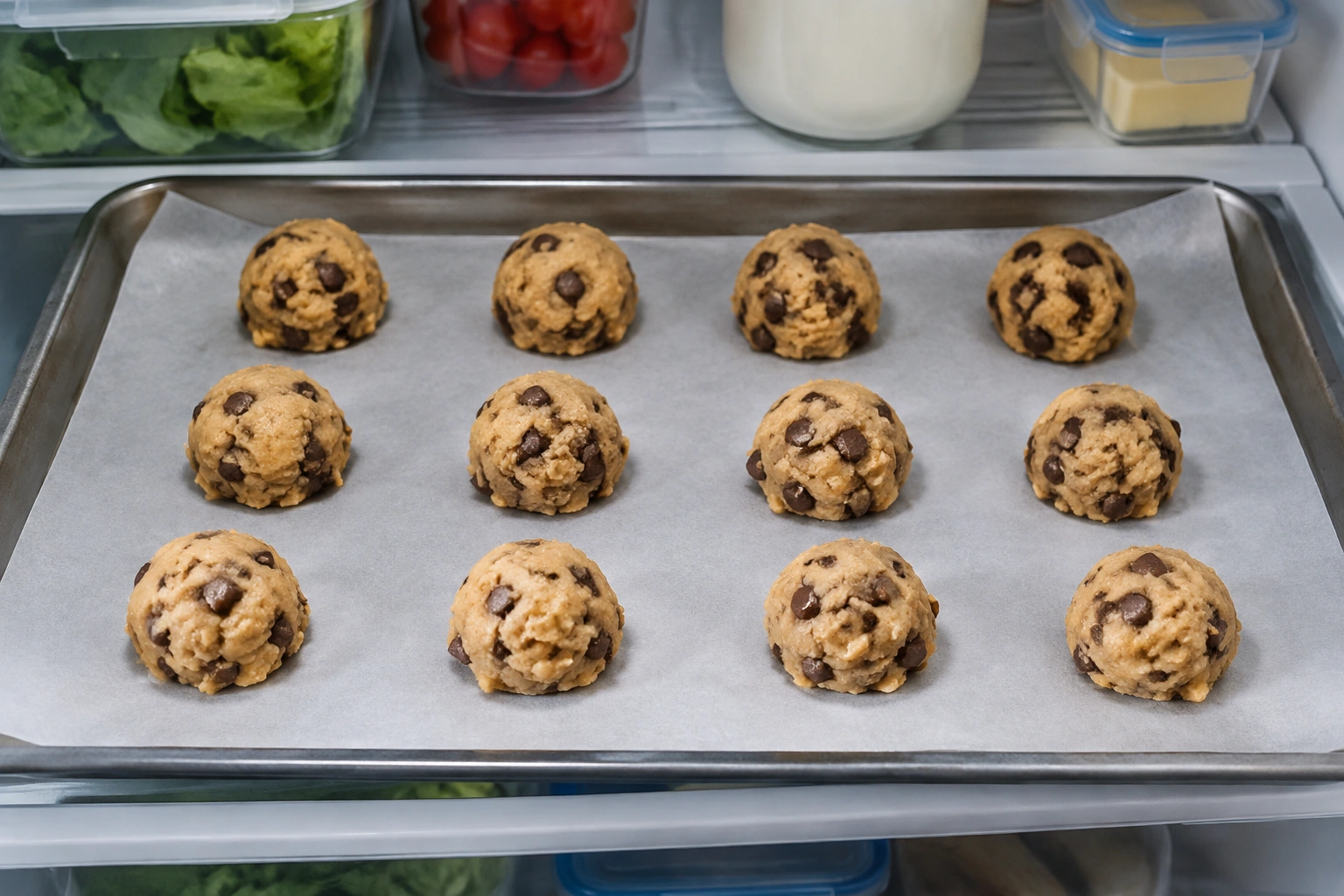
Chilling dough helps firm butter and reduce spreading. That is especially useful for cookies, tart dough, and laminated pastry. If the kitchen is warm and humid, dough can soften quickly on the counter, even if the recipe was mixed correctly.
One useful workflow change is to shape or roll the dough first, then chill it if the recipe allows. That can make it easier to cut, move, and bake cleanly. The point is not to chill everything automatically. It is to chill when the dough is losing structure faster than you can work with it.
For doughs that benefit from immediate oven heat, such as some quick breads or batters that rely on a fresh rise, baking right away is often better than waiting too long. For cookies, pastry, pie dough, and many enriched doughs, chilling is usually the safer choice when the dough feels too soft.
Manage butter temperature carefully
Butter that is too warm can make cookie dough greasy and pastry dough harder to handle. Butter that is too firm can prevent proper creaming in cakes. In humid weather, the window between those two states gets narrower.
If your kitchen is especially warm, cut butter into smaller pieces and monitor it closely. If it softens too quickly, pause and cool the dough rather than forcing the mix to continue.
Preheat fully and bake to doneness cues
Give the oven enough time to stabilize, and rely on visual cues and doneness checks instead of the clock alone.
For a deeper look at oven setup and rack placement, this guide on baking cookies on two racks evenly can help when you are managing multiple trays in a busy kitchen.
Humidity-Specific Tips by Baked Good
Different bakes react to humidity in different ways. A single fix does not fit all of them.
Cakes
Cakes are sensitive to both excess moisture and overmixing. If the batter feels looser than usual, resist the urge to add a large amount of flour. That can make the crumb tight or dry. Instead, check whether your butter is too soft, whether your flour was stored in a humid pantry, and whether the batter was mixed longer than needed.
If a cake bakes with a gummy center, humidity may be part of the problem, but so can underbaking or a pan that is too small. Use the recipe pan size and test doneness carefully.
Cookies
Cookies often spread more in humid weather because butter softens faster and dough can feel looser. Chilling helps. So does measuring flour by weight instead of cups. If the dough still seems slack after chilling, add flour slowly, a spoonful at a time, until it holds shape.
Avoid turning cookie dough into a stiff mass just to stop spreading. That usually produces dry, crumbly cookies instead.
Bread
Bread dough can feel stickier in humid weather because flour has already absorbed moisture from the air. That does not always mean it needs a lot more flour. Add enough to make the dough manageable, not dry. Too much flour makes bread dense and can reduce oven spring.
If your dough is difficult to shape, let it rest briefly. A short rest can make a sticky dough easier to handle without forcing in extra flour.
Pastry
Pastry is the most sensitive to warm, humid conditions because butter must stay cold enough to create structure. If the dough softens before shaping is complete, chill it. If the room is extremely warm, work in shorter sessions and keep the dough moving between the counter and refrigerator.
Rolling pastry on a lightly floured surface helps, but excess bench flour can toughen the final crust. Use just enough to prevent sticking.
Common Humidity Problems and How to Fix Them
Sticky dough
Sticky dough is common in humid weather, but sticky does not always mean wrong. First check whether the dough should be soft. If it should be firmer, chill it before adding much flour. If it still clings after resting, add flour gradually.
Flat cookies
Flat cookies usually point to butter that was too soft, dough that was too warm, or a recipe that needs chilling in humid weather. If you bake immediately after mixing, test one batch chilled and one unchilled to compare texture. The chilled batch often holds shape better.
Dense cake
Dense cake often comes from overmixing, too much flour, or a batter that was adjusted too aggressively to “fix” humidity. Measure accurately, mix only until combined, and avoid piling on flour because the batter feels unusual.
Poor rise
Poor rise can come from leaveners that have picked up moisture, especially if they were stored loosely. It can also happen when dough or batter is too heavy from extra flour. Check storage first before changing the recipe.
Soggy texture
A soggy texture often means the bake was removed too early, the oven was not fully preheated, or the recipe was adjusted too loosely with extra liquid. Humid weather can make the outside look finished before the center is set, so test carefully before pulling the bake.
How to Control the Kitchen Environment
You do not need a laboratory kitchen, but stable conditions help.
Air conditioning lowers temperature and can make butter, dough, and batter easier to manage. A dehumidifier is more direct if moisture is the main issue. If the kitchen is hot and sticky, air conditioning is usually the better first choice because it addresses both heat and humidity. If the room is already a comfortable temperature but still damp, a dehumidifier is often the more practical tool. In very damp conditions, a dehumidifier can help a lot, but it is best thought of as one part of the solution rather than a guaranteed fix.

Use timing strategically too. Bake when your kitchen is coolest and least busy if your schedule allows it. Keep bowls, pans, and ingredients covered until you need them.
If you want a practical comparison, think of air conditioning as helping with temperature control and a dehumidifier as helping with moisture control. Many bakers use both when conditions are difficult, but even one of them can improve consistency.
A Simple Humid-Weather Baking Checklist
Before you begin, run through this short checklist:
- Measure flour and sugar by weight if possible.
- Keep dry ingredients sealed until needed.
- Check that butter is cool, not greasy.
- Decide whether the dough needs chilling before baking.
- Preheat the oven fully.
- Avoid adding extra flour too quickly.
- Watch for dough or batter that is softer than usual.
- Test doneness carefully instead of relying on appearance alone.
When to Consult a Pastry Chef
If you are baking something delicate, such as laminated pastry, macarons, or a formula that fails repeatedly despite careful measuring, a pastry chef can help you separate recipe issues from environmental ones. That is especially useful when humidity is high every day, not just during a temporary weather shift, because the solution may involve workflow changes rather than a single ingredient fix.
Baking Well in Humid Weather Is Mostly About Control
Once you understand what humidity changes, the process becomes much less mysterious. Protect ingredients from moisture, measure more precisely, adjust only as needed, and use chilling or environmental control when the kitchen itself is working against you. That approach gives you better texture, better rise, and fewer surprises from one bake to the next.