
How to Clean an Air Fryer Basket After Baking Without Damaging the Coating
Baking in an air fryer is convenient, but the cleanup can be less forgiving than the recipe itself. Butter, sugar, and fine crumbs tend to cling to the basket and tray, and if you clean them the wrong way, you can wear down the nonstick surface faster than necessary.
The safest approach is simple: let the basket cool, clear out loose debris, then wash it gently with warm water, dish soap, and a soft sponge. If residue is stubborn, use a short soak or a baking soda paste instead of reaching for abrasive tools. That keeps cleanup effective without scratching the coating or forcing grease deeper into the surface.
Quick Answer: The Safest Way to Clean an Air Fryer Basket After Baking
For routine cleanup, wait until the basket is cool enough to handle comfortably, remove crumbs, then wash the basket and tray by hand with warm water and mild dish soap. Use a soft sponge or microfiber cloth, not steel wool or a rough scrub pad.
If you baked something rich, like a butter-heavy loaf or a sticky cinnamon pastry, a short soak may help loosen residue before washing. The goal is to loosen residue, not grind it off. That distinction matters because nonstick coatings hold up best when you clean them with patience rather than pressure.
Are Air Fryer Baskets Dishwasher Safe? What to Check Before You Wash is a useful companion guide if you are unsure whether your model can handle the dishwasher.
Let the Basket Cool Before You Clean It
An air fryer basket should be allowed to cool before washing. That is partly about safety, since hot grease and steam can burn your hands, but it also helps protect the basket itself.
A hot basket can be more vulnerable to sudden temperature changes. Waiting a short while also makes residue easier to handle. Melted butter, sugar drips, and baked-on crumbs are less likely to smear when the basket is warm rather than scorching hot.
A good rule: if you would not comfortably hold the basket with bare hands, it is too soon to wash it.
Remove Crumbs and Loose Debris First
Before you add water, tip the basket over the sink or trash and shake out loose crumbs. If there is a crisper plate or tray insert, remove it and clear that too.
This step sounds small, but it prevents a common problem: crumbs turning into greasy paste once water hits them. That paste is harder to rinse away and more likely to require scrubbing. For pastry cleanup, this matters most after items like muffins, hand pies, or anything with a sugary topping that sheds dry bits before it cools.
If crumbs are stuck in corners, use a dry microfiber cloth or a soft brush to lift them out. Avoid poking at the basket with a knife, fork, or skewer. Sharp tools can nick the coating and create spots where residue collects later.
Wash the Basket by Hand with Warm Water, Dish Soap, and a Soft Sponge
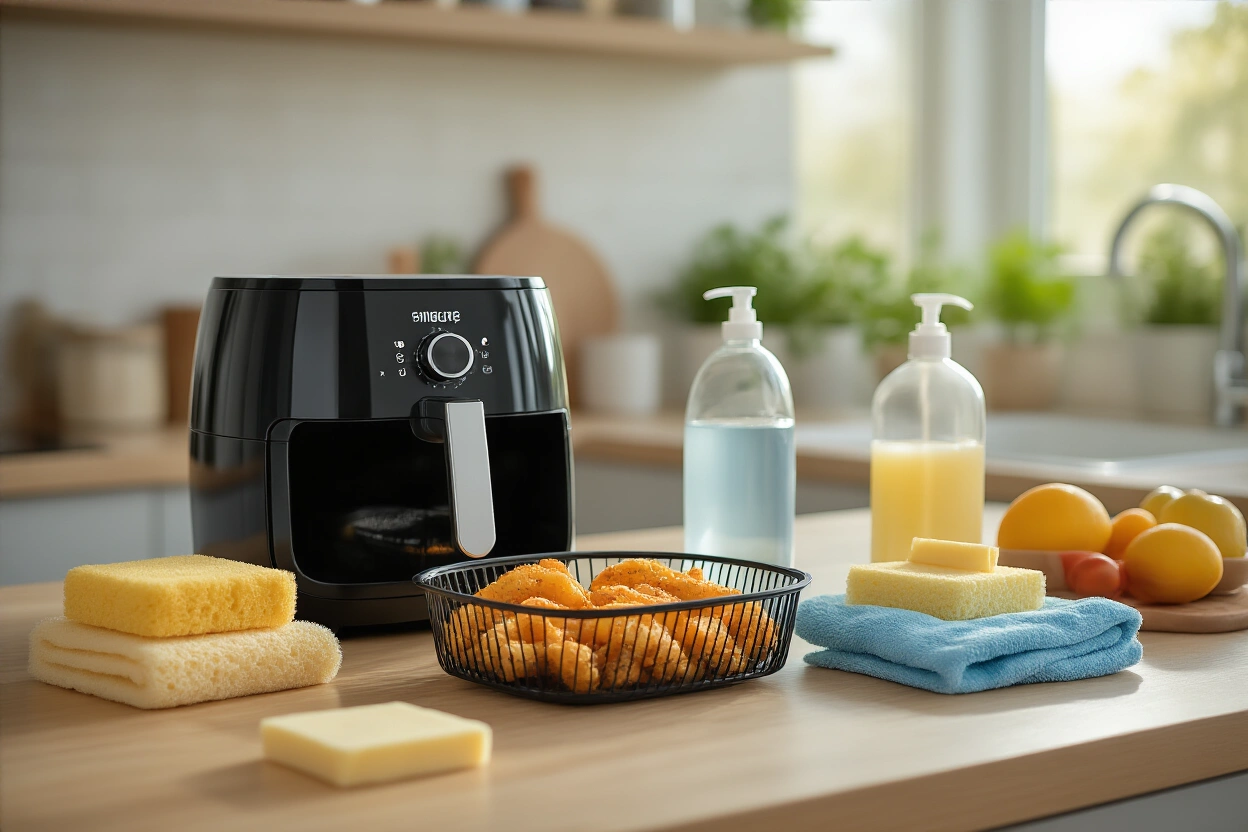
For most after-baking cleanup, hand washing is the most reliable method. It gives you control, protects the finish, and works well for grease, flour dust, and light baked-on residue.
Here is a practical routine:
- Let the basket cool enough to handle comfortably.
- Remove loose crumbs and any tray or insert.
- Fill the sink or a basin with warm water and a small amount of mild dish soap.
- Wash the basket, tray, and any removable inserts with a soft sponge or microfiber cloth.
- Rinse well so no soap film remains.
- Dry the parts completely before reassembling them.
Warm water helps loosen butter and sugar residue without being harsh. Dish soap is usually enough for normal grease from baking, especially if you clean soon after the basket cools. A microfiber cloth is especially useful on nonstick surfaces because it lifts residue without dragging grit across the coating.
If the basket has a textured surface or tight corners, a soft-bristled brush can help, but keep the pressure light. Think of cleaning as lifting residue away, not polishing the basket.
When dish soap is enough
Dish soap alone usually handles:
– light grease from pastries
– a few crumbs after baking
– thin butter residue
– flour dust or dry batter flakes
When you may need more than dish soap
If residue feels tacky, browned, or hardened, dish soap may need help from a short soak or a paste. That is common after baked goods with sugar glaze, butter-rich dough, or filling that bubbled over.
How to Handle Stuck-On Grease, Sugar, or Baked-On Residue
Sticky residue is usually a mix of sugar, fat, and flour. Once it cools, it can form a film that resists a quick wipe. The safest response is to loosen it first.
Try a brief soak before scrubbing
If the manufacturer allows soaking, fill the basket with warm water and a little dish soap, then let it sit briefly. That can soften baked-on spots enough that they wipe away with minimal pressure.
Use soaking as a loosening step, not a long bath. Prolonged soaking is not ideal for every model, especially if the basket has multiple materials or a coating that needs extra care. If you are not sure, check the manual first.
Use baking soda paste for greasy patches
For spots that stay behind after washing, a baking soda paste can help. Mix a little baking soda with just enough water to make a spreadable paste, then apply it to the greasy area. Let it sit briefly, then wipe it away with a soft sponge.
This works well on browned grease marks or sticky areas that formed after baking pastries or enriched doughs. Baking soda adds gentle abrasion, but it is still milder than harsh scrubbers. Use it sparingly and avoid rubbing hard.
Choose the method based on the residue
- Light grease: dish soap and warm water
- Sticky sugar residue: brief soak, then soft sponge
- Browned grease spots: baking soda paste, then gentle wiping
- Burnt-on patch: soak first, then repeat with a soft cloth rather than scraping
If residue still does not move, repeat the soak or paste rather than increasing pressure. Force is what usually damages nonstick coatings.
Can You Put an Air Fryer Basket in the Dishwasher?
Check the manual first. If the manufacturer says the basket, tray, or drawer is dishwasher-safe, you can use the dishwasher. If it is not listed as dishwasher-safe, hand wash only.
That direct rule matters because air fryer parts are not built the same way. Dishwasher heat, detergent, and water pressure may be fine for one model and unhelpful for another, so the manual should always decide. For general care, hand washing is still the safer default for coated parts unless the instructions say otherwise.
Here is the practical trade-off:
| Cleaning method | Safety for nonstick coating | Effectiveness on grease | Best use case |
|---|---|---|---|
| Hand washing | Usually gentlest | Very good for routine cleanup | Most baking cleanup, especially coated baskets |
| Dishwasher | Model-specific | Good for dishwasher-safe parts | Fast cleanup when the manual allows it |
| Soaking | Usually gentle if brief | Helpful for stuck-on residue | Sticky sugar, butter, or baked-on spots |
| Baking soda paste | Gentle if used lightly | Stronger on greasy buildup | Residue that survives soap and water |
For a deeper look at what makes one basket more dishwasher-friendly than another, see what to check before washing air fryer baskets in the dishwasher.
Clean the Tray, Crumb Area, and Interior Around the Basket
The basket is only part of the cleanup. Crumbs and grease often settle in the tray, drawer, or the area where the basket sits, and leaving that buildup behind can cause odors or sticky residue next time you bake.
Remove the tray or crisper plate and wash it separately. Check the corners, edges, and underside, where butter drips often collect. If your air fryer has a crumb tray or drawer base, wipe that area with a damp cloth and a little dish soap, then dry it well.
This is especially useful after repeated baking sessions. Even if the basket itself looks clean, a thin film of grease in the base can smoke, smell stale, or attract more residue the next time you use the appliance.
If you are trying to protect the coating long term, this is also a good moment to inspect for scratches or worn spots. Why air fryer baskets scratch so easily explains what that wear can mean and how to reduce it.
Rinse, Dry Thoroughly, and Reassemble Safely
Once the basket and tray are clean, rinse them well. Soap left behind can leave a filmy feel and may attract more grime later.
Dry every part completely with a clean towel or microfiber cloth. Pay attention to seams, corners, and the underside of inserts, where water tends to hide. If you put parts back while they are still damp, you may trap moisture in the drawer or create a musty smell.
A practical finishing step is to leave the parts out for a few minutes after towel-drying, especially if the basket has grooves or a removable plate. That small pause helps ensure hidden moisture is gone before reassembly.
What Not to Use on a Nonstick Air Fryer Basket
Some cleaning tools make residue disappear quickly, but they do so by removing part of the coating or leaving scratches behind.
Avoid these on nonstick surfaces unless the manufacturer specifically says otherwise:
– steel wool
– abrasive scrub pads
– metal spatulas or knives for scraping
– harsh oven cleaners
– bleach-heavy or aggressive chemical cleaners
– stiff brushes that feel scratchy to the touch
The reason is simple: nonstick coatings are designed to release food, not withstand aggressive abrasion. Once the surface becomes rough, grease and crumbs cling more easily, which makes future cleanup harder.
If you are tempted to scrape off a burnt patch with a metal tool, stop and soak instead. Patience is safer than creating a permanent scratch.
How Often to Deep-Clean an Air Fryer Basket After Baking
A quick wash after each use is usually enough for light baking. A deeper clean makes sense when residue starts to build up, when the basket feels tacky after washing, or when you notice lingering odors.
A deeper clean is especially useful after:
– several back-to-back baking sessions
– buttery or sugary bakes that leave a film
– a spill that browned in the basket
– repeated use without cleaning the tray or drawer base thoroughly
You do not need to deep-clean every time. In fact, over-cleaning with strong methods can be harder on the coating than the residue itself. Use the basket’s condition as your guide. If it still feels smooth and clean after a normal wash, that is enough.
Simple Habits That Make Future Cleanup Easier
A few small habits can save time later.
Line up cleanup with the baking process itself. Once the basket cools, remove crumbs right away instead of letting them sit overnight. Wash the basket and tray together so grease does not dry in one part while you clean another. If your model allows it, use removable inserts or liners only when approved by the manufacturer, since the wrong liner can interfere with airflow or leave residue behind.
It also helps to wipe the basket sooner after rich bakes. A thin butter film is much easier to remove the same day than after it hardens. That is especially true for pastries with glaze, filling, or sugary topping.
For sticky ingredients in general, clean, accurate methods for measuring sticky ingredients without a mess can also reduce spills before they reach the basket.
Troubleshooting: When to Repeat Soaking, Use Baking Soda Paste, or Deep-Clean
If residue is still there after one wash, do not increase pressure right away.
- Repeat soaking when the residue is still sticky, greasy, or softened but not fully removed.
- Use baking soda paste when you see browned grease, a tacky film, or small patches that cling after washing.
- Deep-clean the basket and surrounding parts when buildup keeps returning, the basket feels filmy after cleaning, or you notice residue in corners, seams, or the drawer base.
If a spot still will not budge, that usually means it needs another gentle pass rather than a harder scrub. Buildup that keeps returning is also a sign to clean the tray, drawer, and surrounding parts more thoroughly so residue is not transferring back to the basket.
Final Takeaway
The best way to clean an air fryer basket after baking is also the simplest: let it cool, remove loose crumbs, wash gently by hand, and only escalate to a brief soak or baking soda paste when residue needs extra help. Protecting the nonstick surface should guide every choice. If you clean with that in mind, the basket stays easier to maintain, and your next bake starts from a cleaner surface.


