
How to Convert an 8-Inch Cake Recipe to a 9-Inch Pan Without Guesswork
If you have an 8-inch cake recipe and only a 9-inch round pan, the cleanest conversion is to scale the recipe up by about 1.26, or roughly 1 1/4 times. That is the practical bottom line for keeping the cake close to the same thickness.
Why that number? A 9-inch round pan has about 26% more surface area than an 8-inch round pan, so it needs more batter to fill to the same depth. If you use the recipe unchanged, the cake will still bake, but it will be thinner and usually finish sooner.
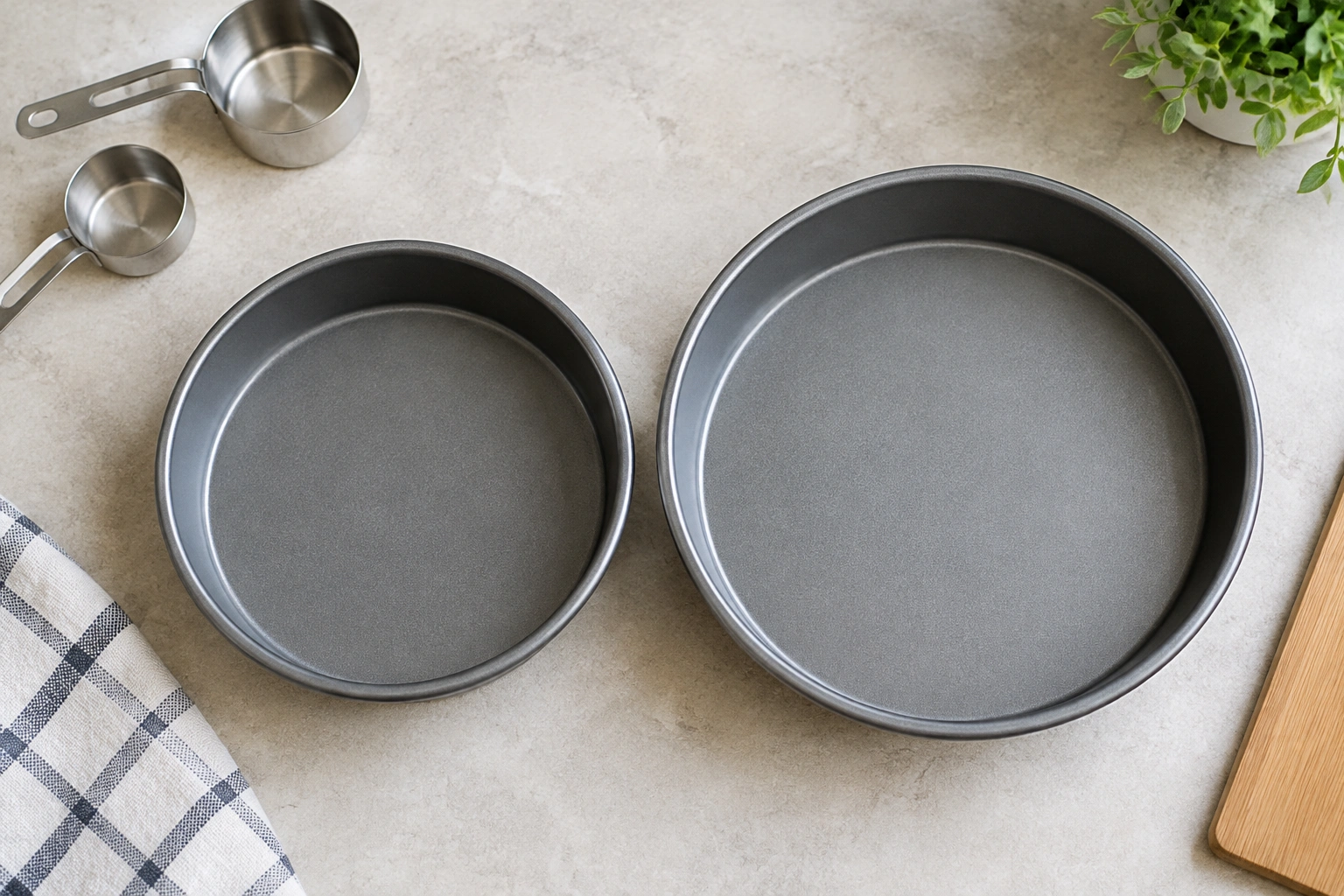
A simple way to think about it:
- Want the same height and structure? Scale the recipe up by about 26%.
- Okay with a thinner cake layer? You can bake the recipe as written in the 9-inch pan and adjust the bake time.
Quick comparison: 8-inch vs. 9-inch round pans
| Pan size | Relative area | Ingredient scaling | What happens to the cake |
|---|---|---|---|
| 8-inch round | 1.00 | Baseline | Standard thickness for the recipe |
| 9-inch round | 1.26 | Multiply ingredients by 1.26 | Same thickness if scaled; thinner if not |
That table is the heart of the conversion. Once you understand the area change, the rest of the decision becomes much easier.
Why pan size changes the cake
Cake batter spreads across the bottom of the pan. When the pan is wider, that same amount of batter covers more surface area, so the layer becomes shallower.
That affects three things at once:
- Height — less batter depth means a shorter cake layer.
- Texture — thinner layers often bake a little faster and can dry out sooner if overbaked.
- Timing — the center has less distance to travel before it sets, so the cake usually needs less time in the oven.
This is why pan size matters even when the recipe itself looks unchanged. A small difference between 8 inches and 9 inches may not sound dramatic, but in baking math it is meaningful.
The math behind the conversion
For round pans, the easiest way to compare capacity is by surface area.
Use the circle formula:
Area = πr²
- 8-inch round pan: radius = 4 inches
Area = π × 4² = 16π ≈ 50.3 square inches - 9-inch round pan: radius = 4.5 inches
Area = π × 4.5² = 20.25π ≈ 63.6 square inches
Now divide the larger pan by the smaller one:
63.6 ÷ 50.3 ≈ 1.26
That is why the conversion factor is 1.26. In practical terms, you multiply every ingredient in the recipe by 1.26 to keep the cake layer close to the original thickness.
This ratio assumes round pans of the same height. If the pans are very deep or very shallow, the amount of batter they can safely hold may differ even if the diameter is the same.
A simple example
If your 8-inch recipe uses:
- 2 cups flour
- 1 cup sugar
- 3 eggs
- 1 cup milk
A proportional 9-inch version would need about:
- 2.5 cups flour
- 1 1/4 cups sugar
- 4 eggs if the recipe is already close to a whole-egg count, or a carefully measured egg amount if precision matters
- 1 1/4 cups milk
For dry ingredients, this is straightforward. For eggs, it can be a little less tidy, so weighing ingredients is often the most accurate approach. If you want a more precise method for dry ingredients, this guide on how to convert cups of flour to grams can help.
How to scale the ingredients correctly
The safest method is to scale the entire recipe proportionally. That means increasing flour, sugar, fat, liquid, leavening, and flavorings by the same factor so the formula stays balanced.
Use 1.26 when you want the same cake thickness
This is the best choice when:
- the recipe was written for one 8-inch round layer
- you want that same layer height in a 9-inch pan
- the cake is part of a layer cake and consistency matters
Round carefully, but not randomly
In real kitchens, you do not need to chase impossible precision. A multiplier of 1.26 is close enough for most home baking. If a measurement becomes awkward, round it sensibly:
- 1.26 cups becomes 1 1/4 cups
- 1.26 teaspoons becomes a slightly rounded 1 1/4 teaspoons
- 1.26 tablespoons becomes 1 tablespoon plus a little extra
The key is consistency. Do not increase only the flour, or only the liquid, because that can change the cake’s structure.
When a full scale-up is worth it
A full scale-up makes the most sense when the cake’s appearance matters, such as:
- a single-layer celebration cake
- a layer cake where both pans should bake to the same thickness
- a recipe that is already close to the pan’s capacity
If you are baking a casual snack cake and do not mind a thinner layer, you may choose not to scale. But that is a texture decision, not a conversion rule.
When you can use the 8-inch recipe unchanged
You can bake the 8-inch recipe in a 9-inch pan without adjusting the ingredients, but the result will be thinner. That can be useful if you want:
- a shorter layer for stacking
- a quicker bake
- a cake with a thinner crumb for slicing into squares or wedges
The trade-off is simple: less height, less margin for error, and a greater chance the cake will finish earlier than the recipe suggests.
This is also where many bakers get tripped up. They see the same oven temperature and assume the same timing applies. It usually does not.
How full to fill a 9-inch cake pan
For most cake batters, fill the pan only partway so the batter has room to rise without spilling over. A practical target is to fill the pan to about two-thirds full unless the recipe says otherwise.

That guideline is helpful, but it is not universal. The ideal fill level can change based on recipe type and pan depth. A deeper 9-inch pan can safely hold more batter than a shallow one, and batters that rise a lot may need more headroom than dense batters.
A useful check before baking
After pouring the batter, look at the side of the pan:
- If the batter sits very low, the cake will be thin.
- If the batter comes too close to the rim, there is a spill risk.
- If it looks roughly two-thirds full, you are usually in a safe range for a standard cake layer.
For a two-layer cake, divide the scaled batter evenly so each pan has a similar depth. Uneven batter amounts can lead to layers that bake at different speeds and stack unevenly.
How bake time changes in a 9-inch pan
A larger pan does not automatically mean a longer bake. In fact, if you use the 8-inch recipe unchanged, the thinner batter in the 9-inch pan will often bake faster, not slower.
That is the part home bakers often miss.
If you scale the recipe up
If you increase the batter to preserve thickness, the bake time may stay closer to the original recipe, though you should still check early because ovens vary.
If you use the recipe unchanged
Expect the cake to finish sooner than the original timing suggests. A thinner layer gives heat quicker access to the center, so the cake can go from underdone to overbaked faster than you expect.
Check earlier, not just longer
Use the recipe’s time as a guide, then start checking 5 to 10 minutes early if the batter layer is thinner than the original recipe intended. A toothpick or skewer in the center is still the simplest test. Also watch for:
- edges that begin to pull slightly from the pan
- a center that springs back when gently touched
- a top that looks set rather than wet
If you are using a darker or thinner pan, the cake may brown faster, so early checking becomes even more important.
Should you change the oven temperature?
Usually, no. For a straightforward 8-inch to 9-inch pan conversion, the safer adjustment is bake time, not oven temperature.
Keeping the temperature the same helps preserve the recipe’s structure. Changing temperature and pan size at the same time makes it harder to know what caused the final result.
When to keep the temperature unchanged
Keep the oven temperature the same when:
- you are only changing from an 8-inch round pan to a 9-inch round pan
- the recipe is otherwise unchanged
- you want the most predictable result
When to be more cautious
If the cake layer is noticeably thinner, begin checking for doneness earlier than usual. The temperature can stay the same, but the cake may be ready sooner.
That approach is more reliable than lowering or raising the temperature on instinct.
Practical conversion examples
Example 1: One 8-inch layer to one 9-inch layer
Suppose a recipe makes one 8-inch round cake layer. To bake it in a 9-inch pan and keep the same thickness, multiply every ingredient by 1.26.
That gives you enough batter to preserve the original height and crumb structure.
Example 2: Two 8-inch layers to two 9-inch layers
If the recipe makes two 8-inch layers, scale the full recipe by 1.26, then divide the batter evenly between the two 9-inch pans.
This keeps both layers close to the original thickness, which matters for stacking and frosting later.
Example 3: Baking the recipe unchanged in a 9-inch pan
If you use the 8-inch recipe as-is in a 9-inch pan, the cake will be thinner. That can be fine for a casual single-layer cake, but you should expect:
- a shorter cake
- a faster bake
- a greater risk of overbaking if you follow the original timing too long
This option is practical when you want simplicity and do not need the original height.
Common mistakes to avoid
1. Assuming the difference is too small to matter
An inch sounds minor, but the area increase is significant. A 9-inch pan needs more batter than an 8-inch pan if you want the same layer depth.
2. Scaling only part of the recipe
If you increase the flour but forget the liquids and fat, the cake’s balance changes. Scale the full formula together.
3. Overfilling the pan
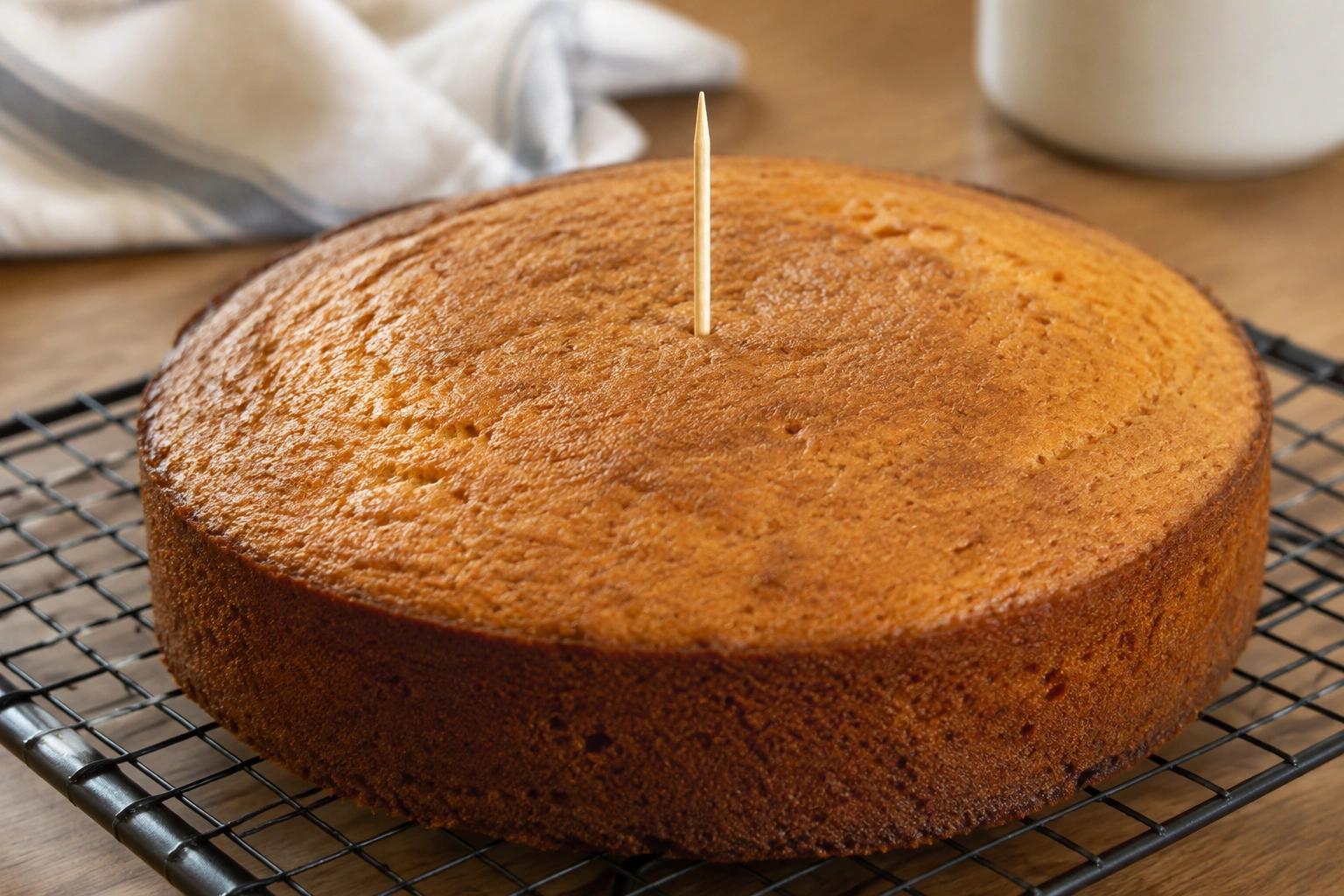
A bigger pan does not mean “pour everything in without checking.” Batter can still rise and spill, especially with recipes that contain chemical leaveners.
4. Relying only on the original bake time
A thinner layer may finish early. A scaled-up layer may still need the full time or a little more. Check for doneness rather than trusting the clock alone.
5. Expecting the same height without adjusting batter
If you keep the 8-inch batter amount in a 9-inch pan, the cake will be thinner by design. That is not a failure; it is the expected result of the larger pan.
A simple decision rule you can use
If you want the same cake thickness, multiply the 8-inch recipe by 1.26 and keep the oven temperature the same.
If you are fine with a thinner cake, bake the recipe unchanged in the 9-inch pan and begin checking early for doneness.
That is the practical fork in the road.
Optional expert help for delicate or large-scale cakes
If your cake is part of a layered dessert, a wedding cake, or a recipe with very delicate structure, optional help from a pastry chef can be useful for scaling it more precisely. That can be especially helpful when the recipe uses unusual pan heights, multiple fillings, or a batter that is sensitive to small formula changes.
For everyday home baking, though, the 1.26 rule is a reliable place to start.
FAQs
How much batter do I need for a 9-inch pan if the recipe is for an 8-inch pan?
For the same cake thickness, use about 26% more batter than the 8-inch recipe makes. In practice, that means multiplying the recipe by 1.26.
Can I use the 8-inch recipe unchanged in a 9-inch pan?
Yes, but the cake will be thinner. It will also usually bake faster than the original recipe timing.
Do I need to change the oven temperature?
Usually no. Keep the temperature the same and adjust your bake time and doneness checks.
Will the cake bake faster or slower in a 9-inch pan?
If you use the same amount of batter in the larger pan, the cake is thinner and will usually bake faster. If you scale the batter up to preserve thickness, the timing may stay closer to the original recipe.
How full should I fill the 9-inch pan?
A common guideline is about two-thirds full, unless the recipe gives a different fill level. That leaves space for the cake to rise without overflowing, but pan depth and recipe type can change the ideal amount.
Does this work for layer cakes?
Yes. For layer cakes, scale the full recipe by 1.26 if you want each 9-inch layer to match the thickness of the original 8-inch layers.
What if my recipe uses very precise measurements?
If accuracy matters, weigh the ingredients after scaling. That is especially helpful for flour, sugar, and eggs, where small rounding differences can affect the final texture.
Is it ever okay not to scale up?
Yes, if you want a thinner cake or a shorter layer for a specific purpose. Just treat it as a deliberate change in cake height, not as a full conversion.

