
How to Fix Cookies That Are Raw in the Middle Without Ruining the Batch
You pull a tray of cookies from the oven, and the edges look right: golden, set, maybe even a little crisp. But when you break one open, the center is soft, shiny, or plainly doughy. That is one of the most frustrating cookie problems because it can mean two very different things: the cookies are simply underbaked, or they were always meant to stay soft.
The good news is that many batches can still be saved. The key is to diagnose the problem quickly, then use the least aggressive fix that will set the center without turning the edges too dark.
Why Cookies Turn Out Raw in the Middle
When cookies brown on the outside before the center sets, the issue usually comes down to heat moving unevenly through the dough. A few common causes show up again and again.
The cookies were too large or too thick
Bigger cookies need more time for heat to reach the center. If you scoop generously and bake them as if they were standard-size cookies, the outside can finish long before the middle does. Thick dough behaves the same way, especially if the dough was packed tightly or shaped into tall mounds.
A classic example is a chocolate chip cookie that spreads very little. The edges look ready, but the center stays puffed and soft because the cookie is simply too thick for the bake time used.
The oven ran hot or unevenly
An oven that runs hotter than the dial says can brown the edges before the center has a chance to set. Hot spots can create the same problem in one part of the tray while another part bakes normally. If this happens often, an oven thermometer can help you check whether the actual temperature matches the setting.
The pan encouraged fast browning
Dark baking sheets absorb and transfer heat faster than lighter ones, so bottoms and edges can color quickly while the center still looks underdone. Thin pans can do this too. Parchment paper helps with release and can slightly soften browning, but it will not fix an oven that is too hot.

The dough was chilled very cold
Cold dough often needs more time in the oven than room-temperature dough. That is not a flaw; it is just slower heat transfer. If you bake chilled dough straight from the fridge, the outside may set before the center has warmed enough.
If you want a deeper look at chilling and spread, this guide on how long to chill chocolate chip cookie dough is useful for understanding why cold dough behaves differently.
The sheet was overcrowded
When cookies are packed too closely, heat and airflow become less even. That can make some cookies overbrown on the edges while others lag in the center. It also makes it harder to judge doneness by color alone because each cookie bakes in slightly different conditions.
How to Tell If the Center Is Truly Raw or Just Soft
This distinction matters. A soft cookie can be fully baked. A raw center is a different problem.
A properly baked soft cookie usually has:
- Edges that look set and no longer glossy
- A center that is soft but not wet
- A surface that looks matte instead of shiny
- A cookie that firms up a bit as it cools
A truly raw center usually looks and feels different:
- Shiny or wet-looking dough in the middle
- A center that collapses when touched lightly
- A gummy, paste-like texture when broken open
- Doughy streaks or an obviously uncooked interior
A simple way to tell the difference is to let the cookie cool first, then press the center lightly with a fingertip. A soft-baked cookie should feel tender but springy, and it should hold together without leaving a wet impression. A truly underbaked cookie often feels sticky, squishy, or gummy even after cooling, and the center may smear instead of breaking cleanly.
If you are unsure, give the cookies a few minutes on the hot baking sheet first. That short rest can help the center finish setting after the tray comes out of the oven. A cookie that looks almost done may finish setting during that rest. A cookie that still looks wet after cooling slightly probably needs more oven time.
Can You Eat Underbaked Cookies If the Problem Is Only Texture?
Sometimes, yes. If the dough was made with ingredients that are safe to eat and the issue is only that the cookie is softer than you wanted, an underbaked cookie may be more of a texture problem than a safety problem. But if the center is visibly raw dough, especially with egg or flour that has not been fully baked, it is better to finish baking it before eating.
Can You Save Cookies That Are Still Warm?
Yes, usually. Warm cookies are the easiest to rescue because the dough is already hot and the oven can finish the job without starting from scratch.
Rescue method for warm underbaked cookies
-
Leave the cookies on the baking sheet.
Do not move them to a cooling rack yet. The sheet helps them keep baking. -
Return the tray to the oven quickly.
Use the same temperature unless the edges are browning too fast. -
Bake in short increments.
Check them every 1 to 2 minutes rather than committing to a long extra bake. You want the center to set, not the edges to harden. -
Watch the surface, not just the color.
When the center loses its shine and looks more matte, you are close. -
Let the cookies rest again before moving them.
The center can finish setting as they sit on the hot pan.
If the tray already sat out long enough to cool completely, the rescue is still possible, but it is less efficient. Warm cookies respond better because the dough is already partway through the baking process.
What not to do
Do not raise the temperature sharply just to force the center to finish. That usually darkens the edges before the middle catches up. A gentler extension is safer for most cookie styles.
What to Do If the Cookies Have Already Cooled
Once cookies cool, the outside firms up and the center sets more. That makes them harder to judge and harder to rescue.
If the center is only slightly underbaked, you can still return cooled cookies to the oven. The fix is less elegant, but it works in some cases. Place them back on a baking sheet and warm them long enough for the center to firm up. Check every 1 to 2 minutes so you do not overbake the edges.
If the center is still visibly doughy after cooling, that is a sign the batch needs more baking time, not just more resting. In that case, rewarm them carefully and check often. If the edges are already quite dark, the remaining cookies may be better repurposed rather than pushed much further.
When cooled cookies are not worth chasing
If the cookies are large, thick, and already browned on the outside, repeated rebaking can dry out the exterior before the center sets. At that point, you are often better off accepting a softer middle or using the batch in another way, such as crumbling them into a dessert topping.
How Much Longer to Bake Without Drying Them Out
The safest approach is usually to add time in small steps instead of guessing a full extra bake. That is especially true when the edges are already browned.
A practical method:
- Add 1 to 2 minutes.
- Check the center.
- Repeat only if needed.
That gives you control over the trade-off between a set middle and a dry cookie. If you extend the bake too much at once, the edges can become hard before the center fully cooks.
Use the center as your guide
The center should lose its wet shine first. The cookie may still look soft, and that is fine. What you want to avoid is a center that still appears glossy and loose. Once the center looks set, pull the tray and let the cookies rest on the pan for a few minutes before moving them.
Soft but baked is not the same as raw
A soft cookie can be done. In fact, many cookie styles are meant to stay tender in the middle. The mistake is assuming every soft center needs a longer bake. If the cookie holds its shape, looks matte in the middle, and no longer looks wet, it may already be finished.
Should You Lower the Temperature or Just Bake Longer?
This is one of the most useful decisions to make, and it depends on what went wrong.
Bake longer when the cookies are close
If the cookies are already browned and only the center is lagging, extending the bake slightly is the cleaner fix. This works best when the oven temperature seems roughly right and the batch is only a little underdone.
Lower the temperature when the edges brown too fast
If the outside is darkening before the center sets, the oven may be too hot for that recipe, or the pan may be too aggressive. Lowering the temperature can help the heat reach the middle more gradually. The trade-off is time: the cookies may need longer overall, but they are less likely to burn on the edges.
Conventional versus convection ovens
Convection ovens usually bake faster because moving air transfers heat more efficiently. That can be helpful for even baking, but it can also push cookies toward overbrowned edges if you use the same setting as a conventional oven. If your oven has a convection mode, follow the recipe or manufacturer’s guidance for that setting rather than assuming the timing will stay the same.
How Cookie Size, Thickness, and Spacing Affect Doneness
The shape of the dough controls how heat moves through it. That means portioning matters as much as the recipe.
Oversized scoops need more time
If you want bakery-style large cookies, you usually need to give them longer in the oven. A standard timing for smaller cookies will leave the center underdone in a large scoop.
For the next batch, try one of these adjustments:
- Reduce each scoop by about 1 tablespoon if the cookies are coming out too thick for the bake time.
- Keep the scoops more uniform so the batch bakes evenly.
- If you want to keep the same large size, plan on a longer bake and check the first tray closely.
Thick dough bakes differently from spread-out dough
Some doughs are designed to stay thick. Others spread more. If your dough is very cold or heavily mixed, it may hold its shape too well and need extra time. That is not always a problem, but it does mean you need to adjust expectations.
For especially thick cookies, try flattening the dough slightly before baking, or give them a little more space so the heat can reach the center more evenly. If the cookies are still raw in the middle next time, space them farther apart and add a few extra minutes rather than baking a crowded tray at the same timing.
Spacing affects airflow
Crowded cookies can bake unevenly because the hot air cannot move freely around each piece. Give the dough enough room so each cookie can bake as its own portion, not as part of a crowded cluster.
How Oven Problems Cause Uneven Baking
If every batch comes out with browned edges and raw centers, the oven itself may be part of the problem.
Start with the easiest checks first
If you suspect the oven, work through the problem in this order:
-
Confirm the recipe timing and rack position.
Make sure you are using the recommended rack and not baking too high or too low. -
Check whether the oven seems to be running too hot or too cool.
If the same recipe keeps baking too fast or too slowly, the oven setting may not match the actual heat. -
Look for hot spots.
If one side of the tray always browns faster, rotate the pan partway through baking. -
Adjust one variable at a time.
Change the temperature, rack position, or pan type separately so you can tell what helped.
An inaccurate oven temperature can mislead you
Many home ovens do not hold temperature perfectly. If the thermostat is off, the dial may say one thing while the oven behaves differently.
Hot spots change the outcome across the tray
One side of the oven may run hotter than the other. If cookies on the back right corner always finish sooner, you are likely dealing with a hot spot. Rotating the tray during baking can help, but it is a workaround, not a cure.
Rack position matters
A middle rack usually gives the most balanced heat for cookies. Too high, and the tops can color too fast. Too low, and the bottoms may brown before the centers finish.
How to Know When Cookies Are Done Next Time
The best cue is not color alone. Brown edges are useful, but they are not enough.
Look for these signs together:
- The edges are set
- The center no longer looks wet
- The top has lost its shine
- The cookie feels set when nudged gently on the pan
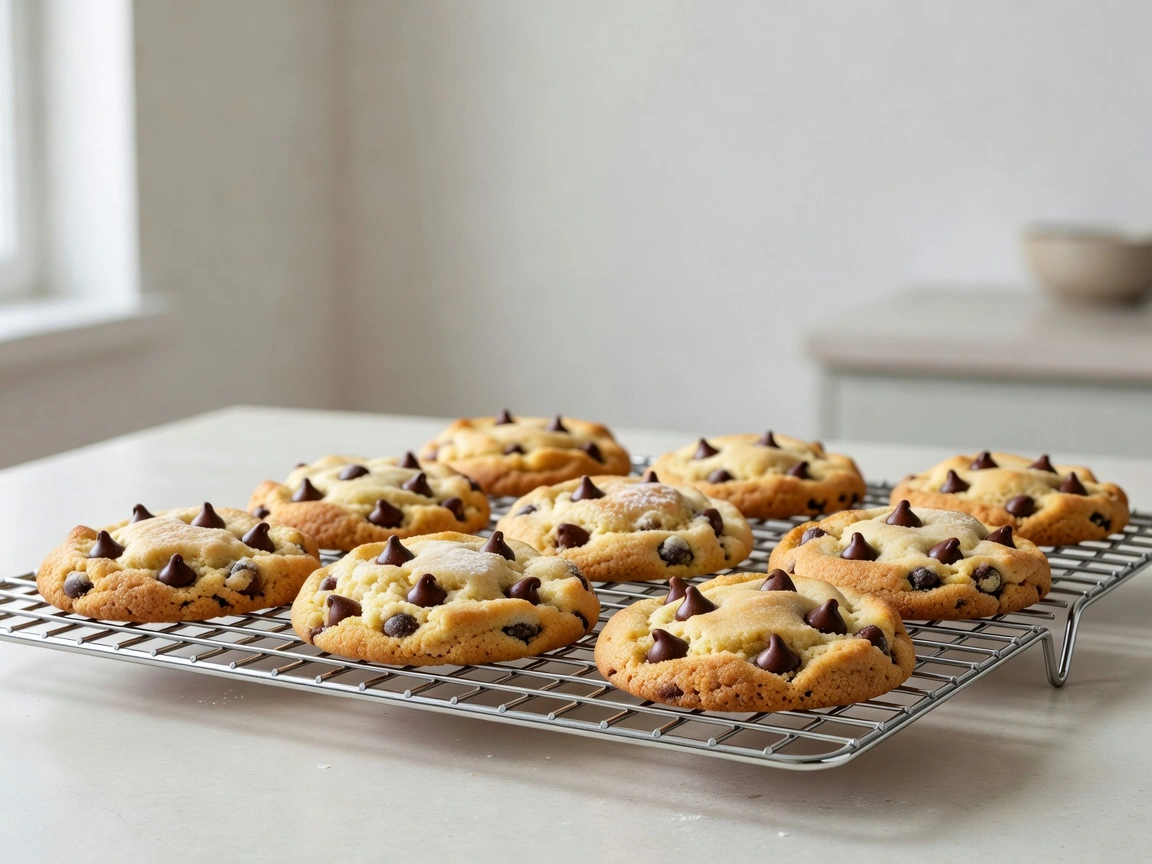
If you bake by appearance only, you are more likely to pull the tray too early. If you bake by time only, you risk overbaking. The most reliable approach is to combine both: use the recipe time as a guide, then check the visual cues.
When Cookies Are Beyond Saving
Some batches can be rescued. Some cannot be fixed without making the texture worse.
A batch may be beyond saving if:
- The centers are still obviously raw after reasonable extra baking
- The edges are already too dark
- The cookies are very large and dense
- Multiple rescue attempts have dried the outside without setting the middle
At that point, it is usually better to stop pushing the batch. You may still use the cookies in crumbs, trifle layers, or other desserts, but they may not be pleasant as whole cookies.
How to Prevent Raw Centers in Future Batches
Once you have handled the current tray, the next step is to make the problem less likely next time.
Preheat fully
Do not rush the oven. A partial preheat can cause the first tray to bake unevenly because the oven walls and air have not stabilized yet.
Use an oven thermometer
This is one of the simplest ways to troubleshoot repeated underbaking. If your oven runs cool, you can compensate. If it runs hot, you can avoid overbrowned edges and raw centers.
Match portion size to bake time
If you want larger cookies, plan for them. If you want a standard bake, keep the scoops consistent so each cookie finishes at the same pace.
Track one change at a time
If you change the temperature, pan type, and cookie size all at once, it becomes hard to know what fixed the issue. Adjust one variable, then note the result. That habit makes future batches much easier to control.
Quick Comparison: Best Fix for the Situation
| Situation | Best next move | Why it helps |
|---|---|---|
| Cookies are still warm and the center is shiny | Return the tray to the oven briefly | Warm dough finishes more easily |
| Cookies have cooled but are only slightly underbaked | Rewarm carefully in short checks | Gives the center time to set without overbrowning |
| Edges brown fast but center stays raw | Lower heat next time or use a lighter pan | Slows edge browning so the middle can catch up |
| Cookies are too thick or oversized | Increase bake time or reduce portion size next batch | Heat needs more time to reach the center |
| Every batch bakes unevenly | Check oven temperature and hot spots | The oven may be the real source of the problem |
| Cookies are soft but matte and set | Leave them alone | They may already be properly baked |
When to Consult a Pastry Chef
If you have tried the usual fixes and the same problem keeps returning, a pastry chef or baking instructor can help you diagnose the recipe and oven together. That is especially useful when you are working with a cookie formula that should bake through but consistently does not, or when your oven seems to behave unpredictably no matter how you adjust the timing.
For most home bakers, though, the solution is straightforward: check whether the cookies are truly raw or just soft, rescue warm trays with short extra baking, and make one controlled adjustment for the next batch.
Frequently Asked Questions
Can I put underbaked cookies back in the oven after they cool?
Usually yes, if they are only slightly underbaked. They are easier to save while still warm, but cooled cookies can sometimes be finished with careful reheating.
Should I lower the temperature or bake longer?
If the edges brown too fast, lower the temperature next time. If the cookies are already close to done, a little more time is often enough.
How do I know if the center is raw?
Raw centers usually look shiny, wet, or doughy. A soft but baked center looks matte and may still feel tender even after cooling.
Why do my cookies brown on the edges but stay soft in the middle?
That usually points to cookies that are too thick, too large, baked too hot, or affected by an oven that runs unevenly.
Do convection ovens change cookie baking?
Yes. Convection can change how quickly cookies bake, so recipes may need some adjustment.

