
How to Get a Shiny Crust on Brownies: A Baker’s Guide to the Crackly Top
If you’ve ever cut into brownies and found a dull, matte surface instead of that thin, glossy, crackly top, you’re not alone. The shiny crust is a brownie trait many bakers look for because it gives the pan a polished, bakery-style finish: a delicate top layer that shatters slightly when sliced, with a fudgy interior underneath.
The good news is that this finish is usually not about one “magic” ingredient. It comes from a combination of sugar, eggs, fat, and mixing technique. Once you understand how those pieces work together, you can make brownies with a shinier top much more consistently.
What actually creates the shiny, crackly brownie crust?
The crust forms when a thin, sugar-rich layer rises to the surface and sets during baking. As you mix the batter, some of the sugar dissolves into the egg mixture and starts to blend with the fat. In the oven, the eggs’ proteins coagulate and the surface sets into a thin film. That film is what turns glossy and then crackly as the brownies expand underneath it.
That’s why the top looks different from the interior. The crust is not just “baked batter.” It is a separate surface layer with its own texture.
A useful way to think about it: the shinier the top, the more likely the sugar was well dispersed and at least partly dissolved before baking, and the more evenly the egg proteins and fat were emulsified into the batter. If the sugar stays gritty or unevenly distributed, the surface is more likely to bake up dull or rough.
This is also why two brownies made from similar ingredients can look very different. The way the batter is mixed often matters as much as the recipe itself. The shiny crust is usually a result of both formula and technique, not just ingredient swaps.
The ingredients that matter most
Some ingredients influence the crust more than others. If you want a reliable shiny top, focus on these first.
Granulated sugar
Granulated sugar is one of the biggest drivers of that classic crackly finish. It helps form the thin surface layer that turns glossy in the oven. Brownies made with enough granulated sugar often have a better chance of developing a shiny crust than brownies that rely heavily on less refined sweeteners.
That does not mean more sugar is always better. Too much can make brownies overly sweet or sticky. But if a brownie recipe is low in sugar and consistently bakes up matte, that may be part of the problem.
Eggs
Eggs matter because they help set the top. As the batter bakes, egg proteins firm up and support the surface structure. Brownie recipes with more egg structure often have a better chance of forming a thin, crackly top, especially when the sugar is well mixed in.
Fat: butter, oil, or chocolate
Fat affects both flavor and texture. Butter can help create a classic brownie flavor and, when melted, works well with sugar during mixing. Oil adds moisture and tenderness, but on its own it does not always encourage the same shiny top. Melted chocolate brings cocoa solids and cocoa butter into the batter, which can deepen flavor and support a more bakery-style finish.
Cocoa powder and melted chocolate
Cocoa powder gives a strong chocolate flavor and a drier ingredient profile. Melted chocolate contributes more fat and a richer, denser texture. In practice, brownies made with melted chocolate often seem especially suited to a shiny crust, while cocoa-based brownies can also develop one if the mixing and sugar dissolution are on point.
If you want a quick rule: melted chocolate often supports richness and shine, while cocoa powder often supports a simpler, pantry-friendly formula. Either can work well.
The mixing method that makes the biggest difference
If there is one controllable step that most affects the top, it is mixing the eggs and sugar well enough before baking.
Whisk the eggs and sugar until the mixture looks smoother

You are not trying to whip the batter into a foam. You are trying to help the sugar begin dissolving into the egg mixture. That smoother, slightly thickened base is what helps create a glossy surface later.
A hand whisk can absolutely work, especially for a small batch. An electric mixer is faster and can be more consistent, but it can also add more air than you need if you let it run too long. For a beginner, the safest goal is a well-combined mixture with a noticeable increase in smoothness, not a meringue-like foam.
Add the fat while it is warm, not scorching hot
Warm melted butter or warm melted chocolate can help the sugar dissolve more effectively than cold ingredients. That matters because undissolved sugar is one reason brownie tops turn dull.
The key is warm, not hot. If the fat is too hot, it can start cooking the eggs too early or create an uneven batter.
Mix until the batter is unified, then stop
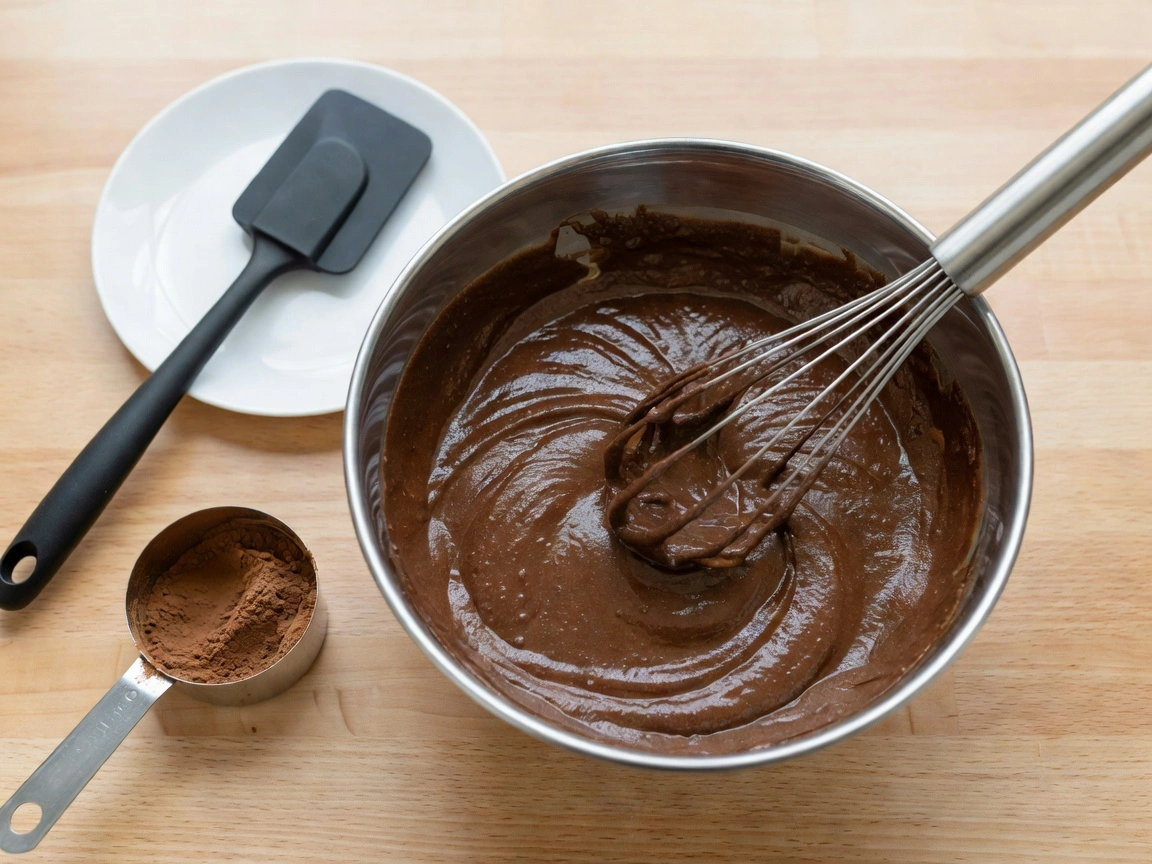
A brownie batter should look glossy and cohesive before it goes into the pan. Once the flour is added, mix only until you no longer see dry streaks. Overmixing at that point can push brownies toward a tougher or more cakey texture.
This is the balance to aim for: enough mixing to dissolve sugar and emulsify the batter, but not so much that you build a lot of air or gluten.
If your brownies keep coming out matte, check the batter before it goes into the pan. It should look smooth and thick, not sandy, separated, or dry around the edges. If you rub a little between your fingers and still feel a lot of sugar granules, it probably needs more whisking.
Butter, oil, or melted chocolate: which works best?
Each fat choice changes the final result. Here is a practical comparison.
| Choice | What it helps with | Trade-off | Best for |
|---|---|---|---|
| Butter | Classic flavor, good crust potential, balanced texture | Can be less moist than oil-only brownies | Brownies with a bakery-style finish |
| Oil | Moist crumb, soft texture | May not create the same crackly top on its own | Very tender brownies |
| Melted chocolate | Rich flavor, dense texture, strong brownie character | More expensive and less pantry-friendly | Deep chocolate brownies with a glossy top |
| Butter + oil blend | Flavor plus moisture | Requires a little more testing to balance | Home bakers who want both tenderness and shine |
If your current recipe uses only oil and the top stays matte, a partial swap to butter or melted chocolate may help more than simply increasing the sugar. If your brownie already tastes good but lacks shine, the fat choice is a reasonable place to experiment. Just keep in mind that fat choice is only part of the picture; mixing method often matters just as much, and sometimes more.
How batter temperature, pan type, and oven settings affect the top
The crust is built before and during baking, so the oven environment matters too.
Batter temperature
Batter that is too cold can slow the dissolving and setting process. Batter that is warm and cohesive tends to bake more evenly at the surface. This is one reason brownies made right after mixing often perform better than batter that sits in the fridge for a long time.
Pan material
Pan choice can influence how fast the edges and bottom set. Dark metal pans generally heat more aggressively than light-colored pans, while glass pans tend to behave differently and may bake more slowly or unevenly depending on your oven. If your brownies are consistently pale on top or overbaked at the edges before the center sets, the pan may be part of the issue.
For most home bakers, a light-colored metal pan is a practical starting point for predictable results, though your oven and recipe may respond differently.
Oven temperature and doneness
Brownies need enough heat to set the top without drying out the interior. If the oven runs too cool, the top may stay soft and dull for too long. If it runs too hot, the surface can set before the batter underneath has time to bake properly, which can leave you with a crust that looks good but a center that is not done.
Use doneness cues rather than the clock alone. The surface should look set, the center should still have a slight give, and a tester should not come out with raw batter. If you want a deeper guide to center texture and doneness, this related article on how to fix brownies that are too gooey in the middle can help.
How to adjust an existing brownie recipe for a shinier crust
You do not always need a brand-new recipe. Often, a few targeted changes are enough.
1. Improve the egg-and-sugar step
If your brownies are tasty but matte, try whisking the eggs and sugar more thoroughly before adding the fat. The goal is a smoother, more unified mixture. As a practical target, the mixture should look thicker, lighter in color, and less grainy than when you started.
2. Use melted butter instead of softened butter
Softened butter is great for creaming in cakes, but brownies often benefit from melted butter because it blends more easily with sugar and cocoa. That can help create a shinier top.
3. Check the sugar type
A recipe built around granulated sugar often has a better chance of developing a shiny crust than one that leans heavily on coarse or less refined sweeteners. If you are already using granulated sugar, make sure it is well incorporated.
4. Rebalance flour if the brownies are cakey
If your brownies rise like cake and the top looks dry or matte, the formula may be too flour-heavy or leavening-heavy for the texture you want. A small reduction in flour, such as a tablespoon or two in a standard home batch, may help more than adding extra butter. If the recipe already uses a lot of baking powder or baking soda, reducing that slightly may also move the texture back toward fudgy.
5. Keep the batter moving from bowl to pan
Once the batter is mixed, get it into the pan promptly. Letting it sit too long can allow the sugar and fat to separate slightly, which works against a smooth top.
If you already have a family brownie recipe you love, change only one variable at a time. That makes it much easier to see whether the crust improved because of mixing, fat choice, or bake time.
Why brownies turn out dull, cakey, or matte instead
A dull top usually points to one of a few common issues.
The sugar never really dissolved
This is one of the most common reasons. If the eggs and sugar were only briefly stirred together, the surface may bake up with a rougher, less glossy finish.
The recipe leans too cakey
More flour, more leavening, or extra mixing after the flour goes in can move brownies away from fudgy and toward cake-like. Cakey brownies can still taste good, but they often lack the thin, shiny crust people expect from bakery-style brownies.
The batter was too cool or too dry
Cold ingredients and a dry formula can make it harder for the surface to set smoothly. This is especially noticeable in cocoa-heavy recipes that do not include enough fat or sugar to create a glossy top.
The brownies were overbaked
Overbaking can dry out the surface and make the crust lose its delicate sheen. A brownie that looks fully set and feels firm in the pan may already be past the best point for a shiny finish.
The recipe and the method were fighting each other
A rich, fudgy formula can still bake up matte if the mixing is too brief. A well-mixed batter can still bake up dull if the formula itself is too flour-heavy. The top is the result of both recipe design and technique.
Troubleshooting by symptom
Here is a quick way to diagnose what happened.
Shiny top, but the center is dry
The crust formed well, but the brownies baked too long or at too high a temperature. Next time, shorten the bake slightly or check your oven temperature with an oven thermometer.
Glossy top, but the brownies feel cakey
The surface may be fine, but the formula likely has too much flour, too much leavening, or too much air from mixing. A shinier top does not always mean a fudgy brownie.
No crackle at all
Look first at the egg-and-sugar step. If that mixture was not whisked enough, or if the sugar never dissolved well, the top may stay flat and matte. A recipe that uses mostly oil and a lower sugar level can also make crackle harder to achieve.
Brownies are shiny on top, but the texture is uneven
That often points to uneven mixing or uneven oven heat. Scrape the bowl well, spread the batter evenly in the pan, and rotate the pan only if your oven bakes unevenly.
Simple brownie crust checklist
Use this as a quick reminder before your next batch:
- Whisk eggs and granulated sugar until the mixture looks smoother.
- Use warm melted butter or melted chocolate when the recipe calls for it.
- Mix in flour only until combined.
- Choose a brownie formula that is not overly flour-heavy.
- Bake in a predictable metal pan if you want consistent results.
- Watch for doneness cues instead of relying only on time.
- Let the batter go into the pan promptly after mixing.
If you want a brownie with a shiny, crackly top, the most reliable path is simple: dissolve the sugar well, build a smooth batter, and bake just until set. That combination does more for the crust than any single ingredient swap.
FAQs
What creates the shiny crust on brownies?
A thin sugar-rich layer forms on the surface during mixing and baking. Eggs help set that layer, and sugar contributes to the glossy finish.
Does whisking eggs and sugar longer help?
Usually, yes, as long as you stop before the batter becomes overly foamy. The goal is a smoother mixture that helps the sugar dissolve and the top set cleanly.
Is butter better than oil for a shiny brownie top?
Butter often gives a more classic brownie flavor and often works well for a shiny crust. Oil can make brownies softer and moister, but it does not always produce the same crackly finish on its own.
Do brownies made with melted chocolate shine more than cocoa powder brownies?
Often they do, because melted chocolate brings extra fat and a denser structure. Cocoa powder brownies can still develop a shiny top, but they usually depend more on mixing technique.
Can I fix a brownie recipe that already tastes good but looks dull?
Yes. The easiest first changes are to whisk the eggs and sugar more thoroughly, use warm melted fat, and avoid overmixing after the flour goes in.
Does pan type matter?
It can. A light-colored metal pan is often the most predictable option for home bakers. Glass and dark pans can change how quickly the brownies set and how the top looks.
Why do brownies sometimes look shiny but taste cakey?
Because appearance and interior texture are not the same thing. A glossy top can happen even when the formula has too much flour or too much air for a fudgy texture.
For bakers who want more brownie troubleshooting help, the guide on baking brownies in an air fryer without drying them out is also useful if you are working with smaller pans or a different heat source.
Can I make brownies with a shiny top every single time?
You can get very consistent, but not perfect, results by controlling the same variables each time: ingredient temperature, egg-and-sugar mixing, fat choice, and bake time. Brownies are forgiving, but they still respond to small changes.
When should I consult a pastry chef?
If you have tried adjusting mixing, sugar, fat, and bake time, and the brownies still come out inconsistent, a pastry chef can help you examine the formula itself. Sometimes the issue is not technique but the recipe balance.
If you want to understand brownie texture more broadly, the King Arthur Baking brownie guidance is a helpful place to compare methods and ingredient choices.
Do boxed mixes make shinier brownies than homemade recipes?
Not automatically. Boxed mixes can be convenient and sometimes produce a familiar texture, but a homemade recipe with the right mixing method can absolutely match or beat that finish. The method matters more than the box.
What is the simplest takeaway?
Use enough sugar, whisk the eggs and sugar well, add warm melted fat, and avoid overmixing after the flour goes in. That is the most dependable path to a shiny brownie crust.

