
How to Keep a Cutting Board from Slipping: Safe, Simple Fixes for Busy Kitchens

A sliding cutting board is more than an annoyance. It slows you down, makes chopping awkward, and can turn an ordinary prep task into a safety problem. The good news is that you usually do not need special equipment to fix it. In most kitchens, the right solution is a small change under the board, not a big purchase.
If you cook often, meal prep for the week, or work on a smooth countertop, the goal is simple: create traction without creating a mess. That means choosing a method that matches your board, your counter, and how hard you tend to chop.
Quick ways to stop a cutting board from slipping
When you need a fast fix, the simplest options are usually the best place to begin.
A damp kitchen towel under the board can add grip between the counter and the cutting board. Wring it out well first so it is damp, not wet. The towel should lie flat under the board.
A damp paper towel works the same way for a quick, disposable setup. It is handy when you only need a temporary fix, such as for one dinner prep session. Thin paper towel is better than a thick wad, which can make the board wobble.
For a more durable option, a non-slip mat, shelf liner, or silicone pad gives steadier support and is easier to reuse. These are especially useful if your board slides every time you chop onions, slice tomatoes, or trim meat.
Which anti-slip method works best for your kitchen
There is no single best choice for every home. The right method depends on how often you cook, how smooth your countertop is, and whether you want something reusable.
Here is a practical comparison:
| Method | Grip | Cost | Reusability | Mess risk | Best use case |
|---|---|---|---|---|---|
| Damp paper towel | Moderate | Very low | No | Low if wrung out well | Quick, one-time fix |
| Damp dish towel | Moderate to good | Low | Yes | Low to moderate | Everyday home prep |
| Silicone mat | Good | Moderate | Yes | Low | Frequent meal prep, smooth counters |
| Shelf liner | Good | Low to moderate | Yes | Low | Budget-friendly reusable support |
A damp towel is the fastest fix if you already have one nearby. A silicone mat or shelf liner makes more sense if you prep meals often and want a setup you can leave in a drawer and reuse again and again.
If you want the most convenient option for repeated use, choose a reusable mat. If you only need a fix once in a while, the towel method is usually enough.
How to use a damp towel, paper towel, or shelf liner safely
The main rule is simple: the support under the board should help with traction, not introduce wobble.
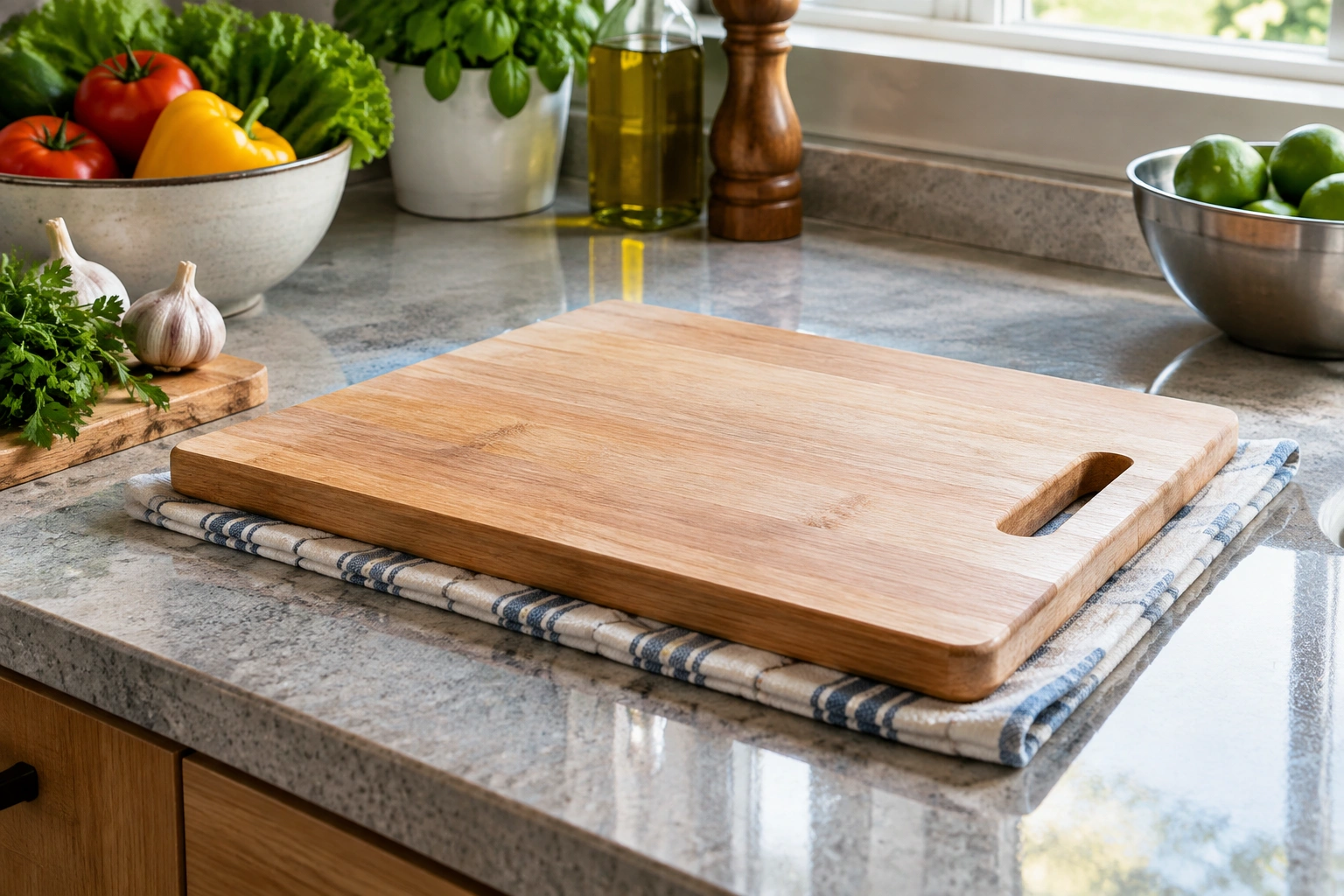
With a towel or paper towel, use just enough moisture to create grip. If water pools under the board, the board can shift instead of stabilize. That is the opposite of what you want.
A few practical setup tips:
- Lay the towel flat so it covers the area under the board evenly.
- Use a towel that is thin enough to compress, not a thick folded bath towel.
- Keep the counter clean and dry before placing the support.
- Press the board down gently before you begin cutting to check that it sits level.
Shelf liner and silicone mats should also lie flat. If the mat is smaller than the board, the unsupported edges can make the board feel unstable.
For raw meat or poultry prep, the USDA says consumers may use wood or a nonporous surface for cutting raw meat and poultry, and it also recommends washing cutting boards after each use with hot, soapy water, then rinsing and air drying or patting dry with clean paper towels. You can read that guidance on the USDA FSIS cutting board page.
When a silicone mat is better than a quick fix
A towel is fine for a fast dinner prep session. A silicone mat is the better choice when the board keeps moving no matter what you try.
That usually happens in kitchens with very smooth surfaces such as quartz, laminate, or polished stone, or when the board is lightweight and tends to wander during chopping. A reusable mat also makes sense if you prep several meals a week or handle heavier tasks like chopping root vegetables.
A silicone mat is the best option if you want a reusable fix that is more dependable than a towel and easier to manage than constantly resetting a quick workaround. It is a practical middle ground between a temporary fix and a more permanent board upgrade.
If you want to keep the setup simple, store one mat with your cutting boards. That way you do not have to improvise every time you cook.
How countertop and cutting board material affect stability
Some combinations slide more than others. A smooth board on a smooth countertop is the most likely to move.
Smooth counters need more traction
Quartz, laminate, glass, and polished stone surfaces can feel especially slick under a board. On those counters, a towel or mat often helps more than trying to “hold” the board in place with your hand.
Board weight matters
A heavier, stiffer board usually stays put better than a thin, lightweight one.
Wood, plastic, and bamboo behave differently
- Wood boards often feel steadier because they have more weight and surface texture.
- Plastic boards can slide more easily, especially if they are thin or warped.
- Bamboo boards are often firm and useful for daily prep, but they still may need extra grip on a slick counter.
In everyday home use, a heavier wood board is often the least likely to slip on its own. Lightweight plastic boards are the most likely to need help, and a mat is a smart choice anytime the counter is very smooth or the board feels unstable during chopping.
If your board moves only when you chop lightly, a damp towel may be enough. If it shifts during more forceful work, a reusable mat is usually the more dependable choice.
Safety mistakes to avoid when stabilizing a cutting board
The wrong setup can create a new problem even while fixing the slipping issue.
Do not use too much water
A board should grip the counter, not float on a puddle. Too much moisture can make the setup messy and less stable.
Do not use a thick, bunched-up cloth
A towel that folds or bunches under the board can make the board rock. That wobble matters when you are slicing quickly or using downward pressure.
Do not place the board on a dirty or greasy surface
Even a good anti-slip method will struggle if the counter is oily, wet, or crumb-covered. Clean, dry contact surfaces work better and are easier to trust.
Do not ignore edge support
If only part of the board is supported, it can tip when you cut near one corner. That is especially important with smaller boards or when you are working on a narrow counter.
A stable board should feel level before you start. If it shifts when you press on one corner, reset it before you pick up the knife.
Best setup for heavy chopping, kneading, and other high-force tasks
The more force you use, the more important the setup becomes.
For light slicing, a damp paper towel or dish towel may be enough. For heavy chopping, firm vegetables, or kneading dough, a reusable non-slip mat is usually the better call because it gives more consistent support.
A few examples:
- Chopping carrots, potatoes, or squash: use a mat or shelf liner if the board tends to move.
- Prepping meat: choose a stable, easy-to-clean setup and keep the counter dry.
- Kneading dough: use a board that stays flat and does not slide when you lean into it.
If the board still shifts during forceful work, stop and reset the setup. A board that moves under pressure is a sign that the support is not enough for the task.
Simple checklist for a board that stays put
Before you start cooking, run through this quick check:
- Counter is clean and dry
- Board is dry on the bottom
- Support lies flat with no bunching
- Board covers the support evenly
- Board does not wobble when pressed at the corners
- Setup feels steady before the knife comes out
That quick check takes less time than cleaning up a slipping board mid-prep.
FAQs
Is a damp paper towel under a cutting board safe?
Yes, if it is only lightly damp and laid flat. The goal is traction, not excess moisture. Wring it out well so it does not create a puddle.
What is the cheapest way to stop a cutting board from sliding?
A damp paper towel or dish towel is usually the cheapest quick fix because it uses something already in the kitchen. If you want something reusable, shelf liner is often a budget-friendly next step.
Do silicone mats work better than shelf liners?
Silicone mats are often the more secure reusable option, while shelf liners can be a lower-cost alternative. If your board is very slippery or your counter is extremely smooth, silicone is usually the safer bet.
Will this work for wood, plastic, or bamboo cutting boards?
Usually yes, but the board’s weight and finish matter. Heavier, stiffer boards tend to stay put more easily. Lightweight plastic boards often need more help than wood or bamboo boards.
What should I avoid so the board does not wobble?
Avoid thick towels, uneven folds, and partial support under only one side of the board. Also avoid using the board on a wet or greasy counter.
Do I need a permanent anti-slip board?
Not necessarily. Many home cooks do fine with a towel or reusable mat. A permanent solution makes more sense if your board slides every day or if you do a lot of heavy prep.
A practical rule for choosing the right fix
If you need a solution right now, use a damp towel or paper towel. If you cook often, switch to a reusable mat. If you do heavy chopping or your countertop is especially slick, choose the most stable option you can fit under the board.
Best by use case: the cheapest quick fix is a damp paper towel, the best reusable option is a silicone mat, and the best choice for heavy chopping is a stable reusable mat or shelf liner that fully supports the board.
That approach keeps meal prep safer, steadier, and less frustrating without spending more than you need to.