
How to Store Bacon After Opening for Maximum Freshness and Safety

Opened bacon is one of those ingredients that can quietly turn into waste if you don’t give it a clear storage plan. The safest approach is simple: refrigerate it promptly in a sealed package or airtight container if you’ll use it soon, or freeze it if you won’t. Bacon should not sit open in the fridge or on the counter, because air exposure dries it out and increases the chance of contamination.
A practical rule I use in home kitchens is this: decide right away whether the bacon will be cooked within the next few days. If yes, keep it cold and tightly sealed. If not, portion it and freeze it before quality drops. That one decision prevents most of the common problems—slimy bacon, strong odors, freezer burn, and slices that stick together into one unusable block.
What You Need Before Storing Bacon
You do not need special equipment, but a few basic tools make bacon storage much cleaner and safer:
- Airtight container
- Zip-top freezer bag
- Plastic wrap or foil
- Greaseproof or parchment paper for separating slices
- Label and marker
- Paper towels for wiping moisture from the package or container
If you are storing raw bacon, use a clean container or bag that closes well. If you are freezing it, choose packaging that keeps air out as much as possible. Air is the enemy here: it dries bacon out and speeds up quality loss.
How Long Opened Bacon Lasts in the Fridge and Freezer
Opened raw bacon in the refrigerator is usually best used within about 1 week if it has been kept consistently cold and tightly sealed. The biggest mistake is assuming the sell-by date tells the whole story. Once the package is opened, storage conditions matter more than the date printed on the label. The package instructions should be checked when they are available, but they are not always detailed enough to replace basic food-safety judgment.
Here is a practical comparison based on verified guidance:
| Bacon type | Best short-term storage | Freezer storage | Notes |
|---|---|---|---|
| Raw bacon, opened | Refrigerate in a sealed container or well-wrapped package | Freeze in a sealed bag or container for 3–6 months | Keep it cold and sealed right away |
| Cooked bacon | Airtight container in the fridge | Freeze in a sealed bag or container for up to 2 months for best quality | Use quickly after cooking |
| Bacon bits made with real bacon | Follow label; USDA notes refrigeration after opening for 1 to 2 months | Check the label if freezing | Product type matters |
| Canned bacon | Follow label; USDA notes a shorter fridge window after opening | Use label instructions | Canned products can differ from regular slices |
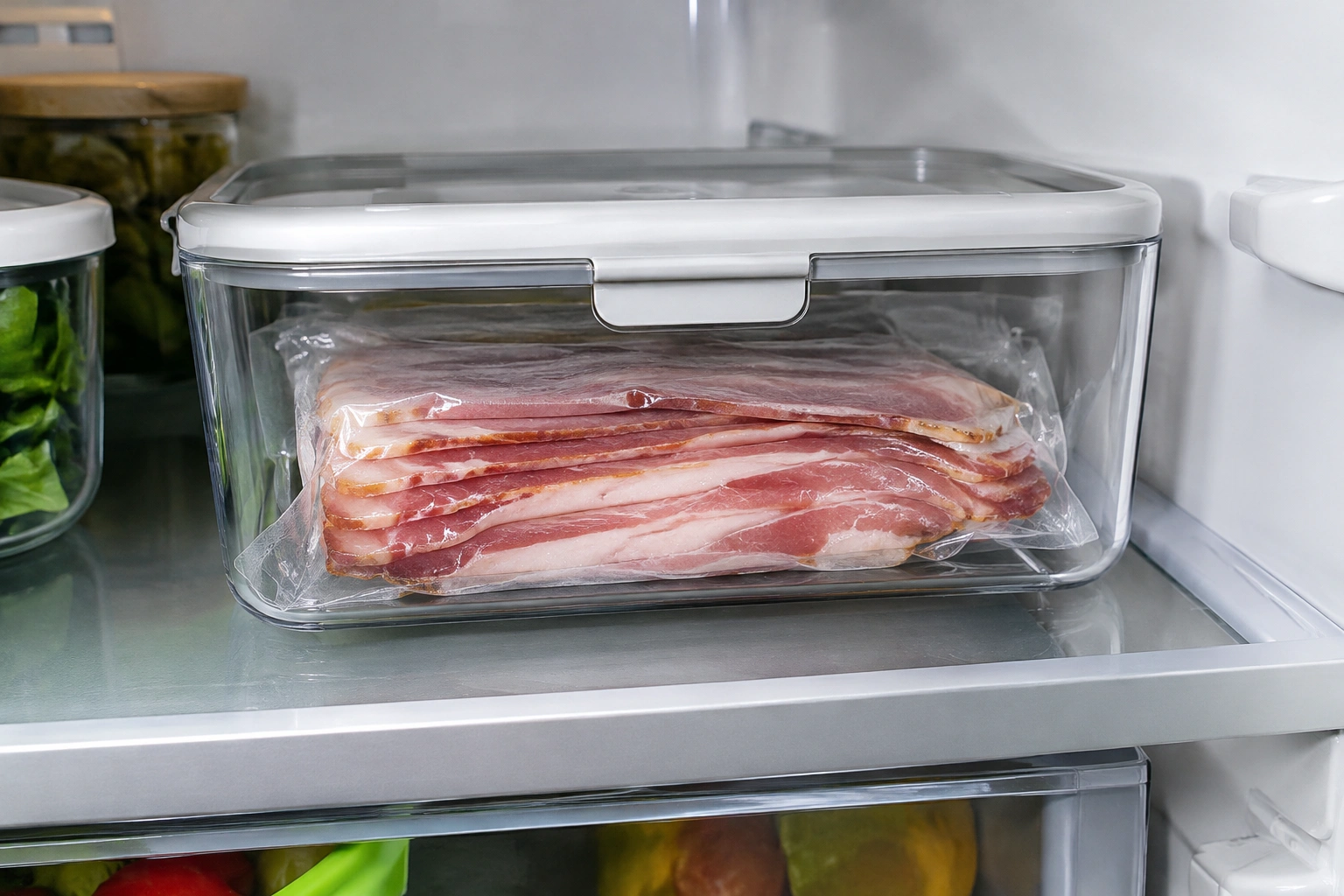
For regular opened raw bacon, the safest move is to refrigerate it if you plan to use it soon, or freeze it if you do not. For cooked bacon, keep it in a separate airtight container and use it quickly. For packaged bacon products like bacon bits or canned bacon, the label and USDA guidance are more important than general rules.
If you want an official reference point for bacon products, the USDA’s bacon safety guidance is a useful place to check because it includes storage notes for bacon bits and canned bacon after opening: USDA bacon and food safety guidance.
Step-by-Step: How to Store Opened Raw Bacon in the Refrigerator
For bacon you plan to use within a few days, refrigeration is usually the simplest option.
1) Close the package tightly or repackage it
If the original package still seals well, you can keep the bacon in it for short-term storage. But if the seal is weak, damaged, or messy, move the bacon into a clean airtight container or zip-top bag.
The goal is to limit air exposure. That helps keep the bacon from drying out and also keeps bacon odor from spreading to butter, fruit, or leftovers nearby.
2) Put it in the bottom of the fridge
Store raw bacon on the bottom shelf or in the coldest practical part of the refrigerator, in a clean sealed container. This reduces the risk of drips contaminating ready-to-eat foods below it. That placement matters more than most people realize, especially in busy fridges where packages get shifted around.
3) Keep it separate from ready-to-eat foods
Do not place opened raw bacon next to cooked leftovers, salad greens, or sandwich ingredients. Raw meat should be treated as a separate storage category. A sealed container helps, but separation still matters because spills and leaks can happen.
4) Use it soon
Refrigeration buys you time, but not forever. If you know the bacon will sit untouched for more than a short window, freeze it instead. That choice reduces waste and avoids the temptation to “stretch” bacon beyond a safe or appealing point.
Step-by-Step: How to Freeze Opened Bacon for Later
Freezing is the better choice when you do not expect to use the bacon soon. It preserves quality and gives you more flexibility for meal prep.
1) Portion it before freezing
Divide the bacon into the amounts you usually cook at one time. For many households, that means small stacks or meal-sized bundles rather than freezing the whole package as one block.
This step saves time later. You will not need to thaw more bacon than you need, and you will avoid repeatedly opening the same frozen pack.
2) Separate slices if you want easier use later
If you plan to pull out only one or two slices at a time, place parchment or greaseproof paper between slices before freezing. That makes the slices easier to separate after thawing and prevents them from welding together.
3) Seal out the air
Use a zip-top freezer bag or airtight container. Press out as much air as possible before sealing. Less air means less freezer burn and better texture later.
If you use a bag, flatten it so the bacon freezes in a thinner layer. Thin packages freeze faster and are easier to stack.
4) Label the package
Write the date you froze it. Bacon can be frozen in a sealed bag or container for 3–6 months for best quality, but labeling helps you use the oldest package first and keeps the freezer from becoming a mystery bin.
5) Freeze it flat if space allows
Flat packages stack neatly and thaw more evenly. For a family freezer, that can make a real difference when you are trying to find dinner fast.
Best Packaging Options: Original Package vs. Airtight Container vs. Freezer Bag
Each storage method has a job. The best one depends on how soon you will use the bacon and how much protection you want.
Original package
This is the easiest option if the bacon is going back into the fridge for very short-term use and the package still seals well enough. The downside is that once the original seal is broken, it may not protect the bacon as well from air and odors.
Airtight container
This is the cleanest option for fridge storage. It helps control smell, keeps the bacon from getting crushed, and reduces the chance of leaks. It also works well for cooked bacon. The trade-off is that containers take up more fridge space than a flat bag.
Zip-top freezer bag
This is usually the best choice for freezing. You can press out air, label it clearly, and flatten it for compact storage. The trade-off is that a bag can be less rigid than a container, so it needs a careful seal to avoid leaks.
Foil or plastic wrap
These are useful as an inner layer, especially if you are wrapping smaller portions before putting them into a freezer bag or container. On their own, they are usually not my first choice for long storage because they do not protect as well from air as a sealed bag or container.
If you want the most practical setup, use tight wrapping plus a second layer. For example, wrap a portion in plastic wrap or parchment, then place it in a freezer bag. That gives you both convenience and better protection.
How to Store Cooked Bacon Safely
Cooked bacon belongs in a different container from raw bacon. That separation is not optional if you want to avoid cross-contamination.
Let cooked bacon cool, then place it in an airtight container in the refrigerator. General food-safety guidance commonly recommends using refrigerated cooked bacon within about 2 days. That is short, but it reflects the reality that cooked bacon still needs careful handling.
For longer storage, freeze cooked bacon in a sealed bag or container for up to 2 months for best quality. Keep portions small so you can reheat only what you need. If you cook bacon for a weekend breakfast and know some will be left over, pack the extra into a separate container right away instead of leaving it on the plate or mixing it with raw bacon packaging.
To thaw cooked bacon safely, move it from the freezer to the refrigerator and let it thaw overnight or until flexible. Reheat it until hot, using a skillet, oven, or microwave depending on how you plan to serve it. Avoid thawing cooked bacon on the counter, since that can leave it in the temperature danger zone too long.
For more general fridge-storage habits that reduce food waste, our guide on how to safely store rice shows the same kind of decision-making: choose the container that matches how quickly you will use the food.
How to Tell If Opened Bacon Has Gone Bad
Do not rely on smell alone. Bacon can look questionable before it smells obviously bad, and smell can sometimes be misleading in a very cold fridge.
Watch for these signs:
- Slimy or sticky surface
- Strong sour, rancid, or off odor
- Gray, green, or unusual discoloration
- Dry, hard edges with a tacky center
- Package swelling, leaking, or excess liquid
If bacon is only slightly off in color or a little dry at the edges, it may be a quality issue rather than a clear safety problem. But if the texture is slimy, the smell is sharp or sour, or the color has shifted to gray-green or otherwise unusual tones, discard it. When in doubt, do not “save” it by cooking it longer. Storage problems are not fixed by heat once spoilage has started.
Common Mistakes to Avoid
A few habits cause most bacon storage failures:
Leaving it loosely wrapped
An open package or a half-closed bag lets in air. That leads to drying, odor transfer, and faster quality loss.
Keeping raw and cooked bacon together
This is a simple cross-contamination risk. Keep them in separate containers and separate fridge zones if possible.
Freezing without sealing well
A badly sealed bag lets in air and creates freezer burn. The bacon may still be safe from a freezer standpoint, but the texture and flavor can suffer enough that people stop using it.
Thawing on the counter
Thaw frozen bacon in the refrigerator instead. Counter thawing leaves the outer layers warm while the center is still frozen, which is exactly the kind of uneven temperature exposure you want to avoid.
Ignoring the package label
Some bacon products have specific storage directions after opening. If the label says something different from a general rule, follow the product guidance.
Troubleshooting Storage Problems
If your bacon already has a problem, here is how to handle the most common ones.
Bacon smells like the fridge
That usually means it was not sealed well enough. The bacon may still be usable if it is within the safe storage window and shows no spoilage signs, but the flavor may be affected. Rewrap it tightly or move it to a better-sealed container.
Bacon is stuck together in the freezer
That happens when slices were frozen in one stack without separation. Next time, use parchment between slices or freeze smaller portions. For the current package, thaw it in the fridge until the slices loosen enough to separate safely.
Bacon has freezer burn
Freezer burn is a quality issue caused by air exposure. It usually shows up as dry, pale, or leathery patches. Better sealing would have prevented it, but if the bacon still seems otherwise normal, you may be able to use it in a cooked dish where texture matters less.
There is too much moisture in the container
Moisture can build up if bacon goes into storage while still warm or if condensation forms in the fridge. Dry the outside of the package, let cooked bacon cool before sealing, and use a container that closes well.
Practical Meal Prep Examples
A busy family opens a pack of bacon on Sunday and knows they will not finish it by midweek. In that case, I would split the pack: keep one meal’s worth in the fridge and freeze the rest in a labeled bag.
A meal prepper making breakfast sandwiches for the week might freeze bacon in single-serving bundles. That makes weekday cooking easier because each portion can be thawed only as needed.
A budget-conscious household may buy bacon when it is on sale and freeze it immediately after opening into smaller packs. That approach protects quality and reduces the pressure to use everything at once.
If you also store other make-ahead foods, the same logic applies to items like buttercream frosting in the fridge: seal it well, portion it for real-life use, and match the storage method to how soon you need it.
When to Ask a Food Safety Expert
If bacon was left out for an unknown amount of time, if the fridge has not been keeping a safe temperature, or if someone in the home is especially vulnerable to foodborne illness, it is worth asking a qualified food safety professional or local extension service for guidance. When safety is unclear, throwing it out is usually the more practical choice.
The Simple Rule That Prevents Most Bacon Waste
Opened bacon stores best when you make one decision early: fridge for short-term use, freezer for later. Keep it sealed, keep raw bacon low in the fridge, keep cooked bacon separate, and label frozen portions so you can use them before quality drops. That is the system that keeps bacon useful instead of forgotten.