
How to Store Cut Vegetables So They Stay Fresh, Crisp, and Safe

Cut vegetables are easiest to keep in good shape when you treat them as a short-term fridge project, not a long-term pantry item. The practical rule is simple: refrigerate them promptly, keep them covered, and match the container to the vegetable. For most chopped vegetables, a clean, covered container in the refrigerator is the default choice. If the vegetable is especially crisp and watery, a sealed bag or container with a paper towel can help control condensation. If it is one of the few vegetables that benefits from water storage, use that method only for the short window it actually helps.
A chopped cucumber, a handful of lettuce, and a container of diced carrots each lose quality in different ways. Some dry out. Some turn slimy. Some brown. Once a vegetable is cut, its protective skin is broken, so moisture loss, air exposure, and contamination become more important. That is why the storage method matters almost as much as the vegetable itself.
What Changes After Vegetables Are Cut
Cutting speeds up spoilage for two reasons. First, the exposed flesh loses moisture faster, so texture declines. Second, the cut surface is more open to bacteria and mold from hands, knives, cutting boards, and the fridge environment. Food safety guidance from the USDA stresses washing produce just before preparation, not before storage, and keeping produce covered and above items that could contaminate it. USDA produce best practices
That leads to the first decision point: if you are cutting vegetables for the next few days, your goal is not to preserve them forever. Your goal is to slow down moisture loss, keep them cold, and use them while they still taste like the vegetable you bought.
Best Storage Method by Vegetable Type
Different vegetables need different handling because their texture and water content are not the same. Use this as your quick planning guide.
| Vegetable type | Best storage approach | Why it works | Watch out for |
|---|---|---|---|
| Leafy greens, chopped lettuce, salad mix | Covered container with a dry paper towel or very lightly lined container | Reduces excess moisture while protecting leaves from crushing | Too much moisture causes slime; too much air causes wilting |
| Crunchy vegetables like carrots, celery, peppers | Airtight container or sealed bag with as much air removed as possible | Protects crunch and limits drying | A wet container can make them limp or slippery |
| Watery vegetables like cucumbers and zucchini | Sealed container or bag in the crisper drawer | Helps slow dehydration and odor transfer | They soften quickly once cut |
| Root vegetables like onions | Tightly sealed container | Limits odor spread and keeps the cut edges from drying out | Strong smell can affect other foods |
| Broccoli and cauliflower florets | Covered container, kept cold and dry | Reduces odor transfer and moisture buildup | Too much trapped moisture can speed softening |
| Tomatoes, if cut | Covered container in the fridge and use soon | Prevents contamination and drying | Texture changes quickly after cutting |
For a broad, practical rule: keep cut vegetables as dry as possible unless a specific vegetable clearly benefits from a little moisture support. That is the balance that prevents both sogginess and shriveling.
Airtight Containers vs. Resealable Bags vs. Water Storage
Each storage option solves a different problem.
Airtight containers
Airtight containers are the most reliable all-purpose choice. They protect against air, odor transfer, and accidental crushing. They are especially useful for meal prep portions, chopped onions, diced peppers, and mixed vegetables you want ready for cooking.
The trade-off is moisture. If you put damp vegetables into a sealed container, condensation can build up and make them slimy. That is why drying matters before the lid goes on.
Resealable bags
Resealable bags save space and work well for vegetables you want to flatten into a shallow layer, such as chopped peppers or broccoli florets. They also make it easy to press out extra air.
The downside is protection. Bags can get punctured, crushed, or opened too often. They are less ideal for delicate greens unless you are careful.
Water storage
Water storage can help a few cut vegetables stay crisp for a short period, but it is not the best universal method. It makes the most sense for vegetables that tend to wilt quickly and can absorb moisture at the cut end. Common examples include cut celery, carrot sticks, and scallions; some people also use it for lettuce hearts or herb stems for short-term crisping. A common practice is to place limp carrot pieces in a glass of water for a brief refresh, but results can vary.
Queensland’s Department of Environment, Tourism, Science and Innovation also notes that chopped cucumbers stay fresh for about 1 to 2 days and should be kept refrigerated in a sealed bag or container. Queensland produce storage guidance
Use water storage sparingly. It can help with crispness for a few vegetables, but it is not a substitute for good refrigeration and it is not the best choice for every vegetable. Avoid storing watery vegetables like cucumbers or tomatoes in water, since they usually soften or turn mushy rather than improve.
How to Keep Cut Vegetables Crisp Without Getting Soggy
Moisture control is the whole game. Too much moisture gives you slime. Too little gives you limp, dry edges.
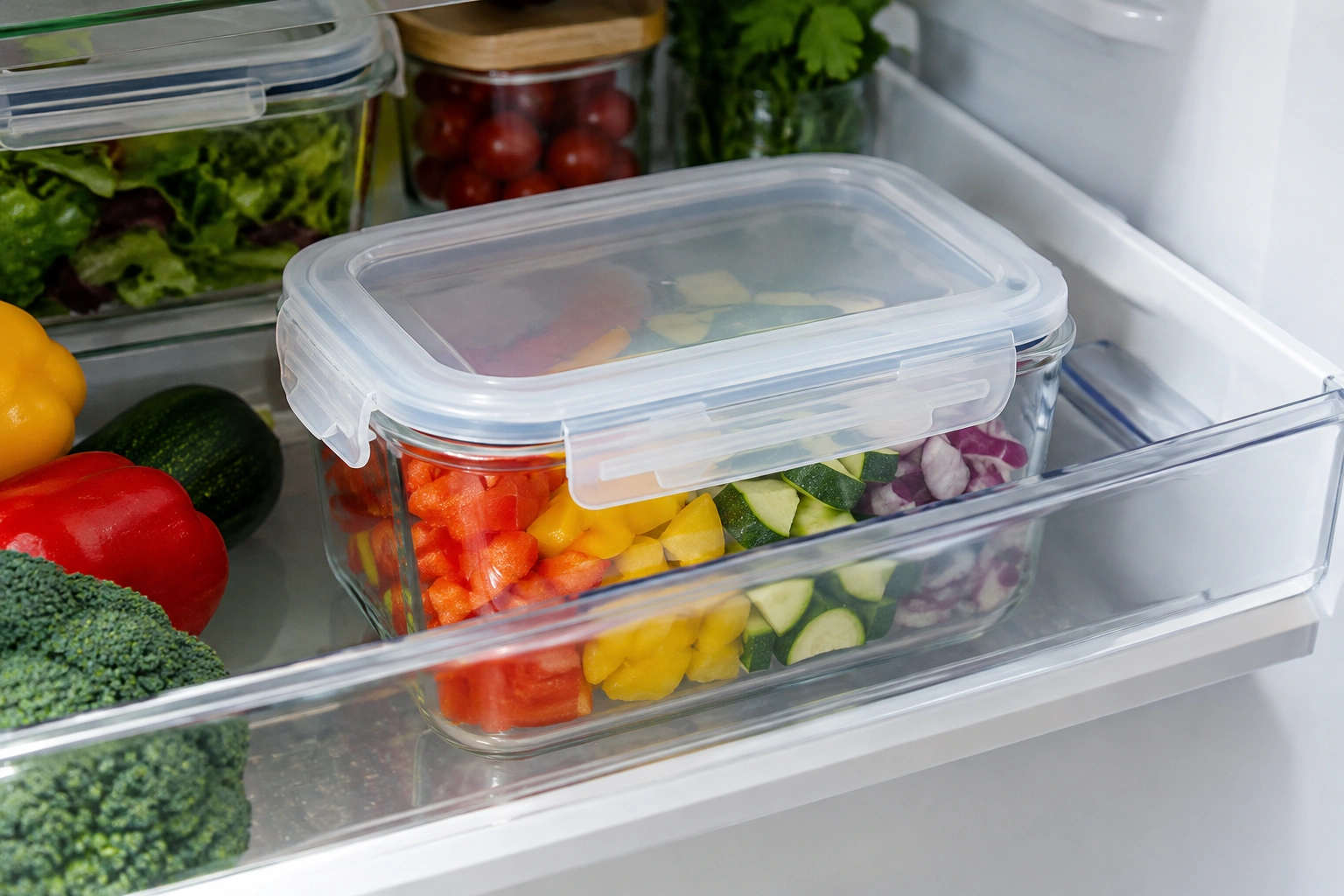
Here is the most practical workflow:
1. Wash vegetables before cutting only when you are ready to prep them.
2. Dry them well after washing.
3. Cut with a clean knife and board.
4. Let any surface moisture settle for a minute or two.
5. Store them in a covered container or sealed bag.
6. Add a paper towel if condensation is a problem.
A paper towel is useful because it catches extra moisture before it turns into slime. That matters most for greens, chopped herbs, and vegetables that release water after cutting. For very dry vegetables like carrots or celery, the towel can still help if your fridge tends to create condensation inside containers.
Do not overdo the drying either. If you pack greens in a bone-dry container with a lot of air, they can wilt faster. The sweet spot is dry enough to avoid puddling, but not so dry that the cut edges shrivel.
How Long Cut Vegetables Last in the Fridge
The safest answer is to use cut vegetables within a few days, unless a more specific vegetable guidance says otherwise. University of Maine Extension states that any cut, peeled, or cooked fruits and vegetables should be stored in clean, covered containers in the refrigerator within two hours of cutting or peeling and consumed within 3 to 4 days. The National CACFP Association gives a similar handling window and says cut produce should be refrigerated within four hours and stored at 41°F or colder. University of Maine Extension
For common vegetables, use these practical targets:
– Cucumbers: about 1 to 2 days once chopped
– Carrots: about 3 to 5 days if kept cold and dry; if they start to limp, water can help revive them briefly
– Celery: about 3 to 5 days, sometimes a little longer if well sealed
– Bell peppers: about 3 to 4 days
– Broccoli florets: about 3 to 5 days for best quality
– Cauliflower florets: about 3 to 5 days, with quality dropping as moisture builds
– Onions: about 3 to 5 days in a tightly covered container, though odor may become noticeable sooner
– Lettuce and salad greens: about 2 to 4 days, often sooner if they were already delicate when cut
Those are quality windows, not promises. If the vegetable smells off, feels slimy, or shows mold, discard it even if the calendar says it should still be fine.
Which Cut Vegetables Should Not Be Stored Together
Some vegetables are poor roommates. The problem is not just space. It is moisture, odor, and shared storage conditions.
It is generally better to keep cut vegetables separate from cut fruit and from strongly aromatic produce. Mixed containers can work for meal prep, but only when the vegetables have similar storage needs.
Keep these apart when possible:
– Onions from delicate greens: odor transfer is the main issue
– Watery vegetables from leafy greens: excess moisture can wilt the leaves
– Strong-smelling produce from milder vegetables: flavor transfer is possible
– Very ripe or soft produce from fresher items: it can shorten the useful life of nearby foods
If you are batch-prepping, separate by moisture level and use. Put crunchy vegetables together, leafy vegetables together, and onions in their own container. For mixed meal prep containers, pair vegetables that can handle the same environment, such as carrots with peppers or broccoli with cauliflower, rather than combining wet cucumbers with lettuce or onions with salad greens.
Should You Wash Vegetables Before or After Cutting?
Wash just before prep, not days before storage. That is the simplest rule and the one most food safety guidance supports. Washing ahead of time can leave residual moisture that encourages spoilage, especially in sealed containers.
There is one exception in practice: if you are prepping a large batch and need to rinse produce before cutting for cleanliness, dry it thoroughly before it goes into storage. The key is not the washing itself. It is whether the vegetable goes into the fridge damp.
For meal prep, this means your workflow should be:
– rinse,
– dry,
– cut,
– package,
– refrigerate.
If you reverse that and store wet vegetables, you are giving slime and softening a head start.
Fridge Placement and Temperature Tips
Cut vegetables belong in the coldest stable part of the refrigerator, not in the door. The fridge door warms up every time it opens, which is not ideal for delicate produce. The American Heart Association recommends keeping the refrigerator at 40°F or below. The National CACFP guidance uses 41°F or colder for cut produce. Those numbers are close enough to point to the same habit: keep the fridge cold and consistent. Food safety storage guidance
Use the crisper drawer for vegetables that benefit from a slightly more controlled environment, especially cucumbers, greens, and other produce that dries out quickly. But do not treat the crisper as a magic fix. If the vegetables are wet, warm, or overcrowded, they will still deteriorate.
Also keep cut vegetables above raw meat, poultry, or seafood. That reduces contamination risk if anything leaks or drips.
When to Refrigerate, Freeze, or Keep Vegetables Whole
Choose based on how you plan to use the vegetable, not just how much you have.
Refrigerate
Refrigerate if you plan to use the vegetables raw or within a few days. This is the best option for lunchbox carrots, salad greens, chopped cucumbers, and stir-fry prep.
Freeze
Freeze if the vegetables are going into cooked dishes later and you do not need crisp texture. Freezing is a waste-saving move, not a freshness-preserving one. It changes texture, so it is better for soups, sauces, casseroles, and sautés than for salads.
Keep whole
Keep vegetables whole if you do not need them right away. Whole vegetables usually store longer than cut ones because they lose less moisture and have less exposed surface area.
That decision alone can save money. If you know a vegetable will sit for several days before use, leaving it whole is often the better move.
Meal Prep Workflow for Busy Households
A simple system keeps prep from becoming a chore.
Here is a practical batch-prep routine:
1. Decide which vegetables will be eaten raw and which will be cooked.
2. Wash only what you are about to cut.
3. Dry thoroughly.
4. Cut by moisture group: leafy, crunchy, watery, and aromatic.
5. Pack each group in its own covered container or sealed bag.
6. Label the prep date.
7. Put the most fragile vegetables where you will see them first.
This is where first-in, first-out matters. Put the older container in front and the newer one behind it. That way you use what is closest to its quality limit before opening a fresh batch.
If you are prepping for school lunches, one good setup is a lined airtight container for carrots and celery, a separate bag for sliced peppers, and a small container for onions or other strong-smelling vegetables. That keeps the fridge organized and cuts down on waste.
Signs Cut Vegetables Have Gone Bad
Do not rely on appearance alone. Spoilage can show up in smell and texture first.
Discard cut vegetables if you notice:
– a sour, rotten, or unusually strong smell
– slime or sticky film
– visible mold
– severe browning plus softness
– a mushy texture that was not there before
– liquid pooling with an off odor
If they are only a little dry at the edges, they may still be usable in cooked dishes. But once the smell or texture turns clearly off, rinsing will not make them safe again. Slightly wilted vegetables are often still fine for soups, stir-fries, roasting, or stock if they do not show other spoilage signs.
When to Ask a Food Safety Expert
If cut vegetables sat out for an extended period, if they were stored near raw meat juices, or if someone in the household is pregnant, older, immunocompromised, or very young, use stricter judgment and follow local food safety guidance. When in doubt, discard questionable produce rather than trying to rescue it.
For everyday home cooking, the safest habit is also the simplest: cut vegetables cold, keep them covered, store them promptly, and use them within a few days.
FAQ
Can you store cut vegetables in water?
Sometimes. Water can help crisp up certain vegetables like celery, carrot sticks, scallions, and some herb stems for a short time. It is not a good method for cucumbers or tomatoes, which usually do better in a sealed container or bag.
Are airtight containers or bags better for cut vegetables?
Airtight containers are better for most meal prep because they protect against crushing and odor transfer. Resealable bags work well when you want to save space or store a shallow layer of vegetables.
How can you tell if cut vegetables are still good?
If they are slightly wilted or dry at the edges but still smell normal and feel firm enough for cooking, they are often fine for soups, stir-fries, or roasting. If they smell sour, feel slimy, or show mold, throw them out.
What cut vegetables last the longest?
Crunchy vegetables such as carrots, celery, and bell peppers usually last longer than leafy greens or watery vegetables like cucumbers. Keeping them dry and cold helps extend their quality.
Can you mix different cut vegetables in one container?
Yes, but only if they have similar storage needs. Carrots and peppers are a better match than cucumbers and lettuce. Keep onions in a separate container when possible because of odor transfer.
Should cut vegetables go in the crisper drawer?
They can, especially if they dry out easily. The crisper drawer is helpful, but it is not a substitute for a covered container and a cold fridge.
How long can cut vegetables stay in the fridge?
Many cut vegetables are best used within 3 to 4 days, though some watery or delicate ones may be best in 1 to 2 days and firmer vegetables can sometimes last a bit longer if stored well.