
How to Store Homemade Bread So It Stays Fresh Longer

If you want the short answer, here it is: store homemade bread at room temperature for a day or two if you’ll eat it soon, freeze it if you need longer storage, and skip the fridge unless you have a very specific reason. That simple rule covers most loaves, but the best method changes depending on the bread’s crust, moisture level, and whether you plan to slice it.
The reason bread storage gets tricky is that freshness is not just about “drying out.” Bread stales because moisture shifts around inside the loaf and the starches in the crumb change structure over time. That means a loaf can feel firm or dull even when it still looks fine. Good storage slows those changes without trapping so much moisture that mold gets a head start.
Quick Answer: The Best Way to Store Homemade Bread
Use this decision rule:
- Eating it today or tomorrow? Keep it at room temperature.
- Eating it within a few days? Room temperature still works for most breads, as long as you wrap it properly.
- Need it to last longer than that? Freeze it.
- Thinking about the fridge? Usually don’t, because refrigeration tends to make bread stale faster.
A practical freshness timeline for homemade bread:
- Same day: Leave it at room temperature once fully cooled. This is the best window for most breads.
- 1–3 days: Still fine at room temperature for many loaves, especially if they are wrapped well.
- Soft loaves: usually hold up best with tighter wrapping.
- Crusty artisan breads: often taste best sooner, because the crust starts losing its snap after the first day or so.
- Longer than 3 days: Freeze it if you want the best chance of keeping decent texture.
A practical middle ground is to keep bread on the counter for a day or two, then freeze what you won’t finish. That approach fits the way many home bakers actually eat bread: a few slices today, a few more later in the week.
What You Need Before Storing Bread
Before you wrap a loaf, make sure it has cooled completely. Warm bread releases steam, and that trapped moisture can soften the crust and create condensation inside the wrap or container.
Have these on hand:
- Plastic wrap or a reusable food-safe wrap
- Aluminum foil
- Paper bag
- Bread box
- Airtight container
- Freezer bag or freezer zipper-top bag
- Optional: parchment paper for very moist sliced bread
The “best” tool depends on what you’re trying to protect. A soft sandwich loaf wants moisture retention. A crusty boule wants a little breathing room so the crust does not turn leathery or soggy too quickly.
How to Store Homemade Bread at Room Temperature
For short-term storage, room temperature is usually the most practical choice. It keeps the crumb from drying out as quickly as it would in the fridge, and it avoids the texture changes that cold storage can cause.
Step 1: Cool the loaf fully
Do not wrap bread while it is still warm. A loaf that feels slightly warm in the center can still release enough steam to create condensation, and condensation is a mold-friendly environment.
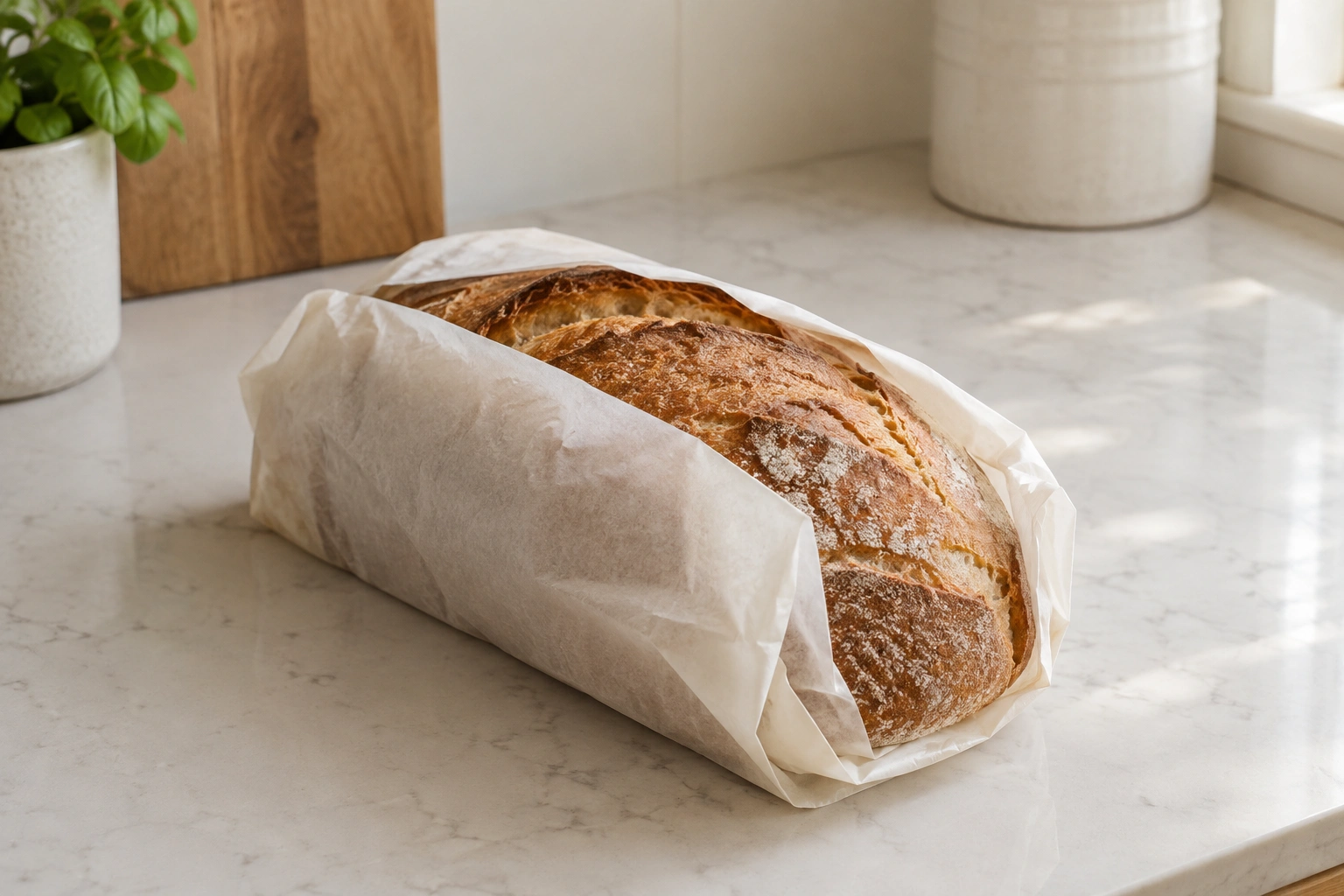
Step 2: Match the wrap to the bread
For most soft breads, plastic wrap or foil does a better job than cloth if you want the loaf to stay soft for a day or two. That lines up with guidance from King Arthur Baking, which notes that plastic or foil are the better options for short-term room-temperature storage. You can read their take on storing yeast bread.
For crusty bread, a paper bag or bread box can be useful when you want to protect the crust from becoming too soft too fast. The trade-off is that paper lets more air move around the loaf, so the crumb may dry out sooner than it would in plastic.
Step 3: Keep it in a stable spot
A cool, stable room temperature is better than a spot near the stove, a sunny window, or an appliance that warms up and cools down through the day. Temperature swings can contribute to faster staling in some loaves.
Step 4: Use it soon
Room-temperature storage is best for short-term freshness, not long-term holding. If you know the loaf will outlast your next meal or two, freeze it before quality starts slipping.
How to Freeze Homemade Bread for Longer Storage
Freezing is the best option when you want to preserve homemade bread beyond the short-term window. It pauses staling far better than the refrigerator, and it gives you more control over portions.
Here is a reliable freezing method:
-
Cool the bread completely.
Any warmth left in the loaf turns into condensation once it hits the wrap. -
Decide whether to freeze whole or sliced.
Whole loaves are great if you want to preserve the interior as intact as possible. Sliced bread is better if you usually take one or two pieces at a time. -
Wrap the bread tightly.
A verified freezing method is to wrap fully cooled bread in plastic, then place it in a freezer zipper-top bag, press out as much air as possible, and seal it. That approach is also echoed by KitchenAid’s guidance on keeping bread fresh in the freezer. -
Remove as much air as you can.
Air exposure invites freezer burn and dulls flavor over time. -
Label and freeze.
Write the date on the bag if the loaf is likely to sit in the freezer for more than a week or two. That helps you rotate older bread first.
Should you freeze bread whole or sliced?
If you slice it first, you gain convenience. You can pull out only what you need, which is especially useful for toast. For many home bakers, this is the best way to store homemade bread if they use it a slice at a time.
That said, slicing before freezing slightly increases exposed surface area, so the loaf is more dependent on a good wrap. For an artisan boule you plan to serve whole later, freezing unsliced may be the better trade-off.
Should You Refrigerate Homemade Bread?
Usually, no.
Refrigeration tends to make bread stale faster. The main reason is starch retrogradation: the crumb’s starches firm up more quickly in cold temperatures, which makes bread feel dry or tough sooner even when it still contains moisture.
That does not mean the fridge is never used. Some people refrigerate bread when they are trying to stretch storage a bit in a very warm kitchen, but it is not the best choice if freshness and texture are the priority. If you want the bread to last longer, the freezer is the better tool.
Think of it this way:
- Counter: best for short-term eating
- Fridge: often the worst option for texture
- Freezer: best for longer storage
Best Storage Method by Bread Type
Different breads lose quality in different ways, so the storage method should match the loaf.
Crusty artisan bread
Examples: boule, batard, country loaf, rustic sourdough with a thick crust.
Goal: preserve the crust as much as possible.
Best approach: room temperature in a paper bag or bread box for a short time if you want to keep the crust from softening too quickly. If you need longer storage, freeze it. A tightly wrapped freezer method protects the crumb better, but the crust will not stay as crisp as it was on day one.
Soft sandwich bread
Examples: pan loaf, milk bread, enriched sandwich loaf.
Goal: keep the crumb soft and sliceable.
Best approach: wrap it well in plastic or foil at room temperature for short-term use. This type of bread usually benefits from tighter wrapping because softness matters more than a crisp crust.
Sourdough
Goal: balance a chewy crumb with a crust that does not go leathery.
Best approach: room temperature for short-term use in a paper bag or bread box if you want the crust to stay a little firmer, then freeze if you need to keep it longer. If you are choosing between the two, a paper bag is usually better for a crusty sourdough you will eat soon, while a bread box is more useful if you want a little more protection from drying without sealing in too much moisture. For longer storage, the freezer is the better choice.
Enriched bread
Examples: brioche, challah, butter-rich loaves.
Goal: protect tenderness and prevent drying.
Best approach: wrap tightly and keep at room temperature for short-term storage, or freeze for longer storage. Enriched breads often feel especially disappointing once they dry out, so they benefit from good moisture retention.
Very moist loaves
Examples: breads with add-ins like potatoes, seeds, or high hydration doughs.
Goal: prevent sticking and manage moisture.
Best approach: freeze if you will not finish them quickly. If slicing before freezing, parchment between slices can help keep them from fusing together.
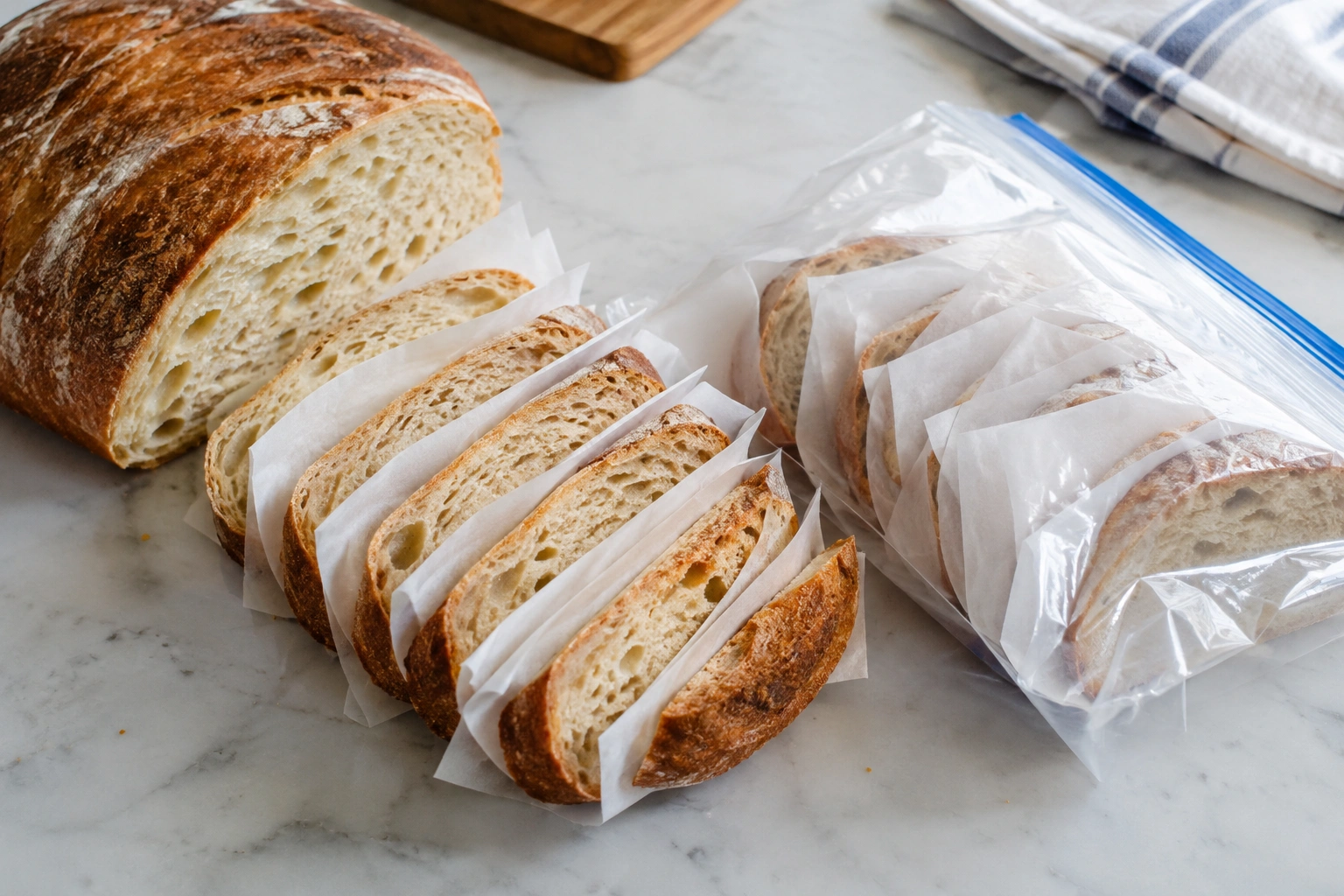
Whole Loaf vs Sliced Bread: What Changes
A whole loaf usually stays fresher-looking longer because it has less exposed surface area. That is useful when presentation matters, or when you want to cut into the loaf only when needed.
Sliced bread is more practical for busy kitchens. If you eat bread one slice at a time, pre-slicing before freezing saves time and reduces waste. The trade-off is that each slice has more exposed surface, so the wrap has to do more work.
A good compromise is to freeze a loaf in halves or in a few thick sections. That gives you some portion control without turning the entire loaf into a pile of loose slices.
For a half-loaf stored at room temperature, keep the cut faces together when possible and wrap the loaf so the exposed crumb is protected. King Arthur Baking suggests storing bread airtight with the two cut halves facing each other, which helps limit moisture loss.
How to Thaw and Refresh Frozen Bread
The goal when thawing is to bring the bread back gently, not shock it with too much heat or moisture.
For a whole loaf
- Leave it wrapped while it thaws so condensation forms on the outside of the wrap, not directly on the bread.
- Thaw at room temperature until fully softened.
For sliced bread
- Take out only the slices you need.
- Toast directly from frozen if that suits the bread type.
- For a softer result, let the slices sit at room temperature briefly, then warm them.
To refresh bread
If the loaf is a little stale but not spoiled, a short reheat can improve texture. The exact method depends on the bread:
- Oven method for crusty bread: lightly mist the crust with water, then warm the loaf in a 350°F oven for about 5 to 10 minutes, just until the crust firms back up.
- Toaster or toaster oven for slices: toast stale slices lightly, or warm them briefly in a toaster oven until they are more aromatic and less dry.
- Soft bread: a gentle toast or short warm-up works better than high heat, which can dry it out further.
Do not expect very stale bread to become truly fresh again. The goal is improvement, not reversal.
Common Mistakes That Make Bread Go Stale or Moldy Faster
A few storage errors cause most of the problems home bakers run into.
Wrapping warm bread
This traps steam and creates condensation, which can soften the crust and encourage mold.
Using paper for soft bread that needs moisture retention
Paper bags are fine when you want a crustier loaf to breathe a bit, but they are not the best choice for a soft sandwich loaf that needs to stay tender.
Refrigerating too early
If freshness is the priority, the fridge usually shortens the loaf’s best-texture window.
Leaving bread exposed to air
Even a good loaf will stale faster if it sits uncovered on the counter.
Freezing without enough wrapping
Air exposure in the freezer leads to dry spots and dull flavor.
Slicing too much too soon
If you only need a few slices, keep the loaf whole as long as you can.
How to Tell If Homemade Bread Is Safe to Eat
Stale bread and spoiled bread are not the same thing.
Stale bread
- Feels dry, firm, or less tender
- May taste dull or slightly chewy
- Can often be refreshed or repurposed if it has no spoilage signs
Spoiled bread
- Visible mold
- Off, sour, or unpleasant odor that is not normal for the bread style
- Slimy or unusually damp spots
If you see mold, discard the loaf. Do not cut around it and assume the rest is safe. Bread has a porous structure, so mold can spread beyond what you can easily see.
Practical Storage Examples
A crusty loaf for dinner tonight and breakfast tomorrow
Leave it at room temperature after it cools, then wrap it loosely enough to protect it without turning the crust soft too quickly. If there is any left the next day, freeze it before it gets stale.
A soft sandwich loaf for the week
Slice it if you know you will use it one slice at a time, then wrap it tightly and freeze part of it. This is especially useful for toast or packed lunches.
A sourdough boule with a crisp crust
Keep it at room temperature for short-term use. If you know you will not finish it in time, freeze it whole and thaw it later rather than letting it sit until the crumb turns dull.
Several slices for quick toast
Slice before freezing, separate very moist slices with a little parchment if needed, and keep the package sealed tightly. That makes weekday breakfasts much easier.
When to Consult a Master Baker
If a loaf repeatedly stales too quickly despite careful storage, or if you are working with a specialty bread that has a very delicate crust or unusually moist crumb, a master baker can help you troubleshoot the loaf style itself. Sometimes the storage method is fine, but the bread’s formula or bake profile makes it more sensitive to moisture loss.
For a deeper look at why loaves stale in the first place, you may also want to read why homemade bread goes stale fast. If you are organizing a broader kitchen system, our guide on storing food in the refrigerator can help with container habits that also matter for bread-adjacent ingredients.
The best storage method is the one that matches how fast you will eat the loaf. Once you think in those terms, bread storage gets much simpler: counter for now, freezer for later, and the fridge only when you have a very good reason.
FAQ
How long does homemade bread last at room temperature?
Most homemade bread is best within 1 to 3 days at room temperature, depending on the loaf. Soft breads usually need tighter wrapping to stay tender, while crusty artisan breads are often best enjoyed sooner because the crust softens over time.
Is a bread box better than a paper bag?
It depends on the bread. A paper bag is often better for crusty bread if you want the crust to stay a little firmer and breathe. A bread box can be a better middle ground when you want some protection from drying without sealing in as much moisture as plastic.
What is the best way to store homemade bread if I sliced it already?
If you already sliced it, wrap it tightly and freeze it if you will not finish it soon. For short-term use, keep the slices well wrapped at room temperature and use them quickly.
Can you fully revive stale bread?
Not fully. You can improve texture with a short oven warm-up or a quick toast, but very stale bread will not become truly fresh again.
Should homemade bread go in the fridge?
Usually no. The fridge is generally not the best choice for texture. Room temperature is better for short-term storage, and the freezer is better for longer storage.
How do I keep homemade bread fresh the longest?
Cool it completely, wrap it properly, store it at room temperature if you will eat it soon, and freeze it if you need more than a few days. That is usually the best way to keep homemade bread fresh without sacrificing texture.