
How to Store White Rice So It Stays Fresh, Safe, and Easy to Use

White rice is one of the easiest staples to stock, but only if you store it the right way. If you need the quick answer: use the pantry for uncooked white rice, and use the refrigerator or freezer for cooked rice. The basic rule is simple: keep uncooked rice dry, sealed, and away from heat; keep cooked rice cold quickly and use it within a safe window. If you remember nothing else, remember this split: pantry storage for dry uncooked rice, refrigerator or freezer storage for cooked rice.
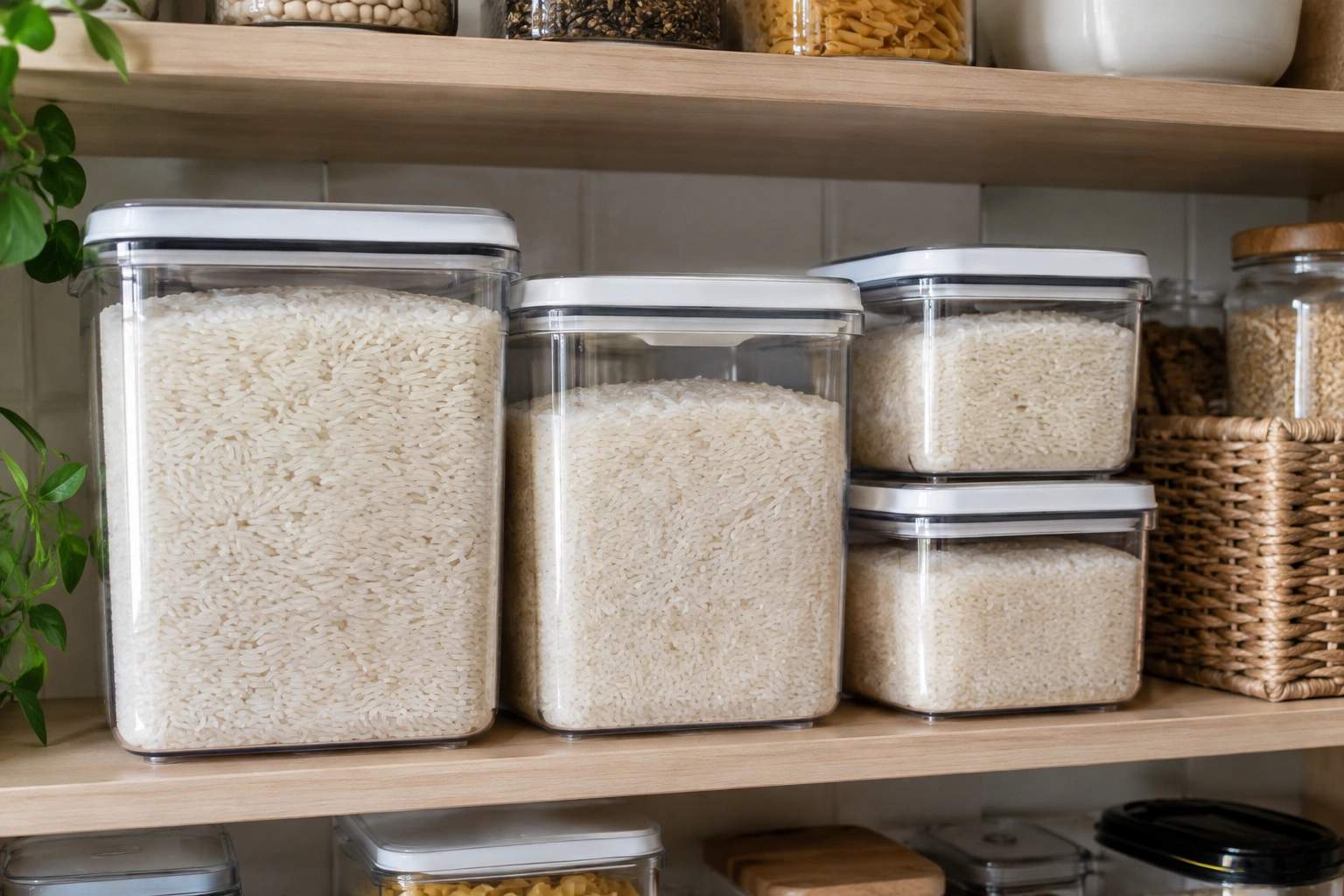
For uncooked white rice, a cool, dry, dark pantry is usually enough for everyday use. For bulk storage, an airtight container with a tight seal is better than leaving the rice in its original bag after opening. For cooked rice, the clock starts as soon as it finishes cooking. It should be cooled quickly, refrigerated promptly, and reheated thoroughly before eating. US Rice recommends cooling hot rice to 70°F within two hours and refrigerating it after that.
Quick Comparison: Pantry, Fridge, or Freezer?
| Storage choice | Best for | Pros | Trade-offs |
|---|---|---|---|
| Pantry, uncooked rice | Everyday dry rice storage | Simple, cheap, convenient | Less protection if the bag is opened or the pantry is humid |
| Airtight container, uncooked rice | Bulk rice and pest prevention | Better moisture and insect control | Takes up more space and costs a bit more |
| Refrigerator, cooked rice | Short-term leftovers | Easy access for meal prep | Still needs careful cooling and date labeling |
| Freezer, cooked rice | Longer storage for meal prep portions | Best option when you will not use rice soon | Requires portioning and freezer space |
If you buy rice in bulk, the decision is mostly about how fast you use it. If a bag will be finished in a few weeks, pantry storage in a sealed container is usually enough. If you want to hold rice longer or protect it from pantry pests, upgrade the packaging. If the rice is already cooked, the refrigerator works for a few days, while the freezer is the better choice when you want to stretch it further.
How to Store Uncooked White Rice in the Pantry
Uncooked white rice stores well because it is dry and shelf-stable. The goal is not to “preserve” it in a complicated way; the goal is to keep out the three things that shorten its life: moisture, heat, and insects.
Choose a pantry spot that stays stable. A shelf away from the stove, dishwasher, oven, or sunny window is better than a warm cabinet above the range. Temperature swings and humidity make rice more likely to absorb odors or pick up moisture. A dry pantry or cool cellar is a better location than a hot garage or damp basement.
For everyday use, a food-safe airtight container is the most practical choice. It helps keep rice dry and makes scooping easier. If you keep rice in its original bag, place that bag inside a sealed bin or container rather than leaving it open with the top folded over. That extra layer matters more than people think, especially in homes where pantry pests are a recurring issue.
For long-term storage, the packaging matters even more. Utah State University Extension notes that food-safe plastics like PETE containers, glass jars, #10 cans with food-grade enamel lining, and Mylar-type bags are useful for long-term rice storage. Their guidance also recommends food-safe oxygen absorbers to help preserve quality and protect against insect infestation. If you are storing rice as a backup supply rather than for weekly use, that setup is worth the extra effort. USU Extension’s rice storage guidance is a solid reference for this approach.
Best Containers for Uncooked White Rice
The best container depends on how you use rice.
Original bag
The original bag is fine if you will use the rice quickly and your pantry is dry. The downside is simple: bags are easy to tear, do not seal well after opening, and offer little defense against moisture or pests.
Airtight pantry container
This is the best all-around option for most homes. It gives you a tight seal, makes storage neater, and helps keep rice fresher. Clear containers are convenient because you can see what is inside, but opaque containers may block light better. Either can work if the seal is reliable.
Mylar bag with oxygen absorber
This is the stronger long-term option. It is more work upfront, but it offers better protection for bulk storage. Use it when you are storing rice for backup supply, not when you want fast daily access. The trade-off is convenience: every time you open it, you break that long-term barrier.
Glass jars
Glass is food-safe and easy to clean. It works well for smaller amounts, but it is heavier and more breakable than plastic. For a family pantry, glass is usually better for portioned storage than for a 20- or 50-pound rice reserve.
If your main goal is meal prep convenience, choose a container that lets you portion rice without fuss. If your main goal is long-term storage, choose a package that limits air exposure and pest access.
How Long Uncooked White Rice Lasts
White rice lasts a long time because it has had the outer bran removed. That makes it more stable than brown rice, but storage conditions still matter.
For typical home use, uncooked white rice stored in a sealed container in a cool, dry pantry is usually best used on a first-in, first-out basis rather than held indefinitely. An unopened bag can often stay in the pantry until you are ready to use it, as long as the package remains intact and the storage area stays dry. Once opened, transfer it to an airtight container or reseal it well inside a secondary bin.
For long-term storage, the timeline depends on ideal packaging and conditions. With proper long-term packaging, some sources say white rice can remain usable for many years, but that is not a guarantee for every pantry. The Provident Prepper notes that white rice can stay good for 25 years or more if packaged correctly, and Utah State University Extension recommends tightly sealed storage with oxygen absorbers for long-term use. That kind of storage is closer to archival or emergency storage than normal household storage.
That said, “can last” is not the same as “will stay perfect forever.” If the rice is kept in a warm, humid, or leaky storage area, quality will decline much sooner. For a busy home, the practical approach is this:
- Use pantry rice first if it is already open.
- Keep newer rice behind older rice.
- Label bulk containers with the purchase date.
- Recheck long-stored rice before cooking, especially if it has been in storage for many months.
If you are storing rice for emergency backup, treat the packaging like a system, not a one-time task. The shelf life depends as much on the seal and storage environment as it does on the rice itself.
How to Prevent Bugs, Moisture, and Spoilage
Pantry pests are the main reason many people transfer rice out of the original bag. Rice weevils and similar insects can get into poorly sealed packages, especially if the pantry is warm or if other dry goods are already infested.
Use these prevention steps:
- Seal the rice tightly. A loose fold is not enough.
- Keep it dry. Never store rice near steam, sinks, or damp walls.
- Store it off the floor. Shelves reduce exposure to spills and pests.
- Check for pinholes or webbing. These can signal insect activity.
- Rotate stock. Use older rice before opening a new bag.
- Clean the pantry regularly. Crumbs and spilled grains attract pests.
Moisture is just as important as bugs. Even a small amount of humidity can cause clumping, odors, or quality loss. If rice smells stale, looks dusty in a strange way, or has visible insect activity, do not try to “save” it by rinsing. Discard it.
How to Store Cooked White Rice Safely
Cooked rice is a different food from uncooked rice in storage terms. Once it is cooked, it becomes perishable and needs prompt cooling.
US Rice recommends cooling hot rice as quickly as possible by transferring it to a shallow pan and bringing it down to 70°F within two hours. After that, it should be wrapped, dated, and refrigerated. That shallow-pan step matters because a deep pot holds heat too long, which slows cooling and increases food safety risk.
A practical meal-prep method looks like this:
- Spread the rice in a shallow container or pan.
- Divide large batches into smaller portions right away so they cool faster.
- Let steam escape briefly so it is not trapped in a deep mass.
- Refrigerate the rice within two hours of cooking, sooner if the room is hot.
- Label the container with the date.
If you are packing rice for lunches, portion it before chilling when possible. Smaller portions cool more evenly and are easier to reheat later.
How Long Cooked White Rice Lasts in the Fridge or Freezer
For refrigerated cooked rice, the safest guidance is to keep it short-term only. US Rice says cooked rice may be stored in the refrigerator for up to 7 days. Riceland gives a more conservative recommendation of 4 to 6 days in an airtight container. That range is useful: if you want the most cautious household routine, aim to eat refrigerated rice within 4 to 6 days.
If you do not plan to use it that soon, freeze it. Freezing is the better choice for meal prep portions that will sit longer than a few days. It also reduces waste because you can thaw only what you need.
Use the refrigerator when:
– you will eat the rice within the week,
– you want fast access for lunches or side dishes,
– and you have room to keep it cold without crowding.
Use the freezer when:
– you cooked a large batch,
– you want to portion rice for later,
– or you know your schedule will not get to it in time.
How to Freeze and Reheat Cooked White Rice
Freezing rice works best when you portion it first. Flat, single-meal portions freeze faster and thaw more evenly than one large block. Riceland recommends resealable freezer bags for this reason, and that advice fits real-life meal prep well.
A simple freezing routine:
– Cool the rice first.
– Portion it into meal-sized amounts.
– Pack it into freezer bags or freezer-safe containers.
– Press out excess air if using bags.
– Label with the date.
For reheating, use a method that heats the rice all the way through. Microwave it in a covered dish with a splash of water if needed, stirring partway through so the heat distributes evenly. On the stovetop, reheat it in a covered pan over low heat with a little water until it is steaming hot throughout. The main food safety point is the end point: the rice should be heated thoroughly until steaming hot all the way through, not just warm in the center.
How to Tell If White Rice Has Gone Bad
Uncooked white rice usually gives clear warning signs when it is no longer worth keeping:
- a stale, musty, or off smell,
- visible insects or webbing,
- clumping from moisture,
- discoloration,
- or evidence that the packaging has been compromised.
Cooked rice is less forgiving. If it was left at room temperature too long, smells sour or unusual, or shows any mold, discard it. Do not taste it to “check.” With rice, the safer decision is to throw it out when the signs are obvious or the storage timeline has been missed.
If you are unsure whether the rice is contaminated, especially after a pantry pest issue, it is better to discard it than risk serving it.
Best Storage Setup for Bulk Buyers and Meal Preppers
For a family buying large bags of white rice, the most practical setup is usually a two-tier system:
- Daily-use rice: keep in a smaller airtight container in the pantry.
- Backup rice: keep in a sealed long-term package such as a Mylar bag or food-safe container, stored in a cool, dry, dark place.
That setup gives you convenience and protection at the same time. The smaller container handles day-to-day cooking. The backup supply stays untouched until needed.
For meal preppers, portioning is the real time-saver. Cook once, cool quickly, then divide the rice into containers that match your normal meals. That makes weekday reheating easier and reduces the chance that leftovers sit too long.
A good rotation system is simple:
– write the purchase date on uncooked rice containers,
– write the cooking date on leftovers,
– and use older stock first.
That habit prevents waste better than any fancy storage trick.
When to Ask a Food Safety Expert
If you have a large quantity of cooked rice that sat out too long, or you suspect a contamination problem in a pantry full of dry goods, ask a food safety expert or your local extension office for guidance. When food has been stored outside safe conditions, the cost of replacing it is usually lower than the risk of guessing.
For a broader pantry strategy, you may also find our related guides helpful: How to Safely Store Rice So It Stays Fresh, Dry, and Safe to Eat and How to Store Rice Safely at Home for Freshness, Food Safety, and Less Waste.
FAQ
Should uncooked white rice be refrigerated or frozen?
For normal home use, no. Uncooked white rice is usually best kept in a pantry in a sealed container. Refrigerating or freezing it is generally unnecessary unless you are trying to manage a specific long-term storage plan or protect it from pests in a difficult environment.
Should I keep unopened rice in the original bag?
If the bag is unopened and intact, it can usually stay that way until you are ready to use it, as long as the pantry is cool and dry. After opening, transfer it to an airtight container or place the bag inside a sealed bin.
How soon should cooked rice go into the fridge?
As soon as it has cooled enough to handle safely, and within two hours of cooking at the latest. Divide large batches into smaller portions right away so they cool faster and do not stay warm too long.
How do I reheat cooked rice safely?
Reheat it in the microwave or on the stovetop until it is steaming hot throughout. If it looks dry, add a small splash of water before reheating. Do not just warm the top layer.
Can I freeze cooked rice for meal prep?
Yes. Freezing is a good option for meal prep portions you will not use within a few days. Cool it first, portion it, seal it well, and label it with the date.
How do I know if stored rice has gone bad?
Look for a stale smell, moisture clumping, insects, webbing, discoloration, or a compromised package. For cooked rice, discard it if it sat out too long or smells off.