
How to Store Yeast So It Stays Fresh, Active, and Ready for Baking

Yeast is one of those ingredients that quietly decides whether your dough rises beautifully or leaves you waiting for a loaf that never quite wakes up. The good news: storing yeast well is simple once you understand what it dislikes most—air, moisture, and heat.
If you want the shortest practical answer, here it is: keep opened yeast sealed tightly in an airtight container, and store it in the refrigerator or freezer if you won’t use it quickly. Unopened yeast can usually stay in its original package until the printed date, but once it’s opened, better packaging matters a lot more.
For home bakers and culinary students, the real skill is not just “where do I put it?” but “how do I protect it from losing strength before I need it?” That’s what this guide covers.
Quick Answer: The Best Way to Store Yeast
If you bake often, a small airtight container in the refrigerator is the most practical everyday setup for opened active dry or instant yeast. If you bake less often or buy yeast in larger amounts, the freezer is the better long-term storage option for dry yeast.
Here’s the simple rule I use in the kitchen:
- Unopened dry yeast: keep it in a cool, dry place until the printed date.
- Opened active dry or instant yeast: transfer it to an airtight container or reseal it tightly, then refrigerate for regular use or freeze for longer storage.
- Fresh yeast: keep it refrigerated and use it quickly; it is not a long-storage ingredient.
- Frequent use: refrigerator storage is convenient for dry yeast.
- Infrequent use or bulk buying: freezer storage is the safer choice for dry yeast.
The key is not just cold storage. It’s cool, dry, and sealed. Yeast that absorbs moisture or gets exposed to condensation can weaken fast.

What You Need Before Storing Yeast
A little setup makes yeast storage much more reliable. Gather these basics:
- Airtight container: a glass jar with a tight lid works well
- Zip-top bag: useful for extra protection or double-sealing
- Tape or clip: helpful for folded packets
- Label and marker: so you can date the container
- Cool, dry storage space: pantry, refrigerator, or freezer depending on use
A labeled container matters more than many bakers realize. When yeast is moved into a plain jar with no date, it’s easy to forget how long it has been sitting there.
Yeast Storage at a Glance
| Yeast type | Recommended storage location | Container type | Realistic post-opening guidance |
|---|---|---|---|
| Active dry yeast | Refrigerator for regular use; freezer for longer storage | Airtight jar or tightly sealed zip-top bag; keep original packet only if it is firmly resealed | Often usable for several months in the fridge; longer in the freezer if kept dry and sealed |
| Instant yeast | Refrigerator for regular use; freezer for longer storage | Airtight jar or tightly sealed zip-top bag; original vacuum-sealed packaging is fine until opened | Often usable for several months in the fridge; longer in the freezer if kept dry and sealed |
| Fresh yeast | Refrigerator only | Original wrapper or a lightly wrapped airtight container that limits drying | Use as soon as possible, usually within a short time after purchase; do not treat it like dry yeast |
These are practical ranges, not guarantees. Brand, packaging, and temperature swings all affect how long yeast stays active.
Choose the Right Storage Method for Your Yeast Type
Not all yeast behaves the same way in storage.
Active dry yeast
Active dry yeast is fairly sturdy, which is why many home bakers keep it on hand. Once opened, it should be sealed tightly so it doesn’t pick up moisture from the air. Bob’s Red Mill recommends keeping opened yeast in an airtight container and notes that air and moisture shorten its lifespan and can cause spoilage. Their storage advice includes folding a packet over and sealing it with tape, or moving loose yeast into a zip-top bag or glass jar with a tight lid. Bob’s Red Mill storage guidance
Instant yeast
Instant yeast is also best kept dry and sealed. It’s often sold in packets, jars, or vacuum-sealed bags. Once opened, transfer it to an airtight container or reseal the package tightly, then refrigerate it if you use it regularly or freeze it if you want to keep it longer.
Fresh yeast
Fresh yeast is a different story. It’s much more perishable and needs refrigeration. It dries out and deteriorates faster than dry yeast, so it’s best used quickly after purchase. If you buy fresh yeast, think of it as a short-term ingredient rather than something to stash for months.
Pantry vs. Refrigerator vs. Freezer: Which Is Best?
This is the decision most bakers want answered clearly. Each storage option has a place.
| Storage method | Best for | Pros | Trade-off |
|---|---|---|---|
| Pantry | Unopened dry yeast, short-term use | Convenient, no extra step | Shortest protection once opened |
| Refrigerator | Opened dry yeast used regularly | Easy access, cooler than pantry | Must be sealed well and kept dry |
| Freezer | Long-term storage of dry yeast, bulk buying | Strongest protection for dry yeast | Less convenient if you bake often |
Pantry storage
The pantry is fine for unopened yeast if the package is intact and the space is cool and dry. But once a packet or jar is opened, a pantry is usually the least protective option. Heat from nearby appliances, humidity from cooking, and repeated opening all work against yeast viability.
Refrigerator storage
The refrigerator is a strong middle ground for opened dry yeast. It gives you cooler conditions without the extra handling of freezing. If you bake weekly or every couple of weeks, the fridge can be a practical home base—as long as the yeast stays airtight and dry.
One caution: don’t let condensation form inside the container. Taking a cold jar in and out repeatedly can create moisture if the lid is opened while the container is still cold and then returned to a warmer kitchen.
Freezer storage
The freezer is the best choice when dry yeast sits unused for long stretches. It’s especially useful if you buy larger quantities. A tightly sealed container helps protect the yeast from moisture and temperature swings.
A practical rule: if you buy yeast in bulk or use it only occasionally, freezer storage is usually the most protective option for dry yeast. If you bake frequently, the refrigerator may be easier to live with.
How to Store Unopened Yeast
Unopened yeast is the easiest case.
- Keep the package sealed until you need it.
- Store it in a cool, dry place away from the stove, dishwasher, or sunny windows.
- If the package is already vacuum-sealed or clearly designed for long storage, leave it alone until opening.
- If the yeast is nearing its date and you won’t use it soon, move it to cold storage if the package instructions allow it.
The original packaging is usually enough while it stays unopened. Once you open it, though, the package itself becomes a weaker barrier against air and moisture.
How to Store Opened Yeast Step by Step
This is where good storage habits really pay off.
1) Handle the package right away
If the yeast came in a packet, fold the top over tightly and seal it with tape if you plan to keep using the packet temporarily. If it came in a bag, squeeze out as much air as possible before sealing it. For longer storage, transfer opened dry yeast into a small airtight container or a zip-top bag placed inside a jar.
2) Use a truly airtight container
A glass jar with a tight lid is one of the simplest and most reliable options for dry yeast. The goal is to keep out air and moisture, not just to make the yeast look neat on the shelf.
3) Label the container
Write the date you opened it. If you transferred yeast from a larger package, note the type too: active dry, instant, or fresh. That way, you won’t have to guess later.
4) Put each type in the right place
- Use the pantry only for unopened dry yeast.
- Use the fridge for opened dry yeast you use regularly.
- Use the freezer for opened dry yeast you want to keep longer.
- Keep fresh yeast in the refrigerator and use it promptly.
5) Minimize temperature swings
Repeatedly opening a cold container in a humid kitchen can invite condensation. If you bake often, it helps to keep one smaller working portion in the fridge and leave the rest frozen and sealed.
How Long Yeast Lasts After Opening
I want to be careful here: yeast life varies by brand, package format, storage conditions, and how well it’s sealed. So instead of pretending there’s one universal number, use this practical framework:
- Active dry yeast, opened and refrigerated: often usable for several months if sealed well
- Instant yeast, opened and refrigerated: often usable for several months if sealed well
- Active dry or instant yeast, opened and frozen: often usable longer than refrigerated storage if kept dry and sealed
- Fresh yeast, refrigerated: use quickly; it is much more perishable than dry yeast
Fresh yeast is the most delicate and should be used quickly. Dry yeast lasts longer, especially when sealed well and stored cold. But no storage method makes yeast immortal. If the container was left open, exposed to steam, or stored warm for a long time, expect performance to drop.
A smart habit is to test older yeast before committing flour, butter, and time to a dough.
How to Test Yeast Before Baking
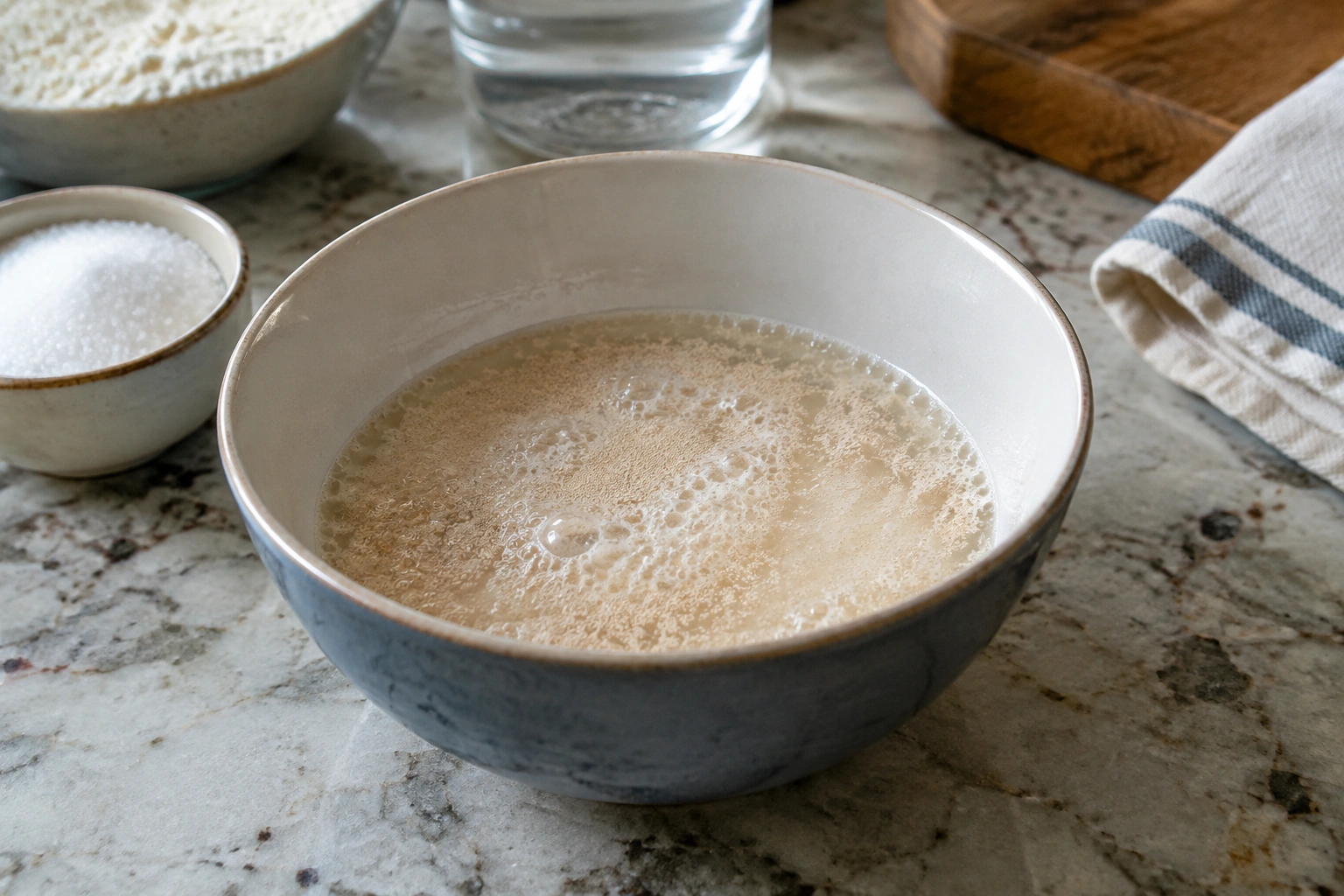
If your yeast is old, stored for a long time, or came from a package you don’t fully trust, test it first.
Exact proofing test
Use these measurements so the test is repeatable:
- 1/4 cup warm water: about 105°F to 110°F
- 1 teaspoon granulated sugar
- 2 1/4 teaspoons yeast if you are testing a standard packet, or the amount you want to check
Steps
- Pour 1/4 cup warm water into a small bowl or measuring cup.
- Stir in 1 teaspoon sugar until dissolved.
- Sprinkle 2 1/4 teaspoons yeast over the surface.
- Let it sit for 5 to 10 minutes.
Pass/fail result
- Pass: the mixture becomes foamy, bubbly, and visibly active, with a clear layer of foam on top.
- Fail: little or no foam appears after 10 minutes, or the yeast only sinks without noticeable activity.
If the test fails, replace the yeast before baking. If it passes, the yeast is active enough to use, though very old yeast may still rise more slowly than fresh yeast.
Common Mistakes That Ruin Stored Yeast
Most yeast storage failures come from a few repeat offenders.
Leaving it loose or half-open
Even a small gap lets in air and moisture. That may not ruin yeast overnight, but it shortens the useful life.
Storing it near heat
The area beside the stove, oven, dishwasher, or a sunny window is a poor home for yeast. Heat speeds up decline.
Letting steam or wet utensils get into the container
Never scoop yeast with a damp spoon. Never open the jar over a steaming pot. Moisture is one of yeast’s fastest enemies.
Repeated warming and cooling
Taking yeast in and out of the freezer or fridge too often can create condensation. That’s why labeling and portioning matter.
Trusting the date blindly
The printed expiration date is helpful, but it doesn’t guarantee the yeast is still lively. Storage conditions matter just as much.
Troubleshooting: Signs Your Yeast Has Gone Bad
Yeast doesn’t usually “spoils” in the same dramatic way as milk, but it can become weak or unusable.
Watch for these signs:
- Clumping from moisture exposure
- Mold
- Off smell
- Little or no bubbling during the proofing test
- Dough that rises very slowly or barely rises at all
If yeast has been exposed to visible moisture, I would not gamble on it. Weak yeast can waste ingredients and time, and in a bread formula, that often means a dense loaf and a frustrating bake.
Practical Storage Examples for Home Bakers
If you bake every weekend
Keep a small amount of active dry or instant yeast in a tightly sealed jar in the refrigerator and freeze the rest. That gives you convenience without risking the whole supply.
If you buy yeast in bulk
Divide dry yeast into smaller airtight portions. Freeze the portions you won’t use soon, and keep one working container in the fridge.
If you found an old packet in the pantry
Don’t assume it’s dead. Test it first. If it foams well, it may still be perfectly usable.
If you use fresh yeast
Buy only what you’ll use quickly and refrigerate it right away. Fresh yeast is not a “stock up for later” ingredient.
When to Consult a Master Baker
If you’re working on professional bread production, testing a new yeast brand, or troubleshooting inconsistent rise in a bakery setting, it can help to talk with a master baker or instructor. Yeast problems sometimes come from storage, but they can also come from flour strength, dough temperature, or mixing method. A skilled baker can help you separate those variables instead of guessing.
Frequently Asked Questions About Storing Yeast
Can I store yeast in its original packet?
Yes, if it’s unopened. Once opened, the original packet is usually not enough on its own. Fold it tightly, tape it shut, or move the yeast into a better-sealed container.
Does yeast need to be kept in an airtight container?
For opened dry yeast, yes. Airtight storage helps protect it from air and moisture, which are the main causes of decline.
Can you freeze yeast?
Yes. Freezing is a practical option for longer storage of dry yeast, especially if you don’t bake often or buy yeast in larger amounts.
Do you need to thaw frozen yeast before using it?
Let frozen yeast warm gradually while still sealed so moisture doesn’t form on the yeast itself. That helps protect it from condensation.
Is refrigerator storage better than pantry storage?
For opened dry yeast, usually yes. The fridge is cooler and generally more protective than a warm pantry, provided the yeast stays dry and sealed.
Should fresh yeast be stored the same way as dry yeast?
No. Fresh yeast is more perishable and needs refrigeration. It should be used much sooner than dry yeast.
Is buying yeast in bulk a good idea?
It can be, if you bake often enough to use it before it loses strength. If you bake only occasionally, smaller packages are usually easier to manage unless you plan to freeze the extra yeast in airtight portions.
Final Takeaway
The best way to store yeast is the simplest one that keeps it cool, dry, and sealed. Use the pantry only for unopened dry yeast that will be used soon. Choose the refrigerator for opened dry yeast you use regularly, and the freezer if you want longer storage. Fresh yeast belongs in the refrigerator and should be used quickly. Then label the container, keep moisture out, and test older yeast before you bake.
That small bit of care can be the difference between dough that springs to life and dough that just sits there looking back at you.