
How to Use a Garlic Press Properly for Faster, Easier Everyday Cooking

A garlic press is one of those tools that either earns its spot in the drawer or gets ignored for years. Used well, it turns a clove into fine, usable garlic in seconds. Used poorly, it leaves you with a sticky mess, half-crushed cloves, and a tool that feels harder to clean than the garlic is worth.
For busy home cooks, meal preppers, and budget-conscious families, the value is simple: less prep time, less knife work, and more consistent garlic in weeknight meals. The trick is learning the small details that make the press work smoothly instead of fighting it.
What a Garlic Press Does and When to Use One
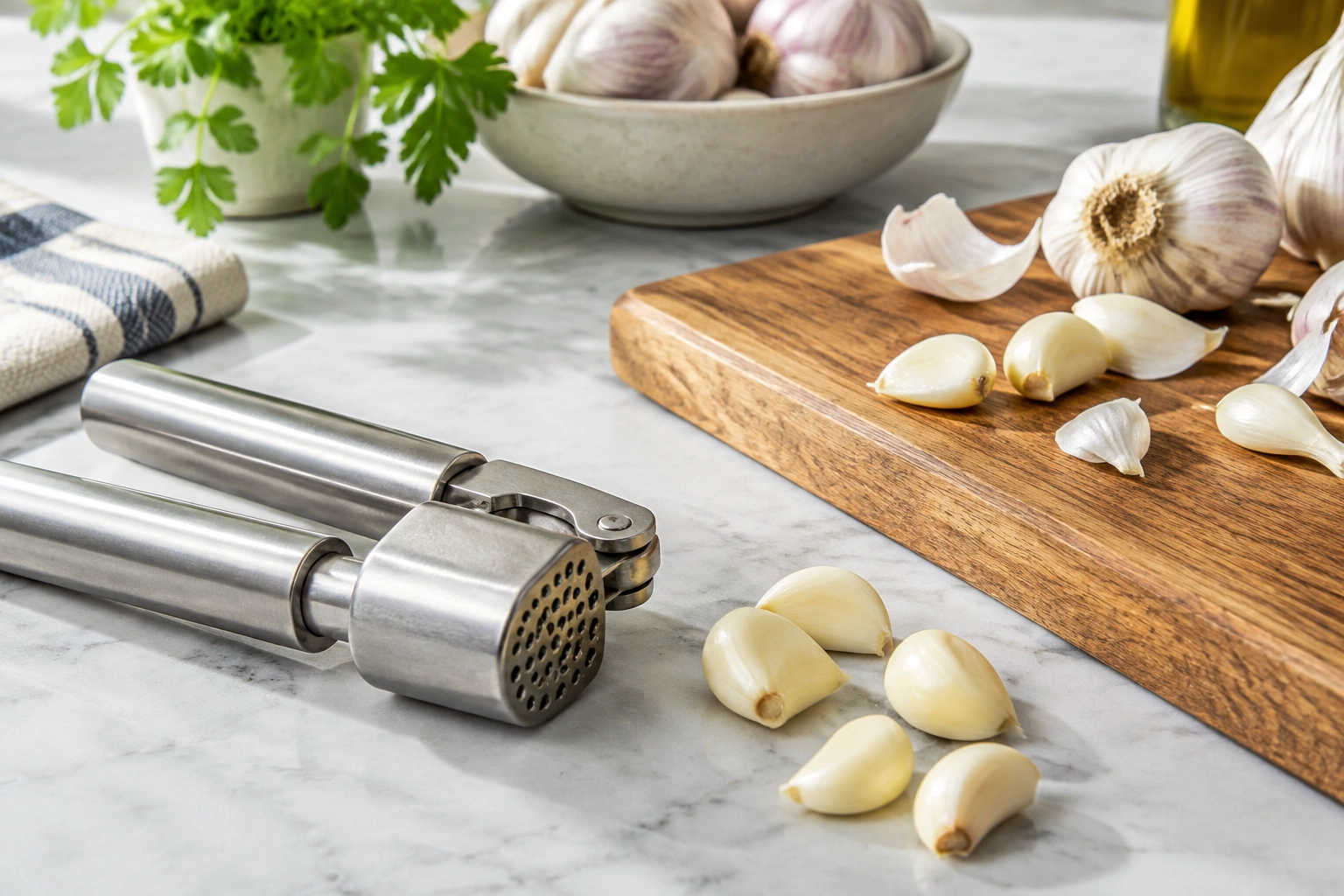
A garlic press crushes a clove through a perforated chamber so the garlic comes out as fine pulp on the other side. That texture is useful when you want garlic to blend into a sauce, sauté, or marinade without noticeable chunks.
It is especially handy for quick meals where you want garlic flavor without stopping to mince carefully. Think pasta sauce, stir-fries, skillet vegetables, or a pan sauce after cooking chicken or fish. You can press garlic directly over a pan or into a dish, which keeps the process fast and contained. Zyliss explains the basic method here.
The trade-off is control. A knife gives you more choice over texture, while a press gives you speed and consistency. If you want very even garlic distributed through a dish, the press is often the more practical tool. If you want visible pieces or a more rustic texture, chopping by hand may fit better.
Do You Need to Peel Garlic Before Pressing?
In many cases, no. Some presses can handle unpeeled garlic, but skin-on pressing depends on the model and usually works best only with presses designed for it. In everyday use, peeling usually makes the press work more easily and reduces cleanup.
Here is the simplest decision rule:
- Peel the clove if you want smoother pressing, less chance of clogging, and easier cleanup.
- Try pressing with the skin on only if your press is designed to handle it and the clove fits comfortably.
If you are prepping several cloves at once for meal prep, peeling first usually pays off. The press runs more smoothly, and you are less likely to spend extra time scraping bits of skin out of the chamber later. If you are cooking one clove for a quick dinner and your press handles unpeeled garlic well, skipping the peel can save a step.
How to Prepare Garlic Cloves for the Press
Good pressing starts before the handle ever closes.
Pick cloves that fit the chamber
Use cloves that fit without force. If a clove is oversized, trim the root end or slice the clove in half lengthwise. A clove that is too large can make the press harder to squeeze and may not crush evenly.
Peel if you want smoother results
If you are peeling, remove the papery skin and any loose bits. Dry cloves press more cleanly than wet, slippery ones, so pat them dry if they were rinsed.
Open the press fully
Make sure the handles open wide enough to load the chamber without pinching your fingers. A press that is partly open can be awkward to load and may not align correctly when you squeeze.
Use one clove first
Even if the chamber looks roomy, begin with one clove. That gives you a clear sense of how the tool behaves before you decide whether it can handle more.
How to Use a Garlic Press Step by Step
The basic method is straightforward, but a few details matter.
-
Open the press fully.
This gives you room to place the clove properly. -
Place the garlic in the chamber.
Set the clove so it sits squarely inside the basket or chamber instead of tilted to one side. -
Close the handles steadily.
Use firm, even pressure. You do not need to jerk the tool or squeeze as hard as possible right away. -
Let the garlic come through the holes.
The clove will be crushed against the pressing plate grid, and fine pulp will emerge on the other side. -
Scrape out the pulp if needed.
If garlic clings to the surface, scrape it with the blunt edge of a knife or another safe tool. -
Remove the peel or residue.
Open the press and clear out the spent skin before loading the next clove.
If you are pressing directly into a skillet, bowl, or saucepan, keep the opening close to the surface so the garlic lands where you want it. That avoids scattering bits across the counter.
What to Do With the Skin, Pulp, and Leftover Bits
A garlic press rarely gives you every last bit of usable garlic in one squeeze, and that is normal.
The peel usually stays behind in the chamber or drops out when you open the press. Toss it in the compost or trash. If you are peeling first, the skin is simply prep waste.
The garlic pulp that comes through is the part you want. Any garlic left on the face of the press can be scraped off with the blunt side of a knife. Recovering it is a practical way to reduce waste.
Do not expect the chamber to come out spotless on its own. A thin film of garlic is common, and that residue is what makes cleaning matter right away.
Common Garlic Press Mistakes and How to Fix Them
Most garlic press problems come from loading, alignment, or cleanup timing.
The press is hard to squeeze
Usually, the chamber is overloaded, the clove is too large, or the garlic is not positioned evenly. Try one smaller clove, or cut a large clove in half before pressing.
The garlic comes out unevenly
This often means the clove was off-center. Reposition it so it sits flat in the chamber before squeezing again.
The holes clog quickly
Dry residue and small bits of skin are the usual cause. Rinse sooner, and use a small brush or toothpick to clear the holes before the garlic dries. If you wait until after dinner and the tool sits in the sink, cleanup gets much slower.
You are losing too much garlic
That usually happens when the press is not fully squeezed or when you stop before the chamber has done its job. Give the handles a full, steady press, then scrape the surface once.
You are trying to press too much at once
It is tempting to load several cloves to save time, but that often makes the press harder to operate and less consistent. One clove at a time is the most reliable method for everyday cooking.
How to Clean a Garlic Press Quickly
Cleaning is easier if you do it immediately after use.
Rinse the press right away under warm water so the garlic does not dry in the holes. If your model opens wide, open it fully and rinse from both sides. A small brush, skewer, or toothpick can help clear stubborn bits from the grid.
If the press is dishwasher-safe, that can save time on busy nights. Check the manufacturer’s care instructions first, because not every model is meant for the dishwasher. If you wash by hand, avoid abrasive scrubbers and do not soak presses with moving parts or coated finishes for long periods, since that can wear the surface or affect how the mechanism works. Dry it promptly so residue does not harden in the chamber.
A practical cleanup routine looks like this:
- Press garlic.
- Scrape out the pulp.
- Rinse immediately.
- Brush the holes if needed.
- Dry and put it away.
That five-step habit prevents the “I’ll clean it later” problem that makes the tool feel annoying to own.
Garlic Press vs. Knife-Mincing and Other Prep Tools
The best tool depends on what you value most in the moment: speed, texture, or cleanup.
| Method | Speed | Cleanup | Texture | Best for |
|---|---|---|---|---|
| Garlic press | Fast | Moderate | Fine, soft pulp | Sauces, stir-fries, quick weeknight cooking |
| Knife-minced garlic | Slower | Low | Customizable | Recipes where you want control over size |
| Garlic rocker | Fast | Moderate | Crushed/minced | Quick prep with a different hand feel |
| Microplane | Very fast | Moderate to high | Very fine, almost paste-like | Strong garlic distribution in dressings or sauces |
A garlic press is worth using when you want convenience and a fairly fine result without spending time on knife work. Knife-mincing is better when you want to see and control the pieces. A microplane can create a very fine texture, but it can also be messier to clean. A rocker-style tool can work well too, but it changes the motion and cleanup pattern.
If you cook garlic often, the press earns its place when the goal is speed on ordinary weeknights, not culinary precision for its own sake.
A Simple Rule for Deciding Whether to Use the Press
Use the garlic press when:
- you want fast prep,
- you are cooking a dish where garlic should blend in,
- and you do not mind a little cleanup afterward.
Skip it when:
- you want chunky garlic pieces,
- you only need a tiny amount,
- or you already have the knife out and want less washing.
For meal prep, the press is especially useful when you are making several portions of the same base recipe. Press the garlic, cook it immediately, and rinse the tool before you move on. That keeps the task manageable instead of letting a small job turn into a sticky one.
When to Ask a Food Safety Expert
If you are unsure whether a specific garlic press is safe to use, clean, or put in the dishwasher according to the manufacturer’s instructions, check the product manual first. For food safety questions about handling ingredients or cleaning kitchen tools, a local extension office or food safety educator can be a helpful resource.
FAQ
Can I press multiple garlic cloves at once?
Sometimes, but one clove at a time is usually easier and more reliable. Multiple cloves can make the press harder to squeeze and may leave uneven results.
Should I press garlic directly into the pan?
Yes, that can be convenient, and it is a common way to use the tool. Just keep the press close to the pan or dish so the garlic lands where you want it.
Why does garlic stick to the press?
Garlic residue dries quickly and clings to the holes and surface. Rinse right away and use a small brush or toothpick if needed.
Is pressed garlic the same as chopped garlic?
No. Pressed garlic is finer and softer, while chopped garlic has more texture. That difference affects how the garlic spreads through a dish and how it cooks.
Can a garlic press be used for other foods?
Some people use garlic presses for small soft ingredients, but that depends on the tool and the food. Check the manufacturer’s guidance before trying anything beyond garlic.
A garlic press is worth keeping around if you want faster garlic prep with less knife work. The key is to match the method to the model, prep the cloves so they fit well, and clean the tool right away so it stays easy to use.