
How to Use Kitchen Shears for Faster, Safer Everyday Food Prep

Kitchen shears earn their place in a busy home because they solve small prep jobs quickly, cleanly, and with less fuss than setting up a knife and board for every little task. Used well, they can trim herbs, cut packaging, portion cooked foods, and help you work directly over a bowl or pan when that makes more sense than transferring ingredients back and forth.
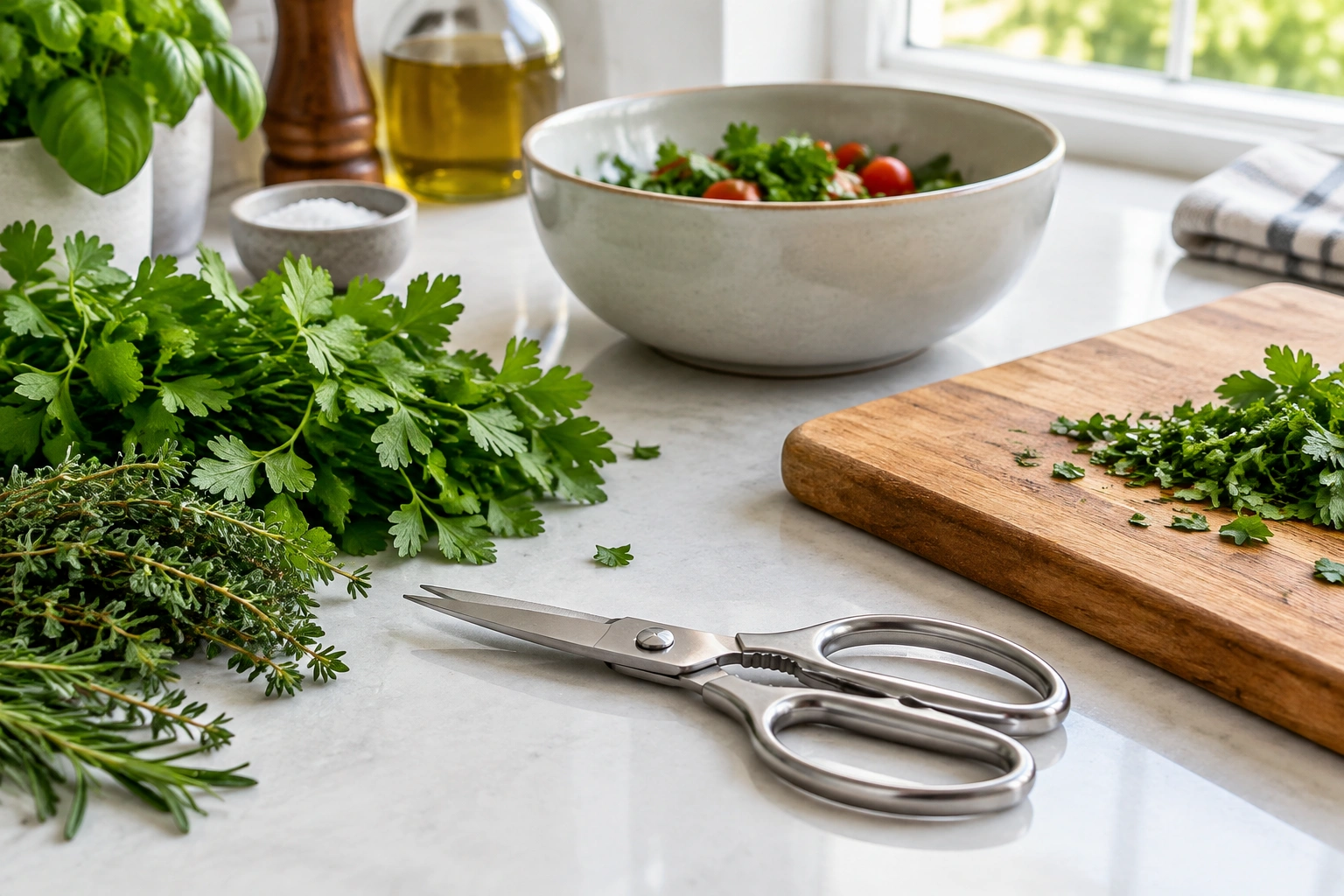
The key is to treat them as a food tool first, not as “just scissors.” That means choosing a sturdy pair, using the blades in a controlled way, and cleaning them properly after contact with raw food. If you cook often, meal prep in batches, or try to stretch groceries without wasting time or ingredients, kitchen shears can be one of the simplest upgrades in your drawer.
What kitchen shears are, and when to use them
Kitchen shears are heavier-duty scissors made for food prep. Compared with regular scissors, they usually have stronger blades, a more stable hinge, and grips designed for repeated cutting in the kitchen. Some models also include a bottle opener, nutcracker notch, or a section that comes apart for cleaning.
That extra strength matters. Regular scissors may snip a bag or a piece of tape, but they are not built for greasy herbs, slippery poultry skin, or repeated kitchen use. A chef’s knife, on the other hand, is better for large, precise cutting jobs on a board. Shears sit in the middle: faster for awkward, small, or direct-in-container tasks, but not a replacement for every knife job.
A useful rule is this: if the task is small, messy, or easier to do while the ingredient stays in place, shears are usually worth reaching for. If the cut needs precision, a flat cutting surface, or a lot of force, use a knife instead.
| Tool | Best for | Trade-off |
|---|---|---|
| Kitchen shears | Herbs, green onions, packaging, cooked meat, light poultry prep, quick snips over bowls or pans | Less precise than a knife for large prep jobs |
| Regular scissors | Paper, craft use, occasional light snipping | Not ideal for food hygiene or tougher kitchen tasks |
| Chef’s knife | Chopping, slicing, dicing, larger ingredients, detailed knife work | Slower for quick snips and awkward packaging |
Common kitchen tasks kitchen shears handle well
The most practical uses are the ones that save you from setting up a full cutting station.
Herbs are a good example. Snipping parsley, cilantro, dill, or chives directly into a bowl keeps the pieces airy and avoids bruising them as much as a lot of rough chopping can. For meal prep, that can mean less cleanup and less herb waste because you are cutting only what you need.
Green onions, lettuce, and leafy greens are also easy wins. If you are packing lunch containers or building a salad, shears let you cut ingredients to size without moving everything to a board. That matters when you are trying to keep prep moving while dinner is already cooking.
Packaging is another everyday use. Kitchen shears can open produce bags, trim vacuum-sealed packaging, and snip tape or twine around food items. This is one of the most underrated time-savers because it keeps your hands cleaner and reduces the chance of fumbling with a slippery package over a sink full of dishes.
Cooked foods are often easier too. You can cut bacon into smaller pieces before cooking, trim cooked chicken for salads, or cut a slice of pizza into smaller portions when a knife or pizza cutter is not handy. One practical advantage is that you can often work directly over the pan, tray, or plate instead of transferring hot food to another surface.
Some shears include extra features that can be useful, depending on the model. Serrated sections, bottle openers, nutcrackers, or similar add-ons may help with certain jobs, but they are not the main reason to buy shears. The cutting performance and ease of cleaning matter more for everyday home use.
How to use kitchen shears safely and effectively
The safest cutting motion is controlled and deliberate. Keep the food stable, keep your fingers out of the blade path, and cut away from your hand whenever you can. That sounds basic, but it is what prevents most slips.
For herbs or soft vegetables, hold the ingredient over a bowl or pan and make short snips instead of trying to force a long cut. Short cuts are easier to control and less likely to crush delicate food. If the ingredient is slippery, place it on a board or plate first so it does not slide toward the blades. For example, a loose bunch of scallions is easier to manage if you lay it flat and snip across the stalks in small sections.
For packaging, open the top edge slowly rather than stabbing into the middle of a bag. That keeps the cut cleaner and reduces the chance of puncturing the food inside. If the package is tight or stiff, use the shears only if the blades can cut without strain; forcing them is how handles loosen and blades dull faster.
A good decision point is whether the cut needs leverage. If yes, shears may be the wrong tool. If the job is a quick trim, a snip, or a small cut while the ingredient stays in place, shears are usually efficient.
Using kitchen shears on raw poultry and other meat
Kitchen shears can be useful for raw poultry in home cooking, especially for trimming excess fat, cutting chicken into smaller pieces, or separating portions before cooking. They can also help with cooked meat, such as cutting chicken thighs or bacon into bite-size pieces for salads, soups, or casseroles.
Raw meat needs extra caution because of cross-contamination. Once the blades have touched raw poultry, treat the shears as contaminated until they have been washed and sanitized. Do not use them to cut herbs, bread, or ready-to-eat food until they have been cleaned properly.
A practical workflow for raw poultry is simple:
1. Wash the shears right after use with hot, soapy water, paying close attention to the hinge and any locking parts.
2. Sanitize them using your kitchen’s normal food-safe sanitizing routine and the manufacturer’s care instructions.
3. Dry the blades, handles, and joint completely so moisture does not sit in the hinge.
4. Store them separately from ready-to-eat prep tools until the next use.
If you cook poultry often, consider dedicating one pair of shears to raw meat and another to general kitchen tasks. That separation is especially worthwhile in busy kitchens where the same tool might otherwise move from raw chicken to herbs or bread in the same prep session. It is a simple, low-cost way to reduce contamination risk and avoid constantly stopping to deep-clean the same pair during meal prep.
Be realistic about limits. Kitchen shears are useful for poultry and some cooked meats, but they are not a good answer for hard bones or heavy-duty butchery. If the cut requires a lot of force, a knife, poultry shears designed for the task, or another tool may be more appropriate.
For food safety basics on preventing cross-contamination, the USDA’s food safety guidance is a solid reference point, especially when you are handling raw poultry in a busy kitchen.
How to clean, sanitize, and dry kitchen shears
Cleaning matters as much as cutting technique. Food residue can collect around the hinge, especially if the shears have a spring, lock, or removable parts.
After normal food use, wash the blades and handles in hot, soapy water, paying attention to the joint. If the shears come apart, disassemble them according to the manufacturer’s instructions so you can clean the hinge area thoroughly. That is one of the main advantages of disassemblable shears: they are easier to clean well, not just quickly.
If the shears touched raw poultry or another raw meat, wash them first, then sanitize them according to your kitchen’s food-safe cleaning routine. The exact sanitizer and process should match your local food safety guidance and the product instructions. Clean first, sanitize second, and let them dry fully before putting them away.
Dishwasher-safe models are convenient, but not every pair belongs there. Some shears can handle the dishwasher; others should be hand-washed to protect the hinge, finish, or handle material. If the label or manual does not clearly say dishwasher-safe, hand washing is the safer default. If you do plan to use the dishwasher regularly, choose a pair that is clearly labeled for that use and still follow the care instructions, since repeated machine washing can be harder on some models over time.
Drying is not optional. Leaving water in the hinge can encourage rust or residue buildup, especially on lower-quality metal. After washing, dry the blades, handles, and joint completely before storage.
How to maintain and sharpen kitchen shears
A well-kept pair cuts cleanly and feels easier in your hand. Dull shears tend to crush herbs, snag packaging, and require more force, which makes them less safe and more frustrating to use.
The simplest maintenance habit is to rinse and dry them promptly after use. That keeps sticky food from hardening around the joint. If you notice buildup, take the pair apart if the design allows it and clean the contact points carefully.
For sharpening, follow the manufacturer’s guidance. Some shears can be sharpened with a sharpening stone or tool, while others are better serviced by a professional or replaced when they no longer cut cleanly. If you are using a stone, work carefully and keep the original blade angle consistent rather than grinding aggressively. Over-sharpening can shorten the life of the blade, and some shears are not meant for user sharpening at all.
Storage matters too. Keep them in a drawer organizer, sheath, or utensil holder where the blades will not bang into other metal tools. That protects the edge and makes them easier to grab when you are in the middle of meal prep. If you want a better storage setup for frequently used tools, see how to store kitchen utensils.
What to look for when buying kitchen shears
If you are choosing a pair for everyday home use, focus on comfort, cleaning, and blade quality before extra gadgets.
Here is a simple buying checklist:
– Blade material and thickness: Look for stainless steel blades that feel sturdy rather than flimsy.
– Hinge and locking mechanism: The joint should feel stable, and any lock should open and close smoothly without wobble.
– Blade length and cutting feel: Choose a length that feels manageable for your hand and the kinds of tasks you do most.
– Handle comfort and handedness: Make sure the grips feel secure and work for left- or right-handed use if that matters for you.
– Cleaning label: If you want dishwasher use, look for a clearly labeled dishwasher-safe pair; if not, pick a model that comes apart for easier hand cleaning.
Stainless steel blades are a strong choice because they resist corrosion better than many cheaper metals. A comfortable, ergonomic handle also matters more than people expect, especially if you use shears for herbs, packaging, and repetitive prep several times a week. If the grips feel slippery or awkward in your hand, the tool will end up sitting in the drawer.
Disassembly is worth considering if you want easier cleaning. Basic shears are simpler and often cheaper, but a pair that comes apart can be much easier to wash around the hinge. That is a real advantage if you plan to use them for raw poultry or sticky foods.
Dishwasher-safe shears are convenient for busy households, but hand-wash-only models may still be the better purchase if they feel sturdier or cleaner in the hand. The trade-off is convenience versus care.
A few features are nice but not essential. Bottle openers, nutcrackers, and serrated sections can be helpful, yet they should not distract you from the basics: sharp blades, stable construction, and a grip that feels secure.
If you are building a practical kitchen toolkit, it can help to think of shears the same way you think about a scale or a good utensil drawer setup: a small tool that removes friction from everyday cooking. For more on organizing your prep area efficiently, this guide on how to organize deep kitchen drawers can help keep your most-used tools easy to reach.
A simple decision guide
Choose kitchen shears if you often:
– snip herbs, green onions, or leafy greens
– open food packaging or trim bags
– portion cooked meat or poultry
– want to work directly over a bowl, pan, or plate
Choose a chef’s knife if you often:
– chop large amounts of vegetables
– need precise slicing or dicing
– are cutting ingredients that need a stable board and controlled knife work
Choose a dishwasher-safe, disassemblable pair if:
– you cook raw meat often
– easy cleaning is a priority
– you want the least hassle in a busy household
Choose a basic pair if:
– you mainly need light prep and packaging use
– you want a simple, lower-cost tool
– you are less concerned about extra features
When to Ask a Food Safety Expert
If you are unsure whether a pair of shears can be safely used on raw meat, whether a specific model is dishwasher-safe, or how to sanitize a tool after raw poultry contact, check the manufacturer’s care instructions first and then follow local food safety guidance. When a tool has rust, loose parts, or persistent residue that you cannot clean out, replace it rather than trying to keep using it.
For general food handling guidance, FoodSafety.gov is a dependable place to check current recommendations.
FAQ
Can kitchen shears replace a knife?
Not completely. They are better for quick snips, packaging, herbs, and small prep tasks. A knife is still the better tool for larger chopping, slicing, and precision work.
Can I cut raw chicken with kitchen shears?
Yes, if the shears are sturdy enough and you clean and sanitize them afterward. Keep them separate from ready-to-eat foods until they have been washed properly.
Can kitchen shears go in the dishwasher?
Only if the manufacturer says they are dishwasher-safe. If that is not clearly stated, hand washing is the safer choice.
What foods work best with kitchen shears?
Herbs, green onions, leafy greens, cooked meat, bacon, some poultry prep, and packaging are all practical uses. Delicate or large prep jobs are usually better on a board with a knife.
Do I need special shears for food?
A kitchen-specific pair is worth it. They are sturdier than regular scissors and are designed for food prep, cleaning, and repeated kitchen use.
How often should I sharpen them?
There is no universal schedule. Sharpen when they stop cutting cleanly, start crushing herbs, or require extra force. Follow the manufacturer’s instructions or seek sharpening help if the design is specialized.
Should I buy a pair with removable blades?
If easy cleaning matters to you, yes. Removable blades make it simpler to clean around the hinge, which is helpful for frequent cooking and raw-meat prep.
Are kitchen shears worth it for busy families?
Usually, yes. They save time on small jobs, reduce the need for extra tools, and make everyday prep feel less complicated. That is especially useful when dinner needs to move quickly and cleanup has to stay manageable.