Is Baking Soda Alkaline? A Clear Guide for Home Bakers
Quick Answer: Is Baking Soda Alkaline?
Yes. Baking soda is alkaline. It is the food name for sodium bicarbonate, a compound that reacts with acids in baking and changes both texture and flavor.
That alkalinity is the reason baking soda can help cookies spread, pancakes rise, and cakes brown more quickly. But it also explains why baking soda does not work well on its own in every recipe. If there is not enough acid in the batter or dough, it may leave behind a flat, bitter, or soapy taste.
If you want a deeper explanation of pH and where baking soda sits on the scale, see our guide on the pH of baking soda.
What Baking Soda Is and How It Behaves on the pH Scale
Baking soda is a chemical leavener and a mild alkaline ingredient. In simple baking terms, “alkaline” means it has the opposite character of an acidic ingredient like lemon juice or vinegar.
On the pH scale, acidic ingredients sit on one side, neutral ingredients sit in the middle, and alkaline ingredients sit on the other. Baking soda is mildly to strongly alkaline, with a pH around 8 to 9 in common kitchen use, which is why it behaves differently from ingredients that are neutral or acidic.
That matters in real baking because alkalinity affects:
- how quickly a batter reacts
- how much lift you get
- how much browning develops
- whether the finished product tastes clean or slightly bitter
Practical example: A chocolate cookie recipe may use baking soda because cocoa and brown sugar bring enough acidity and flavor complexity to benefit from it. A plain vanilla cake with little acid usually needs a different leavener.
Why Baking Soda Needs an Acid in Baking
Baking soda does not create reliable lift by itself. It needs an acid to react with. When the two meet in a batter, they produce carbon dioxide gas, and that gas is what helps a baked good rise.
You can think of it like this:
- baking soda = alkaline base
- acid = reaction partner
- carbon dioxide = the puffing force
That reaction begins as soon as the ingredients are mixed, which is why recipes with baking soda often need to go into the oven fairly quickly. If a batter sits too long before baking, some of the gas escapes before the structure sets.
This is one reason baking soda is useful in quick breads, muffins, pancakes, and cookies. It gives a fast, immediate reaction that works well in batters that do not need long fermentation or proofing.
Useful rule: If a recipe includes baking soda, look for an acidic ingredient somewhere in the formula. If you do not see one, the recipe may be relying on another leavener instead.
Common Acidic Ingredients That Activate Baking Soda
Many everyday baking ingredients are acidic enough to work with baking soda. Some of the most common are:
- buttermilk
- yogurt
- sour cream
- vinegar
- lemon juice
- molasses
- brown sugar
- natural cocoa powder
These ingredients do more than add flavor. They also help activate the baking soda so the batter rises properly.
A few practical examples
Buttermilk pancakes: Baking soda reacts with the acidity in buttermilk, giving pancakes a lighter texture and a little extra tenderness.
Chocolate cookies: Brown sugar and natural cocoa can provide enough acidity for baking soda to contribute to spread and browning.
Lemon cake: Lemon juice adds acidity, which helps baking soda work while also balancing the flavor.
If a recipe is heavy on neutral ingredients like milk, white sugar, and flour, baking soda may not have enough acid to do its job well.
Baking Soda vs. Baking Powder: What’s the Difference?
This is where many home bakers get tripped up. Baking soda and baking powder are not interchangeable.
| Ingredient | What it is | Does it need added acid? | Best use |
|---|---|---|---|
| Baking soda | Sodium bicarbonate | Yes | Recipes with acidic ingredients |
| Baking powder | A complete leavening blend that already includes an acid and a base | No, usually not | Recipes without enough acidity |
| Washing soda | Strong alkaline cleaning product | Not for food use | Cleaning only |
Baking powder already contains its own acid, so it can leaven a batter even when the recipe does not contain acidic ingredients. That makes it a different leavener, not just a substitute for baking soda. Baking soda is more direct and more powerful in the right recipe, but it depends on the rest of the ingredients being balanced.
Decision rule for home bakers
- Use baking soda when the recipe includes acidic ingredients and the formula calls for its specific effects.
- Use baking powder when the recipe needs lift but does not have enough acid to activate baking soda properly.
If you swap one for the other without adjusting the recipe, the texture and flavor can change noticeably.
What Happens If You Use Too Much or Too Little Baking Soda
Baking soda is useful in small amounts, but it is not forgiving when overused.
If you use too little
A batter may not rise enough. The finished product can turn out dense, heavy, or compact. You may also lose some of the browning and spread that baking soda normally helps create.
If you use too much
The flavor can become unpleasantly bitter, metallic, or soapy. The baked good may brown too quickly and can even spread more than intended.
That off-flavor happens because the recipe no longer has enough acid to balance the alkalinity. In other words, the soda is present, but the reaction is out of proportion.
Practical example: A cookie with too much baking soda may look browned on the outside but taste harsh in the center. A muffin with too little may bake up pale and tight instead of tender and open.
For measuring help, use precise spooning or a scale when a recipe calls for a small amount. If you need a reference for converting spoon measures, our guide on teaspoons of baking soda to grams can help.
How Baking Soda Affects Browning, Spread, and Flavor
Baking soda does more than make bubbles. Its alkalinity changes the way a batter behaves.
Browning
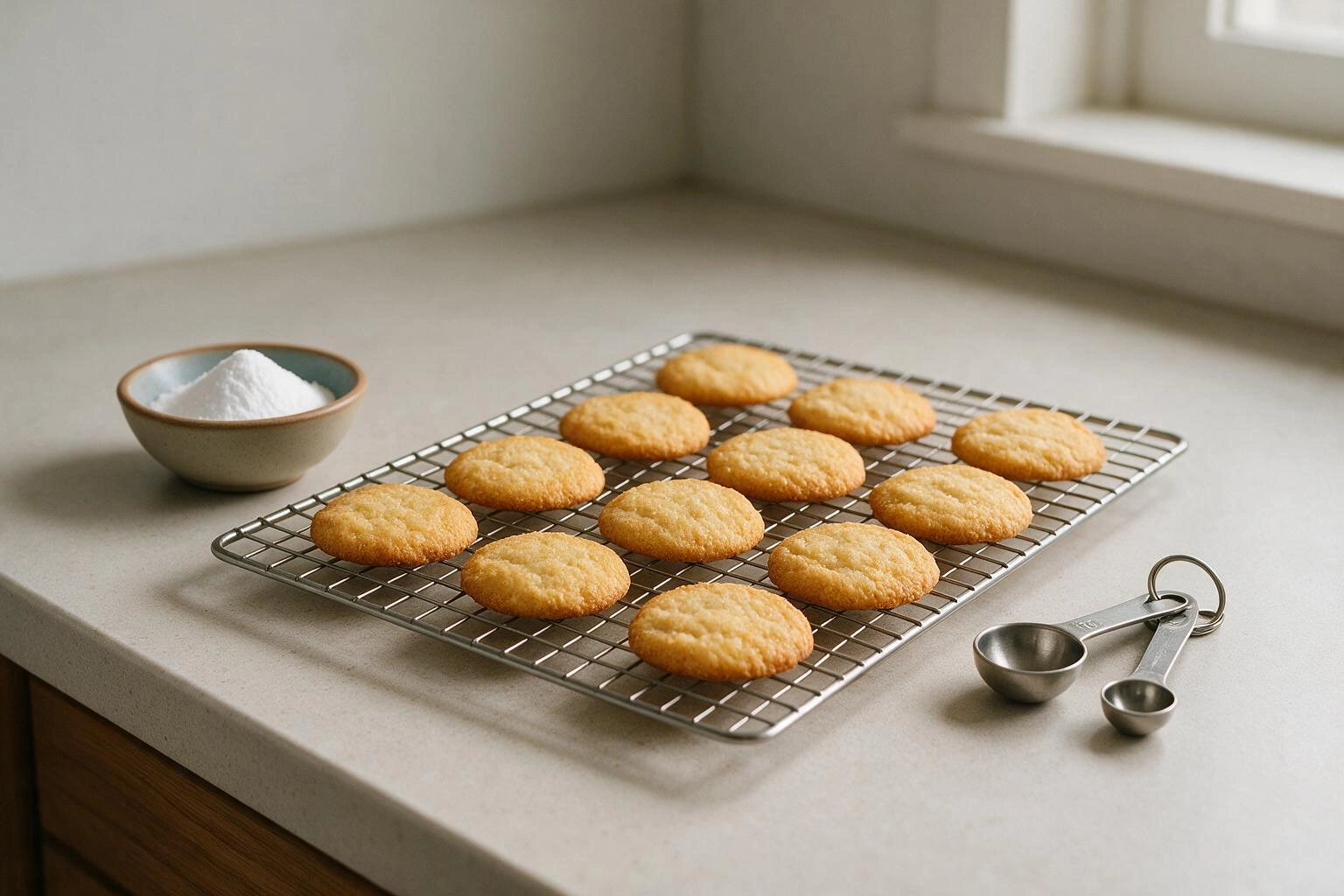
Alkaline conditions tend to encourage browning. In baking, a higher pH can help promote Maillard browning, which is why baking soda is often used in cookies and certain cakes when a deeper golden color is welcome.
Spread
In cookies, baking soda can encourage spread. The dough softens and loosens more quickly, which is useful when you want a thinner, crisper edge or a more evenly browned cookie.
Flavor
Used correctly, baking soda can smooth out acidity and create a balanced flavor. Used heavily, it can leave a harsh aftertaste.
A classic example is the chocolate chip cookie. Baking soda can help the cookies brown and spread while also balancing the slight acidity from brown sugar or cocoa. That is part of why the ingredient is so common in cookie recipes.
The key point is that alkalinity is not just a chemistry fact. It directly shapes the final look and taste of the bake.
How to Tell If Baking Soda Is Still Active
Old baking soda may still look fine in the container, but it may not perform well in a recipe.
A simple freshness check is to mix a small amount of baking soda with vinegar. If it fizzes right away, the soda is still active enough for basic baking use.
That test shows that the baking soda reacts with acid, but it does not measure its exact strength. It is a practical home test, not a precise lab measurement. If there is little or no fizz, replace the container.
When to replace it
Replace baking soda if:
- the container has been open for a long time
- the freshness test produces weak fizzing
- a recipe that used to work now bakes flat despite no other changes
Storage matters too. Keep baking soda tightly sealed in a dry place so it does not absorb moisture or odors from the pantry.
When Baking Soda Is the Right Choice in a Recipe
Baking soda is the right choice when the recipe has two things:
- an acidic ingredient
- a need for quick leavening, browning, or spread
That includes many muffins, quick breads, cookies, and pancakes.
Good signs a recipe may need baking soda
- buttermilk, yogurt, sour cream, lemon juice, or vinegar is listed
- the recipe is meant to brown well
- the batter is mixed and baked soon after combining
Good signs a recipe may need baking powder instead
- the ingredient list is mostly neutral
- there is little or no acidic ingredient
- the recipe needs lift without noticeable flavor change
If you are adjusting a recipe, do not assume baking soda is the stronger or better version. It is simply the better tool when acidity is already present.
Baking Soda vs. Washing Soda: Why the Difference Matters
Baking soda and washing soda are not the same thing.
Baking soda is sodium bicarbonate and is used in food in recipe amounts. Washing soda is a much stronger alkaline product used for cleaning. It should not be treated as a food ingredient.
This distinction matters because both are alkaline, but only one belongs in the kitchen. If a product is labeled for laundry or household cleaning, do not use it in baking.
A good habit is to store food ingredients separately from cleaning supplies so there is no chance of confusion.
A Simple Way to Read a Recipe Before You Bake
When you see baking soda in a recipe, scan the ingredient list and ask three questions:
- Is there an acid in the recipe?
- Does the recipe need quick lift, browning, or spread?
- Is the amount small and specific, rather than a general leavener?
If the answer to the first question is no, baking soda may not be the right choice. If the recipe uses an acidic ingredient and the amount is measured carefully, baking soda is probably there for a reason.
That habit will save you from the most common mistakes: swapping it for baking powder, adding extra “for more rise,” or using old baking soda that no longer reacts well.
Conclusion
So, is baking soda alkaline? Yes. It is a mildly alkaline ingredient, and that alkalinity is exactly why it behaves the way it does in baking.
Once you understand that baking soda needs acid to react, the rest becomes much easier to judge. You can read a recipe more confidently, spot when baking powder is the better choice, and avoid the flat or bitter results that come from using too much or the wrong leavener.
If you keep one rule in mind, make it this: baking soda works best when the recipe already contains enough acid to activate it.
Frequently Asked Questions
Is baking soda acidic or alkaline?
Baking soda is alkaline, not acidic.
Why does baking soda need acid in baking?
It reacts with acid to create carbon dioxide gas, which helps baked goods rise.
Can I use baking soda instead of baking powder?
Not usually. Baking soda needs acid to work properly, while baking powder already contains its own acid.
What does too much baking soda do?
It can cause a bitter, metallic, or soapy taste and may make baked goods brown too quickly.
How can I test whether baking soda is still good?
Mix a little with vinegar. Active baking soda should fizz quickly.
Is baking soda safe for food use?
Yes, when used in normal recipe amounts. Do not confuse it with washing soda, which is not for cooking.