Is Ceramic Coating Better for Air Fryers? A Practical Buyer’s Guide
If you’re comparing air fryers, the coating on the basket or tray matters more than many product pages make it sound. It affects how easy cleanup feels, how well food releases, how long the surface lasts, and how much you trust the material over time.
Ceramic-coated air fryers are often marketed as the safer, cleaner choice. That can be true in a narrow sense, but “better” depends on what you value most. If you want a PTFE-free surface and easier cleanup than bare metal, ceramic can be appealing. If you want the most proven nonstick performance, traditional nonstick still has a strong case. If you want long-term toughness, stainless steel usually wins.
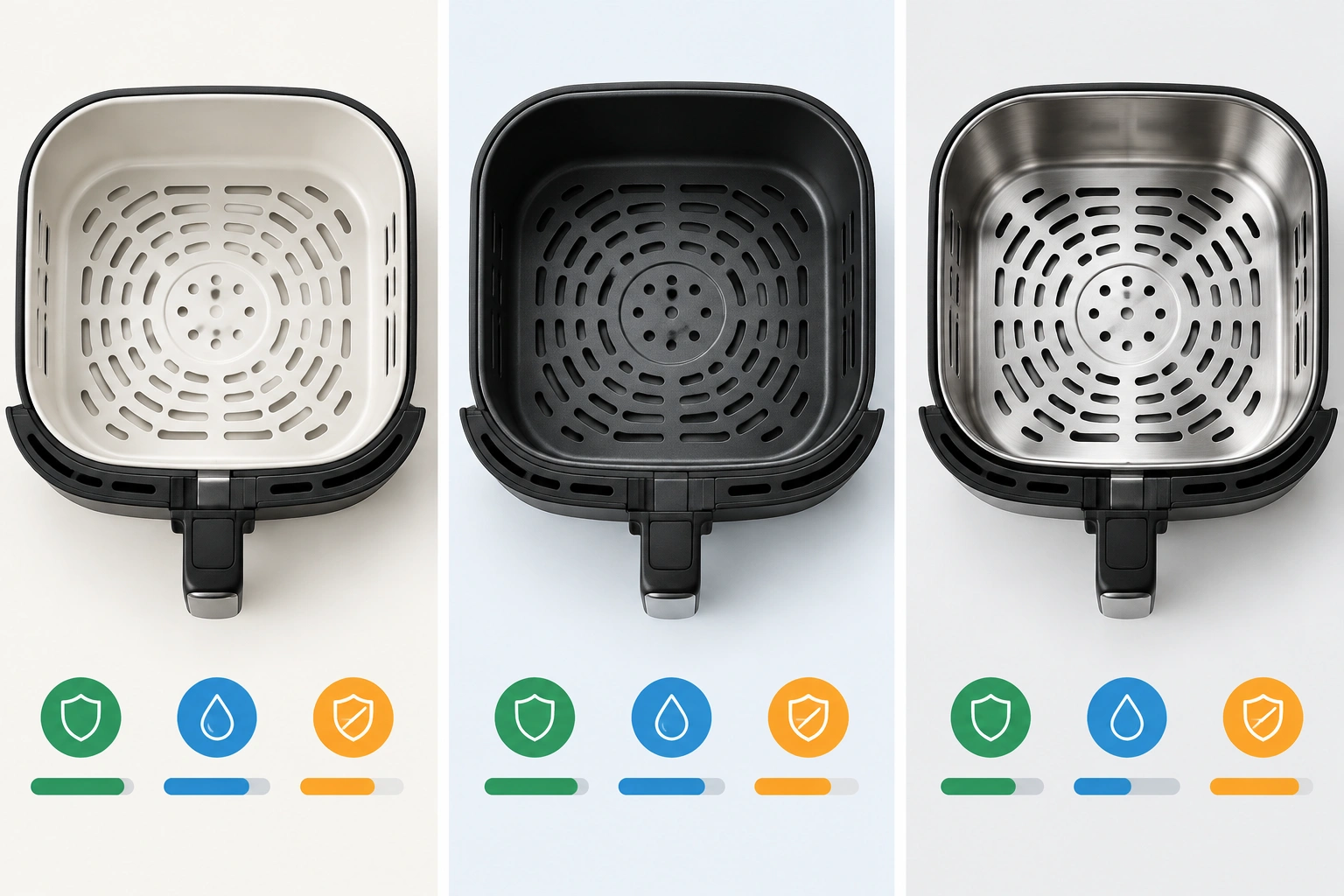
Here’s the short version: ceramic coating is not automatically better for every air fryer buyer. It is better for some people, especially if they care about avoiding PTFE-style coatings and are willing to be more careful with the basket. If you want a surface that can take rough treatment and keep going, ceramic is usually not the strongest choice.
What Ceramic Coating Means on an Air Fryer
A lot of confusion starts with the word “ceramic.” In air fryers, ceramic coating usually does not mean the basket is made from solid ceramic like a baking dish. It usually refers to a ceramic-like nonstick finish applied over metal, often in a sol-gel style coating.
That distinction matters. A product can be advertised as ceramic, ceramic-infused, or ceramic-style without giving you much detail about what is actually on the food-contact surface. If the listing does not clearly say what the coating is made of, treat the label cautiously.
A useful way to think about it: ceramic coating is mainly a nonstick finish category, not a guarantee of a specific performance level. Two ceramic-coated baskets can behave very differently depending on build quality, thickness, and how the manufacturer applies the coating.
For buyers, the practical question is not “Is it ceramic?” but “What exactly is the coating, and how long will it hold up with normal use?”
Quick checklist: how to verify a true ceramic coating
Before you buy, look for these details on the product page, box, or manual:
- A direct material statement such as “ceramic coating” on the food-contact surface
- A clear note on whether the coating is PFAS-free and/or PTFE-free
- A listed coating or basket temperature limit
- Care instructions that match the coating claim
- Specific disclosure about whether only the basket is ceramic-coated, not the whole appliance
Be cautious if the listing only says things like “ceramic-style,” “ceramic-infused,” or “healthy coating” without naming the actual coating. Also check the full spec sheet: some ceramic-coated baskets can still have PTFE or other materials in layers, components, or accessories, so “ceramic” does not always mean fully PTFE-free across the entire product.
Is Ceramic Coating Better Than Teflon for Air Fryers?
This is the comparison most people really want.
PTFE-based nonstick, often called Teflon in everyday conversation, is known for very good food release and easy cleanup. Ceramic coatings are often chosen by buyers who want to avoid PTFE-style nonstick baskets. That makes ceramic attractive if your top concern is material disclosure or a PFAS-free surface.
But ceramic is not automatically better overall.
Where ceramic can have the edge
- It may be easier to feel comfortable with if you want to avoid PTFE.
- Many ceramic-coated baskets clean up quickly when the coating is fresh and the food is not heavily burnt on.
- Some buyers prefer the material disclosure when the manufacturer clearly states the coating is PFAS-free and PTFE-free.
Where PTFE often still wins
- PTFE usually has stronger nonstick performance, especially after repeated use.
- Food release can stay more consistent over time.
- It often takes less oil and less effort to clean.
If you cook things like chicken thighs, salmon, or breaded frozen foods, PTFE baskets often feel more forgiving. Ceramic can still work well, but you may notice more sticking sooner if the coating quality is average or the basket gets scrubbed too hard.
Cooking performance can differ a bit too: ceramic may be fine for crisping, but PTFE often gives more consistent release, while stainless steel can brown well but usually needs more oil and attention.
A fair summary is this: ceramic may be preferable for buyers who prioritize coating disclosure and PTFE-free materials, while PTFE may be preferable for buyers who prioritize the best day-to-day nonstick performance.
Ceramic Coating vs Stainless Steel: Which Is Better for Your Use?
Ceramic and stainless steel solve different problems.
Stainless steel is usually the more durable choice. It does not rely on a delicate coating, so it can handle more aggressive cleaning and everyday wear better than most coated baskets. If you want something that feels sturdy and long-lasting, stainless steel is hard to beat.
The trade-off is sticking. Stainless steel usually needs more oil, more attention, or a little more cleanup effort. Food can cling to the surface, especially with sugary glazes, marinated foods, or lean proteins.
Ceramic-coated baskets sit in the middle:
– easier cleanup than stainless steel,
– better food release than bare metal,
– but less rugged than stainless steel over time.
If you hate scrubbing baked-on residue, ceramic may feel like a big upgrade over stainless steel. If you care more about lifespan than convenience, stainless steel is the safer long-term bet.
A simple decision rule helps here:
– Choose ceramic if cleanup convenience matters most and you are okay treating the basket gently.
– Choose stainless steel if you want the toughest surface and can accept more sticking.
Safety, Heat Resistance, and Non-Toxic Claims
This is where marketing gets slippery.
Ceramic-coated air fryers are often sold as safer alternatives to traditional nonstick baskets. That claim is usually tied to the idea that the coating is PTFE-free and PFAS-free. In plain English, that means the food-contact surface is not using the same family of nonstick chemicals found in many conventional coated pans.
But “safer” needs context. A coating being PTFE-free does not automatically make it better in every way, and it does not mean the entire appliance is more durable or easier to live with.
What matters most:
1. What the manufacturer actually states
2. The temperature limit for the coating
3. How you use and clean the basket
If a brand clearly says the coating is PFAS-free and PTFE-free, that is more useful than vague language like “healthy coating” or “ceramic-style finish.” Those phrases can sound reassuring without telling you much.
In practical terms, “non-toxic” is a marketing claim unless the manufacturer backs it up with a specific material disclosure or a meaningful third-party certification. It does not automatically mean every part of the air fryer is free from all chemicals, nor does it tell you how the coating will perform over time.
For broader food-safety context, it is enough to remember that safe cooking depends on the product details and proper use, not just the basket material.
One more practical point: even a better-sounding coating can still be a poor choice if the manufacturer gives a low temperature limit or weak care instructions. Always check those details before you buy.
How Ceramic Coating Performs Over Time
Ceramic coating often looks great when it is new. Food releases well, cleanup is quick, and the basket feels easy to live with.
The challenge is wear.
Compared with stainless steel, ceramic coatings are more vulnerable to scratching and surface breakdown. Compared with PTFE, they may also lose their slickness faster if they are cleaned aggressively or exposed to repeated abuse.
Common signs of wear include:
– food sticking more than it used to,
– dull patches where the coating has thinned,
– visible scratches from utensils or scrubbers,
– peeling or flaking, which is a sign to stop using the basket and replace it.
This is why ceramic is not the best choice if you tend to throw accessories in the dishwasher without checking the manual, or if you often use metal tongs and spatulas inside the basket.
A ceramic basket can last a reasonable amount of time with careful use. But if you want the surface to stay like-new for years under rough treatment, that is not the material’s strength.
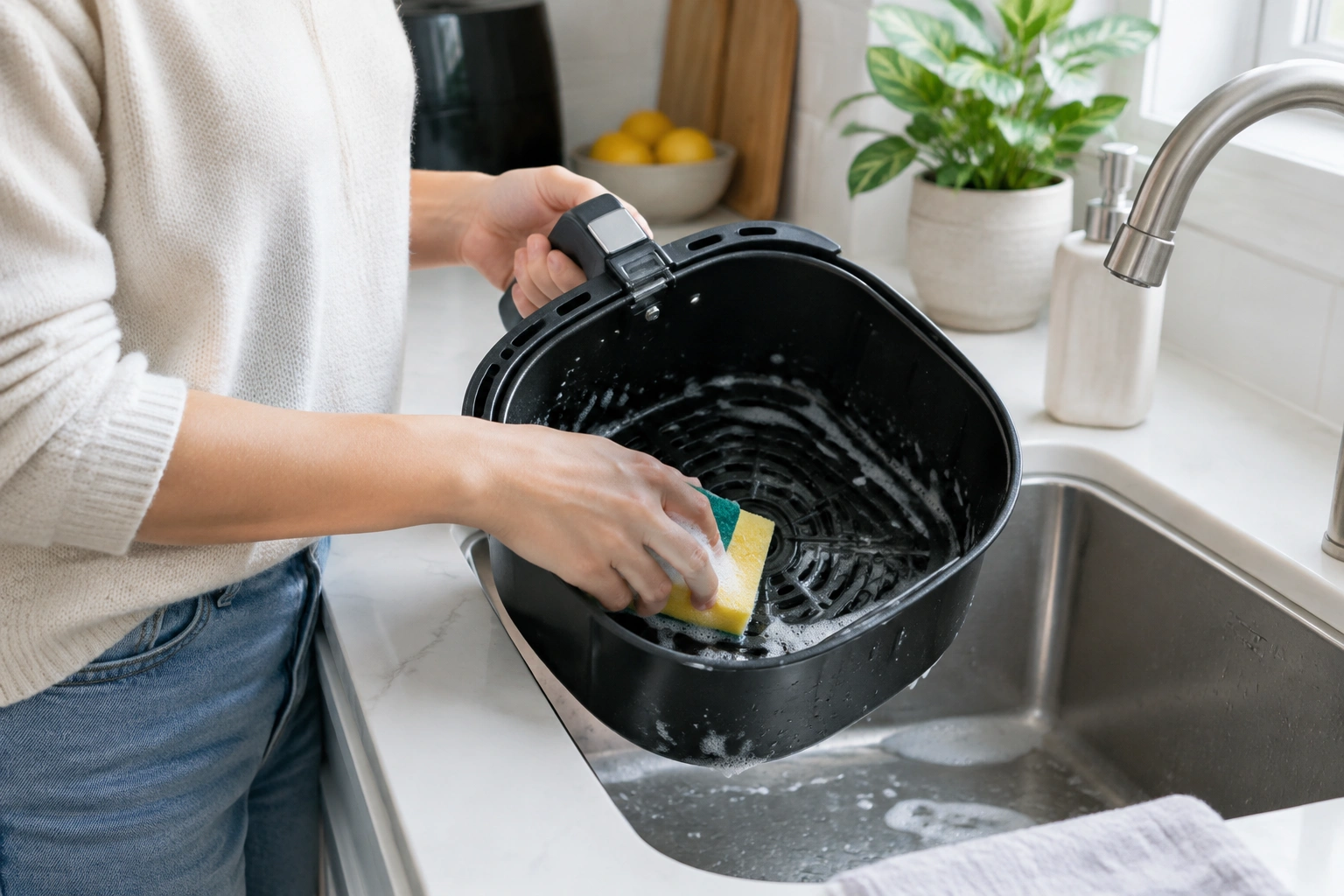
Cleaning and Maintenance Tips That Extend Coating Life
The easiest way to get better results from ceramic is to treat it like a finish you want to preserve.
What helps
- Let the basket cool before washing.
- Use a soft sponge or cloth.
- Soak briefly if food is stuck on.
- Use mild dish soap.
- Wipe out crumbs and oily residue after each use.
What to avoid
- Metal scrubbers
- Abrasive powders
- Sharp utensils scraping the surface
- Harsh dishwasher cycles if the manufacturer does not recommend them
- Overfilling the basket so food rubs and burns onto the coating
One common mistake is using parchment liners too casually. Some liners can help with cleanup, but if they cover too much of the crisper plate, they can block airflow and reduce the air fryer’s performance. A ceramic basket usually does not need a liner for normal use, especially if the coating is in good shape.
The main goal is simple: keep the coating intact, and it will keep doing its job longer.
Ceramic Coating vs PTFE/Teflon vs Stainless Steel
Here is the comparison in plain language.
| Coating type | Safety perception | Nonstick performance | Durability | Cleaning ease | Best for |
|---|---|---|---|---|---|
| Ceramic coating | Often preferred by PFAS-conscious buyers | Good at first, but can vary | Moderate | Easy when new | Buyers who want PTFE-free marketing and simple cleanup |
| PTFE/Teflon | Familiar and widely used | Usually excellent | Moderate to good with careful use | Very easy | Buyers who want the slickest everyday nonstick surface |
| Stainless steel | No coating concerns | Lowest of the three | Highest | More effort | Buyers who want toughness and long life |
That table is the real trade-off. Ceramic is not the best at everything. It is a middle ground: more appealing than stainless steel for cleanup, but often less durable than steel and less slick than PTFE.
If you are choosing between a ceramic-coated model and a standard PTFE model at the same price, compare the warranty, the stated coating type, and the cleaning instructions. If the ceramic model is vague about what the coating actually is, that is a warning sign.
How to Spot Misleading Ceramic Marketing
This is where careful shopping pays off.
Some product pages use words that sound reassuring but reveal very little. Watch for:
– “ceramic-infused”
– “ceramic-style”
– “healthy coating”
– “non-toxic finish” without details
– “PFOA-free” only, with no mention of PTFE or PFAS
Those phrases do not always mean the same thing as a clearly identified ceramic coating. If a manufacturer is proud of the material, it should say so plainly.
Before you buy, look for:
1. A direct statement about the coating material
2. Whether it is PFAS-free and PTFE-free
3. Temperature guidance for the basket or tray
4. Cleaning instructions, especially dishwasher compatibility
5. Signs that the coating is on the food-contact surface, not just a marketing note about the exterior
If a listing gives you none of that, I would pass.
When Ceramic-Coated Air Fryers Are Worth It
Ceramic coating makes the most sense if you want:
– easier cleanup than stainless steel,
– a PTFE-free or PFAS-free food-contact surface,
– decent nonstick performance for everyday meals,
– and you are willing to handle the basket with some care.
It is especially appealing for home cooks who mostly make straightforward air fryer meals and want cleanup to feel simple after dinner.
Ceramic is less compelling if:
– you want the most durable basket possible,
– you use metal tools often,
– you wash accessories aggressively,
– or you expect the coating to stay slick for years without special care.
If you are deciding whether to pay extra, ask one question: Am I paying for a coating I trust, or just for a label that sounds safer? If the answer is the second one, the premium may not be worth it.
My Practical Take
So, is ceramic coating better for air fryers?
Sometimes. But not universally.
Ceramic is a good fit when you care about PTFE-free materials, want easier cleanup than stainless steel, and are willing to accept a little more caution in exchange. It is not the strongest choice if your top priority is durability or the slickest long-term nonstick performance.
If you want the most balanced buying decision, compare the coating disclosure, temperature rating, and care instructions before you look at the price. That tells you far more than the word “ceramic” on its own.
For related reading, you may also want to check which air fryers are non-carcinogenic and whether air fryers are harmful to health.
Frequently Asked Questions
Is ceramic coating safer than Teflon in an air fryer?
It can be a better fit for buyers who want to avoid PTFE-based nonstick, but “safer” is too broad to treat as automatic. The key is whether the manufacturer clearly states the coating is PFAS-free and PTFE-free, and whether you use it within the recommended temperature range.
Does ceramic coating last longer than nonstick?
Usually not if you compare it with a well-made PTFE basket under careful use. Ceramic can wear faster if it is scrubbed hard, overheated, or washed aggressively.
Is ceramic easier to clean than stainless steel?
Yes, in most cases. Stainless steel is tougher, but food tends to stick more. Ceramic usually gives you easier cleanup, especially when the coating is still in good shape.
Can I use metal utensils in a ceramic air fryer basket?
I would avoid it. Metal tools can scratch the coating and shorten its life.
Do ceramic air fryers need parchment liners?
Usually no. A ceramic coating should release food without a liner. If you do use one, make sure it does not block airflow across the crisper plate.
How do I know if a ceramic coating is real?
Look for a direct manufacturer statement about the coating material. Be cautious with vague terms like ceramic-style or ceramic-infused if the listing does not explain what the food-contact surface actually is. A good product page will also say whether the basket is PFAS-free or PTFE-free.
Is ceramic worth paying more for?
Only if the coating details are clear and the benefits match your priorities. If you mainly want durability, stainless steel may be the better value. If you mainly want the slickest nonstick, PTFE may be the better value.
What should I check on the box before buying?
Look for the exact coating name, whether the basket is PFAS-free or PTFE-free, the maximum temperature rating, and any care or dishwasher instructions. If the box only uses marketing phrases and never names the coating, that is a red flag.
When to Consult a Professional
If you notice peeling, flaking, or unusual damage on the basket coating, stop using it and contact the manufacturer for guidance. If you are unsure whether a product’s coating claims are accurate, the manufacturer’s documentation should be your first reference point.