
Is Teflon in Air Fryers Safe? A Practical Guide for Everyday Use
Quick Answer: Is Teflon in Air Fryers Safe?
Yes—Teflon-coated air fryer baskets are generally considered safe for normal everyday cooking when they’re used as intended. In practice, that means staying within the manufacturer’s temperature limit, avoiding empty overheating, and not using a basket that is peeling or badly worn.
The main risk is not routine cooking at common air fryer temperatures. The bigger concern is misuse or damage: running the fryer too hot, heating it empty for too long, or letting the coating degrade until it flakes. Under normal use, a quality PTFE coating is designed to handle cooking conditions. If the basket is scratched but still intact, that is usually less concerning than visible peeling or exposed metal.
If you want the short version: keep using a Teflon air fryer if the coating is intact and you follow the temperature guidance; replace it if the surface is flaking, peeling, or repeatedly overheated.
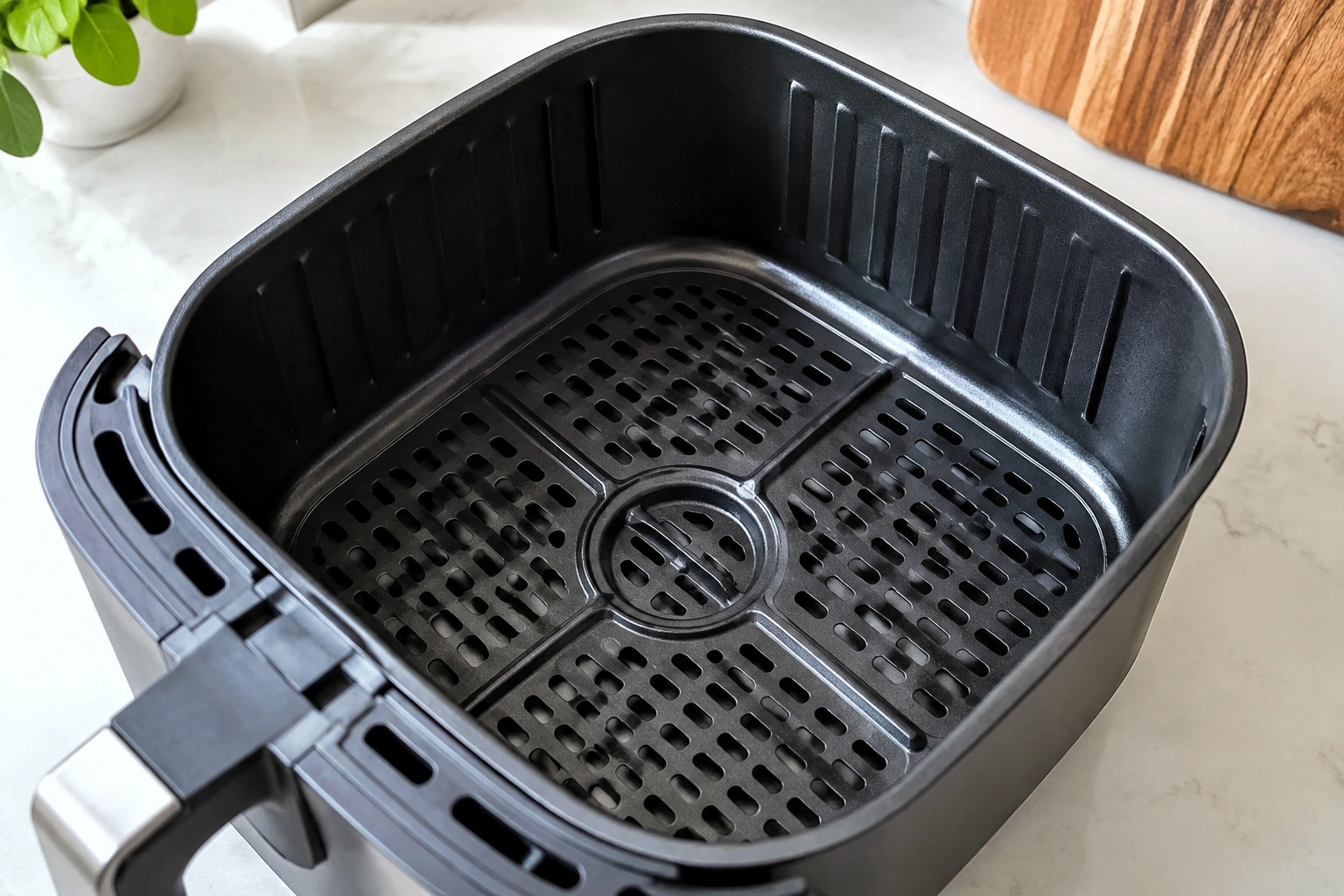
What Teflon Is and Where It’s Used in Air Fryers
“Teflon” is the familiar trade name most people use for PTFE, a synthetic nonstick coating. In air fryers, it is usually found on the basket, tray, or crisper plate rather than on the heating element itself.
The reason manufacturers use it is simple: food releases more easily, cleanup is faster, and baskets are less likely to need heavy scrubbing. That convenience is part of why many air fryers feel easy to live with.
The important distinction is this:
- PTFE/Teflon refers to the nonstick fluoropolymer coating.
- PFOA was a chemical used in some older manufacturing processes, but it is not the same thing as PTFE.
- A basket can be PFOA-free and still have a PTFE nonstick surface.
That difference matters because many people see “PFOA-free” and assume the basket has no nonstick chemistry at all. It may still have PTFE. So if you are trying to avoid Teflon specifically, look for the actual food-contact material, not just a marketing label.
When Teflon Is Safe: Normal Air Fryer Temperatures and Use
For everyday cooking, most air fryer recipes fall within a range that is generally considered normal use for nonstick baskets. Typical settings for fries, chicken, vegetables, and reheating often sit well below the temperatures that raise the biggest concern.
That matters because the risk with PTFE increases when the coating is pushed beyond its intended heat range. In ordinary cooking, a basket that is used correctly is not the same as a pan left on a burner empty and forgotten.
A practical example:
- Cooking chicken thighs at 380°F in a basket that is in good condition is normal use.
- Reheating leftovers at 325°F is also normal use.
- Running the unit on high heat with an empty basket for an extended period is a different situation and can raise risk.
If you follow the manual and keep the basket in good shape, a Teflon-coated air fryer is usually a reasonable everyday appliance. For readers who want a broader look at air fryer health considerations, this guide on whether air fryers are harmful to health is a useful companion read.
When Teflon Becomes a Concern: Overheating, Empty Preheating, and Fumes
The main issue with PTFE is heat abuse, not normal cooking. If a nonstick coating is overheated enough, it can begin to break down and release fumes. That is where the concern about “Teflon fumes” comes from.
A useful way to think about it is this: modern consumer air fryers are typically designed and marketed to operate below the most concerning PTFE decomposition range, so normal cooking is not the same thing as a toxic-fume event. The bigger risks come from misuse, such as running the fryer empty for too long, using a setting above the manufacturer’s guidance, or having a malfunction that causes abnormal overheating.
Most air fryer recipes stay in the normal operating range, but problems can happen if:
- the fryer is run too hot,
- it is left empty while preheating for too long,
- grease or residue overheats on the basket,
- or the coating is already damaged.
If a coating is overheated badly enough, fumes can irritate people and pets. In humans, this is sometimes described as fume fever or “Teflon flu.” The more realistic takeaway for home cooks is not panic, but caution: keep the appliance ventilated, avoid unnecessary high-heat empty runs, and never ignore a burning smell.
If you accidentally overheated your air fryer once, that does not automatically mean it is unsafe forever. But if the basket now looks discolored, warped, or rough, inspect it closely before using it again.
Is Scratched, Worn, or Peeling Teflon Still Safe?
This is where many people get stuck, because not every mark means the basket is finished.
Minor scratches are not the same as failure
A few light cosmetic scratches from normal use are not usually an immediate safety emergency. For example, a silicone utensil leaving faint marks on the surface is different from a coating that is actively coming off in chips.
What cosmetic wear can be acceptable
These signs are often just normal aging, not automatic replacement triggers:
- faint utensil marks,
- slight dulling of the finish,
- minor color change from regular heating,
- or a few surface scuffs that do not catch your fingernail.
When the basket should be replaced
Replace the basket if you see any of these failure signs:
- peeling at the edges,
- bubbling or blistering,
- flakes coming off after washing or cooking,
- exposed metal underneath the coating,
- rough patches where the surface has worn through,
- sticky spots that no longer clean normally,
- or damage that seems to spread after use.
A simple visual test
If you can run a fingertip lightly over the surface and it still feels mostly smooth, that is usually less concerning than a surface that feels rough, lifts at the edges, or sheds material. Cosmetic wear is one thing; active coating failure is another. If a basket is still smooth and intact, it can often keep going. If it is shedding material or visibly deteriorating, stop using it.
PFOA vs PTFE: What Modern Buyers Need to Know
This is one of the most common points of confusion.
- PTFE is the nonstick coating itself.
- PFOA was a processing chemical associated with older nonstick products.
Many modern cookware and air fryer products are marketed as PFOA-free, which is useful, but it does not mean the basket is free of PTFE or free of all concerns. It only means one older chemical is not part of the product in the way it once was.
So if your goal is to avoid PTFE/Teflon because you prefer a coating-free cooking surface, “PFOA-free” is not enough information. You need to check whether the basket is PTFE, ceramic, stainless steel, or another material.
For buyers, this is the simplest way to think about it:
- PFOA-free = addresses an older chemical concern
- PTFE-free = avoids Teflon-style nonstick coating concerns altogether
That distinction is especially useful if you are comparing models and trying to decide whether a nonstick basket is acceptable for your household.
How to Use and Clean a Teflon-Coated Air Fryer Safely
A lot of coating damage comes from everyday habits, not dramatic accidents. The good news is that a few simple routines can make a big difference.
Use utensils that won’t scrape the surface

Silicone, wood, or other non-abrasive tools are safer for the coating than metal tongs or forks. Even if the basket looks sturdy, repeated scraping can shorten its life.
Avoid harsh scrubbing
Steel wool and abrasive pads can wear down nonstick coatings quickly. If something is stuck on, soak the basket in warm soapy water first and let the residue loosen before wiping.
Dry it fully after washing
Water left in seams or around the basket edges can make residue harder to remove over time. A quick dry also helps you spot surface changes more easily.
Don’t use the basket as a storage bin
Stacking heavy pans or utensils inside the basket can scratch it between uses. If you want the coating to last, treat the basket like a cooking surface, not a drawer.
Follow the temperature limit on the manual
This sounds obvious, but it is one of the most important habits. Manufacturer guidance matters more than generic advice because basket construction and coating quality vary.
For practical kitchen use, I also recommend checking the basket before each cooking session. If you see peeling after cleaning, don’t assume it is just cosmetic. That is the moment to pause and decide whether the part still belongs in service.
Teflon vs Ceramic vs Stainless Steel Air Fryer Coatings
If you are deciding whether to keep, replace, or buy a different model, it helps to compare the common options side by side.
| Material | Main advantage | Main drawback | Best for |
|---|---|---|---|
| Teflon / PTFE | Excellent food release, easy cleanup | Can wear, scratch, or overheat if misused | People who want convenience and are careful with use |
| Ceramic coating | Often PTFE-free, depending on the product disclosure | Performance and durability vary by brand; may lose nonstick performance over time | Buyers who want a PTFE-free option and will check manufacturer details |
| Stainless steel | Durable and coating-free | Food can stick more, cleanup may take longer | Buyers who want a simple, robust surface |
A few practical trade-offs matter here:
- Teflon is usually the easiest to live with day to day, especially for sticky foods.
- Ceramic can be appealing if you want to avoid PTFE, but “ceramic” is not a single standard material and it is not automatically more durable or more nonstick than PTFE. Check the disclosed coating and follow the manufacturer’s guidance.
- Stainless steel is the most straightforward from a coating standpoint, but you may need a little more oil or a better cleaning routine.
If you are choosing for a health-conscious household, stainless steel and clearly disclosed ceramic options are worth a look. If you already own a Teflon basket and it is in good condition, there is usually no need to replace it just because it is nonstick.
What to Look for When Buying a Safer Air Fryer
If you are shopping for a new model, focus on transparency rather than slogans.
Look for clear material disclosure
A product page should tell you whether the basket is PTFE, ceramic, stainless steel, or another material. Vague language like “safe nonstick” is not enough.
Check the maximum temperature
If the air fryer has a clear temperature limit, that is useful. It tells you how the unit is intended to be used and helps you avoid pushing the coating harder than necessary.
Prefer easy-to-clean designs
A basket that cleans easily is less likely to need aggressive scrubbing, which helps preserve the surface longer.
Match the surface to your habits
If you cook sticky foods often and want quick cleanup, nonstick may still be practical. If you are especially cautious about coatings, a stainless steel or clearly explained ceramic option may fit better.
For readers who are comparing air fryer health and cooking habits more broadly, this post on healthy air fryer cooking tips can help with the bigger picture.
When to Consult a Professional
If you notice a strong chemical odor during normal use, repeated overheating problems, or a unit that seems electrically unsafe, stop using it and contact the manufacturer or a qualified appliance repair professional. If the basket is peeling badly and you are unsure whether the damage is only cosmetic, replacement is usually the safer choice than trying to “make it work.”
Frequently Asked Questions
Does Teflon in an air fryer release toxic fumes?
It can if it is overheated enough. Under normal cooking temperatures, that is not usually the issue. The concern rises when the basket is run too hot, empty, or badly damaged.
Is a scratched air fryer basket dangerous?
Not necessarily. Light scratches are not the same as peeling. The bigger concern is visible coating failure, flaking, or exposed substrate.
Is PFOA-free the same as Teflon-free?
No. PFOA-free means the product does not use that older chemical. It can still have a PTFE nonstick coating.
Can I keep using my air fryer if the coating is worn?
If it is only lightly worn and still intact, many people continue using it. If it is peeling, flaking, or exposing metal, replace it.
What is the safest air fryer coating?
If your goal is to avoid PTFE entirely, stainless steel is the simplest coating-free option. Ceramic is another alternative, but it still depends on the exact formulation and how it holds up over time.
Should I avoid buying a Teflon air fryer?
Not automatically. If you are comfortable using it within the temperature limits and keeping the coating intact, a Teflon basket can be a practical choice. If you want to avoid fluoropolymer coatings altogether, choose ceramic or stainless steel instead.
Bottom Line
Teflon in air fryers is generally safe when the basket is intact and the appliance is used properly. The real risks show up with overheating, empty preheating, and damaged coatings that are peeling or flaking. If you want the simplest rule to follow: use it within the manual’s temperature range, clean it gently, and replace the basket when the coating starts to fail.

