
Paring Knife vs Utility Knife: Which Small Kitchen Knife Fits Your Everyday Prep?

If you only buy one small knife for a home kitchen, the choice usually comes down to this: a paring knife gives you more control for close-up, detailed work, while a utility knife gives you more reach and flexibility for small slicing jobs. In practical terms, the paring knife is the better pick for peeling, trimming, and precise hand-held work. The utility knife is often the better all-purpose small knife for slicing produce, sandwiches, cheese, and other everyday prep on the board.
For busy home cooks, the smartest choice is not “which knife is better overall,” but “which knife matches the tasks you actually do most often.” That’s where the difference becomes useful instead of confusing.
Quick Answer: Paring Knife vs Utility Knife
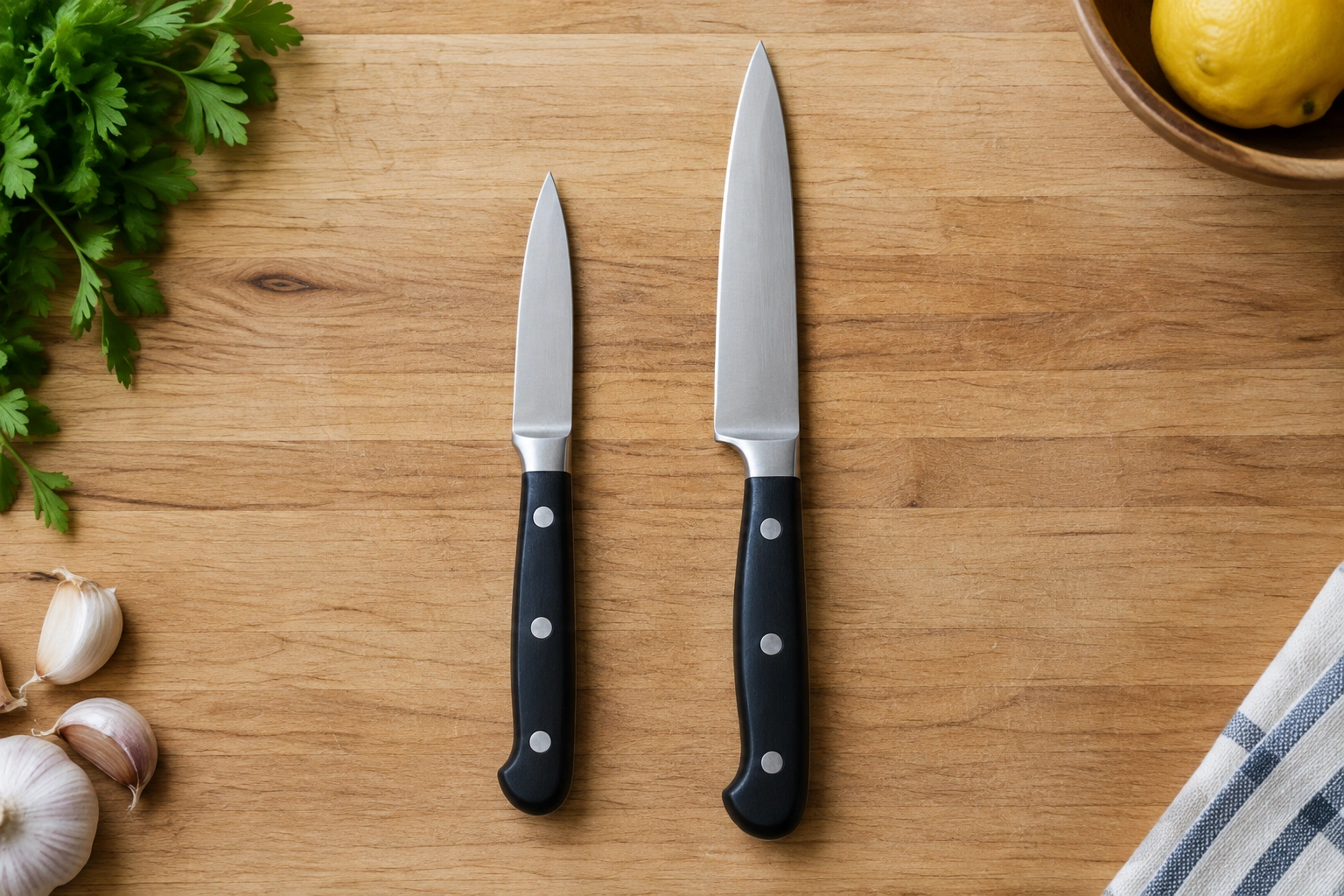
A paring knife is usually the shorter, more precise knife. A utility knife is usually the slightly longer, more versatile one.
Use a paring knife when you want:
– peeling apples, potatoes, or citrus
– trimming strawberries, mushrooms, or green beans
– removing stems, bruises, or small blemishes
– detailed hand work close to the food
Use a utility knife when you want:
– slicing sandwiches or wraps
– cutting cheese or small produce
– trimming meat
– chopping or slicing ingredients that are too small for a chef’s knife but too awkward for a paring knife
If your prep is mostly “small and detailed,” choose paring. If your prep is “small but slice-heavy,” choose utility.
What a Paring Knife Is and What It’s Best For
A paring knife is the compact precision knife of the kitchen. WÜSTHOF describes paring knives as typically ranging from 2 1/2 to 4 inches, which is short enough to keep the blade close to your fingers and the food. That shorter blade is the point: it favors control over reach. WÜSTHOF’s knife guide notes that paring knives are suited to detailed knifework that requires extra precision and accuracy.
That makes a paring knife especially useful for tasks you often do in your hand instead of on the cutting board. Think peeling a kiwi, coring strawberries, trimming the ends off green beans, or taking the skin off a potato while standing at the sink.
The biggest advantage is control. When the food is small, slippery, or awkwardly shaped, a shorter blade is easier to place exactly where you want it. That matters when you are removing only the part you want to cut and leaving the rest of the ingredient intact.
Best uses for a paring knife
- peeling fruit and vegetables
- trimming stems and blemishes
- scoring or hulling small produce
- detailed garnish work
- small tasks done in the hand
Where it falls short
A paring knife is not ideal for longer slicing strokes. If you try to slice a sandwich or a large tomato with one, you often have to saw more than you should. That can make the cut less clean and less efficient.
What a Utility Knife Is and What It’s Best For
A utility knife sits between a paring knife and a chef’s knife in size and purpose. WÜSTHOF places utility knives in the 4 1/2 to 7 inch range, and Japanese Chef’s Knife notes that utility knives are often around 120 mm to 160 mm. That extra length gives you more knife on the food, which makes slicing easier and more natural.
In everyday home cooking, that longer blade is what makes the utility knife feel more adaptable. It is commonly used for slicing produce, chopping herbs, trimming meat, and preparing sandwiches. This is the knife many people reach for when the task is still too small for a chef’s knife, but the paring knife feels cramped. Cutting a bagel half, slicing a sandwich, portioning cheese, trimming a chicken cutlet, or halving a pepper are all jobs where the utility knife usually feels smoother than a paring knife.
Best uses for a utility knife
- slicing sandwiches, wraps, and cheese
- cutting small fruits and vegetables
- trimming meat
- slicing herbs or small aromatics
- general prep when a chef’s knife feels too large
Where it falls short
A utility knife is more versatile, but that does not make it better for every small task. If the job is highly detailed—like peeling a curved apple or removing a strawberry hull—its extra length can feel less nimble than a paring knife.
Paring Knife vs Utility Knife: Key Differences at a Glance
Here is the practical comparison most shoppers need.
| Feature | Paring Knife | Utility Knife |
|---|---|---|
| Typical blade length | About 2 1/2 to 4 inches | About 4 1/2 to 7 inches |
| Main strength | Precision and control | Versatility and slicing reach |
| Best handling style | In-hand work | Board work and quick slicing |
| Best for | Peeling, trimming, detail prep | Sandwiches, cheese, produce, small slicing |
| Feel in use | Compact, nimble, exact | Slightly longer, more flexible |
| Best value for | Very detailed prep | One small knife for many tasks |
The real trade-off is simple: a paring knife is more specialized, while a utility knife is more adaptable. That is why utility knives often become the knife people use most often once they own one.
Which Knife Is Better for Specific Kitchen Tasks?
Peeling apples, potatoes, or citrus
Paring knife wins.
Peeling is a close-control task. A shorter blade makes it easier to follow the curve of the fruit or vegetable without cutting away too much flesh. If you peel by hand often, this is the knife that feels natural fastest.
Trimming strawberries, green beans, and mushrooms
Paring knife usually wins.
For removing stems, ends, or blemishes, the shorter blade is easier to place accurately. If you prep berries for snacks or trim produce for meal prep, the paring knife keeps the job tidy.
Slicing sandwiches, wraps, and cheese
Utility knife wins.
This is where the extra blade length helps. A utility knife gives you a smoother slicing motion and better reach across the food. For lunch prep, it is usually the more comfortable choice.
Cutting small produce like kiwis, lemons, onions, or peppers
Utility knife often wins, but paring knife can handle the detail work.
If you are halving, slicing, or portioning, the utility knife is more efficient. If you are removing a core, trimming a stem, or doing careful cleanup, the paring knife is easier to control.
Trimming meat
Utility knife is usually the better choice.
A slightly longer blade gives you more room to follow the shape of the meat and make cleaner trimming cuts. A paring knife can do small trimming, but it is less comfortable for longer cuts.
Chopping herbs or mincing aromatics
Utility knife is often the better in-between knife.
For small amounts of garlic, shallots, herbs, or similar ingredients, a utility knife can be more practical than a paring knife because it gives you more blade to work with.
Can One Knife Replace the Other?
Sometimes, yes. But not cleanly.
A utility knife can often replace a paring knife if your cooking style is mostly slicing, trimming, and small board work. If you rarely peel produce in your hand, the utility knife may cover most of your needs.
A paring knife can replace a utility knife only if your small-knife tasks are mostly detailed and close-up. If you mostly peel, trim, and do tiny corrections, you may not miss the extra length very often.
Here is the practical rule:
– If you do more peeling and detailed trimming, buy a paring knife first.
– If you do more slicing and mixed small prep, buy a utility knife first.
– If you peel produce by hand often, buy a 3- to 4-inch paring knife first; otherwise, buy a 5- to 6-inch utility knife first.
If your budget allows only one knife, the utility knife is usually the more flexible single purchase for most home kitchens. If your prep style is heavy on produce peeling and detail work, the paring knife earns its place.
Which Is Safer and Easier to Control?
Safety is less about the knife name and more about how the blade fits the task and your hand.
A smaller blade can feel safer because it is easier to control, but only if it is the right size for the job. A paring knife gives excellent control for close work, yet that same short blade can feel awkward if you try to slice long items with it. A utility knife is still compact, but the extra length can make cutting smoother and reduce the need for repeated short strokes.
For busy home cooks, the best safety question is this: Can I make the cut in one controlled motion? If the answer is yes, the knife is probably a good match. If you find yourself forcing a knife through food with short, awkward sawing, the tool is probably the wrong one for that task.
Handle comfort matters too. A knife that fits your hand well will usually feel safer than a more “specialized” knife that feels slippery or unbalanced.
How to Choose the Right Blade Length and Style
For most home kitchens, the sweet spot is not the longest blade possible. It is the blade that matches your most common prep.
If you want the most precision
Choose a paring knife in the shorter end of its range, around 3 to 4 inches. That size is especially useful for hand-held work and detailed trimming.
If you want one small knife to do more jobs
Choose a utility knife around 5 to 6 inches. That length usually gives enough reach for slicing while staying nimble for smaller ingredients.
Straight-edge or serrated utility knife?
A straight-edge utility knife is the safer all-around choice for most households because it makes cleaner cuts on produce, cheese, and sandwiches.
A serrated utility knife can be useful if you often cut crusty breads or slippery foods, but it is less universal for smooth precision work. If you only want one utility knife, straight-edge is usually the better value.
Which Knife Offers Better Value for a Small Kitchen Budget?
If you are trying to keep purchases lean, buy for frequency, not novelty.
A utility knife usually offers better general value for most families because it covers a wider range of small slicing tasks. It can often stand in for a paring knife on many days, especially if you are mostly prepping lunch, produce, and quick weeknight ingredients.
A paring knife is the better value if your kitchen routine includes a lot of peeling and detailed trimming. If you cook from scratch often and prep produce in batches, that control can save time and frustration.
If your budget is tight and you only want one small knife, the utility knife is the safer default. If you already own a chef’s knife and want a second knife for close-up detail work, the paring knife makes the most sense.
For a broader knife workflow question, this also connects to how you handle other prep tasks like garlic. If you are deciding between tools for small aromatic prep, our guide on garlic press vs mincing garlic with a knife can help you compare speed, cleanup, and control.
Common Mistakes When Choosing Between These Knives
Buying both before knowing your habits
A lot of home kitchens end up with duplicate tools. If you rarely peel produce by hand, a paring knife may sit unused.
Choosing only by blade length
Length matters, but blade shape and the task matter too. A longer knife is not automatically better if the job demands close precision.
Using a paring knife for everything small
That can work for a while, but it becomes inefficient for sandwiches, cheese, and longer slices.
Picking a serrated utility knife first
Serrations help with some foods, but they are not the best default if you want a clean all-purpose small knife.
Ignoring handle comfort
For repetitive prep, a handle that fits your hand well is a bigger deal than many shoppers expect.
Simple Recommendation by User Type
If you are a meal prepper
Choose a utility knife first. It handles a wider mix of prep jobs, especially slicing produce, trimming, and small board work.
If you mostly peel fruit and vegetables
Choose a paring knife first. The control is better for close, detailed work.
If you cook simple weeknight meals on a budget
Choose a straight-edge utility knife first. It offers the best blend of versatility and value.
If you already own a chef’s knife
Add a paring knife if you do a lot of trimming and peeling. Add a utility knife if you want a smaller knife that stays useful on the board.
If you want the most practical two-knife setup
Own both, but let them do different jobs:
– paring knife for detailed hand work
– utility knife for slicing and mixed small prep
When to Ask a Food Safety Expert
If you are unsure how to handle damaged produce, raw meat trimming, or cross-contamination risks in your kitchen routine, a local extension office or food safety resource can help. For general home food safety guidance, FoodSafety.gov is a reliable place to start.
Bottom Line
The clearest difference is this: a paring knife is the precision tool, and a utility knife is the flexible small slicer. If your cooking leans toward peeling and detailed trimming, choose the paring knife. If your kitchen work is more about slicing sandwiches, cheese, produce, and small ingredients, choose the utility knife. For most busy households, buy a 5- to 6-inch utility knife first unless you peel produce by hand often, in which case buy a 3- to 4-inch paring knife first.