
The pH of Baking Soda: What It Means for Baking, Browning, and Rise
Baking soda is one of the simplest ingredients in a baker’s pantry, but it does a lot of chemistry in a very small amount. If you understand its pH, you can predict when it will help a batter rise, when it will improve browning, and when it will cause trouble.
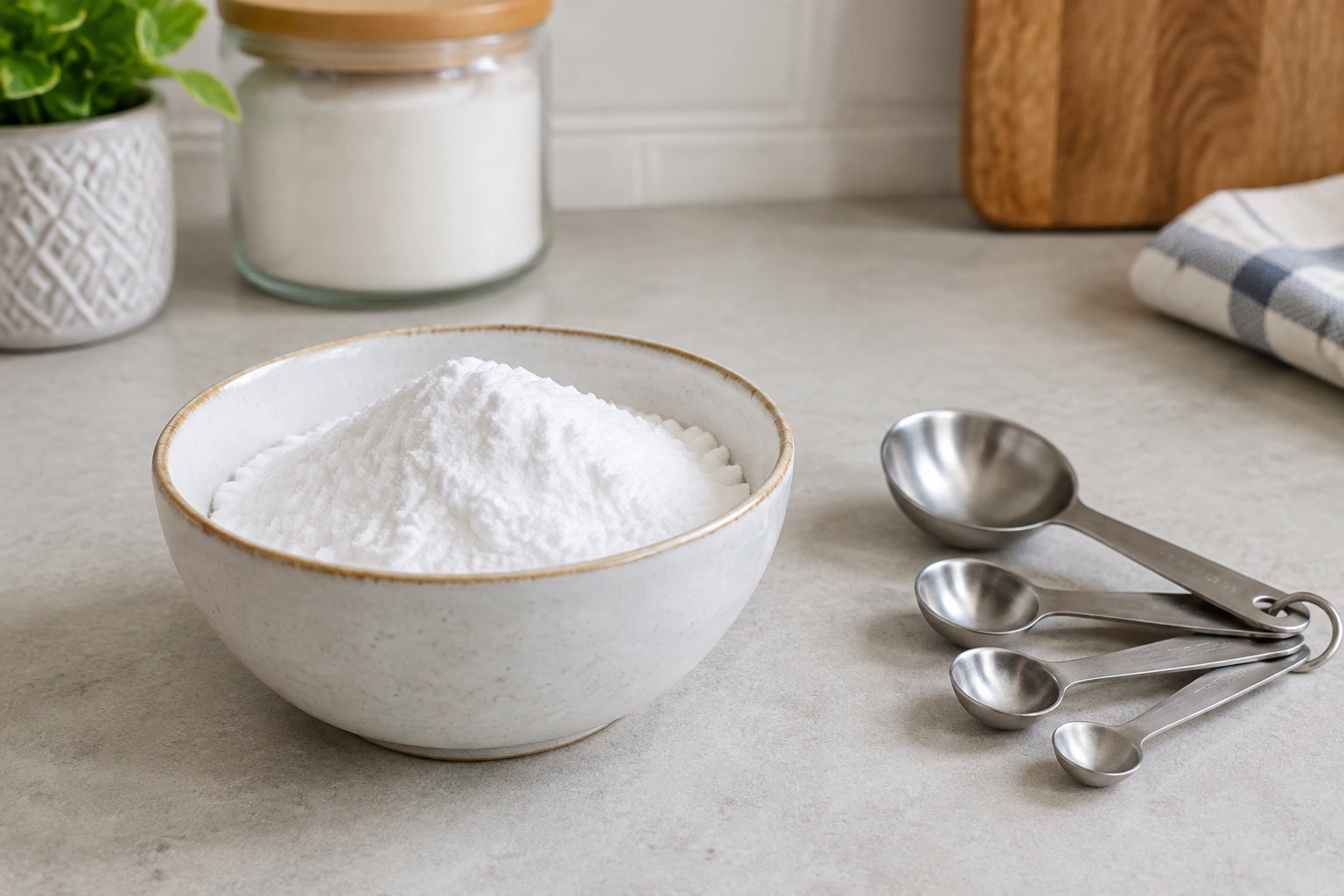
In plain terms, baking soda is sodium bicarbonate, and it is alkaline. That matters because alkaline ingredients behave very differently from acidic ones in recipes. They react with acids, release carbon dioxide, and can also change flavor and color.
For home bakers, the useful question is not just “what is the pH of baking soda?” but “what does that pH do in my recipe?” That is where the science becomes practical.
What Baking Soda Is
Baking soda is the common kitchen name for sodium bicarbonate. It is a single chemical compound, not a blend of ingredients. That is one reason it behaves so predictably when you use it correctly.
In baking, baking soda is mainly used for two jobs:
- Leavening, which means helping baked goods rise
- Altering pH, which can affect browning, flavor, and texture
Because it is a base, baking soda needs the right environment to do its best work. In a recipe with acidity, it can react quickly and produce gas. In a recipe without enough acid, it may not fully react, and that can leave behind an unpleasant taste.
What Is the pH of Baking Soda?
The pH of baking soda is usually described as alkaline, not acidic or neutral. In water or solution, it typically falls in the mildly basic range of about pH 8 to 9, though the exact reading can vary depending on concentration and how the sample is prepared.
That variation matters. A dry powder does not behave the same way as baking soda dissolved in water, and a thicker mixture can read differently from a dilute one. So when people quote a single pH number for baking soda, they are usually giving an approximation, not a fixed universal value.
The key takeaway is simple:
- Baking soda is alkaline
- It is not acidic
- It is not neutral
If you are trying to understand a recipe, that is more useful than memorizing one number.
Why Baking Soda’s pH Matters in Baking
A higher, more alkaline pH changes how ingredients behave in the oven. That can help a recipe, but it can also throw it off if the balance is wrong.
It affects rise
Baking soda creates lift when it reacts with an acid. That reaction releases carbon dioxide gas, and those bubbles expand as the batter heats. This is why a muffin batter with buttermilk or yogurt can rise well with baking soda alone.
It affects browning
Alkaline batters often brown more readily. That can be helpful in cookies, certain cakes, and quick breads where you want a deeper color. But too much alkalinity can push browning too far and make the finished product look dark before it is fully baked.
It affects flavor
Used correctly, baking soda can round out flavor and reduce excessive acidity. Used in excess, it can leave a soapy, bitter, or metallic taste. That off-flavor is one of the clearest signs that the recipe balance is wrong.
It affects texture
A properly balanced batter can bake up tender and light. Too much baking soda, or baking soda without enough acid, can create an uneven crumb, excessive spread, or a coarse texture.
A practical example: a cookie dough made with brown sugar and an acidic dairy ingredient may benefit from baking soda because it helps spread, browning, and lift. A plain cake batter with little or no acid usually does better with baking powder instead.
How Baking Soda Reacts With Acidic Ingredients
Baking soda works best when it meets an acidic ingredient. Common acidic ingredients in baking include buttermilk, yogurt, sour cream, lemon juice, vinegar, molasses, brown sugar, natural cocoa, and some fruit purées.
When baking soda and acid meet, they react and produce carbon dioxide. That gas is what helps the batter rise. The reaction also changes the pH of the batter, which is why the final result can taste and look different from a batter that uses another leavener.
Here is the practical rule:
- No acid, no proper reaction
- Enough acid, better gas release and better balance
That does not mean every recipe must be strongly acidic. It means the recipe needs enough acid to match the amount of baking soda. If the acid is too weak or too small in quantity, some baking soda can remain unreacted.
A common example is a quick bread made with buttermilk. The buttermilk supplies acidity, so baking soda can do its job efficiently. If you swap in regular milk without adjusting the leavener, the chemistry changes and the result may be flatter or less balanced.
Baking Soda vs. Baking Powder
These two ingredients are often confused, but they are not the same.
| Feature | Baking Soda | Baking Powder |
|---|---|---|
| Chemical nature | Single alkaline compound | Blend that includes an acid plus baking soda |
| Needs acid in the recipe? | Yes, usually | Usually less dependent on recipe acid |
| Main role | Neutralize acid and release gas | Provide leavening more on its own |
| Browning effect | Often stronger | Usually milder |
| Risk if overused | Soapy, bitter taste; excess alkalinity | Can taste off, but generally less alkaline than baking soda |
| Best for | Acidic batters and doughs | Recipes with little natural acid |
The easiest way to choose between them is to look at the recipe’s acidity.
- If the recipe includes buttermilk, yogurt, sour cream, molasses, or natural cocoa, baking soda may be the better fit.
- If the recipe has little or no acid, baking powder is usually the more reliable choice.
What Happens If You Use Too Much or Too Little Baking Soda?
Baking soda is powerful, so small measurement errors matter.
Too much baking soda
Too much baking soda can create several problems:
- A bitter or soapy taste
- Excess browning
- A coarse or uneven texture
- Spreading that is too aggressive in cookies
You may also see a strange yellowish or dark tint in the crumb. That is often a sign that the batter is too alkaline.
Too little baking soda
Too little baking soda can leave a recipe flat or dense, especially when the recipe expects a quick reaction with acid. You may also lose some of the browning and flavor balance that the formula was designed to create.
The practical test
If a recipe tastes sharp, tangy, or underbrowned, it may need more alkalinity. If it tastes bitter, soapy, or oddly dark, it may have too much.
That is why measuring carefully matters. Even a small change in quantity can shift the final result.
If you want a deeper measuring reference, this guide on how to convert teaspoons of baking soda to grams can help you weigh it more consistently.
How pH Changes With Water, Concentration, and Mixing
One of the most common mistakes is treating baking soda’s pH as if it is fixed in every situation. It is not.
Dry baking soda is not the same as dissolved baking soda
In dry form, baking soda is simply a powder sitting on its own. Once it is mixed with water or a wet batter, it begins to interact with the surrounding ingredients. That changes how its alkalinity shows up in the recipe.
Concentration matters
A more concentrated solution can behave differently from a more diluted one. That is one reason you will see different pH readings depending on how the sample is prepared. A thick batter, a thin batter, and a glass of water will not give the same result.
Other ingredients affect the reading
Flour, sugar, eggs, dairy, cocoa, and fruit all influence the batter environment. So when a recipe contains baking soda, the final pH is really the result of the whole formula, not baking soda alone.
This is why the pH of baking soda is best understood as a range of behavior, not a single number you can apply to every recipe.
When to Use Baking Soda and When to Choose Baking Powder
A simple decision rule works well in the kitchen:
- Use baking soda when the recipe has enough acid to react with it
- Use baking powder when the recipe lacks enough acid
That rule is practical because it keeps you focused on the formula, not just the ingredient list.
Use baking soda when you want:
- Reaction with buttermilk, yogurt, sour cream, molasses, or natural cocoa
- Stronger browning
- A faster acid-base reaction
- A recipe that is designed around alkalinity
Use baking powder when you want:
- Leavening without relying on acidic ingredients
- A more forgiving formula
- A recipe with little natural acidity, such as many plain cakes or biscuits
A good example is a muffin recipe. If it includes buttermilk, baking soda may be enough. If it uses regular milk and no other acidic ingredient, baking powder is usually the safer choice.
For a related comparison, see this guide on how to convert baking powder teaspoons to grams, which can help when you are scaling formulas.
A Quick Comparison for Real-World Baking
If you are deciding in the middle of a recipe, use this short checklist:
-
Does the recipe include an acid?
If yes, baking soda may be appropriate. -
Is the recipe meant to brown more deeply?
Baking soda can help, but only if the formula can handle it. -
Does the recipe already rely on baking powder?
Then replacing it with baking soda is not a simple swap. -
Is the batter plain or only mildly acidic?
Baking powder is usually the safer leavener.
That kind of decision-making keeps you from forcing the wrong ingredient into the wrong formula.
Common Questions About Baking Soda pH
Is baking soda acidic or alkaline?
Baking soda is alkaline. That is why it reacts with acids and raises the pH of a mixture.
Does baking soda have the same pH in every recipe?
No. The measured pH depends on concentration, moisture, and the other ingredients in the batter or dough.
Does heating change baking soda’s pH?
Heating changes what happens in the recipe, but the more practical point is that baking soda reacts with acids and releases gas before and during baking. The final behavior depends on the whole formula, not heat alone.
Can I use baking soda instead of baking powder?
Not usually as a direct swap. Baking soda needs acid; baking powder already contains acid. Replacing one with the other without adjusting the recipe can change rise, flavor, and browning.
Why does baking soda sometimes taste bitter?
That usually happens when there is too much baking soda for the amount of acid in the recipe, or when it is not evenly distributed in the batter.
Final Takeaway
The pH of baking soda is what makes it such a useful baking ingredient. It is alkaline, it reacts with acids, and that reaction helps create lift, browning, and flavor balance. The exact pH is not one fixed number in every situation, because concentration and moisture change how it behaves. Once you understand that, choosing between baking soda and baking powder becomes much easier.
For most bakers, the simplest rule is this: match baking soda to acidic recipes, and use baking powder when the recipe does not supply enough acid on its own.