
Sodium Bicarbonate in Baking: Why It Tastes Bitter, How Acids Neutralize It, and What pH Changes in Your Recipe
Sodium bicarbonate is one of the most useful ingredients in baking, but it is also one of the easiest to misuse. When it is balanced correctly, it helps batter rise, supports browning, and keeps flavor clean. When it is not, it can leave a bitter, soapy, or alkaline taste that lingers after the bake.
For home bakers, the key idea is simple: baking soda works best when the recipe already has enough acid to neutralize it. If it does not, you may get rise and color but also an off flavor.
What baking soda is and why it can taste alkaline
Sodium bicarbonate is the chemical name for baking soda. In baking, it is used because it reacts quickly when it meets moisture and acid. That reaction releases carbon dioxide gas, which helps lift batters and doughs.
But baking soda has a second job that matters just as much: it raises pH. In plain baking language, that means it makes the mixture more alkaline. A small amount can be useful. Too much, or too little acid to balance it, can leave a bitter, salty, or soapy edge.
That off-taste is one of the most common signs that the soda was not fully neutralized. The baked good may still look fine. In fact, it may brown very well. But the flavor can feel sharp, flat, or oddly chemical instead of clean and rounded.
If you want a broader explanation of why the ingredient behaves this way, see our guide on why baking soda is alkaline.
How sodium bicarbonate reacts with food acids
Baking soda needs an acid to do its job fully in most recipes. When the soda meets an acidic ingredient, the two react and release carbon dioxide. That gas creates lift, especially in quick breads, muffins, cakes, and cookies.
A simple home-baking example is a muffin batter made with 1/2 teaspoon baking soda and 1 cup buttermilk. The buttermilk provides enough acid to help the soda react, so the batter rises cleanly and the finished muffin usually tastes less harsh than it would if the soda were left unbalanced.
In recipe terms, the acid is what “uses up” the baking soda. Once that happens, the mixture is less likely to taste bitter or alkaline. The finished bake usually tastes cleaner because there is less leftover soda in the crumb.
This is why baking soda is different from baking powder. Baking powder already contains both the alkaline component and the acid needed for its own reaction. Baking soda does not. If a recipe has no meaningful acid, baking soda may still help with spread or browning, but the flavor risk goes up.
Which ingredients can neutralize baking soda in real recipes
Not every acidic ingredient behaves the same way in a recipe. Some are strong, some are mild, and some are present in small enough amounts that they only partly balance the soda.
Here are the most common ingredients bakers rely on:
Buttermilk
Buttermilk is one of the most dependable partners for baking soda. It is acidic enough to activate soda in many cakes, muffins, and quick breads. It also adds a gentle tang that can work well in savory or lightly sweet bakes.
Yogurt
Yogurt behaves much like buttermilk, though thickness and acidity can vary. It can support baking soda in muffins, loaf cakes, and pancakes. Because yogurt also adds body, it can change texture as well as flavor.
Vinegar
Vinegar is strong and effective, but it is usually used in small amounts. It is handy in recipes where you want neutralization without adding much dairy flavor. In the right amount, it can help a chocolate cake or a sheet cake rise cleanly.
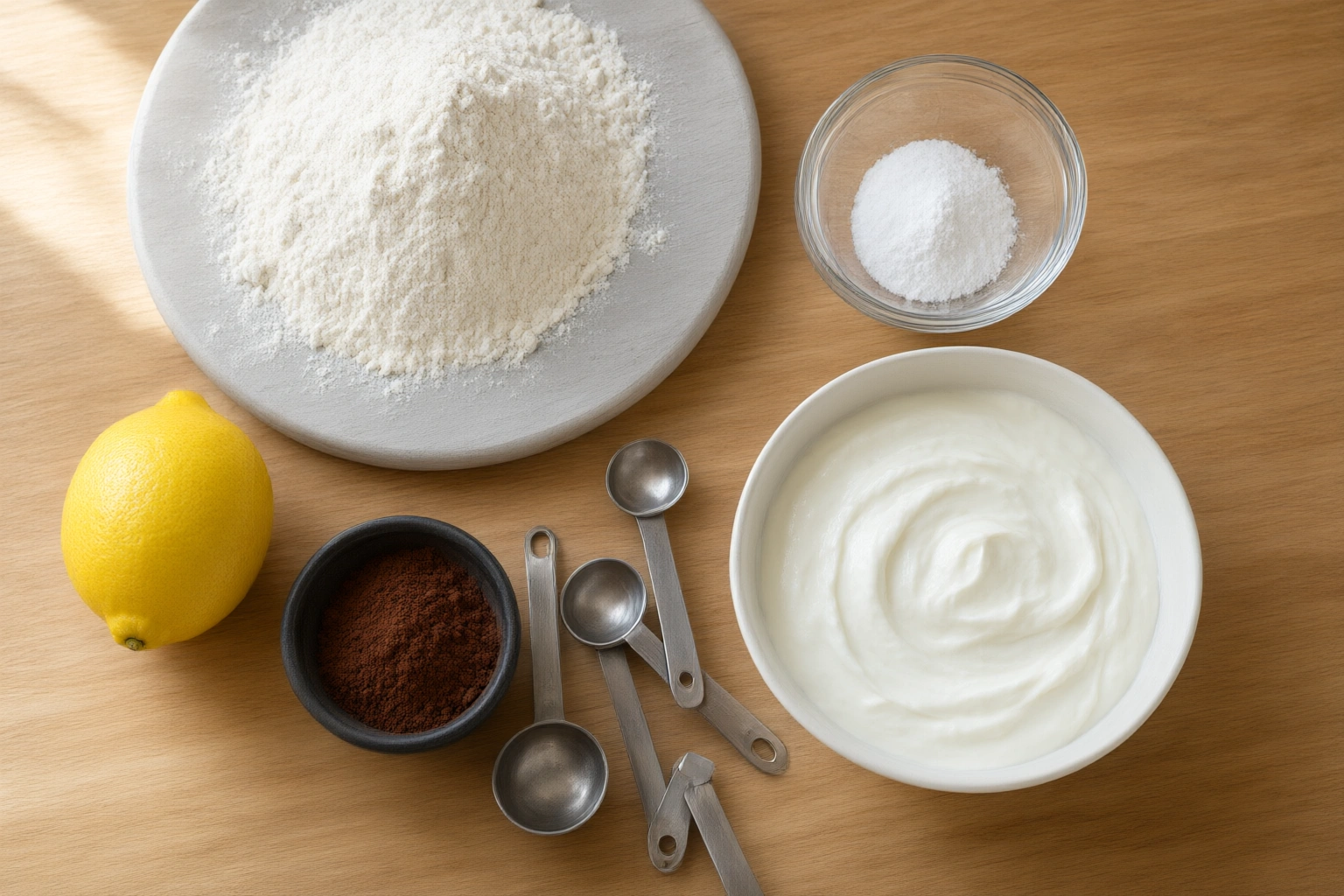
Lemon juice
Lemon juice brings both acidity and a bright flavor. It works well in lemon loaves and citrus cakes, but it can also make a batter taste too sharp if overused. That trade-off matters more in delicate cakes than in robust quick breads.
Cocoa
Natural cocoa is often acidic enough to work with baking soda, which is why many older chocolate cake formulas use it. Dutch-process cocoa is less acidic, so it usually does not provide the same balancing effect. That difference is a common reason one chocolate recipe uses soda and another uses baking powder.
Brown sugar and molasses
Brown sugar and molasses can contribute some acidity, but they are not always strong enough on their own to fully neutralize a larger amount of baking soda. They are often part of the balance rather than the whole answer.
A practical rule: if the recipe depends only on brown sugar or a small amount of cocoa for acidity, do not assume that is enough to support a large dose of baking soda.
Baking soda, baking powder, and acidic ingredients: quick comparison
| Ingredient | Main role in baking | Acidic or alkaline? | Best use case | Watch for |
|---|---|---|---|---|
| Baking soda | Leavener and pH adjuster | Alkaline | Recipes with enough acid, such as buttermilk, yogurt, natural cocoa, or molasses-based batters | Bitter, soapy, or metallic taste if unbalanced |
| Baking powder | Leavener with built-in acid | More neutral in finished flavor | Neutral batters and doughs with little natural acid | Can taste flat if overused or if recipe is poorly balanced |
| Buttermilk | Acidic dairy ingredient | Acidic | Muffins, pancakes, cakes, quick breads | Tangy flavor if used too heavily |
| Yogurt | Acidic dairy ingredient | Acidic | Loaf cakes, muffins, tender quick breads | Dense texture if batter is too thick |
| Vinegar | Acid source | Acidic | Small corrective amounts in cakes or quick breads | Sharp flavor if overdone |
| Lemon juice | Acid source and flavoring | Acidic | Citrus cakes, lemon loaves, bright batters | Can make flavor overly tart |
| Natural cocoa | Flavoring and acid contributor | Often acidic | Chocolate cakes and brownies that use baking soda | Flavor and acidity vary by brand |
| Dutch-process cocoa | Flavoring | Less acidic | Cakes and brownies that rely on baking powder instead | May not activate baking soda well |
This table is useful because it shows the real decision point: baking soda is not chosen just for lift. It is chosen when the recipe has enough acid to balance it and when the baker wants the flavor and browning that come with that balance.
How pH affects leavening, browning, and flavor
pH sounds technical, but in baking it shows up in very familiar ways.
A more alkaline batter can often brown more readily and may spread more in some recipes. That can be a benefit in cookies, muffins, and some cakes, where color and caramelized flavor are welcome.
The trade-off is flavor. When the batter becomes too alkaline, the baked good can taste harsh, hollow, or soapy. That soapy impression usually comes from leftover soda that was not fully balanced, not from pH alone in the abstract.
In some cases, the texture may also feel dry or oddly coarse even when the crumb looks fully baked.
A more acidic batter tends to taste brighter or tangier. That can be pleasant in lemon bakes, spice cakes, and chocolate cakes. But too much acid can make the flavor sharp, and it may reduce browning in some recipes if the balance is pushed too far.
So pH is not just about chemistry. It is part of the flavor design of the recipe. A good recipe uses pH on purpose rather than leaving it to chance.
How to tell whether a recipe already has enough acid for baking soda
If you are reading a recipe and wondering whether baking soda makes sense, look for acidic ingredients that are present in meaningful amounts, not just trace amounts.
A quick rule of thumb: if the recipe includes at least one clearly acidic ingredient such as buttermilk, yogurt, sour cream, natural cocoa, molasses, or a noticeable amount of citrus juice or vinegar, baking soda is often there for a reason. If the recipe is mostly milk, cream, butter, flour, and sugar, baking soda alone is usually a poor fit unless the formula includes another acid source.
A useful test from the ingredient list alone is this: ask yourself whether the acid ingredient is doing real work in the recipe or just adding flavor. A tablespoon of lemon juice in a large cake batter may be too little to justify a heavy hand with soda. A full cup of buttermilk is a much stronger signal that baking soda belongs.
If you are unsure, look at the ingredient list before you change anything. The biggest mistake is adding more baking soda for extra lift without checking whether the recipe has enough acid to support it.
How to tell whether a recipe needs baking soda, baking powder, or both
A useful decision rule is this:
- Use baking soda when the recipe includes enough acidic ingredients to neutralize it and you want the flavor or browning that comes with that reaction.
- Use baking powder when the recipe is not acidic enough to balance baking soda.
- Use both when the recipe needs extra lift plus some acid-driven browning or flavor development.
Here is how that looks in practice:
- Chocolate cake with natural cocoa and buttermilk: baking soda often makes sense because the recipe already has acid.
- Vanilla cake with milk and little else acidic: baking powder is usually the safer leavener.
- Muffins with yogurt and brown sugar: a small amount of baking soda may balance the acidity and improve rise.
- Cookie dough with no acidic dairy or cocoa: baking powder or another structure strategy may be more appropriate than baking soda alone.
Signs you used too much baking soda
Excess baking soda often shows up in the finished product, not just the batter.
Common signs include:
- Bitter or soapy aftertaste
- Metallic or chemical flavor
- Unusually dark browning
- A strange spread in cookies
- A crumb that tastes flat even though the texture looks normal
A direct comparison helps here: properly neutralized baking soda tends to give lift, cleaner flavor, and better browning, while excess baking soda tends to leave a lingering alkaline taste and can make the crumb taste harsh or soapy.
The most useful clue is flavor. If the baked good rises but leaves a lingering alkaline note on the tongue, the soda level was probably too high or the acid balance was too low.
That said, not every off-flavor is caused by baking soda. A stale spice, too much baking powder, old cocoa, or overbaked edges can also create unpleasant flavors. The difference is that excess soda usually has a distinct soapy or bitter finish that shows up even in the center of the crumb.
How to balance baking soda without making the recipe sour
Balancing baking soda is not about forcing in as much acid as possible. The goal is to neutralize the soda enough to avoid bitterness while keeping the flavor profile the recipe is supposed to have.
A more practical way to adjust a recipe is to work from the symptom:
- If the bake tastes bitter, soapy, or metallic: reduce the baking soda first, or increase the acid only if the recipe is meant to be tangy.
- If the bake tastes clean but is flat: the recipe may need a little more baking soda or a different leavener, but only if there is enough acid to support it.
- If the bake is too tart: reduce the acid ingredient slightly rather than adding more soda until the flavor disappears.
- If the bake is dark but tastes harsh: the recipe may have enough soda for color but too much for flavor balance.
A few concrete examples help here:
- In a buttermilk muffin, a small amount of baking soda can reduce tanginess and improve browning.
- In a lemon loaf, soda can soften the sharpness of the lemon, but too much acid can make the loaf taste more tart than bright.
- In a chocolate cake, natural cocoa and a dairy acid like buttermilk often create a balanced flavor with good color.
- In a molasses cookie, soda can help with spread and browning, but the molasses alone may not fully neutralize a heavy hand.
The best adjustment is usually small. If you need more browning or lift, change the recipe carefully rather than doubling down on soda. If a batter already tastes tangy, adding more acid may fix the chemistry but make the flavor less pleasant.

Common recipe examples and what they teach
Chocolate cake
Chocolate cake is one of the best examples of soda behavior in action. Natural cocoa is often acidic, and buttermilk or sour dairy can add more acid. Baking soda helps neutralize that acidity while also deepening color and softening the crumb.
If the recipe uses Dutch-process cocoa instead, the acidity may be much lower. In that case, baking soda may not be the right primary leavener.
Muffins
Muffins often use yogurt, buttermilk, or sour cream. A small amount of baking soda can help the batter rise quickly and brown nicely. Too much, though, can give the muffin a bitter edge that is especially noticeable in a plain or lightly sweet muffin.
Cookies
Cookies are where excess soda shows up fast. A recipe with too much baking soda may spread too much, brown too quickly, and taste soapy. If the dough is not acidic enough, the flavor issue can be stronger than the texture issue.
Lemon loaf
Lemon loaf is useful because the acid is obvious. Baking soda can help balance the tartness and support browning, but it must be used with restraint. Too much soda can mute the fresh lemon flavor and leave the loaf tasting dull or alkaline.
Quick troubleshooting guide for off-flavors and flat results
If your bake did not turn out right, use the symptom to narrow the cause:
- Bitter, soapy, or metallic taste: likely too much baking soda or not enough acid
- Good rise but odd flavor: soda may have been present in excess even if structure looked fine
- Flat, dense result with no obvious off-taste: the recipe may need more leavener, or the soda may have lost gas before baking
- Too much browning and spreading: the batter may be too alkaline
- Sharp, tangy flavor: too much acidic ingredient, or an attempt to “fix” soda with too much acid
- Chocolate cake tastes dull: check cocoa type; natural cocoa and Dutch-process cocoa do not behave the same way with baking soda
A good troubleshooting habit is to ask two questions in this order: Did the recipe have enough acid for the baking soda? And was the soda amount reasonable for the amount of acidic ingredients?
If the answer to either question is no, the problem is probably balance rather than technique.
Home-baker troubleshooting for bitter, soapy, flat, or overly brown bakes
If you want a fast fix for the most common soda problems, start here:
- Bitter or soapy: the usual cause is too much baking soda for the amount of acid. Next time, reduce the soda or use a more clearly acidic ingredient such as buttermilk, yogurt, or natural cocoa.
- Metallic: this can happen when soda is overused, but it can also come from old baking powder or an unbalanced cocoa-heavy recipe. Check the leavener first, then the cocoa type.
- Flat: if the flavor is fine but the bake is dense, the recipe may need more lift overall, or the soda may have been mixed into a batter that sat too long before baking.
- Overly brown: the batter may be too alkaline for the recipe style. Reduce the soda slightly, or add a bit more acid only if the flavor can handle it.
- Too spread out in cookies: baking soda may be too high, especially if the dough is not acidic enough to balance it.
The safest fix is usually to change one variable at a time in the next batch rather than making a large correction all at once.
FAQ
Why does baking soda taste bitter in baked goods?
Baking soda can taste bitter when there is too much of it or not enough acid to neutralize it. The leftover alkaline ingredient is what creates the soapy or chemical edge.
What acid neutralizes sodium bicarbonate in baking?
Common acids include buttermilk, yogurt, vinegar, lemon juice, natural cocoa, and sometimes brown sugar or molasses. The right one depends on the recipe and the flavor you want.
Can I use vinegar or lemon juice to fix a recipe with too much baking soda?
Sometimes, but only with care. Adding acid blindly can make the flavor too sharp or change the texture. If a recipe is already baked, it is usually better to adjust the formula next time than to keep adding acid.
How do I know whether to use baking soda or baking powder?
Use baking soda when the recipe already has enough acidic ingredients to balance it. Use baking powder when the recipe is closer to neutral. Use both only when the formula needs that specific balance of lift and acidity.
Why do some chocolate recipes use baking soda and others use baking powder?
The cocoa type is often the reason. Natural cocoa is usually more acidic, while Dutch-process cocoa is less acidic. That changes whether baking soda can be neutralized properly.
What happens if a recipe does not have enough acid for the baking soda?
The soda may still help with browning or spread, but it can leave an alkaline taste and may not create the clean flavor and texture the recipe needs.
Why does baking soda make cookies spread more?
Baking soda raises pH, which can encourage spread and browning in some cookie formulas. That can be useful in the right recipe, but too much can make the cookie spread too far and taste off.
Can brown sugar alone neutralize baking soda?
Usually not completely. Brown sugar and molasses can contribute some acidity, but they often are not strong enough by themselves to balance a large amount of baking soda.
Final takeaway
Sodium bicarbonate is useful because it does more than leaven. It changes pH, flavor, browning, and texture all at once. When it is paired with enough acid, the result is a cleaner-tasting bake with good rise and better color. When it is not, the finished product can taste bitter, soapy, or metallic even if it looks well baked.
If you remember one rule, make it this: choose baking soda for acidic recipes, baking powder for neutral ones, and check the ingredient list for enough acid before you add more soda.

