
Vital Wheat Gluten for Better Bread: What It Is and How to Use It

If you’ve ever baked a loaf that looked promising but came out a little flat, crumbly, or oddly dense, vital wheat gluten may be the missing tool in your bread kit. Used well, it can help weaker flours behave more like stronger ones, giving dough more structure, better gas retention, and a taller bake.
But this ingredient is not magic. Add too much, and you can tip a loaf from tender to tough. Use it when the flour already has enough strength, and you may not see much benefit at all. The trick is knowing when it helps, how much to use, and what trade-offs you’re making.
What Vital Wheat Gluten Is
Vital wheat gluten is the concentrated protein portion of wheat. In baking, you’ll also see labels such as gluten flour or wheat gluten, but vital wheat gluten is the standard baking term and the one most recipes mean. Product labels can vary, so it is worth checking the ingredient list rather than assuming every name is identical.
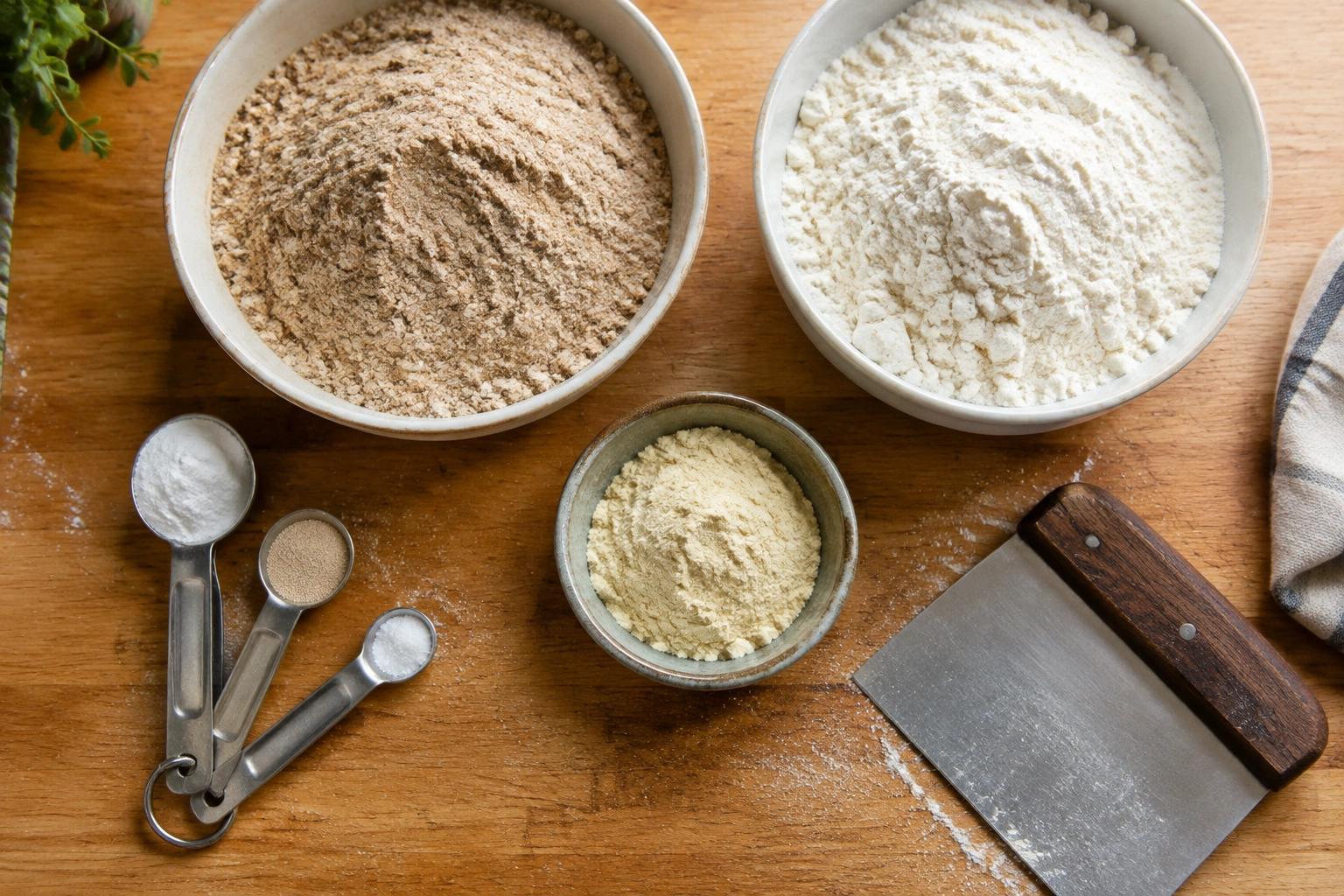
In practical terms, think of it as a protein booster for dough. It is usually sold as a fine powder. When water is added, it becomes elastic and sticky, which is exactly what bread dough needs to trap gas from yeast and hold its shape during proofing and baking.
That high protein concentration is the reason even a small amount can change dough performance noticeably.
How Vital Wheat Gluten Works in Bread Dough
Bread rises because gluten forms a stretchy network that holds onto carbon dioxide and steam. More strong, well-developed gluten usually means better structure, better oven spring, and a loaf that stands up instead of spreading out.
That does not mean “more gluten” is always better. You are balancing two qualities:
- Elasticity, which helps dough spring back and hold shape
- Extensibility, which helps dough stretch without tearing
Vital wheat gluten pushes dough toward more strength and elasticity. That can be a huge advantage in whole wheat bread, low-protein flour, or doughs loaded with seeds and grains. It can also make a loaf chewier and slightly firmer, which is welcome in pizza dough but not always in soft sandwich bread.
That description is helpful because it explains the ingredient’s behavior in the bowl: it strengthens the dough matrix rather than simply thickening it.
The real reason bakers reach for vital wheat gluten is simple: it helps yeast bread keep its structure.
When You Should Use It — and When You Shouldn’t
Here is the simplest decision rule I use in the bakery: add vital wheat gluten when the flour or formula is likely too weak for the loaf you want.
Good times to use it
- Whole wheat bread that feels heavy or spreads too much
- All-purpose flour doughs that need more height or chew
- Low-protein flours used for rustic loaves, rolls, or pizza
- High-inclusion doughs with lots of seeds, grains, or nuts
- Rye-leaning or specialty flour blends that need extra support
Times to skip it
- Your recipe already uses bread flour and rises well
- You want a very soft, tender crumb
- You are making a dough where the flour strength is already carefully balanced
- You are troubleshooting a loaf that is dense because of underproofing or poor kneading, not weak flour
That last point matters. Vital wheat gluten can improve structure, but it cannot fully rescue a dough that was mixed poorly, fermented too short, or baked before it was ready.
Tools, Ingredients, and Prerequisites
You do not need special equipment, but a few basics make the job much easier:
- A digital scale if you want the most consistent results
- Measuring spoons if you are working from cups
- Flour
- Water
- Yeast for yeast-leavened bread
- A mixing bowl and spoon, stand mixer, or your hands
- A recipe that already has a clear hydration target
If you are using vital wheat gluten for the first time, choose a recipe where you can observe the dough’s feel as you mix. That makes it easier to judge whether the flour can absorb a little more water.
How Much Vital Wheat Gluten to Add

This is the part bakers usually want first, so let’s make it practical.
A common home-baking starting point is 1 to 2 teaspoons per cup of flour for weak or whole-grain doughs. For many recipes, that is enough to improve structure without making the crumb too tight.
For a weight-based example, a good starting range is about 1 to 3 grams per 100 grams of flour. If you are developing a recipe, start at the low end and adjust based on the flour’s strength, the dough’s hydration, and the crumb you want.
Quick dosage guide
| Flour type / baking goal | Suggested starting amount | What to expect |
|---|---|---|
| Bread flour | Usually none | Often already strong enough |
| All-purpose flour | 1 tsp per cup | Slightly better rise and structure |
| Whole wheat flour | 1 to 2 tsp per cup | Better height, less crumbliness |
| Low-protein flour blend | Up to 2 tsp per cup | More support for a taller loaf |
| Pizza dough | 1 tsp per cup | More stretch and chew |
| Seeded or grain-heavy dough | 1 to 2 tsp per cup | Helps offset heavy inclusions |
A useful trade-off to remember: the more gluten you add, the more structure you gain, but the less tender the crumb may become. That is why I prefer to start small and adjust only if the dough clearly needs it.
Step-by-Step: How to Add Vital Wheat Gluten to a Recipe
1) Mix it into the dry ingredients first
Do not dump vital wheat gluten onto wet dough and expect it to distribute evenly. Blend it thoroughly with the flour before adding liquid. Whisking well or sifting it with the flour can help prevent clumps and create more even distribution.
2) Add the water, then pause
After you mix the wet and dry ingredients, let the dough sit for a few minutes. This gives the flour and gluten time to hydrate. The dough may feel firmer at first than you expect.
3) Check the dough feel before adding more flour
This is where many bakers go wrong. Added gluten absorbs water, so a dough that seemed normal on paper can suddenly feel stiff. If the dough is dry, add water a teaspoon at a time until it feels supple and workable.
4) Knead or fold until the dough strengthens
Vital wheat gluten is not a substitute for development. You still need kneading, stretch-and-folds, or another mixing method to organize the gluten network. If the dough tears easily, keep developing it. If it becomes smooth, elastic, and slightly springy, you are on the right track.
5) Proof with the dough’s behavior in mind
A stronger dough may hold shape better during proofing, but it still needs enough time to ferment. Watch the dough, not the clock alone. If it is underproofed, it can spring poorly even with added gluten.
6) Bake and evaluate the crumb
After baking, look at the loaf height, sliceability, and crumb texture. If it is still dense, the issue may be hydration, fermentation, or flour choice—not just gluten strength.
Practical Examples for Common Breads
Whole wheat sandwich bread
Whole wheat flour often benefits the most from vital wheat gluten because bran can interfere with gluten development and make the loaf feel heavy. If your whole wheat bread keeps baking up low and crumbly, try adding 1 to 2 teaspoons per cup of flour and give the dough a little extra water if it feels tight.
For a soft, reliable whole wheat loaf, this ingredient can be a useful support, but technique still matters. If the dough is underdeveloped or underproofed, the gluten boost will not do all the work for you. For more on working with whole grain doughs, see our guide to making whole wheat bread softer and more reliable.
Pizza dough made with all-purpose flour
Pizza dough is a great place to use a small amount of vital wheat gluten when the flour is a little weak. It can help the dough stretch without tearing and improve oven spring in the final bake. Here, a firmer, chewier crust is often a feature, not a flaw.
Low-protein or specialty flour loaves
If you are using a flour that tends to be weaker, or a blend that includes rye, oat, spelt, teff, or buckwheat, a modest amount of vital wheat gluten can help the loaf keep its shape.
Common Mistakes to Avoid
Adding too much
This is the fastest way to make bread tough or rubbery. If your loaf feels bouncy in a good way, stop there. More is not automatically better.
Forgetting to adjust hydration
Vital wheat gluten needs water. If you add it and keep the liquid the same, the dough may feel dry and resist shaping. A small hydration increase is often the difference between a dough that feels tight and one that feels smooth.
Using it in a recipe that does not need it
Bread flour already has enough strength for many loaves. Adding extra gluten on top can make the crumb less tender without improving the bread much.
Expecting it to fix technique
Weak kneading, poor fermentation, and overbaking can all produce disappointing bread. Vital wheat gluten is a support tool, not a cure-all.
Troubleshooting Dense, Gummy, or Tough Bread
If the bread did not turn out the way you hoped, use this quick diagnosis.
Dense loaf
Possible causes:
– Not enough hydration
– Underproofing
– Too little gluten development
– Flour too weak for the formula
If the dough was stiff from the start, the fix may be more water, not more gluten.
Gummy crumb
Possible causes:
– Too much vital wheat gluten
– Underbaked loaf
– Excess hydration without enough structure
– Slicing too soon
If the loaf feels chewy in a way that crosses into gummy, reduce the gluten next time and make sure the center is fully baked.
Tough or rubbery texture
Possible causes:
– Overuse of vital wheat gluten
– Overkneading in a high-strength dough
– A formula that was meant to be softer
In that case, back off the gluten entirely or use a stronger flour instead of boosting a weaker one.
Vital Wheat Gluten vs. Bread Flour, Gluten Flour, and Dough Conditioners
Vital wheat gluten vs. bread flour
Bread flour already contains more protein than all-purpose flour, so it naturally develops stronger structure. Vital wheat gluten is a way to strengthen a weaker flour, while bread flour is a flour choice that already brings more strength to the recipe.
If you are deciding between the two, ask what your recipe needs. If you want a stronger dough from the start, bread flour is often the simpler choice. If you already have a flour you like and only need a small structural boost, vital wheat gluten may be the better fix.
Vital wheat gluten vs. gluten flour
These terms are often used interchangeably. In consumer baking, gluten flour and vital wheat gluten usually refer to the same ingredient: concentrated wheat protein.
Vital wheat gluten vs. wheat gluten
In plain baking language, this usually points to the same idea as well, though labels can vary by manufacturer. Always check the ingredient statement if you want to be sure.
Vital wheat gluten vs. dough conditioners
Dough conditioners are a broader category. They may include enzymes, emulsifiers, or other ingredients designed to improve handling or shelf life. Vital wheat gluten is much simpler: it is primarily there to add protein and strengthen the dough network.
If your main problem is weak structure, vital wheat gluten is the more direct tool. If your issue is softness, shelf life, or machine handling in a commercial-style formula, a dough conditioner may serve a different purpose.
Substitutes and Alternatives If You Don’t Have Any
If you run out, you still have options.
Can bread flour replace vital wheat gluten?
Sometimes, yes. If a recipe calls for all-purpose flour plus vital wheat gluten, swapping in bread flour can be a practical substitute because bread flour already has more protein. This is often the best choice when you want more structure without changing the formula too much.
Can vital wheat gluten replace bread flour?
Not by itself. Vital wheat gluten is an ingredient, not a full flour substitute. It adds protein, but it does not replace the starch, flavor, and bulk that flour provides. If you only have all-purpose flour, you can add vital wheat gluten to strengthen it, but you still need the flour in the recipe.
Use bread flour instead of all-purpose flour
This is the cleanest substitution when you want more structure without adding extra ingredients.
Reduce heavy add-ins
If seeds, bran, or grains are weighing the dough down, scale them back a bit. Sometimes the flour is not the real issue; the inclusion level is.
Improve technique
Longer autolyse, better kneading, or a few stretch-and-fold rounds can strengthen dough naturally.
Accept a softer, shorter loaf
If you only have all-purpose flour and no vital wheat gluten, you can still bake good bread. It may just be a little less lofty or less chewy than the version made with added protein.
Storage and Shelf Life
Store vital wheat gluten in an airtight container in a cool, dry place. Because it is a dry ingredient, it keeps well when protected from moisture and heat. If your kitchen is humid, a sealed jar or container is better than leaving the bag open in a cupboard.
For longer storage, the refrigerator or freezer can be appropriate if the product is tightly sealed. That can help protect it from heat and humidity, but it is important to keep moisture out and let the container come back to room temperature before opening so condensation does not form inside.
If it smells stale, looks clumpy from moisture, or has been sitting for a very long time, replace it. A fresh package is inexpensive compared with the frustration of testing a bread formula with a tired ingredient.
When to Consult a Master Baker
If you are working on a formula with multiple variables—such as sourdough, whole grain flour, high hydration, and seed inclusions all at once—it can help to step back and troubleshoot one factor at a time. A master baker would usually ask: Is the flour strong enough? Is the hydration right? Is fermentation complete? Is the dough being overhandled?
That mindset is useful here too. Vital wheat gluten is powerful, but it works best when it supports a well-balanced formula rather than trying to replace one.
FAQ
Is vital wheat gluten the same as bread flour?
No. Bread flour naturally contains more protein than all-purpose flour, while vital wheat gluten is an added protein ingredient you mix into flour.
How much should I use per cup of flour?
A practical starting point is 1 to 2 teaspoons per cup of flour, depending on how weak the flour is and how much structure you want.
Do I need more water when I add it?
Usually, yes. Since it absorbs water, a dough with added vital wheat gluten may need a small hydration increase.
Can I use it in whole wheat bread?
Yes, and that is one of its most common uses. Whole wheat dough often benefits from the added structure.
Can bread flour replace vital wheat gluten?
Often, yes, if the recipe allows a flour swap. Bread flour can be the easier substitute when you want more strength without adding another ingredient.
Can vital wheat gluten replace bread flour?
No, not on its own. It strengthens flour, but it does not replace the full structure of flour in a recipe.
Will it make bread chewier?
It can. That is helpful in pizza dough and some artisan breads, but not ideal if you want a very soft crumb.
Can too much ruin bread?
Yes. Overuse can make bread tough, rubbery, or gummy.
Is it suitable for people with celiac disease?
No. It is a wheat protein ingredient and is not appropriate for gluten-free diets.
Vital wheat gluten is one of those ingredients that rewards restraint. Used thoughtfully, it can turn a weak, stubborn dough into a loaf with better height, better sliceability, and a more confident crumb. The goal is not to add as much as possible; it is to add just enough to let the dough do its job.