
What Butter Does in Bread: Texture, Flavor, Rise, and the Best Time to Add It

If you’ve ever bitten into a soft sandwich loaf, a tender dinner roll, or a rich brioche-style bun and wondered why it feels so different from lean artisan bread, butter is often a big part of the answer. In bread dough, butter is more than a flavoring. It changes how the dough handles, how the crumb sets, how the crust browns, and how the loaf tastes once it cools.
As Ethan Baker, I like to think of butter as a trade-off ingredient: it gives you tenderness and richness, but it asks for some structure in return. Used well, it can turn an ordinary loaf into something softer, more aromatic, and more satisfying. Used carelessly, it can make dough slack, slow, or harder to build into a strong loaf.
Let’s unpack what butter actually does in bread dough and how to decide when it belongs in your formula.
What Butter Changes in Bread Dough
Butter is a dough enrichment, which means it changes the dough’s behavior as much as it changes the flavor. Butter tenderizes bread dough mainly by coating flour proteins and interfering with hydration, which slows gluten development and keeps the network from forming as quickly or as tightly. That’s the heart of it: butter softens the structure on purpose.
Butter makes bread softer and less chewy
Because butter gets in the way of flour hydration and gluten bonding, it makes the dough less able to build a strong, tight network right away. The result is usually a more tender bite and less chew than you’d expect from a lean dough.
That’s why buttered breads often feel pillowy rather than stretchy. Think of dinner rolls, milk bread, brioche, and soft sandwich loaves. They are meant to tear gently instead of resisting your teeth.
Butter adds flavor and aroma
Butter brings a dairy richness that plain flour, water, yeast, and salt simply can’t create on their own. It doesn’t just taste “fatty”; it gives bread a fuller, rounder flavor and a warm aroma that comes through especially well in enriched doughs.
This is one reason buttered loaves often seem more “finished” even before you add anything on top. The loaf itself tastes complete.
Butter affects gluten development and dough strength
Gluten is what gives bread its stretch and structure. Butter can slow that process, especially if it’s added too early. That doesn’t mean butter ruins gluten; it means the dough may need more deliberate mixing or kneading to build enough strength before the fat fully coats the flour proteins.
For a deeper look at the structure side of bread making, see how gluten develops in bread dough.
Butter changes crumb texture
In the finished loaf, butter tends to create a finer, softer crumb. Instead of the open, irregular holes you might want in a rustic sourdough boule, butter-rich dough often bakes into a tighter, more even crumb that slices neatly.
That’s exactly what you want in a sandwich bread. It gives you clean slices that hold together without shredding apart.
Butter softens the crust
Butter can soften the crust after baking, which is part of why enriched breads feel so different from lean loaves. A lean loaf may give you a firmer, crisper crust, while a butter-rich loaf usually bakes into a more tender one.
If you’re aiming for a crisp crust, butter is usually not the ingredient that helps you get there. For that style, a lean formula is often the better choice.
Butter can help bread stay softer after baking
Butter is often associated with slower firming after the loaf cools. In practical terms, that means a butter-enriched loaf may stay pleasant and sliceable longer than a loaf made without added fat. I’d treat that as a quality advantage rather than a promise of a fixed shelf life, since storage conditions matter a lot.
When Butter Helps Bread—and When It Doesn’t
Butter is wonderful in breads where tenderness, flavor, and a fine crumb matter more than chew and open structure. It is less helpful when your goal is a rustic, crusty loaf with strong gluten development and a springy, airy interior.
Use butter when you want a soft, enriched loaf
Butter is a strong fit for:
- sandwich bread
- dinner rolls
- brioche-style doughs
- Pullman loaves
- soft breakfast breads
In these breads, butter supports the style. The loaf should feel rich, slice cleanly, and stay tender.
Skip or reduce butter when structure is the priority
For lean artisan breads, especially baguettes, country loaves, and crusty boules, butter can work against the texture you’re trying to build. A lean dough relies more heavily on gluten strength and hydration for volume, chew, and an open crumb.
If you add too much butter to a bread that is supposed to be rustic, you may get a loaf that feels too soft, spreads more, or loses the crisp, chewy character that makes that style appealing.
A simple decision rule
Ask yourself one question: do I want this bread to feel tender or sturdy?
- Tender, rich, soft: butter helps.
- Chewy, airy, crusty: keep butter low or leave it out.
That one decision usually tells you more than a recipe label does.
Tools and Ingredients You Need
You do not need specialized equipment to work with butter in bread, but a few basics make the process smoother.
Useful tools
- mixing bowl
- scale for accurate measuring
- dough scraper
- stand mixer or sturdy hands for kneading
- loaf pan, sheet pan, or proofing basket depending on the bread
- thermometer if you like to track dough temperature
A scale is especially helpful because enriched doughs are less forgiving when ingredient ratios drift.
Choosing the right butter
Unsalted butter is the safest default for bread recipes because it gives you more control over total salt. That matters in bread, where even small seasoning changes can affect flavor and fermentation.
Salted butter can work, but it adds variable salt to the dough. If you use it, reduce the added salt in the formula a little so the bread doesn’t end up overly salty.
Butter form matters
Butter can be softened, cold, or melted, and each form behaves differently.
- Softened butter blends more evenly into dough and is often the easiest choice for enriched breads.
- Cold butter is harder to incorporate and can leave streaks if the dough is not developed enough.
- Melted butter disperses quickly, but it can make dough feel looser and less structured if the recipe expects softened butter.
The recipe’s method usually tells you which state is best. If it doesn’t, softened butter is the most adaptable starting point for home bakers.
How to Add Butter to Bread Dough
There is no universal rule that butter must always be added last, but timing matters. In many enriched doughs, you want some gluten development first so the dough has enough structure to accept the fat without collapsing into a greasy, weak mass.
1. Mix the flour, liquid, yeast, and salt first
Begin by combining the base dough ingredients until they form a rough dough. At this stage, the flour should start hydrating and the gluten should begin forming.
This gives the dough a framework before the butter enters the picture.
2. Let the dough gain some strength
Whether you knead by hand or machine, give the dough a head start. You’re looking for a dough that has begun to smooth out and show some elasticity.
A practical checkpoint is the windowpane or elasticity test: the dough should stretch without tearing immediately and feel organized enough to hold some structure before you add the butter.
3. Add softened butter gradually
Once the dough has started to organize itself, add softened butter in small pieces. Let each addition disappear before adding more.
This gradual method helps the fat emulsify into the dough instead of smearing across it. The dough may look messy at first, but it usually comes together with continued mixing.
4. Mix until the dough becomes smooth and elastic
Butter-rich dough often needs a little more time to look cohesive. It may feel tackier than a lean dough, and that can tempt bakers to stop too early. Resist that urge. Enriched dough often needs enough mixing to rebuild strength after the fat is added.
5. Expect a softer dough, not a dry one
A butter-enriched dough should feel supple, not stiff. If it seems too slack to shape, it may need more development time, not just more flour.
For a broader understanding of how dough hydration affects handling, see bread dough hydration and how to adjust it.
How Much Butter to Use
The amount of butter you use shapes the loaf style as much as the mixing method does. More butter usually means more tenderness, but also less chew and potentially less structure.
As a rough guide, bakers often think about butter in relation to flour weight:
- Light enrichment: about 5% to 10% butter by flour weight
- Moderate enrichment: about 10% to 20%
- Heavy enrichment: about 20% to 40% or more
These are practical ranges, not hard rules, and the rest of the formula still matters.
Light enrichment
A modest amount of butter can soften a loaf without turning it into a full enriched dough. This works well when you want just a little more tenderness and flavor in a standard sandwich loaf.
Moderate enrichment
This is where butter becomes a clear structural influence. The crumb turns softer and finer, and the bread starts to feel clearly enriched rather than simply lightly enriched. Dinner rolls and many soft loaf breads live in this zone.
Heavy enrichment
At higher levels, butter becomes a dominant part of the formula. The dough will usually be softer, richer, and more delicate, but it may also need more careful handling and a stronger development strategy to avoid spreading or weak rise.
That’s why brioche-style doughs are often treated differently from basic sandwich bread. The structure has to be built around the enrichment.
What to Expect in the Finished Loaf
Butter changes the finished bread in ways you can see, smell, and feel.
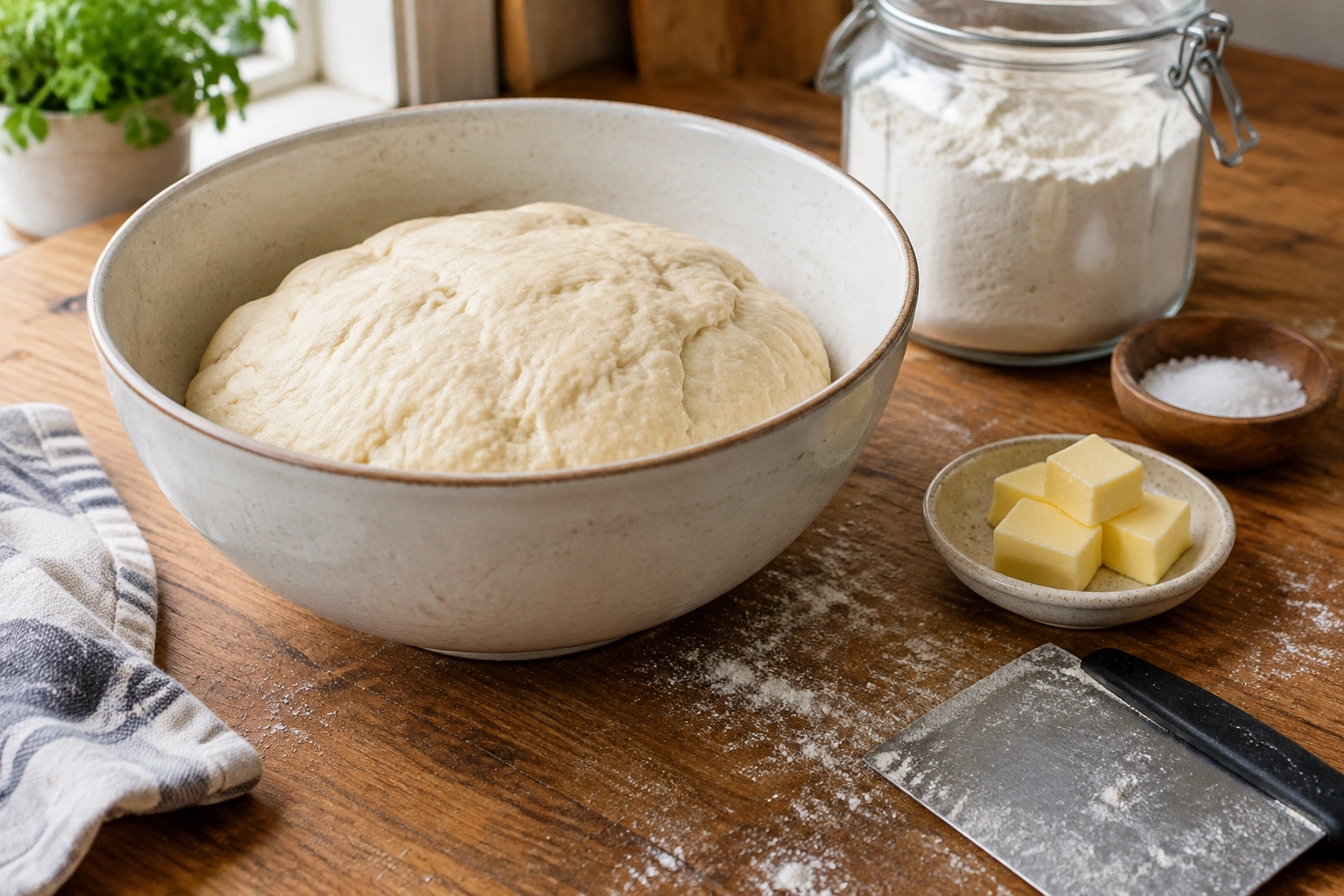
A softer crumb
The interior will usually be more tender and less chewy than a lean loaf. Slices may pull apart in soft strands rather than tearing with resistance.
More even slicing
Butter-enriched bread often has a tighter, more regular crumb. That makes it especially useful for sandwiches, toast, and dinner rolls.
Better browning
Butter can contribute to a richer crust color and a more appealing baked look. The crust often browns more readily, which can be a plus if you want a golden loaf. If you want a very pale crust, butter works against that goal.
For more on crust behavior, this guide to a crisp, crackly crust explains why lean doughs behave differently.
A softer crust
The crust usually feels more tender after cooling. Instead of sharp crackle, you get a gentler bite.
A richer aroma
Butter gives the loaf a familiar bakery smell that many people immediately read as “fresh and comforting.” That aroma is part of the appeal of enriched bread, not just the taste.
Butter vs Oil vs Shortening
Here’s the practical comparison most bakers need.
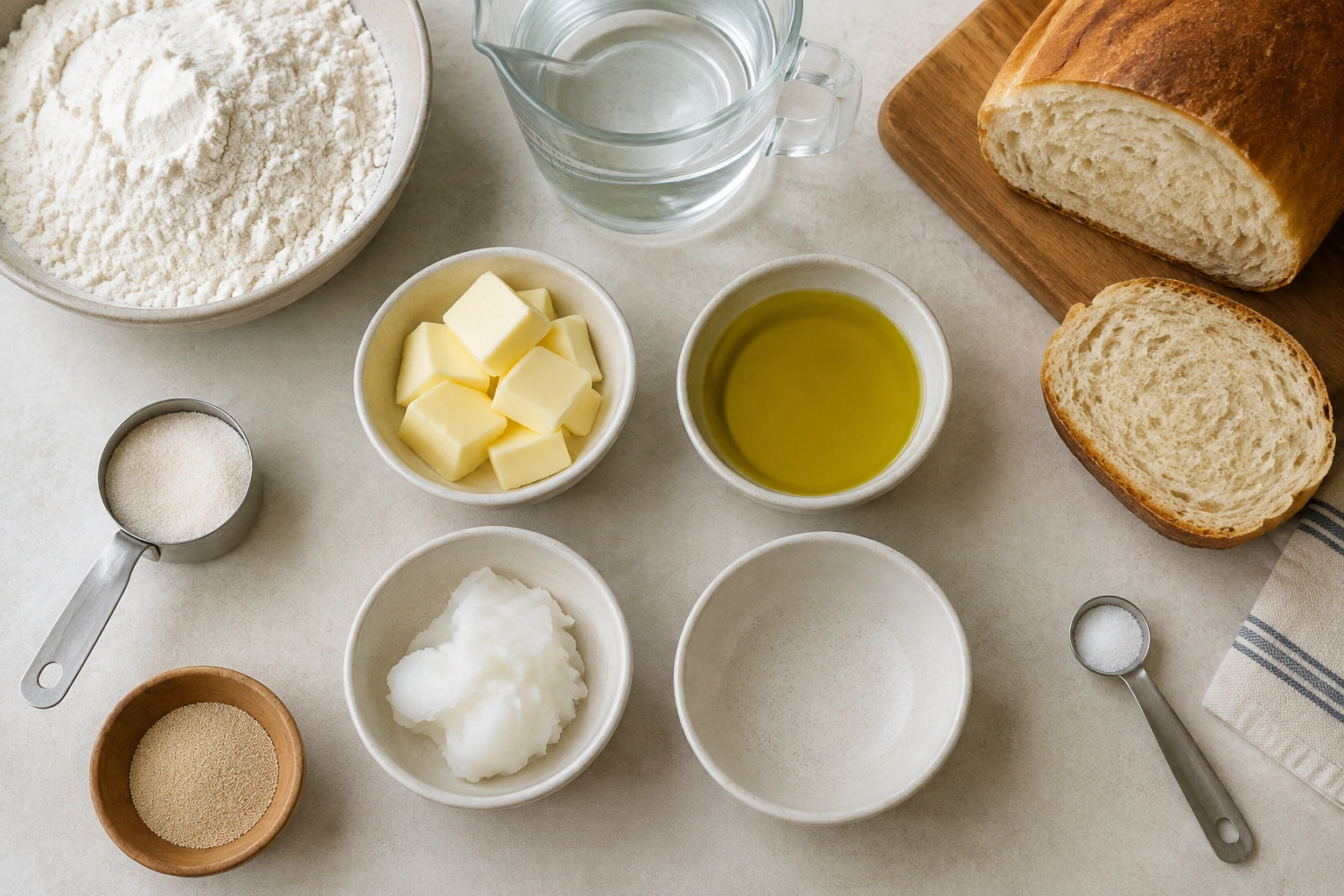
| Fat choice | Softness | Flavor | Structure | Browning | Rise/volume |
|---|---|---|---|---|---|
| Butter | Soft and tender | Rich dairy flavor | Softer, less chewy crumb | Good browning | Can contribute to a softer, less lofty loaf depending on formula and technique |
| Oil | Very soft | More neutral | Tender, less firm crumb | Can brown well | Often supports softness without adding much flavor |
| Shortening | Very tender | Mild, less flavorful | Soft texture with little flavor contribution | Less flavor-driven browning | Can help tenderness, but not flavor |
| No added fat | Least soft | Clean, wheaty flavor | Strongest chew and structure | Crust can be firmer | Often best for open, crusty loaves |
When butter wins
Choose butter when flavor matters as much as texture. It gives bread a more complete, bakery-style richness.
When oil wins
Choose oil when you want maximum softness with a more neutral flavor. Oil can be very effective in sandwich bread where you want tenderness without a strong dairy note.
When shortening wins
Choose shortening when tenderness is the main goal and flavor is less important. It can soften the crumb, but it usually contributes less character than butter.
When no added fat wins
Choose no added fat when you want chew, structure, and a more rustic crust. This is the better route for many artisan breads.
Bread Styles That Benefit Most from Butter
Butter shines in breads that are supposed to feel soft, rich, and comforting.
Sandwich bread
Butter helps produce a loaf that slices neatly, tastes richer, and stays soft enough for everyday use. This is one of the clearest use cases for butter in bread.
Dinner rolls
Butter gives rolls a tender bite and a pleasing aroma. It also makes them feel more luxurious without requiring complicated technique.
Brioche-style doughs
These doughs are built around enrichment. Butter is not a bonus here; it’s part of the identity of the bread.
Pullman loaves
A fine, even crumb is exactly where butter excels. The loaf bakes into tidy slices with a soft texture that works well for sandwiches and toast.
Where butter is less useful
If the bread’s identity depends on an open crumb, crisp crust, and strong chew, butter may work against the final result. In those formulas, restraint often gives you a better loaf.
Common Mistakes When Using Butter in Bread
Adding butter too early
If butter goes in before the dough has begun developing, it can slow gluten formation too much and leave the dough weak.
Using too much butter for the style
A little butter softens. Too much can make the dough overly slack and harder to shape.
Using the wrong butter state
Cold butter can be difficult to incorporate evenly. Melted butter can loosen the dough more than intended. Softened butter is often the most balanced choice unless the recipe says otherwise.
Treating enriched dough like lean dough
Butter-rich dough often feels different in the bowl. If you expect the same springy, elastic feel you get from a lean dough, you may stop mixing too soon or overcompensate with flour.
Ignoring salted butter
Salted butter can throw off seasoning if you don’t account for it. That’s a small mistake that can change the whole loaf’s balance.
Troubleshooting Butter-Rich Dough
If the dough feels sticky
Sticky does not automatically mean broken. Butter-rich dough can feel tackier than lean dough, especially before full development. Give it more mixing time before adding lots of extra flour.
If the dough rises slowly
Heavily enriched doughs can ferment more slowly than lean doughs. Be patient and watch the dough, not just the clock.
If the loaf spreads too much
The dough may be too soft for the formula. That can happen when there is too much butter for the flour strength or when the dough was underdeveloped before shaping.
If the crumb is dense
Dense crumb can come from insufficient gluten development, too much butter, or underproofing. In butter-rich dough, structure and proofing both matter.
If the crust browns too quickly
Butter encourages browning, so you may need to watch the loaf more closely in the oven. If the top is darkening too fast, tenting with foil can help finish the bake without burning the crust.
Practical Examples
A lean artisan loaf and a butter-enriched sandwich loaf are trying to do different jobs.
A lean loaf aims for chew, crust, and an open structure. Butter would soften that profile and move it away from the classic rustic character.
A sandwich loaf with butter aims for tenderness, easy slicing, and a softer crust. In that formula, butter is doing exactly the right job.
A dinner roll dough often benefits from butter added after the dough starts to build strength. That gives you a soft roll without sacrificing all of the structure needed for a good rise.
So the real question is not whether butter is “good” in bread. It’s whether butter supports the bread you’re trying to make.
When to Consult a Master Baker
If you’re working on a formula that keeps failing after you add butter, or if you’re trying to convert a lean dough into an enriched loaf without losing structure, a master baker can help you diagnose the formula rather than just the symptom. That matters most in professional kitchens, bakery production, or any recipe where consistency is critical.
Final Thought
Butter is one of the most useful ingredients in bread when you want softness, richness, and a tender crumb. It can also work against you if your goal is chew, crisp crust, or an open artisan structure. Once you understand that trade-off, butter becomes much easier to use with confidence.
The best bakers do not just add butter because a recipe says so. They add it because they know exactly what it will do.
FAQ
How much butter is too much in bread dough?
It depends on the style, but once butter moves into the heavy-enrichment range, the dough usually needs more careful mixing and shaping. If the loaf spreads, feels weak, or loses structure, the formula may have more butter than the flour strength can support.
Should butter be added before or after gluten develops?
In many enriched doughs, butter is added after the dough has started to develop strength. That helps the flour hydrate and the gluten form before the fat coats the proteins and slows the process.
Does butter make bread rise less?
It can reduce the apparent loft of a loaf if the formula is heavily enriched or underdeveloped, but rise depends on many factors: hydration, flour strength, proofing, shaping, and fermentation all matter. Butter is only one part of the equation.
Is butter better than oil for bread?
Neither is universally better. Butter gives richer flavor and a softer, more bakery-style crumb. Oil usually gives softness with a more neutral flavor. The better choice depends on the loaf you want.
Can I use salted butter in bread?
Yes, but you should reduce the added salt in the recipe a little so the bread does not become too salty.
Why does enriched dough feel different from lean dough?
Butter interferes with hydration and gluten development, so enriched dough often feels softer, less elastic, and more delicate than lean dough. That is normal, as long as the dough still develops enough strength to hold shape.