
What Fruits and Vegetables Can Be Stored Together Without Spoiling Faster?

If you’ve ever opened the fridge to find limp greens, overripe fruit, or a drawer that smells like something went wrong, storage grouping is usually part of the problem. The short answer is this: store most fruits separately from vegetables, and only group produce together when you know they have similar ripening behavior, moisture needs, and storage temperature.
For busy households, the goal is not perfection. It’s to keep produce fresh long enough to actually use it. That means understanding which items create ethylene gas, which items are sensitive to it, and which produce belongs in the fridge, on the counter, or in a pantry.
Quick Answer: Which Fruits and Vegetables Can Be Stored Together?
Here is the simplest practical rule:
- Store fruits with fruits when they have similar ripening needs.
- Store vegetables with vegetables when they need similar humidity and temperature.
- Keep ethylene-producing fruits away from sensitive vegetables when you want maximum freshness.
- Keep cut produce separate from whole produce in covered fridge storage.
Fast storage reference
| Produce item | Best place | Store with | Keep away from |
|---|---|---|---|
| Apples | Fridge for longer storage; counter if ripening/using soon | Other apples, pears | Leafy greens, cucumbers, broccoli, cauliflower |
| Bananas | Counter until ripe; fridge once ripe | Other ripening fruit if you want faster ripening | Most vegetables, berries, greens |
| Avocados | Counter while hard; fridge once ripe | Apples or bananas if ripening faster is the goal | Delicate vegetables and cut produce |
| Tomatoes | Counter until ripe and for best flavor | Other counter-ripening produce | Cucumbers, leafy greens, refrigerated items too early |
| Berries | Fridge | Other berries | Wet produce and strong-smelling items |
| Leafy greens | Fridge crisper | Other greens, carrots, celery | Apples, pears, bananas |
| Carrots and celery | Fridge crisper | Each other, other firm vegetables | Ethylene-heavy fruit bowls |
| Broccoli and cauliflower | Fridge | Each other, other short-term vegetables | Apples, bananas, pears |
| Potatoes | Pantry | Other potatoes, garlic-free dry pantry items | Onions, fruit, warm or bright storage |
| Onions | Pantry | Other onions, dry pantry items | Potatoes, produce bowls |
A few everyday examples make this easier:
- Apples and avocados should usually stay apart unless you want the avocado to ripen faster.
- Bananas and mangoes can speed up ripening in nearby produce, so don’t use the same bowl for everything.
- Tomatoes and cucumbers are a poor match if you want cucumbers to stay crisp.
- Potatoes and onions should be stored separately, not in the same bin or bag.
For a more complete storage system, I also recommend reading how to store fruits and vegetables so they stay fresh longer alongside this guide.
Why Some Produce Should Stay Separate
The main reason produce spoils faster when stored together is ethylene gas. Ethylene is a natural ripening gas released by some fruits and vegetables as they mature. Nearby produce can respond by ripening faster, softening sooner, or breaking down more quickly.
That matters because ripening and spoilage are closely linked. A fruit that ripens too fast may become bruised or mushy before you get to it. A vegetable exposed to too much ethylene may yellow, wilt, or lose firmness earlier than expected.
The practical decision rule is simple: if one item ripens fast and another item is sensitive to ripening, separate them. That is usually more useful than memorizing a long list.
Ethylene-Producing Fruits and Ethylene-Sensitive Vegetables
You do not need to treat every fruit as a problem item. But a few common produce items deserve extra attention.
Common ethylene-producing fruits
These are the fruits most likely to speed up ripening in nearby produce:
- Apples
- Bananas
- Avocados
- Pears
- Peaches
- Mangoes
- Melons
- Citrus fruits in some storage guides
- Tomatoes, which are often treated as a fruit in storage discussions because they ripen and emit ethylene as they sit
Produce that is more likely to be affected
These vegetables are often more sensitive to nearby ethylene:
- Broccoli
- Cauliflower
- Cucumbers
- Leafy greens
- Carrots
- Peppers
- Watermelon
- Many cut vegetables
That does not mean every pairing will fail immediately. It means the risk of faster softening, yellowing, or flavor loss goes up when they are packed together in a closed drawer or crowded bowl.
Safe Produce Storage Pairings by Category
This is where storage gets more manageable. Instead of trying to find one perfect container for everything, group produce by how it behaves.
Good fruit-to-fruit groupings
These pairings are usually more practical than mixing fruit with vegetables:
- Apples with pears if you want both to continue ripening together
- Bananas with mangoes if you are trying to ripen mangoes faster
- Avocados with apples or bananas when the goal is faster ripening, not longer storage
- Berries together in the fridge if they are dry and stored in a container with some airflow
Good vegetable-to-vegetable groupings
Vegetables that need similar fridge conditions can often share space:
- Carrots with celery in a crisper drawer or covered container
- Broccoli with cauliflower if you plan to use them soon and keep them cold
- Leafy greens together in a high-humidity crisper drawer
- Root vegetables together when they are dry, unwashed, and kept cool
Pairings that are usually better kept apart
These are the combinations most likely to shorten freshness:
- Apples and avocados, unless you want faster ripening
- Bananas and mangoes, unless you are actively ripening fruit
- Tomatoes and cucumbers
- Apples or pears near leafy greens
- Potatoes and onions
If you are building a small fridge system, the easiest setup is usually one drawer for vegetables, one separate area for fruit, and one container for cut produce.
What to Keep in the Fridge, on the Counter, and in the Pantry
Storage location matters as much as produce compatibility.
Fridge storage
The fridge is best for produce that benefits from colder temperatures or needs slower ripening. Examples include:
- Apples, if you want them to last longer
- Oranges
- Grapefruits
- Berries
- Many cut fruits and vegetables
- Most leafy greens
- Broccoli and cauliflower
- Carrots and celery
A crisper drawer helps because it protects produce and keeps moisture in. That said, overcrowding cancels out some of the benefit by blocking airflow.
Counter storage
Some produce should stay at room temperature until it ripens or until you are ready to use it:
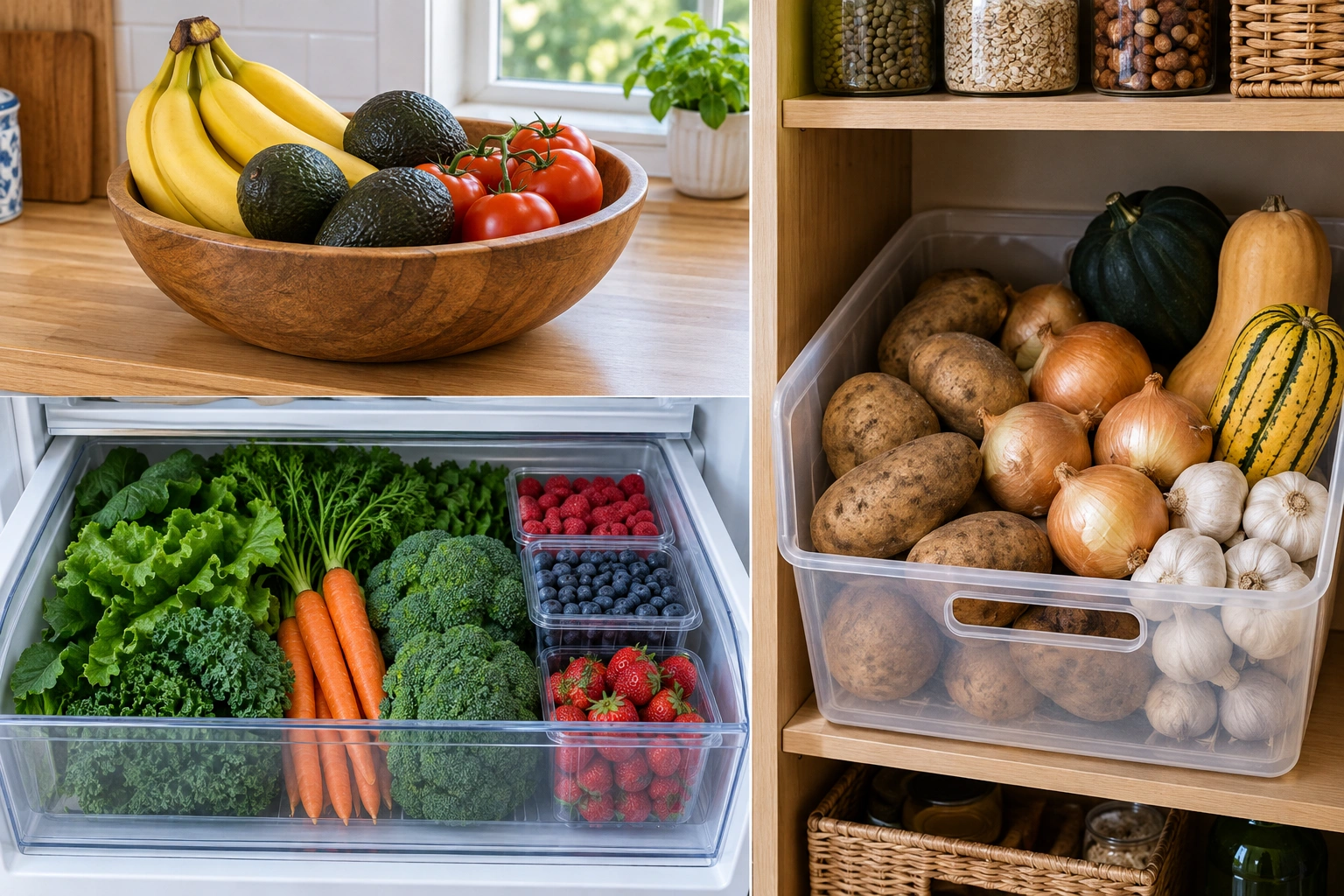
- Tomatoes, until ripe and for best flavor
- Bananas before they are fully ripe
- Avocados before they are ripe enough to eat
- Peaches and nectarines in some ripening stages
- Mangoes when you want them to finish ripening
A useful rule of thumb: if the fruit is still hard, the counter is often better for ripening; if it is ripe and you need to slow it down, the fridge is often better. Apples are a good example of this: they can sit on the counter for convenience, but they usually last longer in the fridge.
Pantry storage
A cool, dark pantry works well for items that do not need fridge humidity:
- Potatoes
- Onions
- Garlic
- Shallots
- Winter squash
For potatoes and onions specifically, keeping them apart matters because they can shorten each other’s shelf life. If you want a deeper breakdown, see the best way to keep potatoes and onions fresh.
How to Store Apples, Bananas, Avocados, Tomatoes, and Potatoes
These five items cause the most confusion, so they deserve direct rules.
Apples
Apples last longer in the fridge than on the counter. If you leave them at room temperature, they soften faster. Store them away from vegetables if you want to avoid pushing nearby produce toward faster ripening.
Bananas
Keep bananas on the counter until they are ripe. If you refrigerate them early, the peel may darken and the texture can suffer, even if the fruit inside is still usable. Once ripe, refrigeration can slow further ripening.
Avocados
Avocados are a classic “depends on the goal” fruit. If they are hard, keep them on the counter. If you want them to ripen faster, place them near apples or bananas. If they are ripe and you are not using them immediately, refrigeration helps slow the process.
Tomatoes
Tomatoes belong on the counter, not in the fridge, until you are ready to use them. Cold storage can dull flavor and change texture. Keep them away from cucumbers if you want cucumbers to stay crisp.
Potatoes
Potatoes belong in a cool, dark pantry, not in a fruit bowl. They should stay away from onions and from any produce that gives off a lot of ethylene. A paper bag or breathable container is better than a sealed plastic bag.
High-Moisture vs. Low-Moisture Produce Groupings
Ethylene is only part of the story. Moisture and airflow also shape how long produce stays usable.
High-moisture produce
High-moisture produce tends to dry out, wilt, or lose crunch if it is left too exposed. Examples include:
- Leafy greens
- Celery
- Carrots
- Broccoli
- Cauliflower
- Berries
These items usually do best in a fridge drawer or container that protects humidity without trapping too much condensation.
Low-moisture produce
Low-moisture produce is less likely to wilt quickly and often needs more airflow:
- Potatoes
- Onions
- Garlic
- Shallots
- Winter squash
These items usually do better in a pantry or dry cabinet than in a humid crisper drawer.
Practical do/don’t guidance
- Do use a high-humidity crisper for leafy greens and similar vegetables.
- Do use a lower-humidity, more ventilated space for dry pantry items.
- Do keep wet produce from sitting in pooled moisture.
- Don’t seal damp produce in a container.
- Don’t crowd the drawer so tightly that air cannot move.
- Do use vented bins or perforated bags when you want some airflow with moisture retention.
How Moisture, Airflow, and Packaging Affect Freshness
Crisper drawers
A crisper drawer helps because it holds humidity better than open fridge shelves. That is useful for leafy greens, carrots, and similar vegetables that dry out quickly. But the drawer should not be packed tightly. If air cannot move, moisture builds up and spoilage speeds up.
Paper bags and perforated bags
These are useful when you want a balance between moisture retention and airflow. A paper bag or perforated plastic bag can help ripening fruit finish ripening without exposing the rest of your produce to too much ethylene. Use them loosely rather than sealing produce tightly inside.
Airtight containers
Use airtight containers for cut produce and berries that have already been washed and dried. The key is dryness first; trapped moisture on wet fruit encourages faster breakdown. If the produce is still damp, give it a chance to dry before you close it up.
How to Store Whole Produce vs Cut Produce
Whole produce and cut produce behave very differently.
Whole fruits and vegetables still have their natural skin or peel, so they lose moisture more slowly. Cut produce has exposed surfaces, which means it spoils faster and absorbs odors more easily.
That is why cut produce should be:
- Refrigerated promptly
- Kept in a covered container
- Stored away from raw meat juices and strong-smelling foods
- Used sooner than whole produce
As a simple rule, once something is cut, treat it like a short-term fridge item rather than something that can sit in a bowl on the counter.
Common Produce Storage Mistakes to Avoid
These are the errors that waste the most food in a normal household:
- Putting all produce in one drawer without sorting by ripening behavior
- Mixing fruit and vegetables just because they fit together
- Leaving berries wet before refrigerating them
- Overfilling the crisper drawer
- Storing tomatoes in the fridge too early
- Keeping potatoes with onions
- Leaving cut produce uncovered in the fridge
Most of these mistakes are easy to fix once you think in terms of airflow, moisture, and ethylene.
When Produce Should Be Separated or Discarded
Sometimes the right answer is not better storage. It is removing one bad item before it affects the rest.
Separate or discard produce if you notice:
- Mold
- Leaking liquid
- Strong off odors
- Slimy texture
- Deep soft spots
- Severe bruising
- Visible rot
If one piece is badly spoiled, do not store it with healthy produce. Mold and decay can spread quickly in closed containers or crowded drawers.
A Simple Storage System for Busy Households
If you want a low-effort setup, use this three-part system:
- Counter bowl: bananas, avocados, tomatoes, and other ripening fruit
- Fridge crisper: greens, carrots, broccoli, cauliflower, berries
- Pantry bin: potatoes, onions, garlic, shallots, winter squash
Then make one extra rule: move fruit away from vegetables unless you intentionally want ripening to speed up. That single habit prevents a lot of waste.
If fridge space is tight, prioritize by sensitivity: keep ethylene-sensitive vegetables in the crisper drawer first, then give ripening fruit its own counter spot or a separate container. Even a small kitchen can stay organized if you separate by ripening stage instead of trying to store everything together.
FAQ
Can you store fruit and vegetables in the same drawer?
You can, but it is usually better to separate them within the fridge if possible. Use one crisper drawer for vegetables and a different area for fruit, especially if the fruit is still ripening.
Which fruits should not be stored with vegetables?
Apples, bananas, avocados, pears, peaches, and mangoes are the main fruits to keep away from sensitive vegetables when freshness matters.
Can tomatoes go in the fridge?
Only if they are already very ripe and you need to slow them down. For best flavor and texture, keep tomatoes on the counter until you use them.
Should potatoes and onions be stored together?
No. Keep them apart in a cool, dark, dry place.
What is the best way to store berries?
Keep berries dry and refrigerate them in a container that allows some airflow. Wash them only when you are ready to use them unless your routine is to wash and dry them carefully before storage.
When to Ask a Food Safety Expert
If you are unsure whether produce is still safe after mold, slime, or unusual odor appears, it is worth asking a food safety professional or your local extension service. Storage compatibility helps with freshness, but it does not turn spoiled produce back into good produce.