
Why Your Air Fryer Smells Like Plastic and How to Fix It Safely
If your air fryer smells like plastic, the first thing to figure out is whether you’re dealing with a normal first-use odor or a warning sign.
A mild plastic-like smell during the first 1–3 uses is fairly common in new air fryers. Tom’s Guide reports that Philips says some air fryer designs use plastic housing and a PTFE-coated basket, which can create an odor when the appliance heats up for the first time. Tom’s Guide also notes that it’s worth checking for leftover plastic wrapping in the basket. Tom’s Guide’s explanation of new air fryer odors lines up with what many home cooks notice the first time they run the machine.
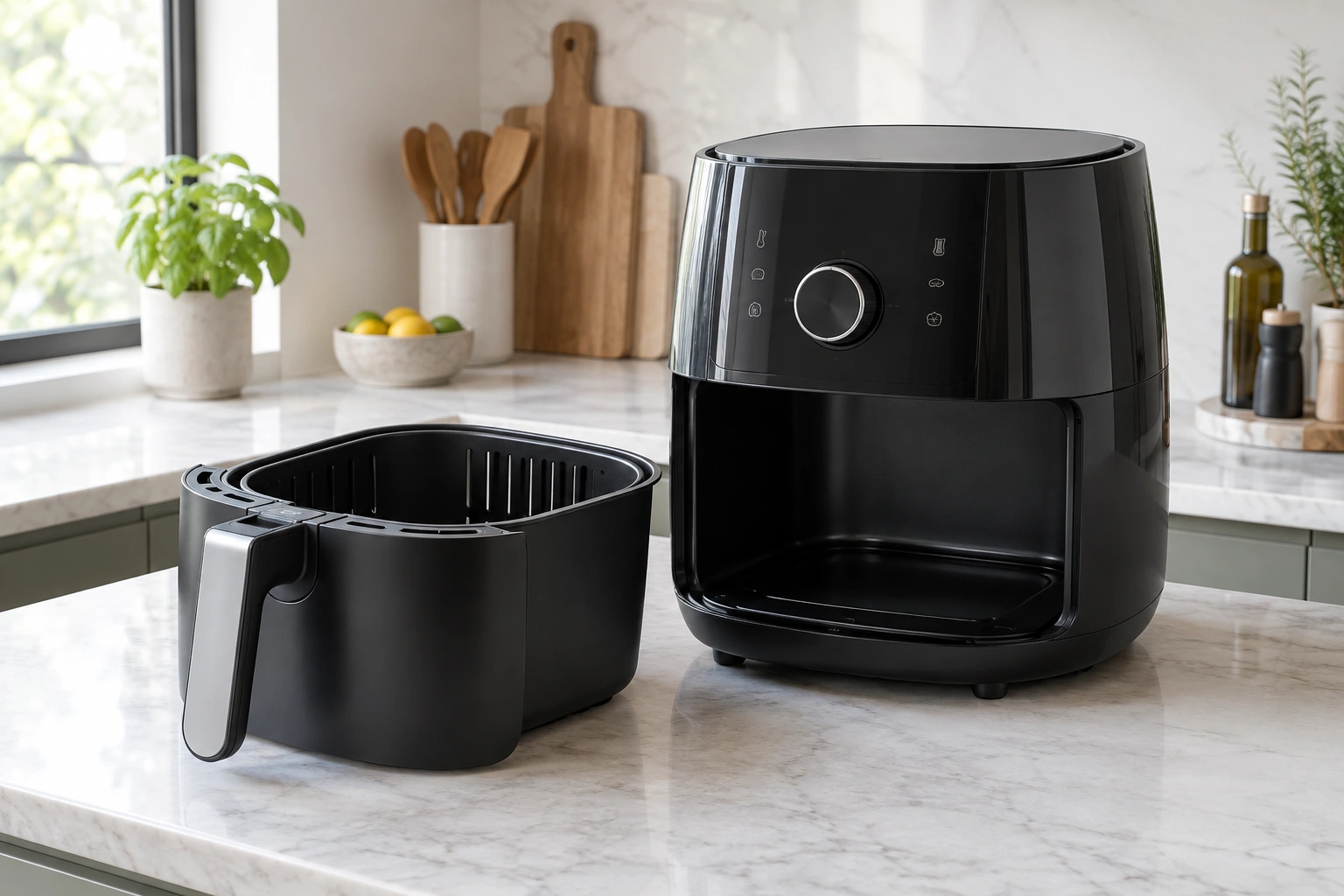
But a strong burnt-plastic smell, smoke, sparks, or an odor coming from the cord or control panel is different. That is not something to ignore.
Quick answer: normal smell or warning sign?
Use this simple rule:
- Likely normal: the air fryer is new, the smell is mild, and it fades after a few uses or after a proper cleaning and empty run.
- Possible residue issue: the smell appeared after storage, after a greasy cook, or after you skipped washing the removable parts.
- Stop using it now: the smell is strong, smells like melting plastic or electrical burning, gets worse with heat, or comes with smoke, unusual noises, or visible damage.
Here’s the practical difference: a normal break-in smell is usually annoying. A dangerous smell usually feels sharp, burnt, or chemical, and it does not improve as the unit warms up.
| Odor type | What it usually means | What to do |
|---|---|---|
| Mild plastic smell on first use | New materials, coating, or manufacturing residue | Wash, air out, then run a short burn-in cycle if the manual allows it |
| Plastic smell after greasy cooking | Food residue or oil buildup | Clean basket, tray, and interior surfaces |
| Strong burnt-plastic smell | Overheating or damaged material | Stop using immediately |
| Smell near plug, cord, or control panel | Possible electrical problem | Unplug and contact support |
| Smell with smoke or sparks | Safety issue | Do not use again until inspected |
If the smell is clearly coming from the cooking chamber and is mild, you usually have a cleaning or break-in problem. If it seems to come from the power area, treat it as a safety issue.
Why an air fryer can smell like plastic
There are a few different reasons this happens, and they do not all mean the same thing.
1) Manufacturing residue
New appliances often have leftover oils, dust, or residue from the factory. That residue can heat up and create a plastic-like or chemical odor the first few times you cook. If you skip the initial wash, the smell can linger longer than it should.
This is one reason a new air fryer can smell strange even when nothing is actually melting.
2) Packaging or shipping materials
Sometimes the issue is simpler: a piece of plastic wrap, tape, foam, or a protective insert was left behind. That can happen in the basket, under the drawer, or around the accessories.
Before you do anything else, inspect the basket, tray, and inside cavity for any packaging material.
3) The housing, drawer, or coating is heating up
Some air fryer designs use plastic in the outer housing or drawer assembly, and the basket often has a nonstick coating. During the first high-heat runs, those materials can give off an odor before they settle in. That does not automatically mean the appliance is defective.
4) Food residue and grease buildup
If the smell starts later, after the air fryer has already been in use, grease is a common suspect. Oil splatter can settle in the basket, tray, or around the heating area and then reheat on the next cook. That can smell plasticky, stale, or burnt.
This is especially common after cooking fatty foods like wings, bacon, or breaded items that shed crumbs.
5) Overheating or an electrical fault
This is the one you do not want to guess about. If a component is overheating, the smell may be sharper and more persistent. If the odor seems to come from the cord, plug, control panel, or the back of the unit rather than the cooking chamber, stop using it.
How long a normal smell should last
A new air fryer smell should usually fade fairly quickly once the appliance is cleaned and used a few times, often within the first 1–3 cooks or after a couple of short runs. If the odor is still strong after that, it is a sign to troubleshoot more carefully.
A practical way to judge it:
- One or two mild first-use odors: often normal
- Odor that improves after washing and airing out: usually residue-related
- Odor that stays strong past the first few cooks: worth investigating
- Odor that gets worse, not better: stop and check for a defect or overheating
The key difference is trend. A normal break-in smell should weaken. A problem smell often hangs around or intensifies.
Step-by-step: how to get rid of the plastic smell safely
This is the process I’d use in a home kitchen before deciding the air fryer is faulty.
1) Unplug it and let it cool completely
Do not clean a hot unit. Let everything cool so you can inspect the basket, drawer, and interior safely.
2) Remove and wash the detachable parts
Wash the basket, drawer, tray, and any removable accessories with warm water and dish soap. Dry them fully before reassembly.
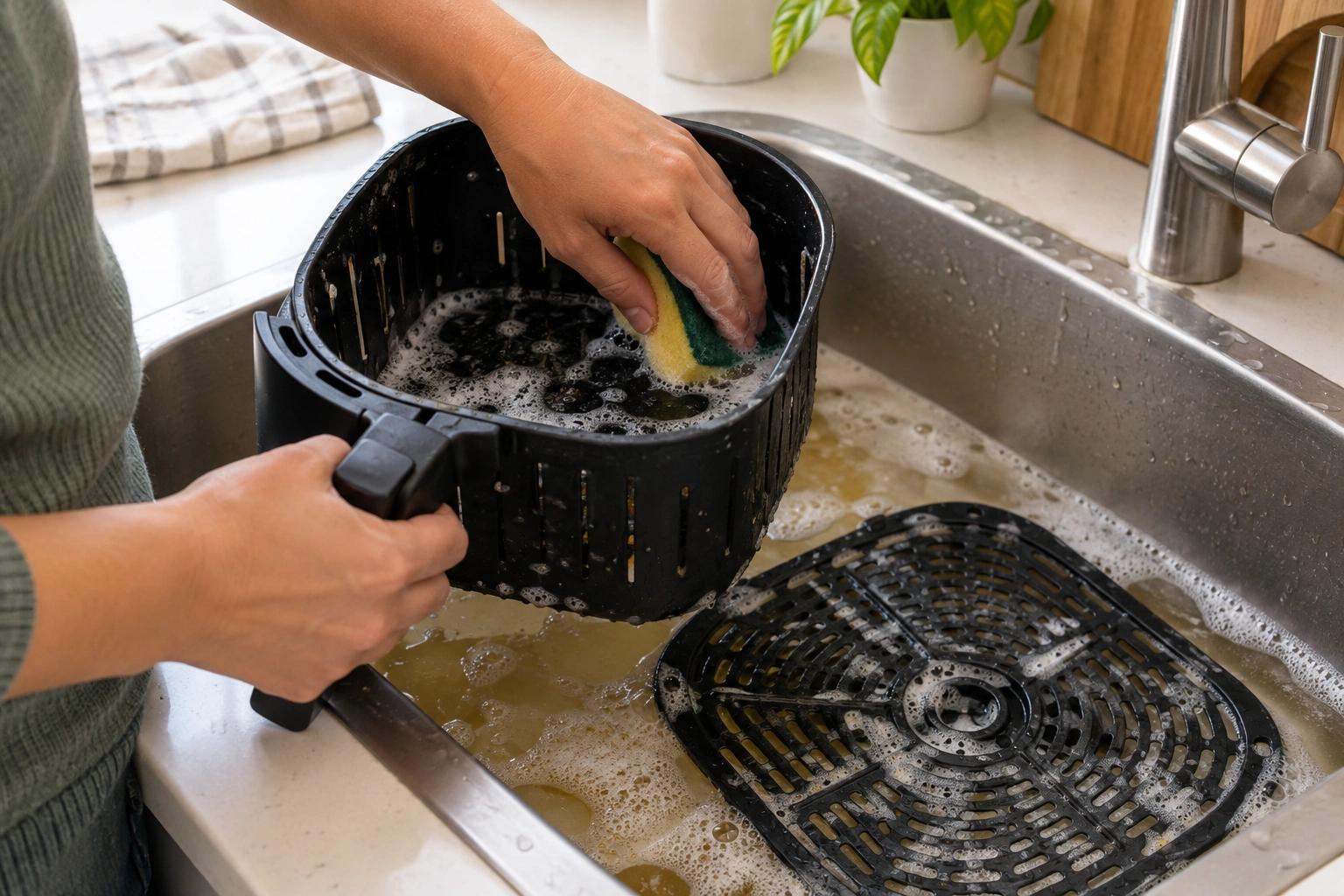
If the parts have a strong odor, let them air-dry for a while in a ventilated spot rather than putting them back in immediately.
3) Check for leftover plastic or packing material
Look inside the basket, around the edges, and near the heating area if it is accessible. A small piece of shipping film or tape can create a smell that seems much bigger than the actual problem.
4) Wipe the interior carefully
Use a soft damp cloth to wipe the inside cavity and any reachable surfaces. Avoid abrasive scrubbers, which can damage the nonstick coating.
If you see greasy residue, clean it thoroughly. A residue smell often comes back if the first wipe is too light.
5) Air it out before the next use
Leave the basket and drawer open for a while so trapped odors can dissipate. Good ventilation matters more than people expect.
6) Run a burn-in cycle if the manual allows it
Follow the manufacturer instructions for first use. If the manual recommends an empty run, use that method exactly rather than improvising with a high heat setting.
A short empty cycle in a well-ventilated area can help remove residual odors if the manufacturer allows it. I would not keep repeating empty high-heat runs if the smell is getting stronger. That is a sign to slow down and reassess.
7) Cook a simple test batch
After cleaning and airing out, cook something plain and low-odor, such as a small batch of toast points or a few potato pieces, rather than a heavily seasoned or greasy food. That makes it easier to tell whether the smell is gone.
What to check if the smell started after the air fryer was already in use
If your air fryer was fine at first and then started smelling like plastic later, the cause is usually different from a brand-new unit.
Check for grease buildup
Look at the basket, tray, crumb tray if your model has one, and around the heating area for stuck-on oil or crumbs. Even a thin film can burn and create a plastic-like odor.
Check your temperature and airflow
If you are running the unit at very high heat for a long time, that can stress plastic components and make odors more noticeable. Make sure vents are not blocked and the unit has room to breathe.
Check whether the smell appears only with certain foods
If it happens after fatty or messy foods but not after simpler ones, residue is the likely culprit. In that case, cleaning frequency matters more than the appliance itself.
Check the location of the smell
A smell that seems to come from the basket area is one thing. A smell that seems to come from the back, cord, plug, or control panel is much more concerning.
Inspect the basket and nonstick coating for damage
If the smell started after long-term use, look closely for visible damage, peeling, or flaking on the basket or nonstick coating. Coating damage can be part of the problem, especially if the smell appears when the unit heats up.
Warning signs that suggest melting plastic or an electrical problem
Stop using the air fryer immediately if you notice any of these:
- A strong burnt-plastic or electrical smell
- Smoke coming from the unit
- Sparks
- Unusual buzzing, crackling, or popping
- Visible melting, discoloration, or warping
- Heat or odor near the cord, plug, or control panel
- The smell gets stronger every time you turn it on
These are not “break-in” signs. They point to a safety issue, and repeated testing is not a good idea.
If the smell is clearly tied to the power area, unplug the appliance and do not keep troubleshooting by running it again.
Should you keep using it, contact support, or return it?
Here is the decision process I would use.
Keep using it if:
- the smell is mild
- it only happens during the first few uses
- it improves after washing and airing out
- there is no smoke, sparking, or electrical odor
Contact customer support if:
- the smell remains after proper cleaning and a normal break-in cycle
- the odor is stronger than you expected but not clearly dangerous
- you want the manufacturer’s guidance for your specific model
Return or replace it if:
- the smell is strong and persistent
- it smells like melting plastic or burning electronics
- the unit shows visible damage
- the odor comes from the cord, plug, or control panel
- the smell gets worse instead of fading
A mild odor is annoying. A worsening odor with heat, smoke, or electrical signs is a reason to stop.
How to prevent the smell from coming back
Once the odor is gone, a few habits help keep it from returning.
Clean the basket and tray regularly
Grease buildup is one of the easiest ways for odors to come back. Clean removable parts after messy cooks instead of waiting until the smell becomes obvious.
Check the crumb tray and heating area
If your model has a crumb tray, empty it regularly. Also look around the heating element area for grease splatter or baked-on residue that can start smelling again when the unit heats up.
Don’t block the vents
Air fryers need airflow. If the vents are crowded or the unit is pressed against a wall, heat can build up and make smells more noticeable.
Avoid overheating the unit unnecessarily
Use the temperature and time your recipe actually needs. Running hotter than necessary does not usually improve results and can make odor problems worse.
Wipe up residue before it bakes on
If you notice splatter or crumbs in the drawer, clean them before the next cook. Once residue is baked on, it is harder to remove and more likely to smell.
Follow the manual for first use
That first clean and burn-in step matters more than people think. It can prevent the “why does this smell?” moment before it starts.
For more general air fryer guidance, you may also find it helpful to read our guide on what foods work best in an air fryer or our look at air fryer toaster oven combos if you are comparing appliance styles.
When to consult a professional
If the smell is tied to the cord, plug, or control panel, or if the appliance shows signs of electrical damage, stop using it and contact the manufacturer or a qualified repair professional. Do not keep powering it on to “see if the smell goes away.”
If you want a food-safety refresher while you troubleshoot, the FDA’s kitchen and appliance safety guidance is a good place to check for general safe-use practices.
Frequently asked questions
Is it normal for a new air fryer to smell like plastic?
Yes, a mild odor during the first 1–3 uses can be normal. It should fade after cleaning, airing out, and using the appliance a few times.
Should I wash the air fryer before first use?
Yes. Wash the removable parts first, and check the interior for packaging residue or protective film.
Can the smell affect the taste of food?
It can if residue is still inside the unit. That is one reason a first cleaning matters before you cook a full meal.
How do I know if it is just residue and not a defect?
If the smell improves after washing and a proper burn-in cycle, residue is more likely. If it stays strong, gets worse, or smells burnt, treat it as a possible defect.
Is a burning plastic smell dangerous?
It can be. A strong burnt smell, smoke, sparks, or odor from the cord or control panel means you should stop using the appliance and inspect it or contact support.
Why does my air fryer smell like plastic after months of use?
That usually points to grease buildup, trapped residue, or overheating rather than a normal new-appliance smell.
How can I make the smell go away faster?
Wash the removable parts, wipe the interior, remove any packaging, and run a manufacturer-approved empty cycle in a ventilated area if the manual allows it.
The bottom line: a mild plastic smell in a new air fryer is often temporary, but a burnt, worsening, or electrical smell is not. Clean it, check it carefully, and trust the warning signs when they show up.

