
Why the Bottom of Bread Burns and How to Fix It

You’ve pulled a loaf from the oven, admired the crust, and then discovered the underside is darker than the top by a long shot—sometimes even blackened in spots. That frustrating moment has a simple core problem: the bottom of the loaf is getting more heat than it can handle before the interior finishes baking.
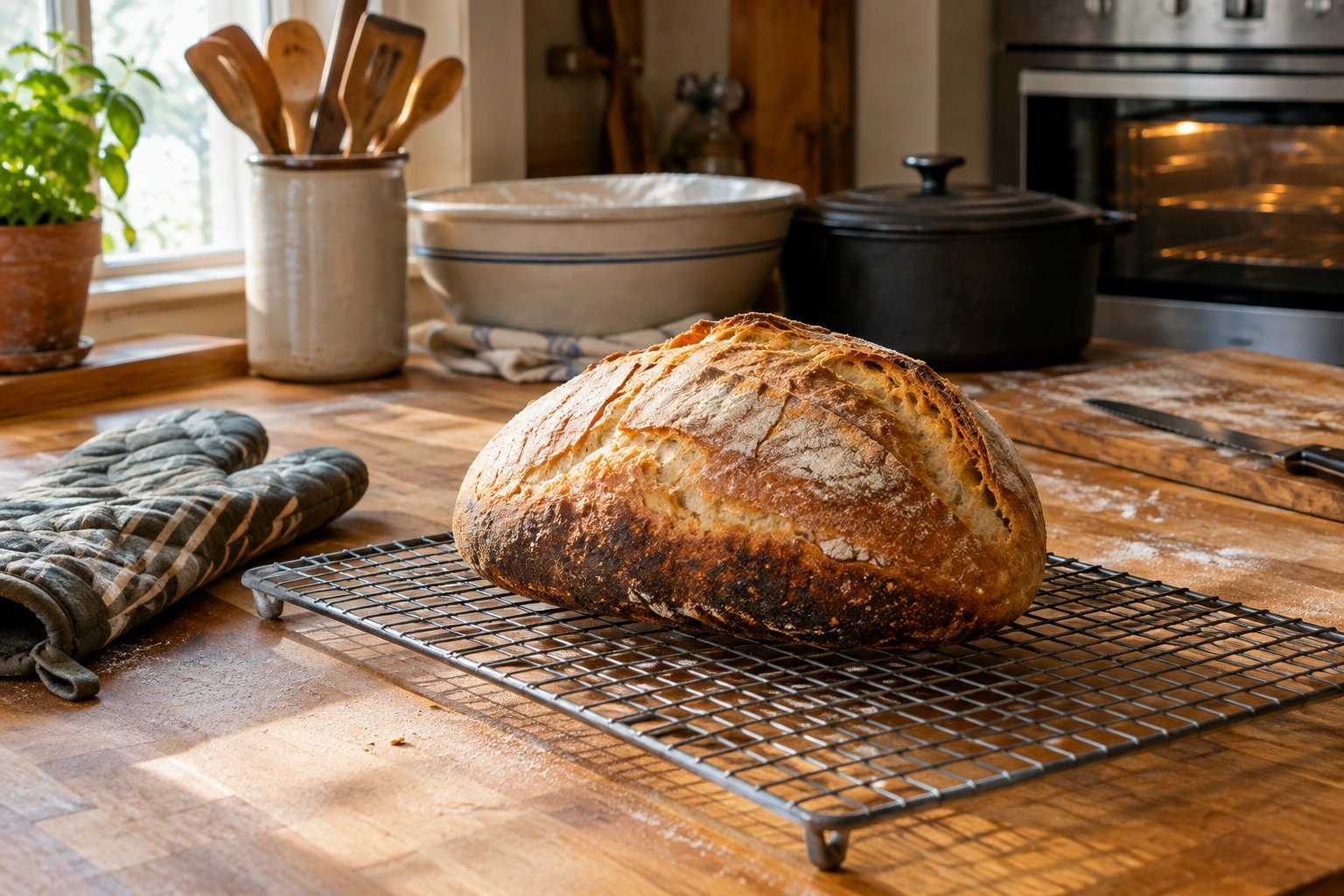
The good news is that this is usually fixable without changing your whole recipe. In most kitchens, the cause is one of a few repeat offenders: the rack is too low, the oven runs hot, the pan or baking surface is too dark or too conductive, or the loaf is sitting in a setup that traps too much bottom heat. In a Dutch oven, for example, bread can end up with an overly dark or even burned bottom if you’re not careful, and parchment alone can still allow charred patches and wrinkled edges King Arthur Baking.
If you bake bread at home, or you’re learning the craft in a culinary program, this is the kind of problem worth diagnosing methodically. Change one thing, observe the result, and keep the fix that actually matters.
Why the Bottom Burns While the Top Looks Fine
Bread browns from heat, but not all heat reaches the loaf the same way. The bottom is exposed to direct conduction from a hot pan, stone, steel, or Dutch oven base. The top mainly browns from hot air and radiant heat. When the underside gets too much direct heat, it can darken long before the crumb is fully baked.
That’s why a loaf can look “done” on top and still have a scorched base. The crust on top is often a slower indicator than the bottom, especially if the loaf is tall, the oven floor is hot, or the vessel concentrates heat.
Here are the most common causes:
1) The rack is too low
If the loaf sits close to the lower heating element or oven floor, the base gets blasted with more heat.
2) The oven runs hotter than the dial says
Home ovens are often not exact. If your oven is running hot, the bottom can scorch even when the recipe temperature is technically correct. That’s why an oven thermometer is one of the first tools to check.
3) The baking surface is too aggressive
A baking stone or baking steel stores and transfers heat efficiently. That is useful for oven spring, but it can also overbrown the bottom if your setup is already hot. A steel usually transfers heat faster than a stone, so it can be the more aggressive of the two.
4) The pan is dark or heavy
Dark metal absorbs and transfers more heat than a light-colored pan. That can be helpful for browning sandwich loaves, but it also increases the chance of a burned base, especially in a hot oven.
5) The Dutch oven is trapping too much bottom heat
A Dutch oven gives you steam, strong oven spring, and a crisp crust. But it can also overdo the underside if you preheat aggressively or bake too long inside the pot. That’s why some bakers end up with a loaf that looks beautiful everywhere except the bottom.
6) The bake is simply too long for that setup
Even if the temperature is right, the loaf may need less time in the most heat-intense stage. A common pattern is a loaf that is fully risen and browned on top while the base keeps cooking past the point of good color.
Before You Change the Recipe: Quick Checks
Before you rewrite the formula, verify the setup. A few quick checks can save you from fixing the wrong problem.
Check the oven temperature
Use an oven thermometer, not just the dial. If your oven is consistently off, you’ll keep chasing the symptom instead of the cause. If the oven is running hot, even a small temperature correction can make a noticeable difference in bottom color.
Look at rack position
If the loaf is on a low rack, move it up one level and test again. That single change often reduces direct bottom heat more effectively than lowering the temperature dramatically.
Notice where the heat source is
In many home ovens, the lower element or the hottest floor zone is the main culprit. If the loaf or Dutch oven is sitting too close to that zone, it may need more distance rather than a totally different recipe.
Inspect the pan or vessel
Ask two questions:
– Is it dark or light?
– Is it thin, medium, or heavy?
Dark, thin, or highly conductive pans tend to brown faster underneath. A light-colored pan or a better-insulated setup usually buys you more margin.
Compare the bottom to the crumb
A very dark bottom with a gummy interior points to too much bottom heat and not enough total bake time. A very dark bottom with a fully baked crumb points more strongly to heat distribution and vessel choice.
Tools and Materials That Help Prevent Burnt Bottoms
You don’t need a kitchen full of specialty gear, but a few items make troubleshooting much easier.
| Tool or material | What it does | Trade-off |
|---|---|---|
| Oven thermometer | Confirms whether the oven is actually at the set temperature | Doesn’t fix the problem by itself |
| Parchment paper | Adds a thin buffer between dough and hot surface | Can wrinkle, shift, or char at the edges |
| Second sheet pan | Acts as a heat shield under the loaf or pot | May slightly slow bottom browning |
| Light-colored loaf pan | Reflects more heat than a dark pan | Browns more slowly overall |
| Baking stone | Helps produce strong oven spring and can moderate heat better than a steel in some setups | Can still intensify bottom heat if the oven runs hot, the rack is low, or the preheat is too long |
| Baking steel | Gives excellent heat transfer for strong oven spring | More aggressive than a stone; easier to scorch bottoms |
| Dutch oven | Traps steam and improves crust development | Can overbrown the base if preheated too hard |
A useful comparison: parchment paper is the simplest shield, but it is not a cure-all. King Arthur Baking reports that a single layer can still leave a loaf with a very dark or burned bottom, and folds in the parchment can affect loaf shape or char where the paper rises and touches the pot. That means parchment helps most when the problem is mild to moderate, not when the oven setup is severely bottom-heavy.
How to Fix a Burnt Bread Bottom Step by Step
Use this sequence in order. It starts with the least disruptive changes and moves toward bigger adjustments only if needed.
1) Raise the rack one level
This is the fastest test. If the loaf is too close to the bottom heat source, moving it higher often helps immediately. You may lose a little bottom browning, but that is the point.
2) Verify the oven with a thermometer
If the oven is hot by 15 to 25 degrees or more, your bread can overbrown before the interior finishes. Correcting the temperature is cleaner than repeatedly shortening the bake at random.
3) Reduce the heat slightly, not drastically
A small temperature drop is usually safer than a big one. If you reduce too much, the loaf may bake pale and gummy instead of evenly browned. The goal is to slow the bottom just enough that the crumb can catch up.
4) Add a heat shield
Place a sheet pan on the rack below the baking vessel, or directly beneath the loaf pan or Dutch oven if the pan can sit safely on that rack. For a loaf pan, the shield goes on the rack below the pan, not under the pan itself. For a Dutch oven, it should sit on the rack below the pot or, if your oven layout allows, on the same rack as a separate layer beneath the vessel without blocking airflow. For a free-form loaf on a stone or steel, put the sheet pan on the rack below the stone or steel. That setup deflects direct bottom heat without changing the recipe.
5) Shorten the covered stage in a Dutch oven
If you bake with a lid, the loaf may not need as much time trapped in the pot. A shorter covered bake can reduce bottom darkening while still giving you good oven spring. You can then finish uncovered just long enough to color the crust.
6) Switch the baking surface
If you’re using a steel and the bottom keeps scorching, try a stone. If you’re using a stone and still getting burnt bottoms, try a thinner heat buffer or a different rack position. The point is not that one surface is always better; it’s that the most conductive surface may be too much for your oven.
7) Move away from direct pot contact
For some bakes, finishing the loaf outside the Dutch oven is the simplest fix. One common workaround is to bake the loaf in the Dutch oven only for the steam phase, then remove it and finish on a stone or sheet pan. That reduces how long the base sits in the hottest enclosed environment.
Choose the Right Fix for Your Baking Setup
Dutch oven baking
If the bottom burns in a Dutch oven, the likely issue is a combination of stored heat and direct contact. The most effective fixes are:
– raise the rack,
– place a sheet pan on the rack below the Dutch oven as a heat shield,
– reduce preheat intensity if your method allows it,
– or shorten the covered bake.
Parchment can help, but it is not always enough on its own. If the parchment edges touch the pot, they can char. So think of parchment as a buffer, not armor.
Loaf pans
For pan loaves, the pan itself is often the main variable. Dark metal pans brown faster than light-colored pans, which can be helpful for a crusty sandwich loaf but risky if the bottom is already overdoing it.
If the loaf is burning underneath in a pan, the first move is usually to switch to a lighter pan or move the rack up. If that still doesn’t solve it, a sheet pan underneath the loaf pan can reduce direct bottom heat. If the pan loaf still overbrowns, check whether convection is on, because that can speed browning in a tight pan setup.
Free-form loaves on a stone or steel
A stone or steel can improve oven spring, but that same heat transfer can burn the underside. If the bottom is too dark, don’t assume the recipe is wrong. Test a higher rack, a lower oven temperature, or a stone instead of a steel.
A steel is the more aggressive option. A stone is generally a gentler middle ground, but the result still depends on oven calibration, preheat time, and rack position. In a hot oven with a long preheat, even a stone can brown the bottom quickly.
Sheet-pan baking
Sheet pans are flexible and easy to manage, but thin pans can still brown quickly if they sit low in the oven. If the loaf is burning on the bottom, try a heavier sheet, a lighter pan color, or a second pan underneath as insulation.
Common Mistakes That Make the Bottom Burn Faster
Using a dark pan without adjusting anything else
Dark pans are not bad. They just brown more quickly. If your recipe was written for a light pan and you switch to a dark one, the bottom may overbake before the loaf is done.
Baking too low in the oven
This is one of the easiest mistakes to miss. A loaf can be perfectly centered left to right and still be too close to the lower element.
Changing three variables at once
If you move the rack, lower the temperature, and switch pans all in one bake, you won’t know which change actually helped. Make one adjustment, then test again.
Relying only on crust color
A dark bottom does not automatically mean the whole loaf is overbaked. It may simply mean the base got too much direct heat. Check the crumb before deciding the loaf failed.
Ignoring convection settings
Convection can speed browning and dry the surface faster. If you use convection, you may need to reduce the temperature or watch the bake more closely. Otherwise, the bottom can darken before the interior is ready.
How to Tell Whether the Bread Is Actually Done
A burnt-looking bottom can be misleading. The loaf may be underbaked inside, fully baked, or somewhere in between.
Use these cues together:
Internal temperature
For many yeast loaves, internal temperature is one of the most reliable checks. If you’re baking professionally or learning the craft, this is worth using regularly because it removes guesswork. Don’t rely on the bottom crust alone.
Crumb texture
If the crumb is gummy, tight, or pasty near the bottom, the loaf likely needed more time in a gentler heat environment. In that case, reducing bottom heat is the right fix, but you should still bake long enough for the center to finish.
Sound and feel
A finished loaf usually feels lighter than it looks and sounds hollow when tapped on the bottom, though that cue is less precise than temperature. If the base is already dark, use this as a secondary clue, not the only one.
Troubleshooting by Symptom
Dark bottom, pale top
This usually points to too much bottom heat or a rack that is too low. Move the loaf higher before changing the formula.
Dark bottom, gummy crumb
This suggests the loaf is baking too fast underneath and not long enough overall. Reduce direct bottom heat, then give the loaf a little more time to finish.
Overbrowned Dutch oven base
This usually means the pot is too close to a strong heat source, or the preheat and covered bake are too aggressive for that oven. A sheet pan shield or a shorter covered bake is often the cleanest fix.
Uneven results from batch to batch
That often signals oven hot spots or inconsistent preheat behavior. Check the oven thermometer and note which rack position gives you the best balance.
Practical Examples of Fixes That Work
A sourdough boule baked in a Dutch oven may develop a nearly perfect crust everywhere except the base. In that case, the first test is usually a higher rack and a sheet pan beneath the pot. If the bottom still darkens, shorten the covered bake and finish uncovered.
A sandwich loaf in a dark metal pan may brown too fast on the bottom while the top stays pale. That points to pan choice more than recipe failure. Switching to a lighter pan can make a bigger difference than lowering the oven temperature alone.
A free-form loaf on a baking steel may have excellent oven spring but a scorched underside. The steel is doing its job too well. Moving to a stone, or moving the loaf higher in the oven, often balances the bake.
How to Prevent Burnt Bottoms in Future Bakes
Once you’ve solved the immediate problem, the long-term goal is consistency.
- Keep an oven thermometer in your baking setup.
- Learn which rack position gives your oven the best balance.
- Match the vessel to the loaf: dark pan, stone, steel, or Dutch oven all behave differently.
- Use parchment as a helper, not the only defense.
- If your oven is a strong bottom heater, keep a sheet pan ready as a shield.
- Record what changed when a loaf bakes well. That note is worth more than a guess next time.
If you want to improve the rest of your bread troubleshooting skills too, it helps to understand how dough hydration affects heat and structure, which is covered in our guide to bread dough hydration, and how handling changes dough behavior in bread dough too sticky.
FAQs
Why is the bottom of my bread burning but the top looks fine?
The bottom is getting more direct heat than the top. That usually means the rack is too low, the pan or vessel is too conductive, or the oven runs hot.
Will parchment paper stop the bottom from burning?
It can help, but not always enough. A single layer of parchment may still allow a very dark or burned bottom, especially in a Dutch oven or on a very hot baking surface.
Is a baking stone or baking steel better for preventing burnt bottoms?
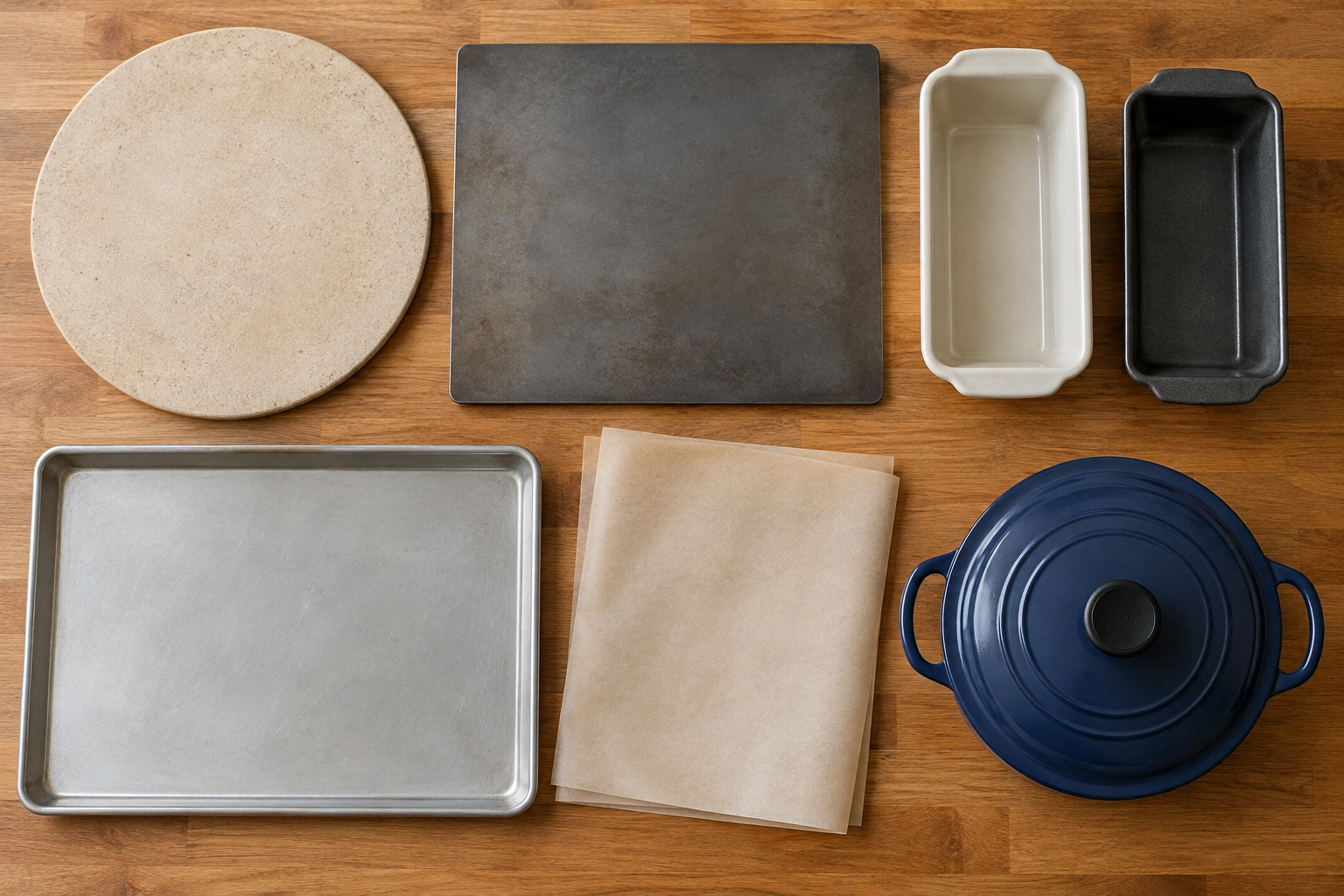
Neither one is automatically better. A steel transfers heat more aggressively and can worsen the problem in a hot oven. A stone is usually a little gentler, but the result still depends on oven calibration, preheat time, and rack position.
Should I lower the oven temperature?
Sometimes, yes. But lower it only enough to slow the bottom without underbaking the loaf. If you lower it too much, the crumb may stay gummy.
How do I know if the bread is done if the bottom is already dark?
Check the internal temperature and crumb texture. Don’t judge doneness by the bottom crust alone.
What if this happens in every recipe?
Then the oven or baking vessel is the more likely issue than the recipe. Check calibration, rack position, and the type of pan or surface you’re using.
Can I fix it by moving the loaf higher in the oven?
Often, yes. That is one of the simplest and most effective adjustments, especially if the loaf is too close to the lower element or oven floor.
When should I call it an oven problem?
If multiple recipes and multiple pans keep producing the same burnt bottom, even after rack and temperature adjustments, the oven is probably the main culprit.
When to Consult a Master Baker
If you’ve checked the oven temperature, changed rack position, tried a different pan or shield, and the bottom still burns across several bakes, it may be time for a second set of eyes. A master baker can help you read the loaf, the oven, and the vessel together instead of treating each bake as a guess.