
Why Your Air Fryer Leaves Food White — and How to Fix It
If your air fryer food comes out cooked through but still pale, floury, or almost white, the problem is usually not that the air fryer “can’t cook.” It’s that the food is cooking before the surface has enough time, heat, airflow, and dryness to brown properly.
That can be frustrating, especially when you expect crisp, golden results and get something that looks underdone. The good news is that pale air fryer food usually has a fixable cause. In most cases, the answer is one of five things: the temperature is too low, the basket is too crowded, the food is too wet, the cook time is too short, or the surface needs a little oil to brown well.
A helpful way to think about it is this: an air fryer is very good at moving hot air around food, but browning still depends on what happens at the surface. If steam is hanging around the food, if the coating is thick and dry, or if pieces are stacked on top of each other, the outside may stay light even while the inside heats up.
Why air fryer food can look white even when it’s cooked

Air fryers brown food by blasting it with hot, fast-moving air. That hot air helps dry the surface and encourages the Maillard reaction, which is the chemical process that creates brown color and savory flavor.
But browning does not happen at the same speed as cooking through. A chicken tender can be hot and safe in the middle before the coating has had enough time to turn golden. Fries can soften and cook internally while still looking pale if the surface is crowded or damp. Vegetables can become tender before their edges ever really toast.
This is why “white” does not always mean “raw.” Sometimes it just means the food has heated faster than it has browned. That said, for meat and poultry, appearance alone is not enough to confirm doneness. Use a thermometer when safety matters, especially with chicken.
If you want a deeper explanation of the cooking process, my guide on how an air fryer cooks food explains the airflow side of it in more detail.
How to tell pale food from undercooked food
The easiest rule is this:
- If the food is pale but the texture is firm, hot, and where expected for that food, it may just need more browning.
- If the food is pale and the inside is still soft, cool, or rubbery, it likely needs more cooking.
For chicken, turkey, and other safety-sensitive proteins, do not rely on color. A breaded chicken tender can look blond and still be cooked through, but it can also look lightly browned and still be undercooked inside. Use internal temperature to check. For plain chicken breasts or thighs, look for juices that run clear and meat that feels firm rather than squishy, but still verify with a thermometer when safety matters.
For fries, pale color often points to a browning issue rather than a doneness issue. If the fries are hot, crisping at the edges, and tender inside, they may simply need more color. If they are limp, soft in the middle, or still icy, they need more cooking time.
For vegetables, pale spots may simply mean the pieces released moisture and steamed instead of roasting. Tender vegetables with browned edges are usually fine; pale, watery vegetables that still feel firm in the center often need more time.
A simple decision guide helps:
- Cooked but pale: increase browning with more heat, better spacing, or a little oil.
- Not fully cooked: continue cooking and check internal temperature if needed.
- Pale in spots only: usually an airflow issue, so flip or shake the food.
The USDA’s food safety guidance on using a food thermometer is a useful reference when you are cooking poultry or other proteins and want to confirm doneness rather than guessing from color alone: USDA food safety guidance.
The most common reasons food stays pale in an air fryer
Here are the main causes I see most often when air fryer food looks white instead of browned.
| Likely cause | What you’ll notice | Why it happens | Best fix |
|---|---|---|---|
| Temperature too low | Food gets hot but stays blond | Surface does not brown fast enough | Raise heat in small steps |
| Cook time too short | Inside seems close, outside still pale | Browning needs more time than heating | Add a few minutes |
| Basket overcrowded | White patches where pieces touch | Air cannot circulate evenly | Cook in a single layer or batches |
| Too much moisture | Wet, soft, pale surface | Steam delays browning | Pat dry before cooking |
| Not enough oil | Dry floury coating, weak color | Some foods brown better with a thin oil film | Use a light oil spray |
| No flipping or shaking | One side browns, the other stays light | The same side faces the hottest airflow | Turn halfway through |
1. Low temperature
If the air fryer is set too low, food can cook through before it browns. This is especially common with breaded foods, frozen items, and vegetables that need a drier surface.
If your food is coming out pale but not raw, try increasing the temperature by 10 to 20 degrees Fahrenheit next time. I prefer changing one variable at a time so you can see what actually fixed the problem.
2. Short cook time
Sometimes the temperature is fine, but the food simply needs a little longer. Browning often happens near the end of cooking, after the surface has dried enough.
If the food is already hot and close to done, add 2 to 4 minutes and check again. That small extension can make a noticeable difference without drying out the inside.
3. Overcrowding the basket
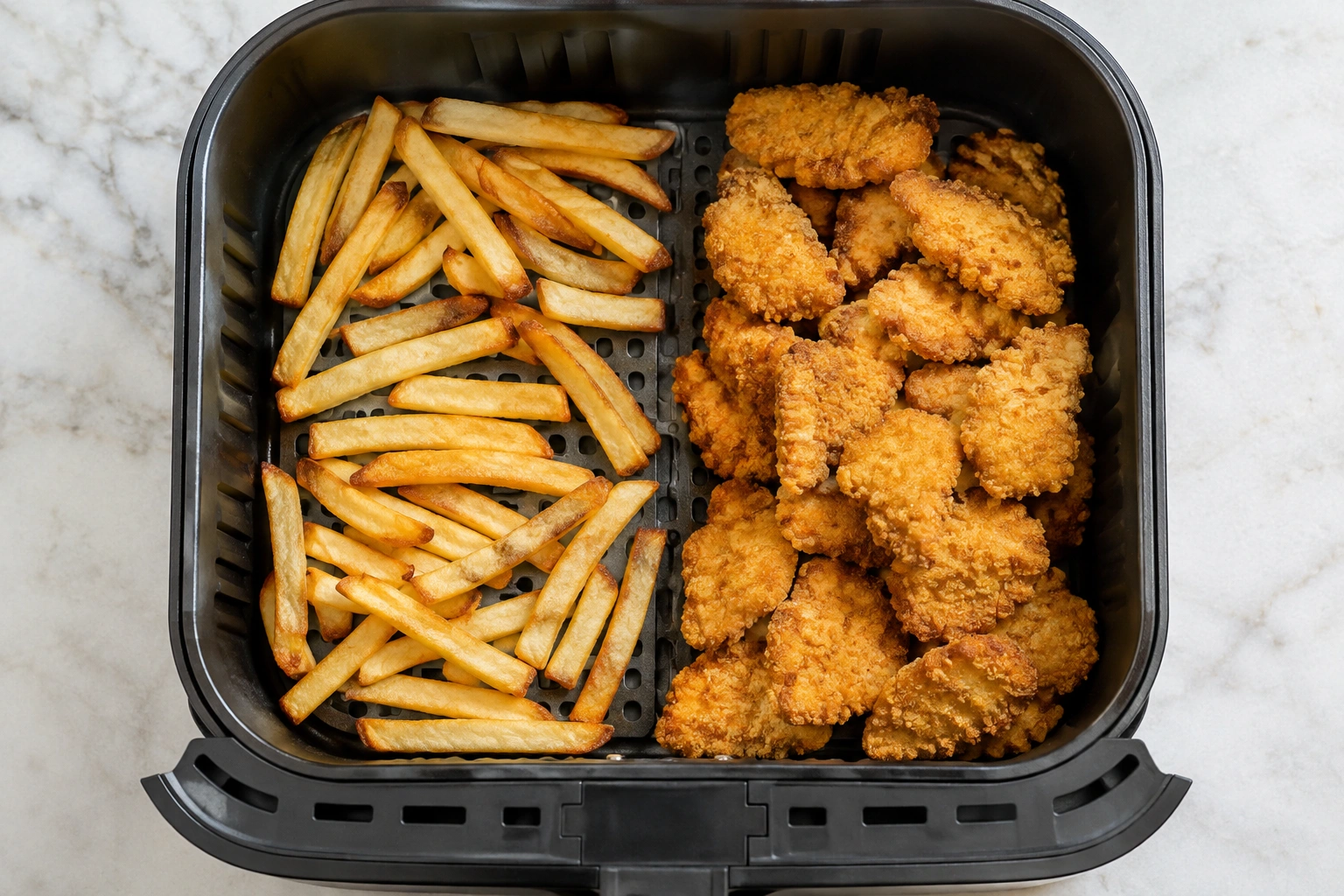
This is one of the biggest reasons food stays white. If pieces are stacked, touching, or packed tightly, the hot air cannot circulate around them.
That matters because the air fryer browns best when air can hit as much surface area as possible. A crowded basket often gives you a mix of pale spots, soft spots, and uneven crisping.
If you want better color, cook in a single layer whenever possible. If that means two batches instead of one, it is usually worth it.
4. Too much moisture on the surface
Moisture is the enemy of browning. Water has to evaporate before the surface can toast, so wet food often lags behind.
This comes up a lot with:
– thawed chicken that was not patted dry
– rinsed vegetables
– marinated foods with a lot of liquid
– frozen foods with surface ice
A paper towel can often help with browning problems, especially when food is visibly damp. Dry the food before it goes into the basket, especially if you want a crisp finish.
5. Not enough oil
A light coating of oil can help food brown more evenly. That does not mean you need to drench the basket or make the food greasy. It means a thin, even layer on the surface often helps with color and crispness.
This matters most for:
– fries
– vegetables
– breaded chicken
– homemade breaded or flour-coated foods
If your food looks dusty, floury, or dry after cooking, a light oil spray before air frying may help. Use just enough to lightly coat the surface.
How to fix pale air fryer food
Once you know the likely cause, the fix is usually straightforward.
Preheat when browning matters
A preheated air fryer gives the food a hotter starting point. That can help the surface begin browning sooner instead of spending the first few minutes warming up the basket.
Preheating is often most useful for:
– breaded chicken
– frozen breaded foods
– fries
– vegetables you want crisped
If your air fryer model preheats quickly, use that step when color matters. If you usually skip it, try it once and compare the difference.
Use a little oil, not a lot
A light oil spray can improve color, especially on dry coatings and vegetables. The goal is a thin sheen, not a wet surface.
Too much oil can have the opposite effect and make food greasy or cause smoking. A light, even coating is the sweet spot.
One caution: some aerosol sprays can leave residue on the basket or basket surface over time, so many cooks prefer a pump sprayer or a non-aerosol oil mister instead.
Flip or shake halfway through
Food that sits in one position often browns unevenly. The top may get color while the underside stays pale.
- Fries and small pieces: shake the basket halfway through.
- Chicken cutlets, fish, or larger items: flip once during cooking.
- Breaded items: turn carefully so you do not knock off the coating.
This is one of the easiest ways to improve color without changing the recipe.
Give the food space
Think in terms of airflow, not just capacity. If the basket looks full, the food is probably too close together for even browning.
A little breathing room helps the hot air dry and color the surface. If pieces overlap, separate them. If they still touch after rearranging, cook in batches.
Increase heat only after checking the other factors
It is tempting to crank the temperature right away, but that is not always the first fix. If the food is wet or crowded, more heat alone may still leave you with pale spots.
I usually work in this order:
1. Dry the food.
2. Spread it out.
3. Preheat if needed.
4. Add a light oil coating.
5. Then raise the temperature if the food is still too pale.
That sequence helps avoid burning the outside while the inside is still catching up.
Why breaded, battered, and flour-coated foods stay white
These foods are especially prone to looking pale because the coating changes how the surface cooks.
A dry breading can look floury if it does not get enough oil or heat. A wet batter can stay blond if it is too thick or the air fryer temperature is too low. Some batters simply are not ideal for air frying and may brown poorly unless they are applied more lightly or prepared in a different way. Flour coatings often need careful handling because they can dry out without really browning.
Here is what usually helps:
- For breaded foods: press the coating on well and lightly oil the surface.
- For battered foods: make sure the batter is not too thick or too wet, and consider a thinner coating if it is staying pale.
- For flour-coated foods: shake off excess flour before cooking, then use a light oil spray.
The goal is not to soak the coating. It is to help the surface brown instead of staying powdery or pale.
Troubleshooting by food type
Chicken
If chicken looks pale but cooked through, the coating is probably the issue, not the meat itself. Breaded chicken tenders often need a preheated basket, a little oil, and enough space to brown.
If it is plain chicken, pale color is less of a problem because the surface may not naturally brown much without seasoning or oil. Check the internal temperature for safety instead of judging by color alone.
Fries
Fries turn pale when they are piled too high or not shaken enough. Frozen fries also vary a lot in how much oil they already have, which affects color.
For better results:
– cook in a single layer
– shake halfway through
– add a light oil spray if they look dry
Vegetables
Vegetables often go soft before they go brown. That is because they release moisture as they cook.
To improve color:
– dry them well after washing
– toss with a little oil
– avoid overcrowding
– cook until the edges have time to toast
Broccoli, zucchini, and mushrooms are especially likely to steam if the basket is full.
Frozen foods
Frozen breaded foods can look pale for a while because the surface has to thaw and dry before browning really starts. If they are crowded or not preheated, the pale look can linger.
If a frozen item is cooked through but still light on top, give it a few more minutes and turn it if needed. If it is still pale and soft, it may simply need more time.
Common mistakes that prevent browning
A few habits show up again and again when air fryer food stays white:
- Skipping preheat on foods that need color
- Packing the basket too full
- Cooking wet food straight from the sink or marinade
- Using no oil at all on dry coatings
- Not flipping or shaking
- Assuming pale color always means the food is done
The biggest mistake is trying to solve every pale-food problem with more time alone. Sometimes the real fix is better spacing or a drier surface, not a longer cook.
When pale results are normal and when to worry
Pale food is sometimes completely normal. A lightly colored piece of chicken, a pale patch on a frozen item, or a blond coating that still tastes crisp may simply mean the air fryer cooked the food without fully browning it.
Worry when:
– the inside is still soft, cold, or rubbery
– the coating is pale and soggy, not crisp
– the food has not reached a safe internal temperature
– the basket was crowded and the food looks unevenly cooked
If the issue is just color, you can usually fix it with a better setup next time. If the issue is doneness, keep cooking and verify the temperature.
Final take
When an air fryer leaves food white, the machine is usually doing part of the job well: heating the food. The missing piece is surface browning. That usually comes down to airflow, moisture, oil, temperature, and spacing.
If you want a quick fix, try this next time: dry the food, preheat the air fryer when color matters, leave space in the basket, use a light oil spray, and flip or shake halfway through. Those changes solve most pale air fryer problems without making the food greasy or overcooked.

