
Why Sugar Goes Into Bread Dough: What It Really Does for Rise, Browning, and Texture

Sugar in bread dough is one of those ingredients that looks simple but does several jobs at once. In some loaves, it is there for flavor. In others, it helps the crust brown more deeply or keeps the crumb softer for longer. And in many basic breads, it is optional rather than essential.
That last point surprises a lot of bakers.
If you are used to seeing sugar in sandwich bread recipes, it is easy to assume yeast needs it to work. In reality, yeast can ferment the natural sugars already present in flour. Sugar can give fermentation an early boost in some formulas, but it can also slow yeast down when used in larger amounts. So the effect depends on how much sugar is in the dough and what kind of bread you are making.
As a baker, I like to think of sugar as a design choice, not a rule. Add it when you want a softer, sweeter, more golden loaf. Leave it out when you want a lean, wheaty bread with a firmer crust and more open, rustic character.
What Sugar Actually Does in Bread Dough
Sugar plays four main roles in bread dough:
- It adds sweetness and flavor
- It helps bread brown more readily
- It can make the crumb softer and the loaf feel richer
- It changes how the dough behaves during fermentation and handling
That sounds like a lot for one ingredient, but each effect comes from a different property of sugar.
Sugar feeds yeast, but it is not yeast’s only food
Yeast does not require added sugar to survive in bread dough. Flour already contains starch, and enzymes break some of that starch into sugars that yeast can use. So when a recipe has no added sugar, the dough can still rise normally.
Where sugar helps is in the early stages. A small amount gives yeast a quick, available source of food, which can make the dough seem more active at first. That is one reason some bakers add a little sugar to everyday bread doughs.
But there is a trade-off: when sugar levels get high enough, they can pull water away from yeast cells and slow fermentation instead of speeding it up. So sugar is not a universal “yeast booster.” It is a tool that works best in moderation.
Sugar supports browning and a deeper crust
Sugar helps bread brown more quickly in the oven because it contributes to both caramelization and the Maillard reaction. That is why a loaf with a little sugar often turns golden sooner than a lean loaf made with only flour, water, yeast, and salt.
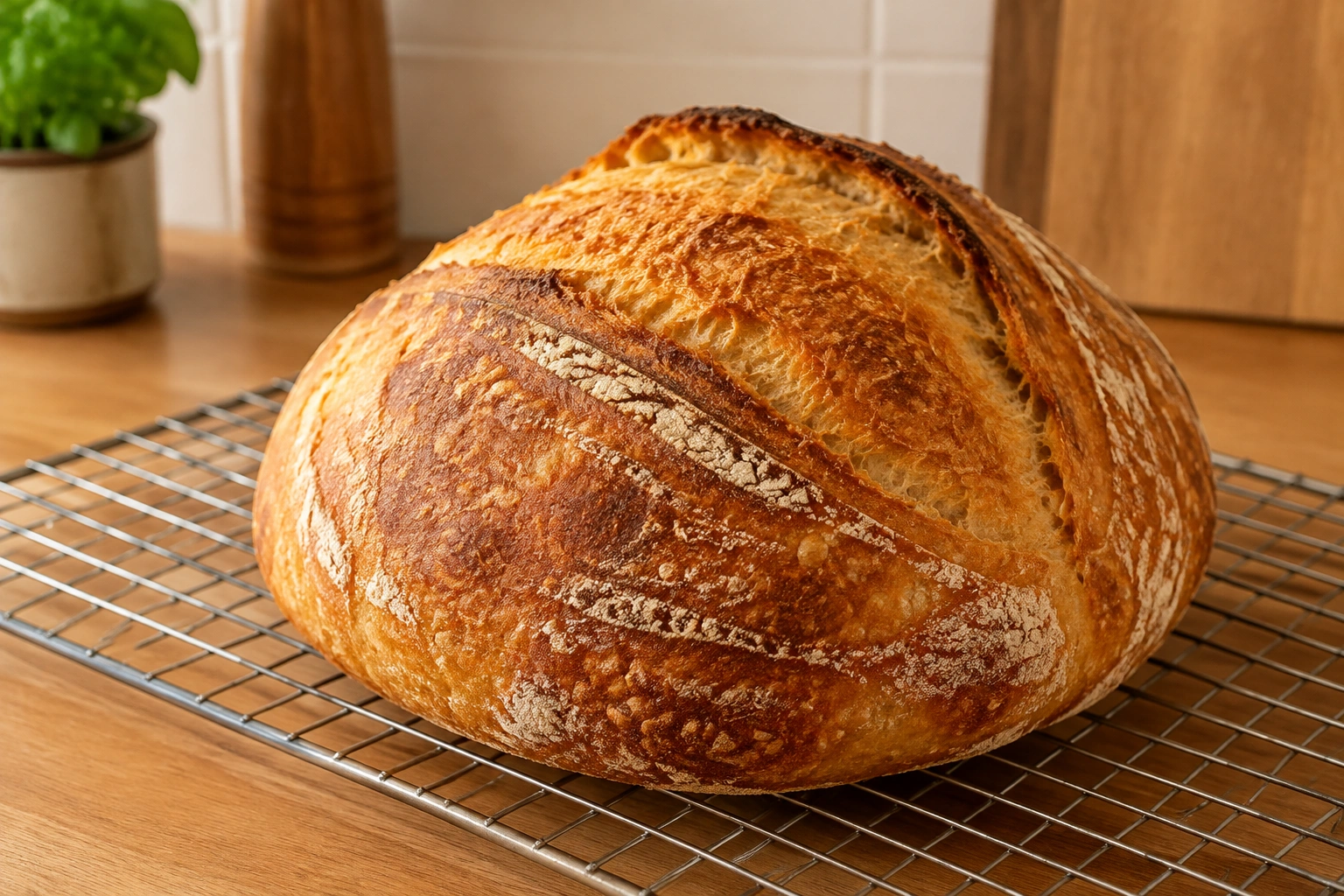
This matters because crust color is not just cosmetic. A well-browned crust can add aroma and a fuller baked flavor. But if you use too much sugar, the crust can darken faster than the inside of the loaf finishes baking, so you may need to watch the oven more closely.
Sugar softens the eating quality of the bread
Sugar can make bread feel softer and more tender. It does this partly by changing how water is held in the dough and baked loaf. In practical terms, that usually means a finer, softer crumb and a loaf that stays pleasant a little longer after baking.
That is one reason enriched breads—think sandwich loaves, dinner rolls, brioche-style doughs, and sweet breads—often contain sugar. They are designed to be soft and rich rather than crusty and chewy.
Sugar changes dough handling
Sugar also affects the dough itself. In higher amounts, it can make dough feel stickier and looser. That can be useful in some enriched formulas, but it can also make shaping more challenging if you are expecting a lean dough texture.
So if you notice a dough becoming slack or tacky after adding sugar, that does not automatically mean something went wrong. Sometimes that is just the expected behavior of a sweeter formula.
Do You Actually Need Sugar for Bread to Rise?
No. In most bread doughs, sugar is optional.
A lean dough such as a baguette, country loaf, or simple hearth bread can rise beautifully without any added sugar. Yeast will use the sugars already available from the flour. Many traditional breads are made this way on purpose because the baker wants a cleaner wheat flavor, a chewier crumb, and a more assertive crust.
If you are making a softer sandwich loaf or a roll, sugar becomes more useful. Not because yeast cannot work without it, but because the final bread is meant to be tender, lightly sweet, and more deeply browned.
A useful decision rule is this:
- Choose no sugar when you want a lean, rustic loaf
- Choose a small amount of sugar when you want a softer everyday loaf
- Choose more sugar only when the bread style is meant to be enriched or sweet
That simple framework will keep you from adding sugar just because a recipe happens to include it.
How Sugar Affects Yeast, Fermentation, and Proofing Time
This is where a lot of bread myths get tangled up.
Small amounts can help early activity
In a lightly sweetened dough, sugar may give yeast an early burst of available food. That can make the dough seem to start moving a little sooner, especially in a cool kitchen or with a young yeast culture.
But “faster at the start” is not the same as “faster overall.” A dough that gets a quick first push can still need normal proofing time afterward.
Too much sugar can slow fermentation
Once sugar becomes a significant part of the formula, it starts competing for water. Yeast has a harder time working when the dough environment is very sweet. That is why rich doughs often ferment more slowly than lean doughs.
In practical home-baking terms, slowdown usually becomes noticeable once sugar reaches roughly 8–10% of flour weight or more, and it is often more obvious in the 10–15%+ range. At that point, dough can feel noticeably less lively and may need extra proofing time.
Practical timing guidance
For home baking, think in broad terms:
- Lean doughs usually ferment and proof more quickly than enriched doughs and often contain about 0–2% sugar by baker’s percentage, or none at all
- Everyday sandwich breads often fall around 2–8% sugar, which is enough for mild sweetness, better browning, and a softer crumb without turning the dough into a high-sugar formula
- Enriched doughs commonly sit around 8–15% sugar, where fermentation slowdown starts to matter more and dough handling becomes more sensitive
- Sweet breads often land at 15% sugar and above, and some formulas go much higher; these are the doughs where sugar has a strong effect on rise, texture, and browning
If a dough is sweeter than the recipe you are used to, watch the dough rather than the clock. Use rise cues, dough volume, and touch tests instead of assuming the same timing will carry over from a lean loaf. If you want a deeper refresher on those cues, this guide on how to tell when bread dough is ready is worth keeping nearby.
How Sugar Changes Crust Color, Flavor, and Crumb Softness
Sugar is one of the easiest ways to move a loaf away from “rustic and chewy” toward “soft and golden.”
Crust color
A little sugar helps bread brown more evenly and more quickly. That is why many sandwich breads have a rich golden crust even though they are baked at moderate oven temperatures.
The upside is obvious: attractive color and better aroma. The caution is just as important: a sugary dough can go from golden to too dark faster than a lean dough. If your loaf is browning quickly, you may need to tent it loosely with foil near the end of baking.
Flavor
Sugar does not only make bread taste sweet. Even a modest amount can round out the flavor and make the loaf taste fuller. In small doses, it can soften the sharp edges of plain flour and salt. In larger doses, it becomes a defining flavor rather than a background note.
That is why a basic sandwich bread with a little sugar tastes different from an unsweetened country loaf, even if the ingredient list is otherwise similar.
Crumb softness and keeping quality
Sugar helps many breads stay softer for longer. That is one reason enriched breads often remain pleasant the next day, while lean breads can feel firmer or drier sooner.
This is a trade-off, though. The same qualities that make sugar useful in a soft loaf can work against the open, chewy structure you want in artisan bread. If you are chasing a crusty loaf with a more dramatic crust-to-crumb contrast, too much sugar can push the bread in the wrong direction.
How Much Sugar to Use for Different Bread Styles
Here is a practical way to think about sugar levels in bread dough.

| Bread style | Approximate sugar level | What it does | Trade-off |
|---|---|---|---|
| Lean bread | 0–2% baker’s percentage, often none | Keeps flavor clean and crust more rustic | Less browning and less softness |
| Everyday sandwich bread | About 2–8% baker’s percentage, often roughly 1–2 tablespoons in a home loaf | Adds mild sweetness, better browning, softer crumb | Slightly stickier dough and a softer crust |
| Enriched dough | About 8–15% baker’s percentage | Supports tenderness, flavor, and deeper color | Slower fermentation and more dough handling sensitivity |
| Sweet bread | 15%+ baker’s percentage | Creates a clearly sweet, soft loaf | Proofing can slow and browning can happen quickly |
A few notes make this table more useful:
- Lean breads are the best choice when you want the flour to lead and the crust to stay firm.
- Everyday sandwich breads often use sugar for balance, not sweetness.
- Enriched doughs rely on sugar as part of the style, not as a minor add-in.
- Sweet breads need closer attention because sugar affects both fermentation and browning more strongly.
If you are unsure where your recipe belongs, ask what the bread is supposed to feel like. A crusty boule and a soft dinner roll should not be treated the same way.
Step-by-Step: Adjusting Sugar in a Bread Recipe
If you want to change the sugar in a recipe, make the change deliberately.
1. Decide what you want the bread to be like
Do you want a firmer crust, a softer crumb, a more golden color, or a sweeter loaf? That goal should guide the sugar level.
2. Check the bread style first
If the recipe is for a lean loaf, removing sugar usually makes sense. If it is for a soft sandwich bread or enriched dough, cutting sugar too much may change the texture more than you want.
3. If you reduce sugar, expect less browning
A loaf with less sugar will usually brown more slowly. That does not mean it is underbaked; it may simply look paler.
4. If you increase sugar, watch fermentation and handling
More sugar can mean stickier dough and slower proofing. Give the dough more time and pay closer attention to rise rather than relying on the recipe clock.
5. If you swap in liquid sweeteners, adjust hydration
Honey, maple syrup, and similar ingredients add liquid as well as sweetness. That means the dough may need a small liquid adjustment to stay balanced.
6. Test one change at a time
If you are learning, do not change sugar, hydration, and flour all at once. Make one adjustment, bake, and observe the result. That is the fastest way to understand what sugar is doing in your own kitchen.
Practical Examples: No Sugar, Low Sugar, and High Sugar Doughs
No sugar: rustic country loaf
A lean dough with no added sugar will usually ferment normally, brown more slowly, and bake into a loaf with a firmer crust and a more wheaty flavor. This is ideal when you want simplicity and structure.
Low sugar: everyday sandwich bread
A small amount of sugar gives the loaf a little more softness and a warmer crust color. The bread still tastes like bread, but it feels a bit more polished and familiar.
High sugar: enriched dinner rolls or sweet bread
Here sugar is part of the identity of the bread. The crumb is softer, the flavor is richer, and the crust browns more quickly. Proofing may take longer, so patience matters.
These three styles are useful because they show that sugar is not one thing. In one dough, it is optional. In another, it is a quiet helper. In a third, it is central to the bread itself.
Common Mistakes When Adding or Removing Sugar
The most common sugar-related mistakes are surprisingly practical.
Assuming sugar is always required
This leads to unnecessary sweetness in breads that should taste lean and rustic.
Removing sugar without changing expectations
If you cut sugar from a recipe that was designed for a soft loaf, the bread may be less tender and less browned than you expected.
Using too much sugar in a lean-style dough
That can make the dough sticky, slow the rise, and shift the bread away from the style you wanted.
Swapping sweeteners without adjusting hydration
Liquid sweeteners are not one-for-one replacements by volume in the way many bakers assume. They change moisture as well as sweetness.
Watching the clock instead of the dough
This is especially important in sweeter doughs, where proofing can slow down. Dough readiness matters more than a fixed timer.
Troubleshooting Sugar-Related Bread Problems
If your bread is not behaving as expected, sugar may be part of the story.
Slow rise
If the dough is very sweet, the sugar level may be slowing fermentation. Give it more time and keep the dough warm, but not hot.
Sticky dough
Sugar can make dough feel tackier and looser. That is normal in enriched formulas, though it can also mean the dough needs better gluten development.
Pale crust
A dough with little or no sugar often browns more slowly. Bake it fully and do not judge doneness by color alone.
Dark crust too fast
If the loaf is browning before the center is finished, sugar may be contributing to rapid surface color. Lower the oven temperature slightly or cover the loaf near the end.
Dense crumb
Sugar is not usually the only cause. Dense bread often points to underproofing, weak gluten, or poor shaping. Sugar can contribute if the dough is very sweet and the fermentation was not allowed to complete.
For a fuller look at dough readiness, the companion article on bread dough hydration and adjustment can also help you separate sugar issues from water-balance issues.
Sugar Substitutes: Honey, Maple Syrup, and Malt
Many bakers want to know whether they can replace sugar with another sweetener. The answer is yes, but not blindly.
Honey
Choose honey when you want a rounder, floral sweetness and a loaf that browns readily. It works well in sandwich bread, rolls, and soft enriched doughs. Since honey is liquid, reduce the other liquid in the recipe a bit if needed and expect a slightly stickier dough. It is a good choice when you want sweetness plus a noticeable flavor note.
Maple syrup
Choose maple syrup when you want a gentler, more distinctive flavor that does not taste as neutral as white sugar. It is especially useful in breads where the maple note can be part of the flavor profile, such as breakfast breads or mild enriched loaves. Because it is also a liquid sweetener, you may need a small hydration adjustment, and the dough may brown a little faster than you expect.
Malt
Choose malt when you want a baking-specific sweetener that supports flavor and browning without necessarily making the bread taste obviously sweet. Malt is often used in bread formulas for a particular crust and crumb character, especially in sandwich bread and some bagel-style doughs. Use it carefully because malt products vary a lot, so you should follow the recipe’s form and dosage rather than assuming all malt behaves the same way.
The key point is this: sweetness is not the only variable. When you change the sweetener, you are also changing moisture, browning behavior, and sometimes fermentation speed.
Simple Decision Guide: When to Use Sugar and When to Leave It Out
Use this rule of thumb when you are deciding what belongs in your dough:
- Leave sugar out if you want a lean, crusty bread with a clean wheat flavor.
- Add a small amount if you want gentler sweetness, better browning, and a softer crumb.
- Use more sugar only when you are making an enriched or sweet bread that is supposed to be soft and rich.
That is the heart of it. Sugar is not mandatory in bread dough, but it is very useful when you want to steer the loaf toward softness, color, and a richer flavor profile. Once you understand that, you can choose the amount with intention instead of following the ingredient list blindly.
FAQs
Does sugar feed the yeast in bread dough?
Yes, but only in a limited sense. Yeast can use added sugar, yet it can also ferment the sugars naturally available from flour. That is why many breads rise well without any added sugar.
Does sugar make bread rise faster?
Sometimes at the beginning, in small amounts. But higher sugar levels can slow fermentation overall, especially in enriched doughs.
Can I make bread without sugar?
Absolutely. Many traditional breads are made with no added sugar at all.
Why do some recipes use sugar and others do not?
Because the breads are different styles. Sugar is more useful in soft sandwich breads and enriched doughs than in lean artisan loaves.
What happens if I add too much sugar to bread dough?
The dough can become stickier, fermentation can slow, and the loaf may brown too quickly before the center is fully baked.
Can I replace sugar with honey or maple syrup?
Yes, but you should account for the extra liquid. Those sweeteners affect hydration as well as flavor and browning.
Does sugar make bread softer?
Usually, yes. Sugar can help create a softer crumb and a loaf that stays tender longer.
Is sugar more important in enriched dough than in basic bread?
Yes. In enriched dough, sugar is often part of the style itself. In basic bread, it is usually optional.