
Why Humidity Changes Dough Texture and How to Adjust It with Confidence
If your dough feels sticky in July and tight in January, you are not imagining it. Humidity changes dough texture because it changes the baking environment around the dough, which can affect how flour absorbs moisture, how the surface feels, and how easily the dough develops and holds its structure.
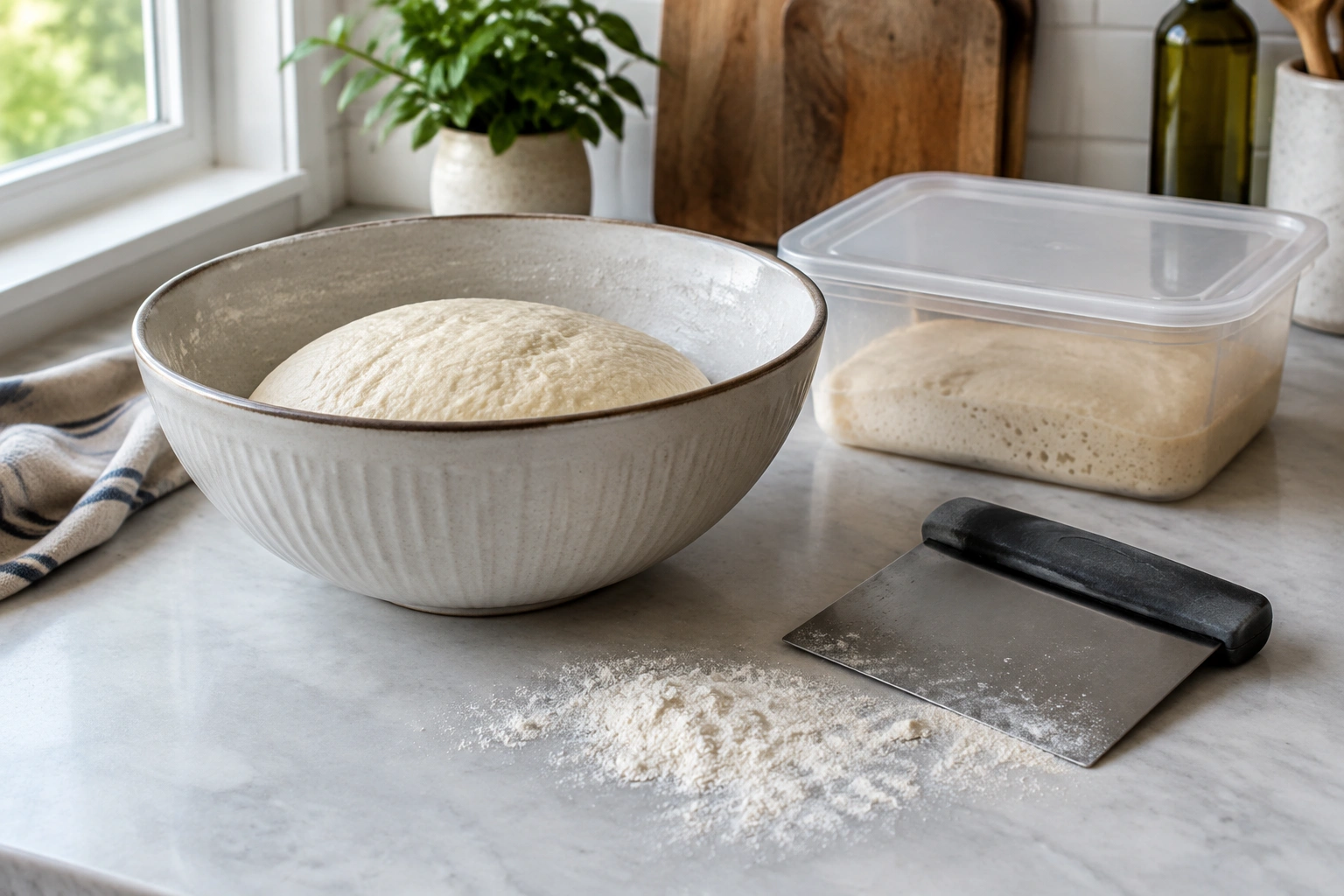
The key point is simple: humidity usually influences dough indirectly. It does not instantly “soak” dough from the air in a dramatic way, but it can change how your flour behaves, how the dough surface dries or softens, and how the dough feels during mixing, resting, shaping, and proofing. In warm, humid kitchens, dough may proof faster mainly because of the temperature and the way surface moisture is retained, not because humidity alone is driving the change. That is why the same formula can behave differently from one season to the next.
For home bakers and pastry students, this matters because the fix is not always “add more flour.” Sometimes the dough only needs time to hydrate. Sometimes it needs a brief chill. And sometimes the problem is really dry air, not the recipe.
Relative Humidity vs. Actual Dough Hydration
Humidity in the room and water inside the dough are related, but they are not the same thing.
Relative humidity describes how much moisture is in the air compared with how much the air can hold at a given temperature. Dough hydration describes how much water is already in the dough. When the room is humid, flour stored out on the counter may already contain a little more moisture than usual, depending on storage and exposure. That can make your dough feel softer or stickier sooner than expected. In dry conditions, flour and exposed dough can lose surface moisture more quickly, which makes the dough feel drier, firmer, or more prone to cracking.
That effect is usually subtle in ordinary home baking. Bakers often notice it more in storage, surface drying, and handling than in the dough’s internal water content. The dough may look fine when first mixed, then feel looser after a short rest in a warm, humid kitchen. Or it may seem okay at first, then tighten and dry out while sitting uncovered in a dry room.
A useful way to think about it: humidity changes the conditions around the dough, which changes how the dough behaves.
How Humidity Affects Flour Absorption, Gluten, and Elasticity
Flour does not absorb water at the same speed or in the same way every day. In humid weather, flour may already be holding a little extra ambient moisture, so when you add the recipe’s water, the dough can feel softer sooner. In dry weather, flour may seem thirstier and the dough may feel stiff until it has had enough time to fully hydrate.
That change in hydration affects gluten development. Gluten forms when flour proteins absorb water and are mixed or kneaded. If the dough is properly hydrated, gluten can develop into a network that gives dough strength and stretch. If the dough is too dry, it may resist stretching and tear at the edges. If it is too wet, it may feel slack, sticky, and harder to shape.
Elasticity also shifts with hydration. A well-hydrated dough tends to stretch more evenly. A dry dough often snaps back and feels tight. A very wet dough may stretch too easily and lose shape.
Humidity can also affect proofing and fermentation indirectly. Warm, humid kitchens often make dough proof faster because the dough stays warmer and the surface is less likely to dry out, not because humidity alone speeds fermentation in every case. This is why resting matters so much. A dough that seems rough right after mixing may improve after a short rest because the flour finishes absorbing water. Before you add more flour, let the dough tell you whether it is truly underhydrated or just unfinished.
What High Humidity Does to Bread, Pizza, Pastry, and Cookie Dough
Different doughs respond differently, and that is where many bakers get tripped up.
Bread dough
Bread dough is usually more forgiving than pastry because it is built to develop gluten and hold gas during fermentation. In humid weather, it may feel tackier and slightly looser, but a short rest or a brief chill often brings it back into a manageable range. The trade-off is that adding too much flour can make the crumb denser.
Pizza dough
Pizza dough is sensitive because it needs enough extensibility to stretch without tearing, but enough strength to hold shape. In humid conditions, it may spread faster and feel stickier on the bench. In dry conditions, it can tighten and resist stretching. For pizza, the goal is usually to adjust handling first, not overhaul the formula.
Pastry dough
Pastry dough is often the most sensitive to humidity because butter, flour, and water all need to stay in a narrow handling range. In a humid kitchen, pastry can soften quickly and become difficult to roll cleanly. A short chill often helps more than extra flour, because too much bench flour can interfere with layering and tenderness. If you want a deeper look at cold fat and texture, see why butter temperature changes pie crust texture.
Cookie dough
Cookie dough often seems “off” in humid weather because it can spread more readily and feel softer than expected. In dry weather, it may seem crumbly or stiff. Because cookie dough is usually less elastic than bread dough, small texture changes are easier to notice. If you want to compare handling methods, our guide on why chilling cookie dough changes cookie texture is a useful companion.
Signs Your Dough Needs an Adjustment
The best cue is not the calendar. It is the dough in front of you.
Here are the signs to watch for:
- Sticky but cohesive: The dough holds together, but it clings to your hands or bench. This often needs resting or chilling, not a large flour addition.
- Soft and slack: The dough spreads or slumps instead of holding shape. Humid conditions, warm dough, or underdeveloped gluten can all contribute.
- Dry and cracking: The surface looks rough, the edges split, or the dough tears when shaped. This is more common in dry air or when too much flour was added.
- Tight and resistant: The dough springs back quickly and resists stretching. It may need more resting time, not more kneading.
- Smooth but greasy-feeling: In enriched doughs or pastry, warmth and humidity can make the fat soften too much, changing the feel before the dough is actually overhydrated.
A practical rule: if the dough is sticky but still elastic and cohesive, pause before changing the formula. If it is dry, cracking, or tearing, add moisture in small amounts and give it time to absorb.
How to Adjust Dough in Humid Weather
When humidity is high, the first instinct is often to dust heavily with flour. That usually creates a second problem: the dough becomes dry on the outside and tough in the finished bake.
A better sequence is:
1. Rest before correcting
If the dough is only slightly sticky, let it rest. Flour continues to hydrate after mixing, and many doughs become easier to handle after a short pause. This is especially helpful for bread and pizza dough.
2. Chill soft doughs
If the dough is warm and hard to shape, refrigeration can make it easier to handle. This is especially useful for pastry and cookie dough, where a cooler texture improves control without changing the formula much.
3. Use less bench flour
Dusting the work surface lightly is usually enough. Too much flour can dry the outer layer of the dough and make seams harder to seal. For pastry, excess flour can also interfere with tenderness and layering.
4. Make only a small seasonal water adjustment after repeated testing
If a recipe repeatedly becomes too soft in humid months, test a small reduction in water only after you have seen the pattern more than once. Keep the change modest, record what you did, and note the result so you can compare it next time. Large changes make it harder to compare results and can throw off gluten development.
For example, if a bread dough normally mixes cleanly in winter but feels tackier every summer, the issue may not be the recipe at all. It may simply need a shorter bench rest, cooler handling, or a slight hydration adjustment.
How to Adjust Dough in Dry Weather
Dry air causes the opposite problem: dough can feel tight, rough, and prone to cracking.
1. Cover the dough early
Uncovered dough loses surface moisture fast in dry conditions. Keep it covered during rests, proofing, and bench work so it does not form a dry skin.
2. Give it more resting time
If the dough resists stretching, it may just need time for the flour to finish hydrating. Resting lets the gluten relax and the dough become more workable without extra kneading.
3. Add water in very small amounts only if needed
If the dough is truly dry and crumbly, add water gradually. A few teaspoons can make a noticeable difference in a small batch. Mix, rest, then reassess before adding more.
4. Avoid overflouring the bench
In dry weather, it is easy to keep adding flour out of habit. That can make an already dry dough even stiffer. Use only enough flour to prevent sticking.
A pizza dough that tears at the edge when stretched on a dry winter day is often telling you it needs rest and coverage, not more kneading. A pastry dough that cracks while rolling may need a short rest between passes so the moisture can even out.
When to Rest, Mix More, or Refrigerate Instead of Adding Flour
This is the decision point that saves a lot of dough.
Rest if:
- the dough is sticky but cohesive
- the dough feels rough right after mixing
- the dough is elastic but not yet smooth
Resting gives flour time to absorb water and gluten time to relax. Many doughs improve more from 15 to 20 minutes of rest than from another handful of flour.
Mix a little more if:
- the dough still has dry pockets
- the texture is uneven after the initial mix
- the dough looks shaggy because the ingredients have not fully come together
In this case, the problem is incomplete mixing, not humidity.
Refrigerate if:
- the dough is soft, warm, or hard to shape
- the fat in the dough is softening too quickly
- the dough needs to hold its structure during shaping
Refrigeration is especially useful for pastry and cookie dough. It firms the dough without forcing you to alter the formula.
Add flour only if:
- the dough is genuinely too wet for the recipe style
- the dough remains loose after resting
- the extra stickiness is not just from warm hands or a humid bench
Even then, add flour sparingly. Too much can make dough dry, dense, or tough.
Seasonal Troubleshooting: High-Humidity vs. Low-Humidity Baking
A seasonal shift does not always mean you need a new recipe. Often, you only need a few small adjustments.
| Condition | What the dough may do | Likely cause | Best first fix |
|---|---|---|---|
| High humidity | Feels sticky, soft, slack, or hard to shape | Flour holds more moisture; dough surface stays tacky | Rest, chill, and use less bench flour |
| Low humidity | Feels dry, tight, or cracks at the edges | Flour and dough lose surface moisture faster | Cover well, rest longer, add water carefully |
| Warm + humid | Dough feels extra soft or greasy | Heat softens fat and speeds fermentation | Chill briefly before shaping |
| Cool + dry | Dough feels stiff and resists stretching | Moisture loss slows hydration and relaxation | Extend resting time and keep covered |
If a recipe behaves differently every summer or winter, the answer is usually small seasonal tuning, not a major rewrite. That might mean a slight hydration change, a different rest schedule, or a cooler handling approach.
Storage and Handling Tips to Prevent Texture Problems
Good handling prevents many humidity problems before they start.
- Cover dough tightly during rests. Even a short exposure can dry the surface in low humidity.
- Keep ingredient bowls and shaped dough covered. This helps the texture stay consistent from mixing through proofing.
- Use refrigeration strategically. Cold dough is easier to manage in humid conditions, especially for pastry and enriched doughs.
- Avoid leaving dough on a warm counter too long. Warmth amplifies humidity-related softness.
- Match the handling method to the dough type. Bread can tolerate more manipulation than delicate pastry, so the same fix does not work equally well for every dough.
If you are making pastry ahead of time, storage becomes even more important. Our guide on how to make cookie dough ahead of time also covers practical holding methods that help maintain texture.
Common Mistakes Bakers Make When Humidity Changes
A few habits cause more trouble than humidity itself.
Adding too much flour too quickly
This is the most common overcorrection. It may solve stickiness for a minute, but it can leave the dough dry and tough later.
Ignoring room temperature
Humidity and temperature work together. A warm dough often feels softer, stickier, and less stable, even if the humidity is only moderately high.
Treating all doughs the same
Bread, pizza, pastry, and cookie dough respond differently. A fix that helps one can harm another.
Skipping the rest
A dough that seems wrong immediately after mixing may be fine after a short pause. Judging too early leads to unnecessary adjustments.
Overmixing to “fix” texture
If the dough only needs hydration time, more mixing can make it worse by tightening the gluten or warming the dough.
Simple Rules of Thumb for Adjusting Dough by Feel
When in doubt, use the dough itself as your guide.
- Sticky but stretchy: rest first
- Tight and tearing: cover and rest longer
- Soft and hard to shape: chill briefly
- Dry and cracking: add a little water, then wait
- Still shaggy after mixing: mix a bit more before adjusting anything
- Consistently different every season: make small seasonal changes, not big ones
That approach keeps you from chasing every weather shift with a new recipe. Most humidity problems are manageable once you focus on what the dough is actually doing.
When to Consult a Pastry Chef
If a dough keeps failing despite small, careful adjustments, the issue may be the formula, the mixing method, or the dough type itself. A pastry chef can help you identify whether the problem is hydration, gluten development, fat temperature, or handling technique.
That is especially useful for laminated doughs, enriched doughs, and delicate pastry formulas where a small change can have a big effect on texture.
Humidity will always influence dough to some degree. The goal is not to eliminate that influence. The goal is to recognize it early, respond calmly, and make the smallest adjustment that gets the dough back on track.

