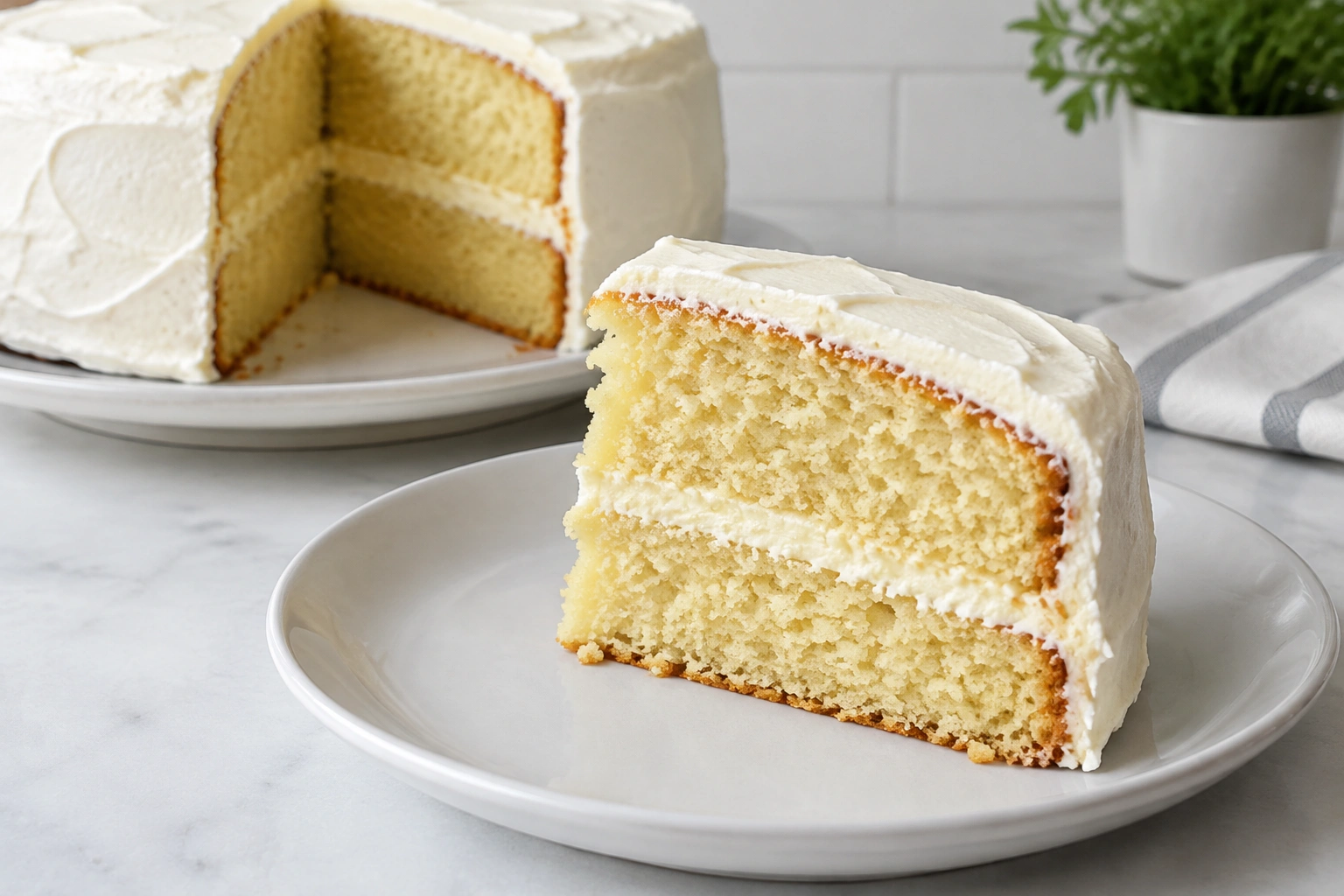
If you’ve ever reduced the sugar in a cake and ended up with a dry crumb, you’ve already seen the main idea in action: sugar does far more than sweeten. In cake batter, sugar helps manage water, slows the setting of the crumb, supports a finer texture, and helps the finished cake stay soft for longer.
That does not mean sugar “adds” moisture in the same way milk or oil does. More accurately, sugar helps a cake hold onto moisture and stay tender as it bakes and cools. That distinction matters, especially if you’re trying to make a cake less sweet without losing the texture that makes cake enjoyable in the first place.
For home bakers, this is one of the most useful baking basics to understand. Once you know what sugar is doing in the batter, you can make better decisions about recipe changes, ingredient swaps, and troubleshooting dry cakes.
Why sugar matters in cake texture, not just sweetness
Sugar is one of the main reasons cake feels soft instead of bready. It affects the batter before baking and the crumb after baking.
A cake with enough sugar usually bakes up with a more tender, delicate texture. A cake with too little sugar often sets faster, feels tighter, and dries out sooner. That’s why a recipe can taste only slightly less sweet but still feel noticeably different in the mouth.
Think of sugar as part of the cake’s structure, not just its flavor. It changes how flour behaves, how much water stays available in the batter, and how quickly the cake firms up in the oven. In other words, sweetness is only one job sugar does.
How sugar keeps cake batter and baked cake moist
Sugar helps cakes stay moist in a few practical ways.
Sugar holds onto water in the batter
Sugar is hygroscopic, which means it attracts and retains water. In cake batter, that helps keep some of the liquid tied up instead of evaporating or being absorbed too quickly by flour.
That matters because flour needs moisture to hydrate, but too much water absorption too early can lead to a firmer, drier crumb. Sugar helps moderate that process.
Sugar slows the setting of the crumb
As cake bakes, starches in the flour gelatinize and proteins set. Sugar interferes with that setting process enough to give the batter more time before it firms up. The result is a softer crumb and a more tender bite.
If you remove too much sugar, the cake can set earlier in the oven. That often produces a denser texture and can make the cake seem dry even when it is technically baked through.
Sugar helps the finished cake stay fresh
Sugar also matters after baking because it helps the crumb retain moisture during storage. For example, two cakes can come out of the oven looking similar, but the one with more balanced sugar may still feel softer the next day because it holds onto moisture better as it sits.
This is one reason a cake can taste fine on day one but feel dry on day two if the sugar level is too low.
Image placeholder 1
Surrounding Text: Sugar helps cakes stay soft for longer.
Sugar helps cakes stay soft for longer.
Image Purpose: Illustrate the relationship between sugar and cake moisture retention.
Image Caption: Sugar helps cakes stay soft for longer.
Image Alt Text: Close-up of a moist cake crumb on a plate.
Image Prompt: A close-up food photograph of a sliced vanilla cake showing a soft, moist crumb on a simple plate, natural light, neutral background, no people, clean kitchen setting.
How sugar affects tenderness, softness, and crumb structure
Moisture and tenderness are related, but they are not identical. A cake can be moist yet still feel a little tough if the crumb is too tight. Sugar helps with both.
When sugar is present in the right amount, it weakens the tendency of flour proteins to form a strong gluten network. That is especially important in cake, where you want structure, but not chewiness.
Sugar also contributes to a finer crumb. Instead of large, uneven tunnels or a bread-like texture, the cake tends to bake with smaller, more uniform air cells. That gives the cake a softer bite and a more even mouthfeel.
A simple way to picture it: flour builds structure, but sugar keeps that structure from becoming too firm.
What happens when you reduce sugar in a cake recipe
Reducing sugar can be useful if you want a less sweet cake, but the texture trade-off is real.
Here are the most common changes:
The cake may feel drier, even if the ingredient list still includes the same amount of liquid.
The crumb may become tighter or less delicate.
The cake may set faster in the oven, which can reduce tenderness.
The finished cake may stale more quickly.
A classic example is a vanilla layer cake with a 25% sugar reduction. The cake may still rise and bake through, but the crumb often feels less plush and the flavor balance can shift toward flour, eggs, or butter.
That does not mean you can never reduce sugar. It means the change should be made carefully, especially in cakes where softness matters.
How much sugar can you cut?
There is no universal number that works in every cake, but a small reduction is usually less disruptive than a large one. As a practical rule of thumb, modest cuts in the neighborhood of 10% to 15% are often easier to manage than bigger changes, while larger reductions are more likely to affect structure, browning, and softness enough that the recipe may need reformulation rather than a simple substitution.
A cautious approach is to reduce sugar gradually and evaluate the result before making a bigger change. That gives you a clearer sense of how the recipe behaves. If you remove a large amount all at once, it becomes harder to tell whether the problem is sugar, overbaking, or a different ingredient imbalance.
White sugar vs brown sugar: which keeps cakes moister?
Both granulated sugar and brown sugar help with moisture, but they behave a little differently.
Sugar type
Moisture effect
Texture effect
Flavor effect
Recipe adjustment notes
Granulated sugar
Helps retain moisture in a neutral way
Supports a light, even crumb
Clean, straightforward sweetness
Most predictable in standard cake formulas
Brown sugar
Often gives a moister-feeling crumb because of molasses
Softer, sometimes denser texture
Deeper, caramel-like flavor
Can darken color and change batter behavior
Liquid sweeteners
Can contribute moisture, but in a different form
Often produce a different crumb and structure
Distinct flavor, often stronger than white sugar
Usually require liquid balance adjustments
Brown sugar often seems moister because it contains molasses, which brings extra flavor and a softer, richer texture. That makes it useful in spice cakes, snack cakes, and other cakes where a slightly denser, softer crumb is welcome.
Granulated sugar is better when you want a more classic cake structure. It is usually easier to predict in a butter cake or vanilla layer cake.
If you want to understand brown sugar measurement more precisely, it helps to review how to measure brown sugar correctly, because packed versus loose sugar can change the result more than many home bakers expect.
Granulated sugar vs liquid sweeteners in cakes
Liquid sweeteners such as honey, syrup, or similar ingredients do not behave exactly like granulated sugar. They can make a cake feel moist, but they also bring extra liquid into the batter.
That means you are not just swapping sweetness sources. You are changing the batter’s balance.
A honey-sweetened cake, for example, may need less added liquid because the sweetener itself is already fluid. If you replace granulated sugar with a liquid sweetener without adjusting the recipe, the batter may become too loose or bake differently than expected.
Liquid sweeteners can be useful when you want a particular flavor and a softer, more supple crumb. But they are not a direct one-to-one substitute in every cake. They often work best in recipes designed for them.
How sugar works with flour, fat, and eggs
Cake texture is a system. Sugar does not work alone.
Sugar and flour
Flour provides structure. Sugar softens that structure by competing for water and slowing gluten development. If there is too little sugar relative to flour, the cake can lean toward a firmer, bread-like texture.
Sugar and fat
Fat adds richness and tenderness. Sugar helps distribute air when creamed with fat, which improves the cake’s lift and texture. If you reduce sugar without changing anything else, the fat may not be able to compensate fully for the lost tenderness.
Sugar and eggs
Eggs help set structure and add moisture, but they also firm up during baking. Sugar helps keep that firmness in check so the crumb does not become rubbery or tight.
A well-balanced cake uses all four ingredients—sugar, flour, fat, and eggs—to create a crumb that is soft, stable, and pleasant to eat.
How the creaming method uses sugar to improve cake texture
In butter cakes, sugar does another important job before the cake even goes into the oven: it helps trap air during creaming.
When butter and sugar are beaten together, the sugar crystals cut into the fat and create tiny air pockets. Those pockets help the cake rise and contribute to a lighter crumb.
If you want a deeper look at that process, creaming butter and sugar without a mixer is a useful technique to study because it makes the visual cues easier to understand.
This is one reason sugar reduction can affect more than moisture. Less sugar can mean less aeration during creaming, which may lead to a tighter, heavier cake. The issue is not only sweetness; it is structure.
Signs a cake has too little sugar
If a cake turns out drier than expected, sugar may be part of the problem. Look for these clues:
The crumb feels firm or tight rather than tender.
The cake seems to stale quickly after baking.
The texture is more bread-like than cake-like.
The cake rises less evenly or feels heavier.
The flavor seems flat, but the bigger issue is texture, not sweetness alone.
These signs are especially telling if you also reduced the sugar and did not adjust anything else. In that case, the recipe may simply no longer have the balance it needs.
How to keep cakes moist when adjusting sugar
If you want a less sweet cake without sacrificing softness, make changes carefully.
Reduce sugar gradually
A small reduction is easier to manage than a large one. That gives you room to see how the cake behaves before making further changes.
Watch the bake, not just the recipe
Lower-sugar cakes can dry out faster if they are overbaked. Even a well-formulated cake will lose moisture if it stays in the oven too long. Check the cake for doneness with the same care you would use on any cake, and avoid assuming dryness is always caused by the ingredient list.
Adjust only when the formula can support it
If you are making a modest sugar reduction, you may be able to leave the rest of the recipe alone and simply watch texture and bake time more closely. If the cake becomes noticeably less tender, a small increase in fat can sometimes help with richness, while a small increase in egg can help with structure in formulas that already have enough liquid. But if you are cutting sugar by a large amount, it is usually better to reformulate the recipe rather than keep adding compensating ingredients one by one.
Choose the right sugar for the job
If moisture and softness are priorities, brown sugar may be a better fit than granulated sugar in certain cakes. If you want a lighter, more classic crumb, granulated sugar is usually the safer choice. If you want to use a liquid sweetener, expect to adjust the liquid balance and possibly the baking behavior as well.
For cakes you plan to store, freezing can also help preserve texture. Once baked and cooled properly, freezing cake layers before frosting can protect moisture better than leaving layers exposed on the counter.
Common mistakes when trying to make a cake less sweet
The most common error is assuming sugar only affects flavor. That leads to changes that look simple on paper but create dry or dense cake in practice.
A few mistakes to avoid:
Cutting sugar too much at once
Swapping granulated sugar for liquid sweetener without changing the rest of the liquid
Using brown sugar as if it were a direct texture fix in every recipe
Blaming sugar when the real problem is overbaking
Forgetting that sugar affects creaming, not just sweetness
If you want a less sweet cake, the best outcome usually comes from making small, deliberate changes rather than trying to “fix” the recipe in one step.
The practical takeaway for home bakers
Sugar helps cakes stay soft because it manages water in the batter, slows the setting of the crumb, and supports a tender structure as the cake bakes and stores. It also improves aeration when creamed with fat, which affects the final texture as much as moisture does.
That is why reducing sugar often changes more than flavor. It can make a cake drier, tighter, and less forgiving.
If you remember one thing, let it be this: sugar is part of the cake’s structure. When you change it, you are changing the way the entire cake bakes and feels.
FAQ
Does sugar actually add moisture to cake?
Not exactly. Sugar mainly helps a cake retain moisture and stay tender. It influences how water behaves in the batter and how the crumb sets during baking.
Why do low-sugar cakes often feel dry?
With less sugar, the cake usually has less water retention, a firmer crumb, and a faster set in the oven. That combination often reads as dryness.
Is brown sugar better than white sugar for moist cakes?
Brown sugar often gives a softer, moister-feeling crumb because of the molasses it contains. White sugar gives a more neutral, predictable structure. The better choice depends on the cake style you want.
Can I replace sugar with honey or syrup and get the same texture?
Usually not. Liquid sweeteners behave differently from granulated sugar and often require recipe adjustments. They can add moisture, but they also change batter consistency and baking behavior.
How can I reduce sugar without ruining cake texture?
Reduce it gradually, keep an eye on bake time, and expect some change in crumb and softness. Small reductions are usually easier to absorb than large ones, and bigger cuts often need recipe reformulation.
What else helps keep cake moist besides sugar?
Fat, eggs, proper mixing, and careful baking all matter. Sugar works with those ingredients, not instead of them.
Why does my cake dry out even when I use enough sugar?
Sugar is only part of the picture. Overbaking, too much flour, too little fat, or poor storage can all dry out a cake.
Should I use brown sugar instead of white sugar in every cake?
No. Brown sugar can improve softness and flavor in certain cakes, but it also changes color, density, and taste. It is best used when those changes fit the recipe.
When should I consult a pastry chef?
If you are reformulating a cake for a bakery menu, adjusting sugar for a special dietary need, or trying to preserve a very specific texture while changing sweetness, a pastry chef can help you rebalance the formula more precisely.
I’m Ethan Baker, a baking and kitchen enthusiast who enjoys making cooking easier for everyday home cooks. I share practical baking tips, pastry guides, cookware advice, kitchen-tool recommendations, and honest product insights. My goal is to help readers choose useful kitchen products, avoid common cooking mistakes, and feel more confident while preparing food at home.