
Can Baking Powder Be Used Instead of Baking Soda Safely

Baking powder can replace baking soda in some neutral recipes, but it is not a direct one-to-one swap. If the recipe contains acid or depends on browning, the substitution may change flavor, color, and texture.
Yes, baking soda and baking powder are related, but they do not behave the same way in a recipe. Baking powder can sometimes stand in for baking soda, but only with careful adjustment and realistic expectations.
- Not interchangeable: Baking powder is weaker and already contains acid, so it does not behave like.
- Best use case: It works best in neutral batters that only need modest lift.
- Main risk: Too much baking powder can cause bitterness, pale color, or a coarse crumb.
- Recipe matters: Buttermilk, yogurt, molasses, citrus, and cocoa can change the outcome a lot.
- Safest approach: Test a small batch first and keep the original leavener when the recipe depends.
Can Baking Powder Be Used Instead of Baking Soda? The Short Answer for Home Bakers
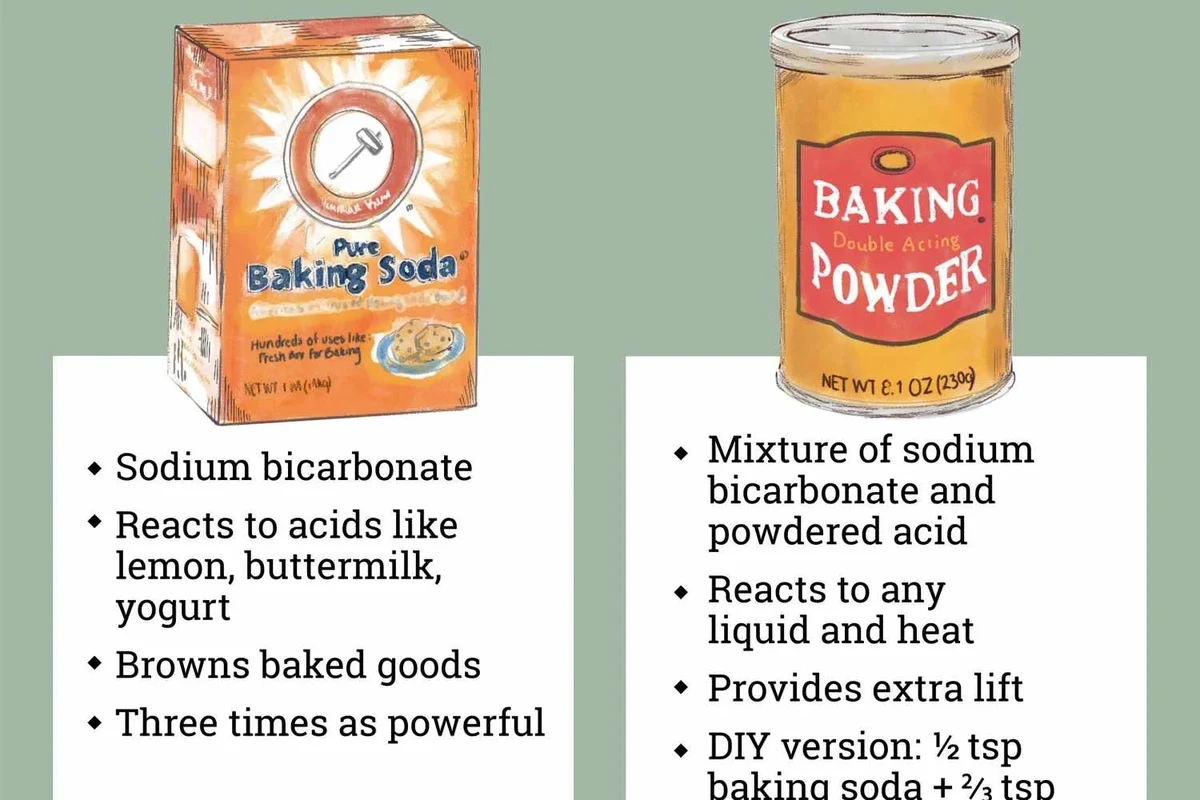
The short answer is yes, sometimes, but not as a direct one-to-one swap. Baking powder already contains acid, so it can create lift on its own, while baking soda needs an acid in the batter to react properly.
That means the substitution may work in some neutral recipes, but it can also change flavor, color, and texture. If you are trying to rescue a recipe mid-bake, it helps to know what the leavener is doing before you change anything.
Why this substitution comes up so often in 2026 kitchens
Home bakers often reach for baking powder instead of baking soda because one ingredient is missing, the pantry was restocked with the wrong canister, or a recipe was copied without the right leavener. It also comes up in mixed kitchens where people bake only occasionally and do not keep both on hand.
Another common reason is recipe confusion. A recipe may call for baking soda because it needs browning and neutralization of acidic ingredients, but the baker assumes any “baking” leavener will do the same job.
The basic rule: why baking powder is not a one-to-one swap
Baking soda is much stronger than baking powder by weight. If you replace soda with powder using the same amount, the batter usually will not rise the same way, and the finished product may taste flat or look pale.
In general, baking powder is used in a larger amount because it is weaker and already diluted with starch and acid. That is why a simple spoon-for-spoon swap usually gives disappointing results.
Recipe results can shift with ingredient brand, measuring style, oven calibration, pan size, and even humidity. A substitution that seems fine in one kitchen may behave differently in another.
How Baking Soda and Baking Powder Work Differently in Batter and Dough
To understand the substitution, it helps to think about how each ingredient works in the bowl and in the oven. Both release gas that expands during baking, but they do it in different ways and for different reasons.
Baking soda as a pure alkali and what it needs to activate
Baking soda is sodium bicarbonate, a pure alkaline ingredient. It needs an acid, such as buttermilk, yogurt, molasses, citrus juice, or natural cocoa, to make carbon dioxide gas quickly.
That reaction also affects flavor and color. It can reduce sharp acidity, deepen browning, and create the familiar spread and chew found in many cookies and cakes.
Baking powder’s built-in acid and double-acting rise
Baking powder contains baking soda plus one or more acid salts, usually along with starch to keep it dry and stable. Most baking powder sold today is double-acting, meaning it releases some gas when mixed with liquid and more when heated in the oven.
This built-in acid makes baking powder more self-contained, which is useful in recipes that do not have enough acidic ingredients to activate baking soda. The tradeoff is that it usually provides a gentler rise and less impact on flavor balance.
How these leaveners affect flavor, browning, and texture
Baking soda often supports stronger browning because it raises pH, which encourages color development. It can also soften the sharpness of acidic ingredients, which is why recipes with molasses or buttermilk often taste more balanced when soda is used correctly.
Baking powder tends to create a milder taste and a lighter, more neutral crumb. If too much is used, though, the finished baked good can become dry, coarse, or slightly bitter.
Many quick breads rely on a balance of acid and alkali, not just lift. If that balance is off, the loaf may rise but still taste dull, sour, or soapy.
When Baking Powder Can Replace Baking Soda Safely
There are situations where baking powder can work as a backup. The key question is not “Can I use it?” but “Will the recipe still have enough structure, flavor, and browning after the swap?”
Recipes with little or no natural acid
Neutral batters and doughs are the easiest place for this substitution. If a recipe has little acid to begin with, baking powder may provide the lift the batter needs without creating a major flavor conflict.
This is more likely in simple pancakes, some biscuits, and certain plain quick breads. Even then, the result may be slightly different from the original recipe, so the swap is best treated as a backup plan rather than an exact replacement.
Situations where a small lift matters more than strong browning
If the goal is a modest rise rather than a deep golden color, baking powder has a better chance of working. That can be true for delicate cakes, tender muffins, or batters where you want a lighter crumb and do not rely on soda for flavor correction.
Still, the amount matters. Too much baking powder can leave a chemical aftertaste, so the safest swaps are usually small and measured, not generous.
Examples of baked goods where the swap may work better than expected
Some pancakes, simple tea cakes, and lightly flavored muffins can tolerate the change if the recipe is not acid-heavy. A batter that already includes milk, eggs, butter, and flour without a strong acidic ingredient may be a reasonable candidate.
For more guidance on ingredient balance, it can help to review how the original formula is built. If you are also unsure about leavener freshness, see when baking soda needs replacing so you do not misdiagnose a stale ingredient as a recipe problem.
Often forgiving because the batter is usually neutral and the rise is modest.
Can work if the recipe does not depend on soda for browning or acid balance.
When the Substitution Fails: Common Baking Problems to Watch For
When baking powder replaces baking soda in the wrong recipe, the problems usually show up in the oven and in the first bite. The batter may rise unevenly, the color may stay pale, or the finished texture may feel heavier than expected.
Weak rise, dense crumb, and pale color
Because baking powder is weaker, it may not create enough lift to support the batter’s structure. The result can be a dense crumb, a flatter top, or a cake that looks done but feels heavy in the center.
Pale color is another clue. If the recipe needed baking soda for browning, replacing it with powder may leave the crust lighter and the flavor less developed.
Soapy or metallic taste from overusing baking powder
It can be tempting to add more baking powder to “make up” for the missing baking soda, but that often backfires. Too much baking powder can leave a bitter, metallic, or soapy taste that lingers after the bake.
This is especially noticeable in delicate cakes and muffins, where there is not much strong flavor to hide the aftertaste. If a recipe tastes off, more leavener is not always the answer.
Spread, structure loss, and off texture in cookies, muffins, and cakes
In cookies, the wrong substitution can change spread and thickness. Some doughs spread too much because the balance of acid, fat, and leavener shifts; others stay too puffy and cake-like.
In muffins and cakes, the crumb may become coarse or uneven. If the recipe was designed around baking soda, the texture can lose its intended tenderness and structure even if the bake looks acceptable on top.
The bake looks pale and tastes flat.
The recipe may have needed baking soda for browning and acid balance. Use baking powder only if the formula is mostly neutral, and expect a milder result.
How to Adjust Measurements If You Must Use Baking Powder Instead of Baking Soda
If you have no choice, use a careful conversion rather than guessing. The goal is to get enough lift without adding so much baking powder that the flavor turns harsh.
The practical conversion range and why more is not always better
A common kitchen rule of thumb is that baking powder is used in a larger amount than baking soda, often several times more. But the exact amount depends on the recipe, because baking soda is not only a leavener; it also changes acidity and browning.
That is why a direct conversion can only be approximate. If the recipe already contains acidic ingredients, the needed adjustment may be different than in a neutral batter.
Do not keep increasing baking powder until the batter “looks right.” Excess baking powder can leave a bitter taste and weaken texture, especially in cakes and muffins.
How to account for acidic ingredients already in the recipe
If the recipe includes buttermilk, yogurt, sour cream, molasses, citrus, or natural cocoa, that acid was probably part of the original design. Baking soda would have reacted with it, so replacing soda with powder changes both the chemistry and the flavor.
In those cases, the safest move is often to use a different recipe or to make a small test batch first. A recipe built around acid and soda may not behave well if you simply swap in powder and leave everything else the same.
When to reduce other acidic components to protect flavor balance
If you are adapting a recipe and using baking powder instead, you may need to reduce an acidic ingredient to prevent the batter from tasting too sharp. This is especially relevant in recipes with strong sour dairy or a large amount of molasses.
That said, reducing acid can also change moisture and tenderness. If you are not sure, it is usually better to make a small batch and observe the batter’s smell, thickness, and bake color before changing the full recipe.
Ingredient Examples That Change the Outcome
The ingredients already in the bowl often decide whether the substitution is workable. Two recipes that look similar on paper can behave very differently once acid, sugar, fat, and cocoa are mixed in.
Buttermilk, yogurt, sour cream, molasses, and citrus in the recipe
These ingredients bring acidity, which baking soda normally helps neutralize. If you replace soda with baking powder in a recipe that depends on them, the final flavor may stay too tangy or the crumb may feel less tender.
Molasses is especially important because it adds both acidity and a strong flavor. Citrus and cultured dairy can have the same effect in smaller but still noticeable ways.
Neutral batters like pancakes, biscuits, and some quick breads
Neutral batters are often more forgiving because they are not relying on soda to tame a strong acid. In these recipes, baking powder may provide enough lift to get a decent rise and a soft crumb.
Even so, biscuits and quick breads are sensitive to overmixing and oven temperature. A substitution may work, but the handling method still matters just as much as the leavener.
Why cocoa type, brown sugar, and honey can alter the decision
Cocoa powder can be either natural or Dutch-processed, and that difference matters. Natural cocoa is acidic, while Dutch-processed cocoa is less acidic, so the recipe may have been built around one type of leavener or the other.
Brown sugar and honey also affect moisture, acidity, and browning. A recipe with these ingredients may not respond the same way as a plain white-sugar batter, which is why ingredient labels and the original formula matter so much.
Baking soda is stronger and depends on acid; baking powder is weaker and carries its own acid, so the two are not interchangeable in every recipe.
Best when acid is present
Helps with browning, flavor balance, and stronger chemical lift, but it needs an acidic ingredient to work properly.
VS
Best in neutral recipes
Provides built-in acid and a gentler rise, but too much can leave an aftertaste and a drier crumb.
Testing, Troubleshooting, and Storage Tips for Better Results
When you are unsure about a substitution, testing is better than hoping. A small batch can show you whether the batter rises, browns, and sets the way you want before you commit to the full recipe.
How to do a small batch test before committing to the full recipe
Mix a small portion of the batter using the adjusted leavener amount and bake it in a comparable pan if possible. Watch for the way the batter spreads, how the top domes, and whether the crumb feels tender or heavy after cooling.
If the sample bakes up pale or tastes bitter, the formula likely needs more than a simple leavener swap. In that case, it may be better to choose a recipe designed for baking powder from the start.
Signs your leavener is fresh enough to trust
Both baking powder and baking soda lose performance over time, especially in humid kitchens. If a leavener clumps, smells stale, or has been open for a long time, it may not give reliable lift.
For any food ingredient, follow package instructions and replace it when performance drops. If you are troubleshooting a flat bake, stale leavener should be one of the first things you check before changing the recipe itself.
- Check whether the recipe contains acidic ingredients.
- Confirm that your baking powder is fresh.
- Make a small test batch if the recipe is important.
- Expect changes in browning, flavor, and texture.
Storage conditions that preserve potency in humid kitchens
Keep baking powder and baking soda tightly sealed in a cool, dry place. Moisture is the enemy because it can weaken performance or trigger premature reaction in baking powder.
A pantry away from the stove is usually better than a warm cabinet above the oven. If your kitchen is humid, do not leave the container open while you measure other ingredients.
Safety and labeling checks for students, home bakers, and allergy-sensitive kitchens
In teaching kitchens and shared homes, label containers clearly so baking soda is not mistaken for baking powder. That matters for both recipe accuracy and allergen awareness, since some baking powders contain starches or other ingredients that should be checked on the label.
If you are baking for someone with food allergies or sensitivities, read the package carefully and verify cross-contact guidance from the manufacturer. For serious allergy concerns, use qualified advice and product labels rather than assumptions.
Do not taste raw batter that contains uncooked flour or eggs. If you are testing a substitution, wait until the baked item is fully cooled before judging flavor and texture.
Final Verdict: The Best Way to Decide Whether to Swap in Baking Powder
Baking powder can replace baking soda safely only in the right recipe and usually only with adjustments. The more acidic, strongly flavored, or browning-dependent the recipe is, the less likely the swap will preserve the original result.
Decision guide based on acid level, flavor goals, and recipe type
If the recipe is neutral and only needs a modest lift, baking powder may work as a backup. If the recipe contains buttermilk, yogurt, sour cream, molasses, citrus, or natural cocoa, baking soda was probably chosen for a reason, and the swap is much riskier.
What to do when the recipe depends on baking soda specifically
When baking soda is there to balance acidity, improve browning, or shape the final flavor, the best option is usually to keep the original ingredient. If you cannot, look for a recipe written for baking powder instead of forcing the substitution.
That approach is especially helpful in cookies and quick breads, where small chemical differences can change spread, rise, and tenderness. For a deeper comparison of the two ingredients, you may also find the reverse substitution guide useful when you are working from the other direction.
Recap of the safest substitution mindset for reliable baking
The safest mindset is simple: treat baking powder as a backup, not a perfect stand-in. Check the recipe’s acid level, expect changes in flavor and color, and test a small batch when the bake matters.
If you want to understand the chemistry behind the fizz, the article on the baking soda and vinegar reaction is a helpful companion read. Knowing why the reaction happens makes it much easier to decide when a substitution is worth trying and when it is better to start with the right leavener.
Baking powder can sometimes replace baking soda, but only in recipes that do not depend on soda for acid balance, browning, or flavor correction. If the recipe was built around baking soda, the safest choice is usually to keep it or use a formula written for baking powder.
Frequently Asked Questions
No. Baking powder can work in some neutral recipes, but it is not a one-to-one replacement for baking soda. Recipes with acidic ingredients usually need baking soda for the best flavor and texture.
There is no perfect universal conversion because the recipe’s acid level matters. Baking powder is weaker, so the amount usually needs to be higher, but adding too much can cause a bitter taste or poor texture.
Baking soda helps with browning by making the batter more alkaline. If you replace it with baking powder, the baked goods may rise but still look lighter and taste less developed.
Yes. Changing the leavener can alter spread, thickness, and structure in cookies. Some cookies spread more, while others stay puffier and more cake-like.
Fresh baking powder should still produce reliable rise and should not be clumped or stale-smelling. If you are troubleshooting flat bakes, stale leavener is one of the first things to check.
No. Raw batter may contain uncooked flour or eggs, which can carry food safety risks. Wait until the baked item is fully cooked and cooled before evaluating flavor.