Yes, you can put a small amount of baking soda in cat litter for odor control. It works best as a helper, not a replacement for scooping and regular cleaning.
If you are wondering can you put baking soda in cat litter, the short answer is yes, in many cases you can. It is a common odor-control trick, but it works best when you use a small amount and still scoop the box regularly.
- Use lightly: A small sprinkle is usually better than a thick layer.
- Watch your cat: Avoid it if your cat sneezes, avoids the box, or dislikes dust.
- Keep cleaning: Baking soda helps odor, but scooping still does the real work.
- Match the litter: Clumping litter usually pairs best with baking soda.
- Change the setup if needed: Better ventilation or a different litter may work better for strong odors.
Why People Add Baking Soda to Cat Litter for Odor Control
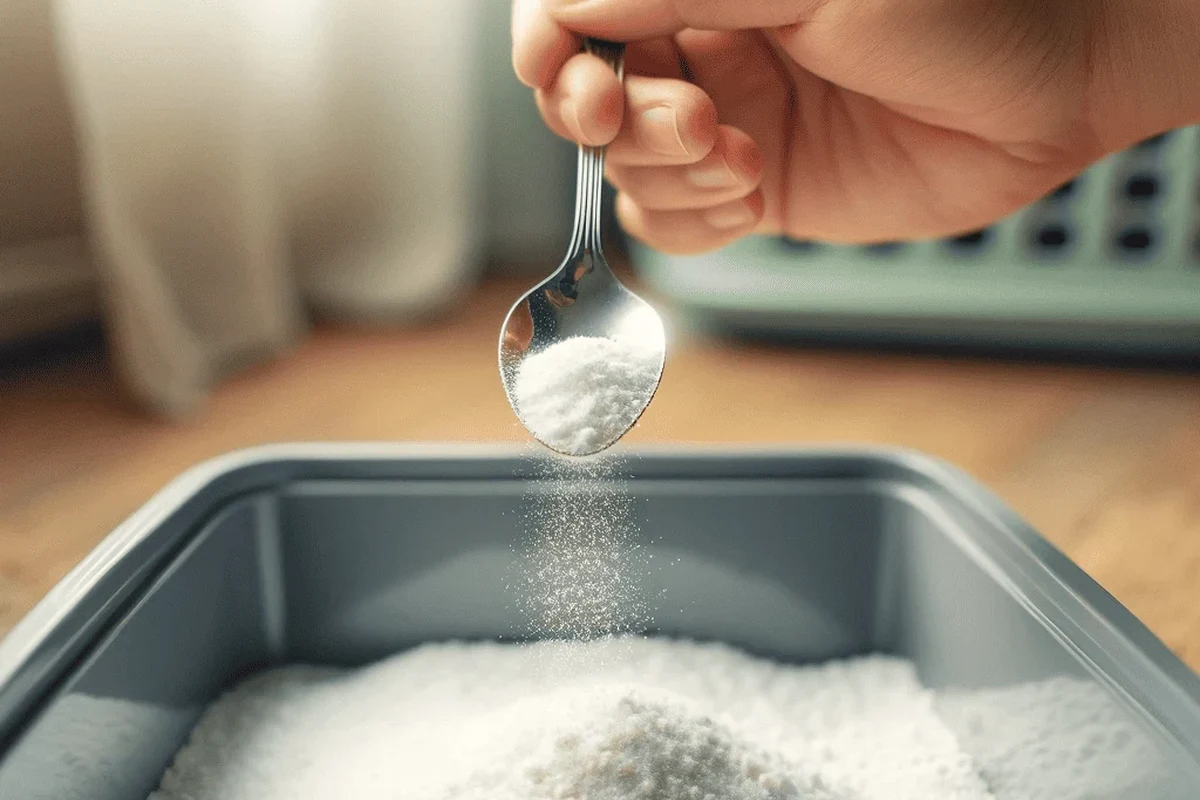
Baking soda is popular because it can help neutralize some odors instead of only covering them up. That makes it a simple, low-cost option for people who want a fresher litter box without adding a strong fragrance.
For readers who like simple ingredient science, the idea is similar to how baking soda can help with household smells in other settings, like the methods covered in our guide to baking soda for smoke odors. It does not remove waste, and it does not replace cleaning, but it can reduce the sharp smell that builds up between scoops.
How baking soda works as a deodorizer in litter boxes
Baking soda is mildly alkaline, so it can help balance some of the acidic odor compounds that come from urine and waste. In plain terms, it may make the box smell less harsh, especially in a small room where odors linger.
It works best when the litter itself still does the main job of absorbing moisture. Think of baking soda as a helper, not the main odor-control system.
Baking soda is odor-neutralizing, not scent-masking. That is one reason it is often preferred over heavily perfumed additives for sensitive homes.
When odor control matters most: multi-cat homes, apartments, and covered boxes
Odor control becomes more important when a litter box sits in a small apartment, a bathroom, or any room with limited airflow. Multi-cat homes also create more frequent waste buildup, which means smells can appear faster.
Covered boxes can trap odors inside, which may sound helpful at first but often makes the smell stronger when the lid is opened. In those situations, baking soda may help a little, but ventilation and scooping habits still matter more.
Is Baking Soda Safe to Mix with Cat Litter in 2026?
For most healthy adult cats, a small amount of plain baking soda mixed into litter is generally considered a common household practice. Still, safety depends on the cat, the litter type, and how much you use.
If your cat has asthma, chronic sneezing, or another respiratory concern, it is smart to be cautious with any dusty additive. When in doubt, check the litter brand’s instructions and ask your veterinarian for guidance.
What most litter brands and veterinarians say about safety
Many unscented litter products allow odor-control additives, but not all brands recommend them. The safest approach is to read the package directions before adding anything to the box.
Veterinary guidance usually focuses on keeping the box clean, low-dust, and acceptable to the cat. If an additive causes the cat to avoid the box, that can become a bigger problem than the odor itself.
Do not use baking soda as a substitute for cleaning a dirty litter box. If a cat starts urinating outside the box, contact a veterinarian, since that can signal a medical or behavior issue.
Situations where baking soda may be a poor fit for cats
Baking soda may be a poor choice if your cat already dislikes dusty litter, has sensitive paws, or tends to sniff and sneeze around the box. Some cats are also picky about changes in texture or smell.
Very young kittens and cats with known respiratory irritation may do better with the least dusty setup possible. In those cases, it is often better to improve ventilation and scooping rather than add another powder.
Signs your cat may dislike the smell, texture, or dust
If your cat hesitates at the box, scratches less than usual, or starts using the floor, the litter setup may be the issue. A sudden change in litter box behavior should never be ignored.
Watch for sneezing, paw shaking, avoiding the box, or digging briefly and leaving. Those are practical clues that the additive may be bothering the cat, even if it seems fine to you.
When testing any litter change, keep the rest of the setup the same. That makes it easier to tell whether baking soda helped or just made the box less appealing.
How Much Baking Soda to Use with Cat Litter
There is no single perfect amount, because litter depth, box size, and cat habits all matter. The safest general approach is to start small and increase only if your cat tolerates it well.
As a rule of thumb, a light sprinkle is better than a thick layer. You want enough to help with odor, but not so much that it changes the texture of the litter bed.
Suggested measurement ranges for clumping and non-clumping litter
For clumping clay litter, many cat owners use a thin dusting across the surface or a small amount mixed into the clean litter before filling the box. For non-clumping litter, the same idea applies, but the box may need more frequent refreshing because moisture control is weaker.
Since brands vary, it is safer to think in terms of a light coating rather than a fixed exact measurement. If the litter starts to feel powdery, you have probably used too much.
Why too much baking soda can reduce performance instead of improving it
Too much baking soda can create extra dust, which may bother cats and people who are sensitive to airborne particles. It can also make the litter feel drier and looser, which may affect clumping performance in some products.
In practice, overdoing it often leads to more tracking and a messier box. If the goal is odor control, a small amount usually works better than trying to fully cover every smell.
Practical examples for single-cat and multi-cat litter boxes
In a single-cat home, you may only need a small sprinkle each time you refresh the box. In a multi-cat home, it can help to split the odor-control effort between more frequent scooping, deeper litter, and a modest amount of baking soda.
If the box fills quickly, do not keep adding powder to chase the smell. At that point, the better fix is usually more frequent cleaning or an extra litter box.
Exact amounts depend on the litter brand, box size, and how often waste is removed. Always verify whether the manufacturer allows additives before mixing anything in.
Best Way to Add Baking Soda to Cat Litter
The best method is simple: add a small amount to clean litter, mix lightly, and keep up with maintenance. That approach gives you odor control without creating a dusty top layer.
If you want a broader household perspective on odor management, our article on baking soda to laundry detergent benefits and uses shows the same basic principle: baking soda helps most when it is used as part of a system, not as the only solution.
Layering, mixing, and maintenance methods that actually work
A light mix through the clean litter is usually better than dumping baking soda on top. That helps distribute it more evenly and reduces the chance that your cat steps into a powdery patch.
Some people prefer a thin bottom layer, but that can be less effective if moisture reaches it unevenly. Light mixing is usually the most practical method for everyday use.
Empty and wash the litter box if needed, then dry it fully before adding fresh litter and a small amount of baking soda.
Stir the baking soda through the litter just enough to distribute it. Avoid creating a cloud of dust.
Remove waste daily, or more often in multi-cat homes, so the baking soda is helping a clean box rather than hiding buildup.
How often to refresh the litter box for better odor control
Even with baking soda, a litter box still needs regular scooping and periodic full changes. The right schedule depends on the number of cats, the type of litter, and the box design.
If the box starts smelling strong before your usual cleaning day, that is a sign the current routine is not enough. Odor control works best when you treat the whole system, not just the additive.
Common mistakes: overmixing, using scented add-ins, and skipping scooping
Overmixing can kick up dust and make the litter less comfortable for cats. Scented add-ins can also create a stronger smell that some cats dislike more than the original odor.
The biggest mistake is skipping scooping because you assume baking soda will handle the smell. It will not. Waste still needs to be removed promptly for the box to stay sanitary and acceptable to your cat.
- Use a small amount of plain, unscented baking soda
- Mix it into clean litter lightly
- Scoop waste every day
- Dumping in a thick layer of powder
- Adding scented fragrances on top
- Relying on baking soda instead of cleaning
What Type of Cat Litter Works Best with Baking Soda
Baking soda does not perform equally well with every litter material. The best results usually come from litters that already manage moisture and odor well on their own.
If you are comparing litter types, think about how they absorb liquid, control ammonia smell, and handle dust. Those factors matter as much as the baking soda itself.
Clumping clay litter versus crystal, pine, paper, and corn-based litter
Clumping clay litter is often the easiest match because it forms solid clumps and makes waste removal simpler. Crystal litter can also work, but it depends more on the brand’s odor-control design.
Pine, paper, and corn-based litters vary widely. Some are naturally lower in dust, while others absorb moisture differently, so the baking soda effect may be more noticeable in one product than another.
How litter material affects odor absorption and moisture control
Moisture control is the key factor. If the litter traps liquid well, odors have less chance to spread, and the baking soda can act as a secondary aid.
If the litter stays wet or breaks down quickly, baking soda cannot fully compensate. At that point, a different litter formula may solve more of the odor problem than any additive.
- Can boost odor control in many unscented litters
- Usually inexpensive and easy to find
- Works best as a simple add-on
- May add dust in sensitive homes
- Can bother picky cats
- Does not replace good litter quality or cleaning
Choosing the right setup for covered boxes, open boxes, and automatic boxes
Open boxes usually allow better airflow, which helps odors disperse before they build up. Covered boxes may benefit from baking soda more visibly, but they also trap smells and can make cats feel boxed in.
Automatic boxes are a special case because the manufacturer may warn against additives that interfere with sensors, rakes, or waste drawers. Always check the manual before adding anything to an automatic system.
Cleaning, Maintenance, and Safety Considerations
Odor control is only one part of litter box care. Cleaning habits, dust level, and the cat’s comfort all affect whether baking soda is a smart choice.
If you are also interested in other household baking soda uses, our guide to baking soda vinegar cleaning ovens is a good reminder that baking soda works best when matched to the right surface and job.
Dust, tracking, and respiratory concerns for cats and humans
Fine powders can become airborne when poured or stirred. That matters in small rooms, especially if anyone in the home has allergies or breathing sensitivity.
Tracking is another practical issue. If the powder sticks to paws and gets carried around the house, the box may create more cleanup work instead of less.
Pour baking soda slowly and keep the box away from food prep areas. Fine powder can drift into nearby surfaces, and it is best to keep pet care supplies separate from cooking spaces.
How baking soda affects box cleaning, waste disposal, and litter longevity
Baking soda may help the box smell fresher between changes, but it does not make litter last forever. If the litter is saturated or the box is holding onto odor, it still needs a full refresh.
When cleaning, use warm water and a pet-safe cleaner if the box needs washing, then dry it completely before refilling. A damp box can make litter clump poorly and can encourage odor to return faster.
When to stop using baking soda and switch to a different odor-control method
Stop using baking soda if your cat avoids the box, sneezes more, or if the litter becomes noticeably dusty. That is a sign the additive may be causing more trouble than it solves.
If odor remains strong even with regular scooping, the better fix may be a larger box, a different litter, or improved airflow. In stubborn cases, a veterinarian can help rule out health-related causes of unusual smells or litter box changes.
Alternatives to Baking Soda for Cat Litter Odor Control
Baking soda is only one option, and sometimes it is not the best one. If the smell is strong, the box setup may need a bigger change than a deodorizing powder can provide.
Unscented litter upgrades, litter deodorizers, and better box placement
Upgrading to a higher-quality unscented litter can make a bigger difference than adding powder to a lower-performing one. Some litter deodorizers are designed specifically for cat boxes, but they still need to be chosen carefully for dust and cat acceptance.
Box placement matters too. A well-ventilated area away from heat and humidity usually smells better than a closed corner with poor airflow.
Ventilation, scooping frequency, and litter box size as odor-control factors
Fresh air helps odors disperse, especially in covered spaces. Scooping frequency is just as important, because waste left in the box is the main source of smell.
Box size also matters. A box that is too small can feel dirty faster, which means more smell and less comfort for the cat.
Comparing baking soda with charcoal, enzymatic products, and litter additives
Activated charcoal products can be effective for odor absorption, but they vary by brand and may cost more. Enzymatic products are usually aimed at breaking down odor-causing residue, which can be useful in some setups.
Compared with those options, baking soda is simple and inexpensive, but it is also less specialized. If you need stronger odor control, a purpose-made litter additive may work better than baking soda alone.
Odor-control options for litter boxes
Choose the option that fits your cat’s comfort, your litter type, and how much maintenance you can realistically keep up with. A product that smells strong or creates extra dust may be less effective in the long run if your cat refuses the box.
Should You Put Baking Soda in Cat Litter? Final Recommendation
Yes, you can put baking soda in cat litter, and for many homes it is worth trying in a small amount. It is most useful when you want a simple, low-cost odor helper and your cat is comfortable with the litter texture.
But baking soda should be treated as a support ingredient, not a cure-all. If the box still smells bad after regular scooping, the real fix is usually better litter, better airflow, or a different box setup.
Best-use scenarios where baking soda is worth trying
It makes the most sense in a clean, unscented litter box that already gets scooped often. It can also be a reasonable option in apartments, multi-cat homes, or covered boxes where odor builds quickly.
When to avoid it and what to do instead for stronger odor issues
Avoid it if your cat is sensitive to dust, dislikes changes, or has a history of litter box avoidance. In those cases, focus on ventilation, more frequent scooping, and a better-fitting litter rather than adding powder.
Recap for choosing the safest, most effective odor-control approach
The safest approach is usually to start small, watch your cat’s reaction, and keep the box as clean as possible. If baking soda helps without causing dust or avoidance, it can stay in your routine; if not, switch to another odor-control method that fits your cat better.
Baking soda can help control litter box odor when used sparingly with a good litter and regular scooping. If your cat dislikes it or the smell stays strong, a better litter, better ventilation, or a larger box is usually the smarter fix.
Frequently Asked Questions
Use only a light sprinkle or a small amount mixed into clean litter. Too much can create dust and make the box less comfortable for your cat.
For many healthy adult cats, a small amount of plain baking soda is generally considered a common household practice. If your cat has respiratory issues or avoids the box, stop using it and ask your veterinarian.
Yes, baking soda is often used with clumping litter because the litter still handles moisture and waste removal. Mix it lightly so the texture stays comfortable and the clumps still form properly.
No, it can help reduce odor but it will not replace scooping and regular litter changes. Strong smells usually mean the box needs better cleaning, ventilation, or a different litter.
Stop using the baking soda and check whether the litter, box size, or placement is the problem. If your cat keeps avoiding the box, contact a veterinarian because it can signal a medical issue.
Yes, options include higher-quality unscented litter, activated charcoal products, enzymatic additives, better ventilation, and more frequent scooping. The best choice depends on your cat’s comfort and the type of litter box you use.
