
Baking Soda for Lawn Fungus Easy Fix for Healthy Grass

Baking soda can help with mild surface lawn fungus, but only if you use it carefully and in small spot treatments. For spreading or recurring disease, better lawn care habits or a labeled fungicide are usually the smarter fix.
Baking soda for lawn fungus can be a handy short-term fix for minor surface problems, but it is not a cure-all. Used carefully, it may help slow visible fungal growth while you improve the lawn conditions that let disease spread.
- Best use: Mild, surface-level fungus on a small patch of grass.
- Main limit: It will not fix deep disease, poor drainage, or repeated outbreaks.
- Safe approach: Test a small area first and avoid strong mixes or hot-weather spraying.
- Better long-term fix: Water correctly, mow at the right height, and improve airflow.
- Stop using it if: The lawn burns, the patch spreads, or the problem keeps returning.
What Baking Soda Can and Cannot Do for Lawn Fungus
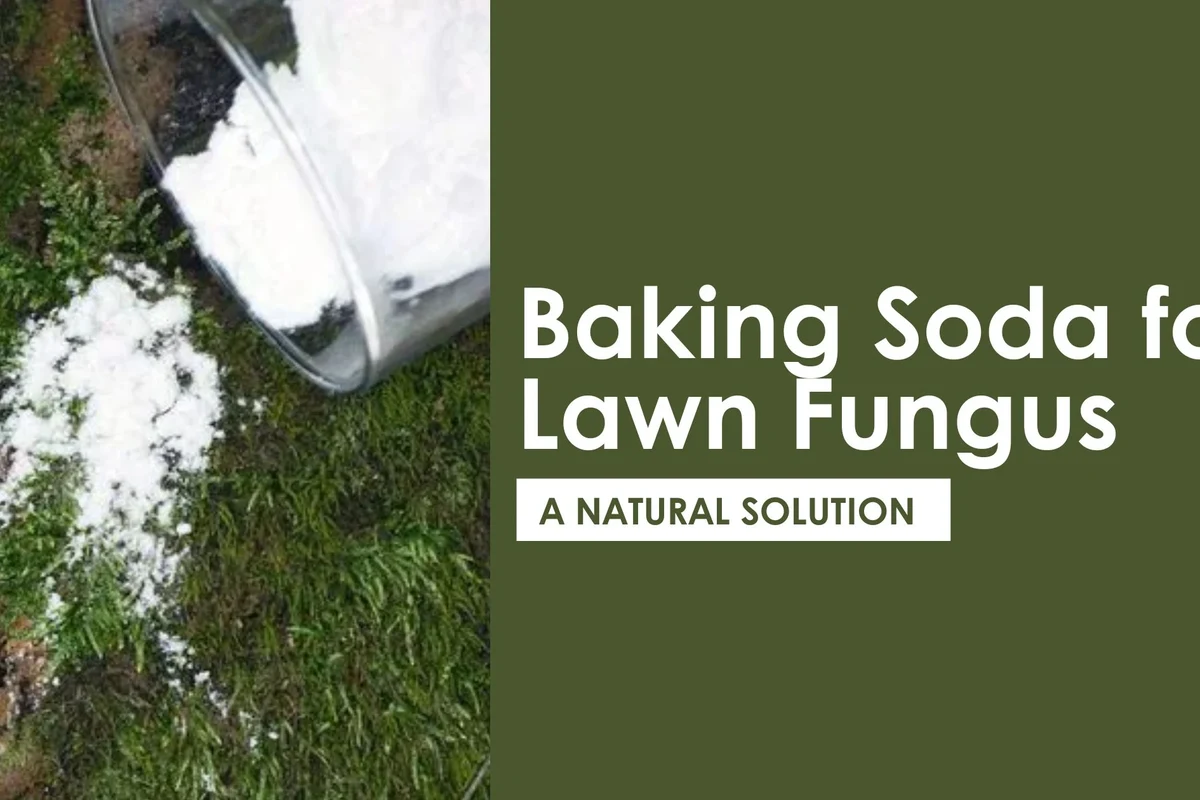
Homeowners often reach for baking soda because it is cheap, easy to find, and already in the kitchen. It sounds like the kind of quick DIY solution that might save a patchy lawn before the problem gets worse.
That makes sense, especially if you are already familiar with simple household uses like the baking soda and vinegar reaction explained simply or other basic baking soda tricks. But lawn fungus is different from cleaning a stain on a pan. Grass is living tissue, and the wrong treatment can stress it further.
Why homeowners search for baking soda as a fast lawn fix
Baking soda is popular because it feels low-risk and affordable. People also like that it can be mixed into a spray without special tools, which makes it seem like an easy first step before buying stronger products.
Another reason is speed. When you see a white film, brown patch, or powdery coating on grass blades, you want something that looks like it can be sprayed right away. That urgency is understandable, especially during warm, humid weather when fungus can move quickly.
How baking soda works on fungal growth, and where it falls short
Baking soda is sodium bicarbonate, and it can make the surface of a leaf less friendly to some fungal growth. In simple terms, it may interfere with the conditions certain fungi prefer on the grass blade itself.
That said, it works best on mild, surface-level problems. It does not fix compacted soil, poor drainage, overwatering, or a serious turf disease already spreading through roots and crowns. If the lawn problem is deeper than the leaf surface, baking soda is only a temporary bandage.
Baking soda is not the same as a labeled lawn fungicide. A product label gives specific use directions, while a kitchen remedy depends on careful dilution and judgment.
Common Lawn Fungus Problems People Try to Treat with Baking Soda
Not every discolored patch is fungus, but some surface diseases are the reason people try baking soda first. The key is to identify whether the issue looks like a leaf-surface problem or something caused by watering, mowing, or pet traffic.
Dollar spot, powdery mildew, and other surface-level fungal issues
Dollar spot often shows up as small, straw-colored patches that can merge into larger areas. Powdery mildew looks like a white dusty coating on leaves, especially in shaded or crowded spots with poor airflow.
These are the kinds of visible, above-ground symptoms where a mild spray may seem worth trying. Even then, results vary by grass type, weather, and how advanced the disease already is.
Many lawn diseases look similar at first. A brown patch can come from fungus, drought stress, compacted soil, low mowing, or even pet urine, so the fix depends on the cause.
Signs the problem may be disease, not drought, pet damage, or poor mowing
Fungal damage often spreads in irregular patches, while drought stress usually follows a more general pattern across the lawn. Pet damage often shows up as concentrated rings or spots with darker edges, and mowing damage can create uniform scalping across the yard.
If the grass looks thin, matted, or greasy in the morning, or if a fuzzy coating appears after humid nights, fungus becomes more likely. If the lawn is crispy from heat and lack of water, baking soda will not solve the real issue.
If you are unsure whether a patch is fungus, check with a local extension service or lawn professional before treating. Misdiagnosis can waste time and make turf stress worse.
How to Use Baking Soda on Grass Without Damaging the Lawn
If you decide to try baking soda for lawn fungus, keep the treatment light and targeted. The safest approach is to treat only the affected area, then wait and watch for improvement or new damage.
Typical dilution ratios, application timing, and spray coverage
There is no single universal recipe that fits every lawn, but many DIY guides use a mild solution, such as a small amount of baking soda mixed into a gallon of water. The exact amount matters because stronger mixes increase the risk of leaf burn and salt buildup.
Apply enough to lightly coat the fungus-affected blades, not enough to drench the soil. A fine mist is usually better than heavy spraying, since runoff can spread the solution beyond the problem area.
- Confirm the problem is on the leaf surface, not deep turf decline
- Test a small patch first
- Use a fresh, fully dissolved solution
- Avoid spraying stressed grass in direct sun
Why spot-treatment is safer than blanket application
Spot-treatment reduces the chance of changing the soil surface too much. Grass can tolerate a small, careful application far better than repeated full-yard spraying.
This matters because lawn fungus is often localized. If only one corner of the yard looks affected, there is no reason to coat the entire lawn and expose healthy grass to unnecessary stress.
Best weather conditions for applying a baking soda solution
Choose a cool, calm time of day, such as early morning or late afternoon, when the sun is not intense. Wind can blow the spray onto nearby plants, and hot sun can make leaf burn more likely.
Try not to apply before heavy rain, because runoff can wash the solution away before it has a chance to work. A dry window with mild temperatures is usually the most practical choice.
Wear gloves and keep the sprayer clearly labeled if you reuse it for lawn care. Do not store mixed spray in an unmarked container where it could be mistaken for a kitchen ingredient.
Risks, Side Effects, and Common Mistakes with Baking Soda Treatments
The biggest mistake with baking soda is assuming that “natural” always means harmless. On grass, concentration and frequency matter just as much as the ingredient itself.
Salt buildup, leaf burn, and soil pH concerns
Baking soda contains sodium, and sodium can build up if you use it too often. Over time, that can be tough on soil structure and root health, especially in already stressed areas.
Leaf burn is another concern. Grass blades can dry out, turn pale, or develop scorched edges if the solution is too strong or too frequently applied. Soil pH can also shift, which is why repeated use is not a good long-term strategy.
Overapplying, spraying in heat, and using the wrong concentration
More is not better here. A stronger mix does not guarantee faster fungus control, and it may damage the lawn before any benefit appears.
Spraying in midday heat is a common mistake because the combination of sun, heat, and moisture can stress the leaf surface. If you have ever seen how a small kitchen ingredient can behave differently depending on how it is used, the same logic applies outdoors; even something as simple as using baking soda instead of baking powder safely depends on the right amount and purpose.
When baking soda makes turf stress worse instead of better
If the lawn is already thin, drought-stressed, newly seeded, or suffering from compacted soil, baking soda can add another layer of stress. In those situations, the grass needs recovery conditions more than it needs a spray.
It can also be a poor choice on ornamental ground covers or near sensitive plants. A little overspray can leave visible damage on leaves that are much softer than turf grass.
- Cheap and easy to find
- May help with mild surface fungus
- Useful for small spot treatments
- Can burn grass if overused
- Not effective for deep or advanced disease
- Repeated use may affect soil health
Better Lawn Care Habits That Help Fungus Go Away Faster
The strongest long-term fix for lawn fungus is usually not a spray. It is correcting the growing conditions that let the disease take hold in the first place.
Watering, mowing height, airflow, and thatch control
Water early in the day so grass blades dry faster. Wet leaves overnight invite fungal growth, especially in warm, humid weather.
Mow at the proper height for your grass type and avoid cutting too short. Taller grass shades the soil, supports stronger roots, and is less likely to be scalped. Good airflow also matters, so trim back dense edges and reduce thatch where needed.
Fertilizer balance and why overfeeding can feed fungal outbreaks
Too much nitrogen can push soft, fast growth that is more vulnerable to disease. The grass may look lush at first, but tender growth can be easier for fungus to exploit.
Balanced feeding is better than chasing quick green color. If you are unsure what your lawn needs, a soil test is often more useful than guessing with extra fertilizer.
Practical examples of lawn changes that reduce recurring fungus
A shaded backyard that stays damp after evening watering may improve simply by switching to morning irrigation and raising the mower deck. A crowded front strip with poor airflow may do better after edging, thinning nearby plants, and removing thick thatch.
These changes do not give instant results, but they often reduce repeat outbreaks more reliably than any kitchen remedy. That is the same practical mindset used in other home care topics, like baking soda vinegar cleaning ovens, where the method matters as much as the ingredient.
When Baking Soda Is Not Enough: Smarter Alternatives for Stubborn Lawn Disease
If the fungus keeps spreading, it is time to move beyond baking soda. The goal is to stop the disease without making the lawn weaker.
Soap-and-water, horticultural treatments, and labeled fungicides
Some homeowners try soap-and-water mixes or horticultural products for light surface issues, but these still need cautious use. For persistent or severe disease, a product labeled for lawn fungus is usually the more reliable route.
Always follow the label directions exactly. For any pesticide or fungicide, the label is the legal and safety guide, and official guidance from recognized sources such as local extension services can help you choose the right type for your grass and disease pattern.
Choosing between DIY remedies and professional lawn diagnosis
DIY makes sense when the patch is small, the symptoms are mild, and the grass is otherwise healthy. A professional diagnosis makes more sense when the problem keeps returning or you are seeing widespread decline.
If you have already changed watering and mowing habits but the lawn still worsens, the issue may be more complex than a simple fungus spray can handle.
How to tell when the fungus has spread beyond a simple home fix
Red flags include rapid spreading, large dead patches, repeated outbreaks in the same area, or lesions that appear on many parts of the lawn at once. If the grass is thinning at the base or failing to recover after treatment, the problem may be beyond DIY control.
At that point, a lab test, extension diagnosis, or lawn care professional can save time and prevent more damage than trial-and-error spraying.
- Test a small area first
- Improve watering and airflow
- Use labeled treatments when needed
- Blanket-spraying the whole lawn
- Using a stronger mix to force results
- Ignoring repeated disease spread
Safety, Storage, and Environmental Considerations for 2026 Home Lawn Care
Good lawn care includes protecting people, pets, and nearby plants. Even simple ingredients deserve careful handling when they are sprayed outdoors.
Protecting pets, children, and nearby plants during treatment
Keep pets and children off the treated area until the spray has dried. That reduces the chance of skin contact, tracking residue indoors, or accidental ingestion.
Be careful near flower beds and vegetable gardens. Overspray can affect tender foliage, so use a controlled nozzle and avoid windy conditions.
Storing baking soda and mixed solutions safely
Dry baking soda should be stored in a sealed container away from moisture. Once mixed with water, use the solution soon rather than keeping it for long periods, since homemade sprays are harder to label, measure, and trust later.
If you reuse a sprayer, clean it thoroughly and keep it separate from kitchen tools. That is especially important in homes where food prep and garden supplies are stored close together.
Current best practices for eco-conscious lawn disease control
For eco-conscious lawn care, the best approach is usually prevention first: proper watering, correct mowing, and soil improvement. Use the least aggressive option that matches the severity of the problem.
If you do move to a commercial product, choose one labeled for the target disease and grass type, and follow official directions. That helps reduce waste, unnecessary runoff, and repeat applications that may do more harm than good.
Final Verdict: Is Baking Soda for Lawn Fungus Worth Trying?
Baking soda for lawn fungus is worth trying only as a cautious, small-scale experiment on mild surface issues. It is a low-cost option, but it is not the best answer for serious or recurring lawn disease.
Best-use scenarios for a cautious DIY approach
Use it when the problem is small, the grass is otherwise healthy, and you are willing to treat only a test spot first. It is most reasonable when you also plan to fix watering, mowing, and airflow at the same time.
If you already keep the lawn in good shape and the fungus is still minor, a gentle spot treatment may buy you time while the grass recovers.
Recap of when to stop experimenting and switch strategies
Stop experimenting if the patch spreads, the grass burns, or the issue keeps returning after basic care changes. At that point, the smarter move is diagnosis and a labeled treatment plan rather than more baking soda.
In short, baking soda can be a helpful first aid step, but healthy grass usually comes from better lawn habits, not from a kitchen shortcut alone.
Try baking soda only for small, visible fungus problems and only with a careful spot treatment. If the lawn is stressed, the disease is spreading, or results are weak, switch to better lawn care practices or a labeled fungicide instead.
Frequently Asked Questions
There is no single perfect amount for every lawn, so start with a mild mix and test a small area first. Too much baking soda can burn grass, so keep the solution light and follow up only if the turf responds well.
Spot-treatment is safer than spraying the entire yard. Blanket application raises the risk of leaf burn, sodium buildup, and unnecessary stress on healthy grass.
No, baking soda is only a limited DIY option for mild surface problems. It will not fix deep turf disease, poor drainage, or recurring fungal outbreaks.
Apply it during cool, calm weather, usually early morning or late afternoon. Avoid hot sun, strong wind, and application right before heavy rain.
Yes, repeated use can add sodium and may affect soil health over time. That is why baking soda should be used sparingly and not as a long-term lawn treatment.
Improve watering, mowing height, airflow, and thatch control first. If the problem continues, get a professional diagnosis or use a labeled fungicide made for the specific lawn disease.