
Why Your Air Fryer Melts Plastic: Causes, Safety Checks, and What to Do Next
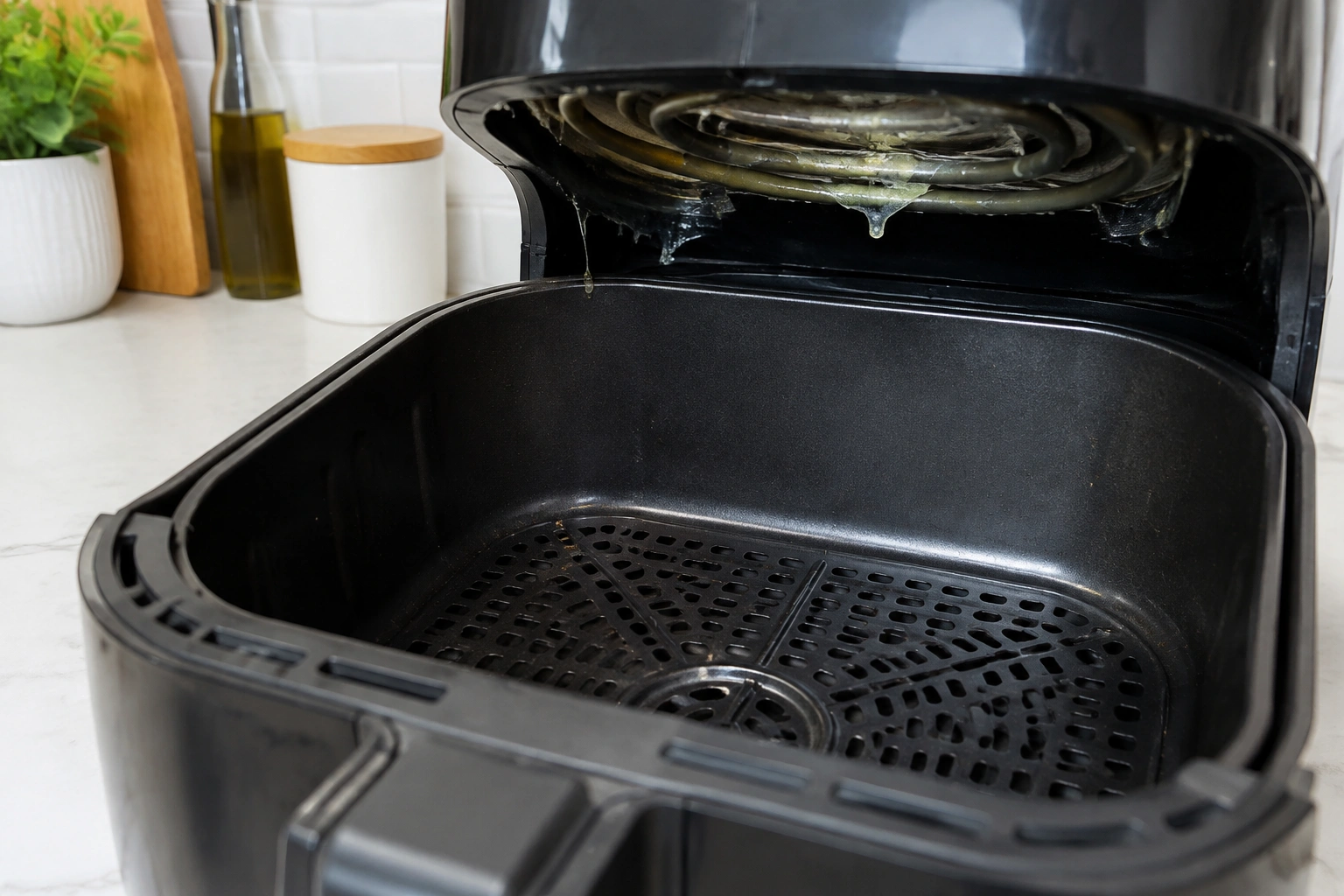
If your air fryer smells like melted plastic, has warped accessories, or left a sticky residue inside the basket, treat it as a safety issue first and a cleanup problem second. In many cases, the cause is simple: a non-heat-resistant item got too close to the heating element, or a packaging piece, liner, or accessory was not actually safe for air fryer temperatures. But if the smell is sharp, the body of the machine is smoking, or the cord and plug are unusually hot, stop using it right away.
A plastic-like odor can also come from normal break-in, leftover packaging, residue, or routine cooking buildup. That said, a true melting-plastic event needs a more careful response than a new-appliance smell. If you are trying to figure out whether your unit is safe, the key question is not just “what melted?” but “where did it melt, and what did it touch?”
Why an air fryer melts plastic
The short version is that plastic melts when it is exposed to heat it was never meant to handle.
That can happen in a few common ways:
- A plastic accessory was used by mistake. Some kitchen plastics are fine for storage or serving but not for high-heat cooking.
- A liner or insert sat too close to the heating element. Air fryers get hot from above, so anything that rises too high can soften, warp, or melt.
- Packaging was left inside. A stray clip, wrapper, label, or piece of protective film can melt quickly during preheating.
- A third-party accessory was not truly air fryer-safe. Some inserts are marketed for air fryers but are not rated for the temperatures they actually face.
- The appliance may be overheating or malfunctioning. If melting happens with multiple accessories or under normal use, the problem may be the unit rather than the item.
A useful example: a silicone liner that stays flat in the basket may be fine, while a plastic handle cover, insert frame, or disposable liner edge can soften if it lifts toward the heating zone. The material alone does not tell the whole story. Placement matters just as much as the label.
Is it safe to keep using the air fryer after plastic melts?
Use this decision rule:
- Stop using it immediately if plastic melted onto the heating element, fan area, cord, plug, or any electrical part.
- Pause and inspect it carefully if the melt is limited to the basket, tray, or a removable accessory.
- Do not keep using it if the unit still smells burnt after cleaning, shows warping, or has repeated the same problem.
The safest approach is to unplug the appliance and let it cool before you do anything else. If you see smoke from the appliance body rather than from food, or if the plug or cord feels unusually hot, that points to a more serious issue than a simple accessory problem.
If the melted material is only on a removable basket or tray and the heating area stayed clean, cleanup may be enough. But if residue reached the fan or heating element, the risk goes up because those parts are harder to inspect and clean thoroughly. In that situation, do not scrape the residue, spray cleaner into that area, or run the air fryer to try to burn it off. Contact the manufacturer for support, and if the affected parts are non-removable or the damage is significant, replacement may be the safest option.
For food-safety basics on handling hot equipment and preventing contamination, the USDA’s food safety guidance is a useful reference point, especially if melted plastic left residue near cooking surfaces.
Which air fryer parts and accessories should be heat-resistant?
Not every part inside an air fryer is made from the same material, and not every “kitchen-safe” item is air fryer-safe.
Here is a practical comparison:
| Material or part | Typical role | Usually safer in an air fryer? | Notes |
|---|---|---|---|
| Coated metal basket or tray | Main cooking surface | Yes | Designed for high heat, but the coating can still be damaged by scraping. |
| Silicone accessory | Liner, mold, trivet, handle grip | Often yes | Must still be rated for the temperatures your air fryer reaches. |
| Plastic accessory | Handles, clips, inserts, packaging pieces | Often no | Many plastics soften long before air fryer temperatures are reached. |
| OEM replacement part | Basket, tray, insert made by the manufacturer | Usually yes | Best fit and least guesswork if the original part was damaged. |
| Third-party accessory | Generic basket insert, rack, liner | Maybe | Check the exact temperature rating and fit, not just the product listing. |
The main distinction is heat-resistant versus heat-safe in practice. A material can be labeled “food-safe” and still not be suitable for the direct heat and airflow inside an air fryer. Silicone is generally more forgiving than plastic, but even silicone accessories should have a clear temperature rating and should not block airflow or touch the heating element.
In practical terms, many heat-resistant silicone accessories are commonly rated around 400°F to 450°F, while common heat-sensitive plastics can soften far below typical air fryer cooking temperatures. That is only a general guide, not a guarantee: always verify the accessory’s exact temperature rating and make sure the manufacturer approves its placement and clearance for your specific model.
If you are unsure about a replacement part, the manufacturer’s manual is the best place to confirm what belongs in that model.
How plastic ends up touching hot surfaces
Most melting problems come from contact, not from the air fryer simply being “too hot.”
The common trouble spots are:
Liners and inserts that sit too high
A liner that rides up the side of the basket can get close enough to the heating element to soften. This is especially common with lightweight inserts that shift when hot air starts moving around the basket.
Packaging left in the basket
This sounds obvious, but it happens more than people admit. A bit of foam, sticker backing, twist tie, or protective film can end up in the basket during setup and melt on the first run.
Handles, clips, and edge pieces
Some accessories have plastic handles or trim pieces that are farther from the food but still inside the hot chamber. Those parts can warp even if the main cooking surface survives.
Third-party racks or baskets
A rack that looks like it fits may still sit too close to the top heating zone. If it is not made for that exact model or temperature range, the fit can be the real problem.
Food residue that looks like melting
Sometimes the smell is not new plastic at all. Grease buildup, crumbs, or leftover coating can create a burnt odor that feels plastic-like. That is one reason a new smell should be checked carefully before assuming the worst.
How to tell whether it was user error or a defective air fryer
This is the part that matters when you decide whether to clean, replace a part, or contact the manufacturer.
More likely user error:
– A liner, insert, or packaging piece was visibly too close to the heating element.
– The problem happened once and matches a specific accessory or setup mistake.
– The melted item was not rated for air fryer temperatures.
More likely a defect or appliance issue:
– The same melting happens again with different accessories.
– The unit smells burnt even when used correctly.
– The basket, tray, or surrounding parts warp under normal use.
– The heating element area shows discoloration, residue, or damage without an obvious cause.
– The heating element appears positioned unusually low, leaving too little clearance above the basket.
– The basket or tray seems warped from manufacturing, so it sits unevenly or closer to the heat source than it should.
– The temperature control seems faulty, causing overheating or inconsistent heat that damages safe accessories.
A practical example: if a disposable liner curled upward and touched the top of the cavity, that points to placement. If a properly fitted accessory still warped during a normal cook at standard settings, the appliance or the accessory quality deserves a second look.
When the same problem repeats, do not keep “testing” the machine with another accessory. That only gives the problem more chances to spread.
What to do right away after plastic melts inside the air fryer
Here is the safest sequence:
- Turn the air fryer off.
- Unplug it.
- Open a window or improve ventilation.
- Let the unit cool completely.
- Remove the basket or tray only after it is cool enough to handle.
- Inspect the basket, tray, heating element area, and fan opening.
Do not scrape while the unit is hot. Hot plastic can smear, and the smell can get worse if residue is spread across the surface. Also avoid running the fryer again just to “burn off” a strong melting smell unless the manufacturer specifically recommends that for a brand-new unit. A new-appliance odor may sometimes be handled by cleaning and a short empty run, but a real melt event is different.
If the odor seems more like a sharp electrical smell than a normal break-in smell, treat that as a stop-use warning, not a minor nuisance.
How to remove melted plastic safely
Cleanup depends on where the residue landed.
If it is on the basket or tray
Let the part cool, then remove loose pieces by hand. Use a soft sponge or cloth with warm, soapy water. If the residue is stubborn, soften it with a little warmth from soaking the removable part in hot water, then wipe gently.

Avoid metal tools, razor blades, or aggressive scouring pads. Those can damage the nonstick coating and leave the basket harder to clean later.
If it is near the heating element
Be much more careful. Do not soak the main unit and do not spray cleaner into the fan or electrical area. The main unit should never be immersed in water or put in a dishwasher. That can damage the electronics and create a bigger problem than the original melt.
If residue is stuck on the heating element or inside the fan area, do not scrape it, spray cleaner into that area, or run the air fryer to try to burn it off. Contact the manufacturer or a service center instead. If the heating assembly or fan area is damaged and not safely serviceable, replacement may be the only practical option.
If the smell lingers after cleaning
A lingering burnt-plastic smell usually means some residue remains somewhere. Check seams, corners, and the top interior area. If you cannot locate it or the smell keeps returning, do not assume it is harmless.
For general cleaning and care guidance, a brand-new air fryer with a burnt-plastic smell may sometimes need a thorough clean, but that advice applies to normal break-in odors, not obvious melting damage.
When to replace a part, contact the manufacturer, or replace the whole air fryer
Use the damage location to guide the decision.
Replace the accessory if:
- The melted part was a removable liner, insert, or third-party accessory.
- The basket or tray itself is still intact.
- The air fryer no longer smells burnt after careful cleaning.
Contact the manufacturer if:
- The original basket or tray warped under normal use.
- The heating element area was affected.
- The smell or smoke came from the appliance body.
- You suspect the unit may be defective or unsafe.
Replace the whole air fryer if:
- The heating element, fan area, cord, or plug was damaged.
- The smell returns after cleaning.
- The same problem keeps happening with correct use.
- The nonstick coating is damaged enough that cleaning the part is no longer realistic.
- Plastic melted onto non-removable internal parts, or the damage is inside the sealed heating assembly and cannot be safely repaired.
If the unit is still under warranty, this is the point to check the manual and contact support before buying replacement parts on your own. A warranty claim is often more sensible than piecing together a fix for a unit that may have a deeper problem.
How to prevent plastic melting in the future
A few habits make a big difference:
- Check the temperature rating on every accessory. Do not assume “air fryer-safe” means safe at every setting.
- Keep anything plastic away from the top heating zone. That includes handles, clips, wrappers, and loose inserts.
- Prefer OEM parts when the basket or tray needs replacing. They are more likely to fit the cavity correctly.
- Use silicone carefully, not blindly. Silicone is usually a better choice than plastic, but it still needs the right rating and shape.
- Inspect the basket before preheating. A quick look catches packaging, labels, and small inserts before they become a problem.
- Avoid disposable liners that can lift or curl upward. If a liner shifts into the airflow path, it can reach the heating zone.
- Confirm accessory height clearance before cooking. Anything that sits too tall in the basket can touch the top heating area.
- Do not use generic plastic inserts unless the manufacturer explicitly approves them. “Fits most models” is not the same as safe for yours.
One practical rule I use in my own kitchen: if an accessory can shift upward or curl toward the top of the basket, I do not trust it until I have checked how it behaves during heating. Fit matters as much as the label.
When to consult a professional
Get outside help if the air fryer shows any of these signs:
- repeated burning or melting smells after cleaning
- smoke from the appliance body
- damage to the cord, plug, or control area
- melted residue inside the fan or heating assembly
- visible warping, cracking, or electrical issues
If the machine is under warranty, manufacturer support is usually the first call. If it is out of warranty and the damage involves electrical parts, replacement is often the safer and more practical option than repair.
Frequently asked questions
Can I still use the basket after plastic melted on it?
Maybe, if the residue is fully removed and the coating is still intact. If the nonstick surface is scratched, peeling, or warped, replace it.
Is a burnt-plastic smell always dangerous?
Not always. A new appliance can sometimes smell odd during break-in, and residue can create a plastic-like odor. But a sharp electrical smell, smoke, or hot cord is a stop-use warning.
Can silicone melt in an air fryer?
Silicone is more heat-resistant than many plastics, but it still needs the right temperature rating. If it is not rated for your air fryer’s heat, do not assume it is safe.
What if plastic melted onto the heating element?
Stop using the air fryer. That is not a simple basket-cleaning issue, and continued use could make the problem worse.
Should I run the air fryer empty to fix the smell?
Only if the manual or a trusted manufacturer guide recommends that for a new-unit odor. If actual plastic melted, clean first and inspect carefully before doing anything else.
How do I know if an accessory is air fryer-safe?
Check the exact temperature rating, the material, and whether it is made for your model. “Food-safe” alone is not enough.
If you want more background on how these machines move heat around the cavity, see our guide on how an air fryer cooks food. For a related safety issue, our article on why an air fryer smells like plastic covers the difference between normal break-in odor and a real warning sign.

