
Can an Air Fryer Overheat? Signs, Causes, and What to Do Next
An air fryer can overheat, but not every hot unit is malfunctioning. These appliances are built to run hot, and the outside can feel warm or even very hot during cooking. The real concern is when the heat seems abnormal: burning smells, smoke, repeated shutoffs, error codes, or a cord or plug that feels hot.
That difference matters. A basket-style air fryer that feels warm after a 20-minute cook is usually behaving normally. An air fryer that shuts off repeatedly, smells like melting plastic, or gets so hot that you hesitate to touch the casing is a different situation.
In this guide, I’ll walk through how air fryers regulate heat, how to tell normal operation from a genuine overheating problem, what usually causes it, and what to do if your unit starts acting strange.
Can an Air Fryer Overheat?
Yes, an air fryer can overheat if airflow is blocked, the appliance is pushed too hard, or a part is failing.
That said, “overheating” does not just mean “hot.” Air fryers are designed to cook with intense heat and fast air circulation. A unit running at a high temperature is expected. Overheating means the appliance is running hotter than it should, losing temperature control, or showing warning signs like smoke, burning odors, or automatic shutoff.
A useful way to think about it:
- Normal hot operation: the basket, drawer, and outer shell get warm; the fan runs; food cooks as expected.
- Possible overheating: the unit gets unusually hot, smells burnt, shuts off unexpectedly, or leaves you unsure whether it is safe to keep using.
If your air fryer is simply warm on the outside after cooking, that alone is not a problem. If the heat feels excessive or the appliance behaves differently than usual, it deserves attention.
Normal heat versus overheating
A good comparison is a toaster oven versus a toaster that starts smoking. Both get hot, but one is operating normally while the other is showing a warning sign.
With an air fryer, normal heat usually comes with steady operation. Overheating usually comes with one or more of these extras:
- a burning smell
- smoke from the vents or basket area
- a sudden shutoff
- an error message
- a cord, plug, or outlet that feels hot
If you notice only warmth, that is often just part of the cooking process. If you notice heat plus one of the warning signs above, treat it as a safety issue.
How Air Fryers Regulate Heat
Most air fryers rely on four main parts to manage temperature: the heating element, thermostat, fan, and safety shutoff features.
Heating element and fan
The heating element produces the heat, and the fan pushes that hot air around the food. That airflow is what gives air fryers their fast, crisp results. If the fan is weak, dirty, or blocked, heat can build up in the wrong places instead of moving through the chamber properly.
Thermostat and temperature control
The thermostat helps the appliance stay near the set temperature. In plain terms, it tells the air fryer when to heat more and when to back off. If that control system is working properly, the unit should cycle heat in a controlled way rather than just getting hotter and hotter.
Auto shut-off and overheat protection
Many air fryers include auto shut-off or overheat protection. That is a safety feature, not necessarily a sign of failure. If the appliance senses a problem, it may turn off to protect itself.
A shutdown after a long cook can be normal if the unit is protecting itself from excess heat. A shutdown that happens repeatedly, especially with smoke or a hot cord, is more concerning.
If you want a broader sense of how much food an air fryer can handle without crowding the basket, this guide on how much food fits in an air fryer is useful because overload is one of the most common causes of heat buildup.
Signs an Air Fryer Is Overheating

The warning signs are usually easier to spot than the cause.
1. Unusual heat on the outside
Some exterior warmth is normal. What is not normal is a casing that feels excessively hot compared with past use or hot enough that you instinctively pull your hand away.
2. Burning smell or hot plastic odor
A brief cooking smell is one thing. A smell like melting plastic, scorched wiring, or burned insulation is a warning sign. If that odor appears, stop the appliance and let it cool.
3. Smoke
A little smoke from grease or food residue can happen, but smoke that seems to come from the machine itself, the vents, or the back housing is more serious.
4. Repeated shutoffs or error codes
If the air fryer turns off once after a long session, it may simply be protecting itself. If it keeps shutting down, or the control panel shows an error code, the appliance may be struggling to control heat.
5. Hot cord, plug, or outlet
A warm appliance is one thing. A hot power cord or outlet is not. If the plug, outlet, or cord feels unusually hot, stop using the unit and inspect for damage before plugging it in again.
6. Uneven cooking plus extra heat
When food cooks unevenly and the appliance seems to run longer than usual, the unit may be working harder than it should. That can happen when the basket is overloaded or airflow is restricted.
Common Causes of Overheating
Most overheating problems come down to airflow, cleaning, placement, or worn parts.
Blocked vents or poor placement
Air fryers need space around them. If the unit is pressed against a wall, tucked under cabinets, or placed near curtains or paper towels, heat can build up around the housing instead of escaping.
A simple test: if moving the air fryer to a more open spot improves the problem, poor ventilation was probably part of it.
Overloading the basket
Packing the basket too full is one of the easiest ways to create heat problems. Food blocks airflow, so the appliance may run longer and hotter trying to finish the job.
This is especially common with frozen snacks, battered foods, or large batches. If the basket is so crowded that air cannot circulate around the pieces, the air fryer has to work harder.
Grease buildup and crumbs
Grease and crumbs near the basket, tray, or heating area can smoke and create a burning smell. Over time, buildup can also affect airflow and make the appliance run less efficiently.
A clean basket is not just about flavor. It also helps the machine breathe properly.
Incorrect use of foil or liners
Foil and liners can be helpful when used correctly, but they can also block airflow if they cover too much of the basket or shift into the heating path. If the liner traps hot air or touches the element, it can contribute to overheating.
If you use silicone or other basket accessories, make sure they are intended for air fryer use and do not reduce airflow. This article on silicone air fryer baskets and safety is worth reading if you use accessories often.
Long continuous cooking sessions
Air fryers are designed for short, efficient cooking. Long continuous use can make internal components work harder and struggle to dissipate heat. That does not mean you can never cook in batches, but it does mean back-to-back runs without breaks may push the appliance more than a single normal cycle.
Faulty thermostat, fan, or heating element
If the appliance is clean, well placed, and not overloaded, but it still overheats, the issue may be mechanical or electrical. A weak fan, failing thermostat, or damaged heating element can prevent proper temperature control.
What to Do Right Away If It Overheats
If your air fryer seems to be overheating, treat it like a safety problem first and a cooking problem second.
1. Stop the cycle
Cancel the cook cycle if the controls still work.
2. Unplug the appliance
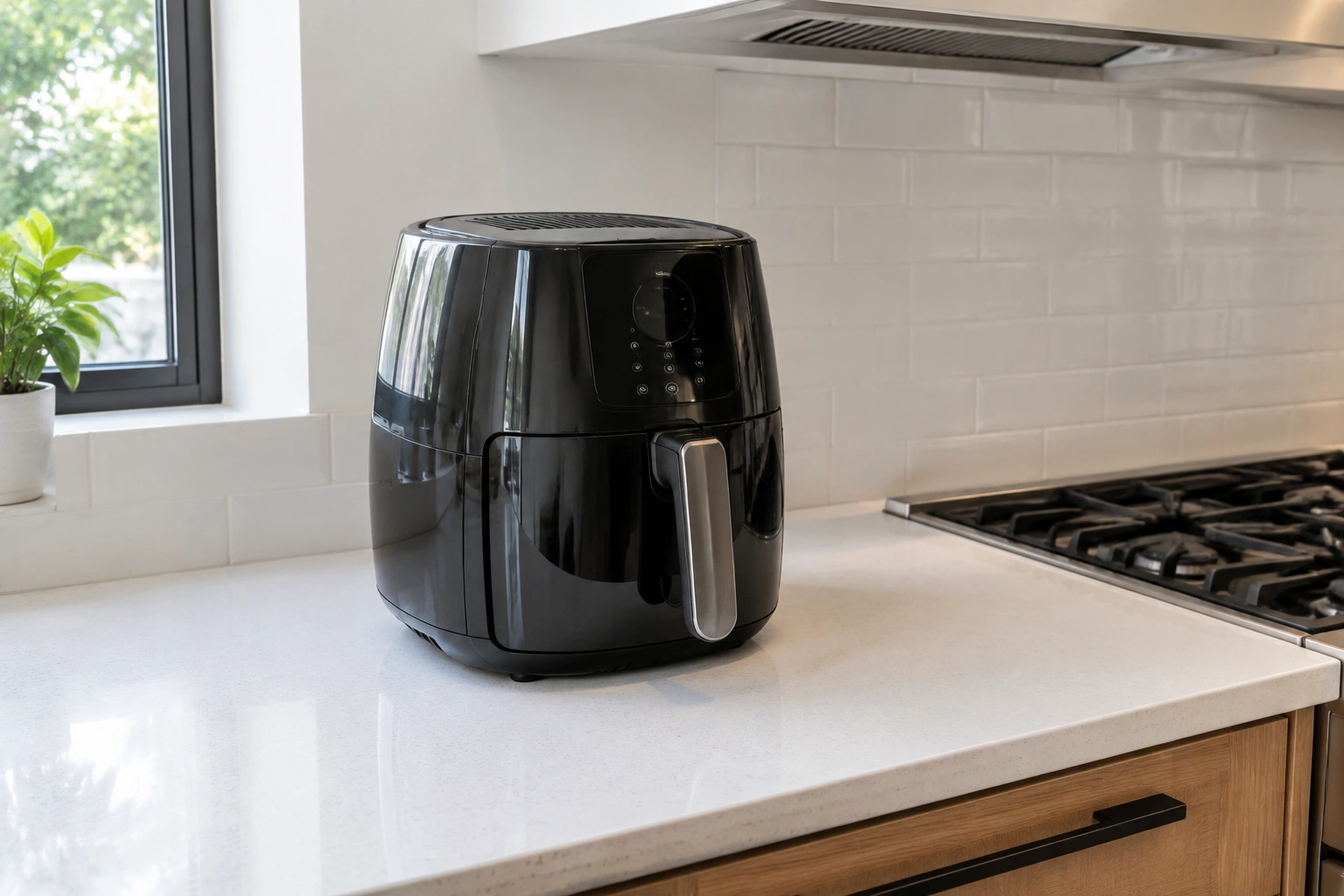
If you see smoke, smell burning plastic, or think the unit is heating abnormally, unplug it once it is safe to do so. Do not keep testing it while it is acting up.
3. Let it cool fully
Do not open the housing or inspect internal parts while it is still hot. Let the unit cool completely before touching the basket, cord, plug, or exterior.
4. Check for obvious causes
Once cool, look for:
- food blocking vents
- grease buildup
- foil or liner placement problems
- the unit being too close to a wall or cabinet
- a damaged cord or plug
5. Do not reuse it immediately if the smell or shutdown was serious
If the air fryer only seemed a little hotter than usual and then cooled down normally, you may be able to troubleshoot placement or cleaning. If it smoked, smelled like burning plastic, or tripped power repeatedly, do not keep using it until you understand why.
A quick reminder from the U.S. food safety guidance: cooked foods should still be handled safely after any interruption in cooking. If you need official food safety basics while troubleshooting dinner, the USDA’s food safety and cooking guidance is a reliable place to check.
Is It Dangerous If an Air Fryer Gets Too Hot?
It can be.
Normal cooking heat is expected. The danger starts when the appliance shows signs of losing control: smoke, burning odors, hot wiring, repeated shutoffs, or visible damage.
A few practical rules help here:
- Warm casing only: usually normal.
- Very hot casing plus burning smell: stop using it.
- Smoke or melting odor: unplug and do not restart.
- Hot cord, plug, or outlet: stop using the appliance and inspect for damage.
- Repeated breaker trips or shutdowns: possible electrical fault.
Air fryers are designed to run at high heat, so they should be treated with the same general caution as other cooking appliances. The problem is not heat by itself; it is heat without control.
How to Prevent an Air Fryer From Overheating
Most prevention comes down to giving the appliance room to breathe and keeping it clean.
Give it space
Place the air fryer on a stable, heat-safe surface with room around the vents. Do not crowd it against a wall or under low cabinets if the exhaust is directed upward or backward.
Clean the basket and heating area regularly
Crumbs and grease are easy to ignore until they start smoking. Wipe the basket, tray, and accessible interior after use, and clean more thoroughly when you notice buildup.
Avoid overfilling
If you are cooking a large batch, split it into smaller rounds. You may spend a little more time cooking, but the food usually cooks more evenly and the machine runs more comfortably.
Use accessories carefully
Liners, foil, and silicone inserts should not block airflow. If an accessory covers too much of the basket, it can trap heat and reduce performance.
Watch for warning patterns
If your air fryer only overheats when it runs for a long time, that may point to a usage issue. If it overheats even during normal, moderate cooking, that points more toward a fault.
The biggest trade-off here is convenience versus airflow. A packed basket is faster in the moment, but it raises the risk of uneven cooking and extra heat buildup.
When to Stop Using It and Get It Checked
Some problems are worth a cleanup. Others are worth a service call or replacement.
Cleaning and repositioning may be enough if:
- the unit got hot once after a long cook
- there was no smoke or burning plastic smell
- the appliance cools normally afterward
- moving it to a better-ventilated area solves the issue
Contact the manufacturer or a repair service if:
- the air fryer repeatedly overheats
- it shuts off again and again
- the control panel shows persistent error codes
- the fan sounds weak, strange, or inconsistent
- the cord, plug, or outlet shows heat damage
- you smell burning plastic or electrical odor
Replace the unit if:
- there is visible melting, cracking, or scorch damage
- the cord or plug is damaged
- the appliance trips power repeatedly after cleaning and repositioning
- the manufacturer says it is unsafe to repair
If you are unsure, the user manual should be your first stop. Manufacturer support can tell you whether the problem is a known fault, a part replacement issue, or a reason to retire the appliance.
Quick Comparison: Normal Heat, Auto Shutoff, or Overheating?
| Situation | What you might notice | What it usually means | Next step |
|---|---|---|---|
| Normal hot operation | Warm casing, fan noise, food cooks normally | Expected cooking behavior | Keep using it normally |
| Auto shutoff after long use | Unit turns off once, then cools down | Safety feature or temporary heat limit | Let it cool, then try again with better airflow |
| True overheating | Smoke, burning smell, repeated shutoffs, hot cord, error codes | Possible blockage or fault | Stop using it and inspect carefully |
When to Consult a Professional
If your air fryer shows repeated overheating after you have cleaned it, given it more space, and reduced the basket load, it is time to bring in the manufacturer or a qualified repair service. The same is true if the cord, plug, or outlet looks damaged, or if the unit smells electrical rather than just “hot.”
I would not keep experimenting with a unit that smokes, trips breakers, or melts accessories. At that point, the cost of replacing it is often lower than the risk of continuing to use a questionable appliance.
FAQ
Can an air fryer overheat during normal use?
Yes, especially during long cooking sessions or if airflow is restricted. But normal heat alone is not the same as a problem. Overheating usually comes with warning signs like smoke, burning smells, or shutdowns.
Why does my air fryer smell hot or like burning plastic?
That smell can come from grease buildup, food residue, or something more serious like overheating wiring or a failing part. If the smell is strong or keeps coming back, stop using the appliance and inspect it after it cools.
Will an air fryer turn off automatically if it overheats?
Many models will, yes. Auto shutoff and overheat protection are common safety features. A one-time shutoff can be normal, but repeated shutdowns suggest something is wrong.
Is it normal for the outside of an air fryer to get hot?
Yes. The exterior can feel warm to very hot during cooking. What matters is whether the heat seems excessive, whether the cord or plug is hot, and whether there are other warning signs.
Can foil or liners cause overheating?
They can if they block airflow or touch the heating area. If you use them, keep them limited and make sure they do not cover vents or interfere with circulation.
When should I replace my air fryer instead of repairing it?
If there is melting, damaged wiring, repeated electrical problems, or the manufacturer says the unit is unsafe, replacement is usually the better call. For smaller issues like grease buildup or poor placement, cleaning and repositioning may solve it.
Does a hot air fryer always mean danger?
No. Air fryers are supposed to get hot. The danger is abnormal heat plus warning signs like smoke, a burning odor, repeated shutdowns, or a hot cord.
What is the safest first move if I think it is overheating?
Stop the cycle, unplug it if it is safe, and let it cool completely before checking for blocked vents, grease buildup, or damage.

