
How to Bring Butter to Room Temperature Safely for Better Baking
Softened butter is one of those small details that changes how a recipe behaves. When butter is at the right temperature, it creams smoothly with sugar, blends evenly into batter, and gives cookies, cakes, and frosting the texture the recipe is aiming for. When it is too cold, it stays lumpy. When it is too warm, it can turn greasy and throw off the structure.
If you have ever stood in the kitchen wondering whether butter is soft enough yet, this guide will give you a clear, safe way to handle it. I’ll walk through what properly softened butter looks like, how long it usually takes, and which quick methods are worth using when you forgot to plan ahead.
What Room-Temperature Butter Should Look and Feel Like
“Room temperature” butter does not mean warm, shiny, or half-melted. For baking, the ideal softness depends on the recipe.
- For creaming butter and sugar: the butter should be soft enough to press easily, but still hold its shape. When you press it, your finger should leave a clear indent without the butter looking greasy or collapsing.
- For frosting: the butter should be soft and spreadable, with no hard center. When cut, it should look even all the way through, not cracked or cold in the middle.
- For pastry: the butter is usually meant to stay cooler and firmer than baking butter. It should still be distinct pieces in the dough, not fully smooth or oily.
For cookies and cakes, this texture matters because softened butter traps air when you beat it with sugar. That is one reason recipes often call for softened butter rather than melted butter. Melted butter behaves differently and usually produces a denser result.
For frosting, the butter should be soft enough to whip without resistance, but not so soft that it turns loose or greasy. For pastry, you usually want butter cooler than you would for cake batter, because the butter needs to stay in distinct pieces.
How Long Butter Takes to Soften on the Counter
In a normal kitchen, a stick of butter usually takes about 30 to 60 minutes to soften at room temperature. If the butter is already sliced, cubed, or grated, it can soften faster. A whole block takes longer than thin slices or small pieces.
There is no single exact time that works in every kitchen. A cold kitchen, a warm kitchen, a whole stick, and a cut-up stick all behave differently.
Here is a practical comparison:
| Method | Typical softening speed | Best for | Main risk |
|---|---|---|---|
| Whole stick on the counter | Slowest | Planning ahead | Outer layer softens before center |
| Cut into small pieces | Faster | Last-minute baking | Can get too soft in a warm kitchen |
| Grated or thinly sliced butter | Fastest on the counter | Very quick softening | Easy to soften unevenly |
| Microwave in short bursts | Fastest overall | Emergency softening | Easy to overheat or melt |
As a rough planning guide, a whole stick left on the counter will soften more slowly than butter cut into cubes, thin slices, or grated pieces. In a cool kitchen, that difference becomes even more noticeable. If your kitchen is warm, the butter may soften quickly enough that you need to watch it closely so it does not turn greasy.
A useful rule: if you are baking something that depends on creaming, check the butter early and give yourself extra time. It is easier to wait for butter to soften a little more than to rescue butter that has gone too far.
The Safest Natural Way to Bring Butter to Room Temperature
The safest and most predictable method is still the simplest one: leave the butter out on a clean plate or in its wrapper until it softens evenly.
For best results:
- Unwrap the butter.
- Cut it into a few pieces if you need it sooner.
- Leave it on a clean surface away from direct sun, ovens, or stovetops.
- Check it periodically instead of assuming it is ready.
This method gives you the most control over texture because the butter softens gradually. That matters in baking, especially for recipes that depend on creaming butter and sugar together.
A note on food safety: butter can usually sit out for several hours at typical room temperature while it softens, and many bakers leave it out long enough to become workable for a recipe. Leaving butter out overnight is generally acceptable in a normal, cool kitchen if it is covered and not exposed to heat. In a very warm kitchen, though, butter can soften too much or become greasy before morning, so it is better to refrigerate it and soften it with a faster method instead.
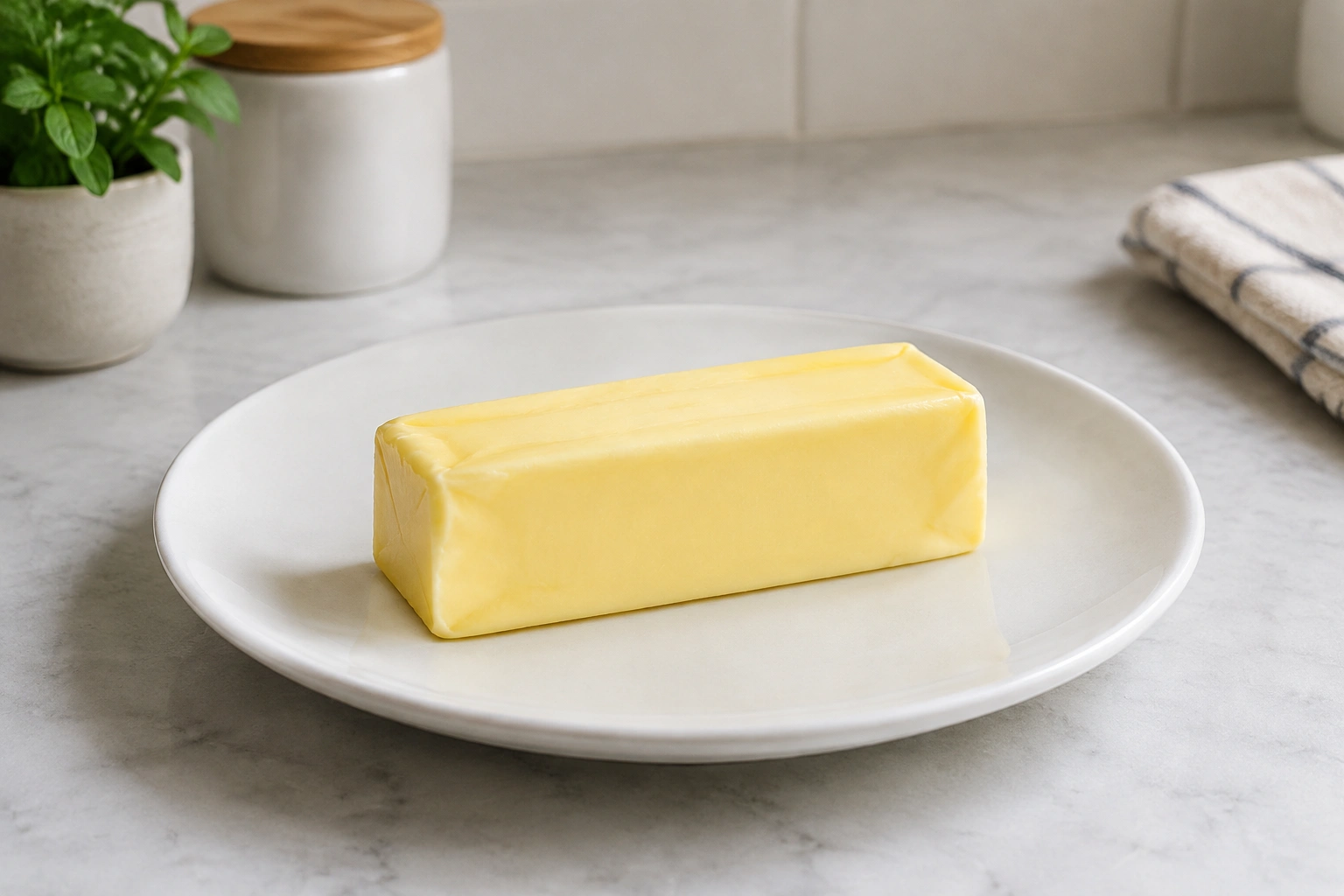
Do not leave butter out where it gets warm from sunlight, a hot stove, or a running oven. If it smells off, looks oily, or seems questionable, discard it.
For general food-safety guidance on leaving perishables out, the USDA’s food safety basics are a useful reference point.
How to Soften Butter Faster Without Melting It
When time is tight, the goal is not just speed. It is controlled softening.
Cut the butter into smaller pieces
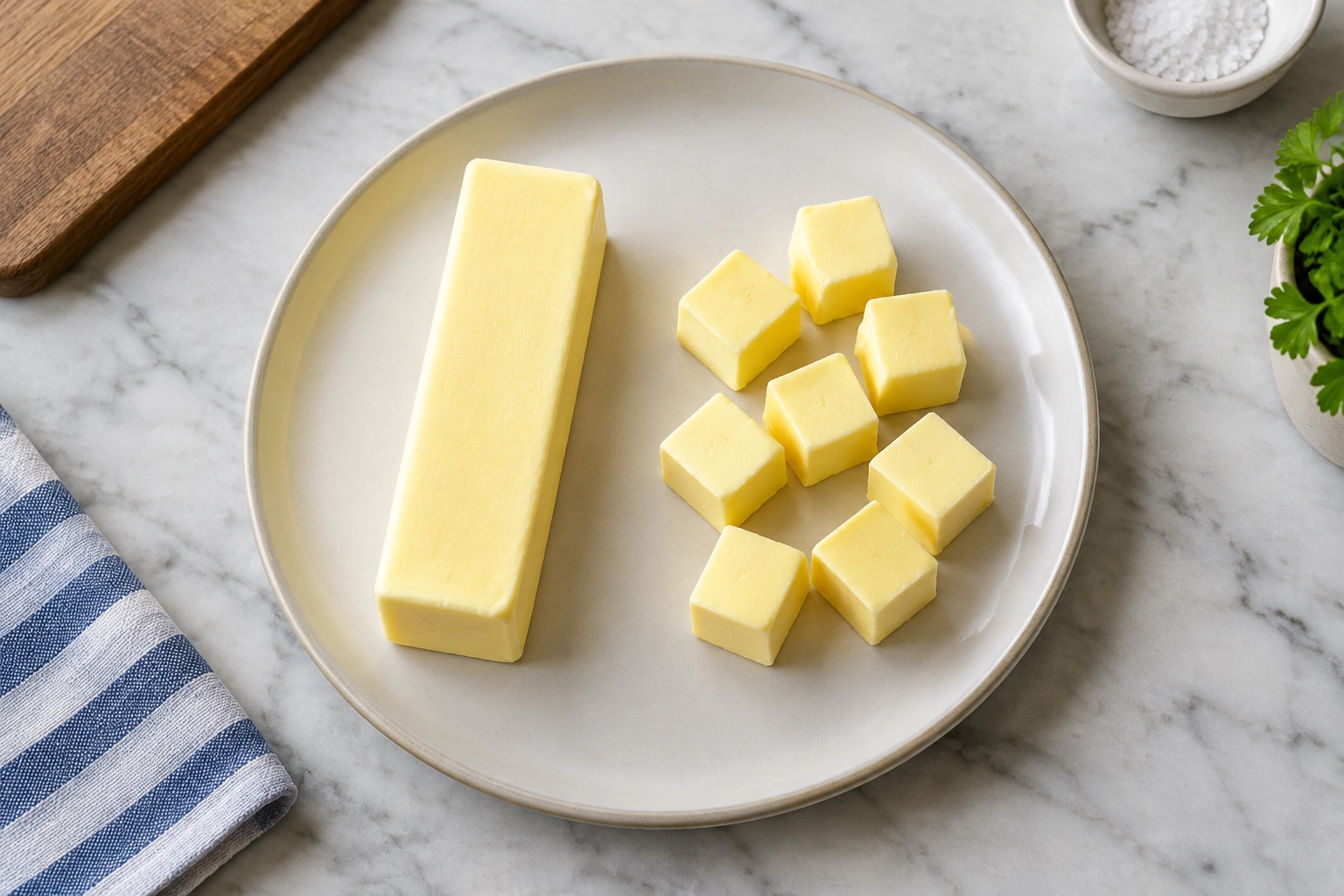
This is the easiest way to speed things up without adding heat. A whole stick has a cold center that takes longer to soften. Smaller pieces expose more surface area, so the butter warms more evenly.
This works especially well if you need butter for:
- cookie dough
- cake batter
- buttercream frosting
If you are short on time, cut the butter into tablespoon-size pieces, thin slabs, or small cubes and spread them out slightly on a plate. Grating the butter can also help it soften faster and more evenly.
Use the microwave carefully
The microwave can work, but it is easy to overshoot. Butter can go from firm to partially melted in a very short time, especially if your microwave runs hot.
Use very short bursts at low power, if possible: about 5 seconds at a time, then let the butter rest for 10 to 15 seconds before checking it. Repeat only as needed. You want the butter to soften, not liquefy. If only the edges start to melt while the center is still cold, the texture is no longer even, which can make baking less predictable.
A microwave is best when you need butter quickly and you are willing to monitor it closely. If you are distracted or multitasking, the countertop method is safer.
A hot-glass method can help, but watch it closely
Some bakers use a warmed glass placed over a stick of butter to trap residual heat and speed softening. It can work, but it is not a set-it-and-forget-it method. The butter can soften unevenly if the glass is too hot or left in place too long.
If you try this kind of shortcut, keep the butter covered only briefly and check it often. The goal is softened butter, not butter that starts to collapse at the edges.
Countertop vs. Microwave: Which Method to Use
If you are deciding between the two main options, this comparison usually settles it.
Choose the countertop when:
- you have at least some time
- the kitchen is not especially cold
- you want the most even texture
- the recipe is sensitive to butter consistency
Choose the microwave when:
- you are in a hurry
- the butter is still very cold
- you are able to watch it closely
- the recipe can tolerate a slight texture variation
The countertop gives you better control. The microwave gives you speed. That is the trade-off.
For most baking projects, I would rather see butter soften a little too slowly than see it overheat in the microwave. Once butter starts melting, you lose the structure that helps it cream properly.
How Recipe Type Changes the Butter You Need
Not every recipe wants the same butter texture.
For cookies and cakes
Softened butter is usually the target because it creams with sugar. That process helps build a lighter texture and better distribution of ingredients.
For frosting
Butter should be soft enough to whip smoothly. If it is too cold, the frosting can look grainy or lumpy. If it is too warm, it may become loose and hard to pipe.
For pastry
Butter is often meant to stay cooler than room temperature. In pie dough, puff pastry, and similar doughs, visible butter pieces can be a feature, not a problem. Those pieces help create layers or flaky texture. If you soften the butter all the way, the dough may lose that structure.
That is why the phrase “room temperature butter” is not universal across all baking. It is right for many cakes, cookies, and frostings, but not always for pastry.
How to Tell Butter Is Ready for Baking
A simple readiness test is better than guessing.
Press the butter with a fingertip:
- If it resists strongly, it is still too cold.
- If your finger sinks in easily and leaves a clear indentation while the butter still holds its shape, it is ready for creaming.
- If it is soft enough to spread smoothly for frosting, it should look even when cut and should not have a hard center.
- If it looks shiny, greasy, or begins to slump, it is too soft.
Another good sign is how it behaves when you cut or mix it. Properly softened butter should blend smoothly without leaving hard chunks, but it should not smear like oil.
If you are creaming butter and sugar, the butter should be soft enough that the mixer can work it without struggling. If it is still cool in the center, the mixture may look uneven for longer than expected.
What to Do If Butter Gets Too Soft or Starts to Melt
If the butter has gone too far, do not throw it out right away.
Move it to the refrigerator for a short chill, then check it again. The goal is to bring back a workable texture, not to freeze it solid. A brief chill can firm up butter that has become too loose for cookies or frosting.
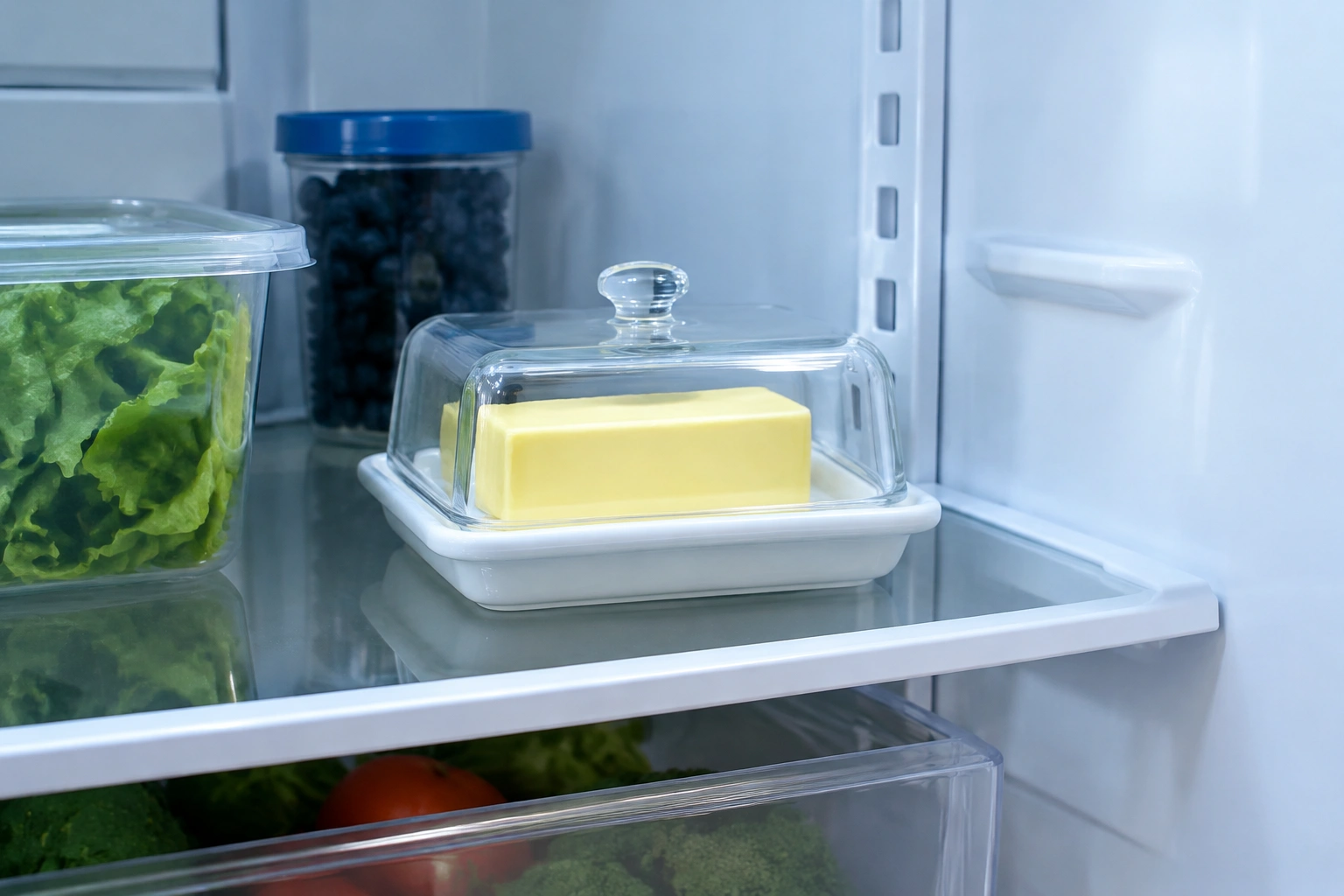
If you are making frosting and it has turned slack, chilling the bowl for a few minutes can help restore structure. If you are making dough and the butter has softened too much, refrigerate the dough before continuing.
The key is to correct the texture before mixing goes too far. Once butter is fully melted into a batter, you cannot recreate the same creamed-butter structure.
Does Salted Butter Soften Differently Than Unsalted Butter?
In practical baking terms, salted and unsalted butter soften at about the same rate.
The bigger differences are usually:
– the brand
– how cold the butter was stored
– whether it is in a full stick or cut into pieces
If all you have is salted butter, the softening process is basically the same. Just be sure to account for the salt in the recipe if needed.
Common Mistakes That Ruin Butter Texture
A few common errors cause most butter problems in baking.
Leaving it out too long in a warm kitchen
Butter can go from firm to greasy faster than expected. Once it gets too soft, it may not cream properly.
Microwaving without checking
Even a few extra seconds can create hot spots or partial melting. Always stop and inspect the butter.
Using melted butter when the recipe wants softened butter
Melted butter changes the final texture of cookies, cakes, and frostings. It is not a harmless shortcut.
Softening the butter unevenly
A cold center and soft edges can make mixing inconsistent. Cutting butter into smaller pieces helps avoid this.
Ignoring the recipe type
Pastry, frosting, and cake batter do not all want the same butter texture. That distinction matters more than many beginner bakers realize.
Quick Takeaway
If you want the safest, most reliable method, let butter soften gradually at room temperature and check it often. If you need it faster, cut it into smaller pieces before it sits out, or grate it for even quicker softening. Use the microwave only when you can monitor it closely, and stop before the butter begins to melt.
The best butter for baking is not the warmest butter. It is the butter with the right texture for the recipe.
FAQ
How long does butter usually take to soften at room temperature?
A stick of butter usually takes about 30 to 60 minutes in a normal kitchen, but the exact time depends on room temperature and whether the butter is whole, sliced, cubed, or grated.
Can butter sit out overnight?
Yes, in a normal cool kitchen, butter can usually sit out overnight if it is covered and not near heat. In a very warm kitchen, it is better to refrigerate it and soften it another way.
How do I know butter is soft enough for creaming?
It should press easily, leave a clear indent, and still hold its shape. It should not look oily or slump.
What texture should butter have for frosting?
It should be soft and spreadable, with no hard center. When cut, it should look even and smooth, not cracked or greasy.
Can I soften butter in the microwave?
Yes, but use very short bursts at low power, then rest the butter between bursts so it softens without melting.
Is it faster to soften butter if I slice or cube it?
Yes. Smaller pieces soften faster than a whole stick, and grating it can speed things up even more.
Should pastry butter be fully softened?
Usually not. Many pastry recipes work best with cooler butter that stays in visible pieces.

