
How to Keep Fruit Fresh Longer: Practical Storage Tips for Less Waste

If you want fruit to last longer, the biggest wins are simple: keep it dry, store it at the right temperature, and separate fruit that speeds up ripening from fruit that spoils easily. That means a few smart habits at unpacking time can save you money all week.
For most households, the best system looks like this:
- Leave fruit on the counter only when it still needs to ripen.
- Move ripe fruit to the fridge when cold storage helps slow spoilage.
- Keep berries, grapes, and cut fruit dry and chilled.
- Store apples and bananas away from delicate fruit when possible.
- Use a paper towel or breathable liner to catch extra moisture.
Those steps sound basic, but they solve the main reasons fruit goes bad: moisture, bruising, and ethylene gas.
What You Need Before You Start
You do not need special equipment, but a few basic tools make fruit storage more effective:
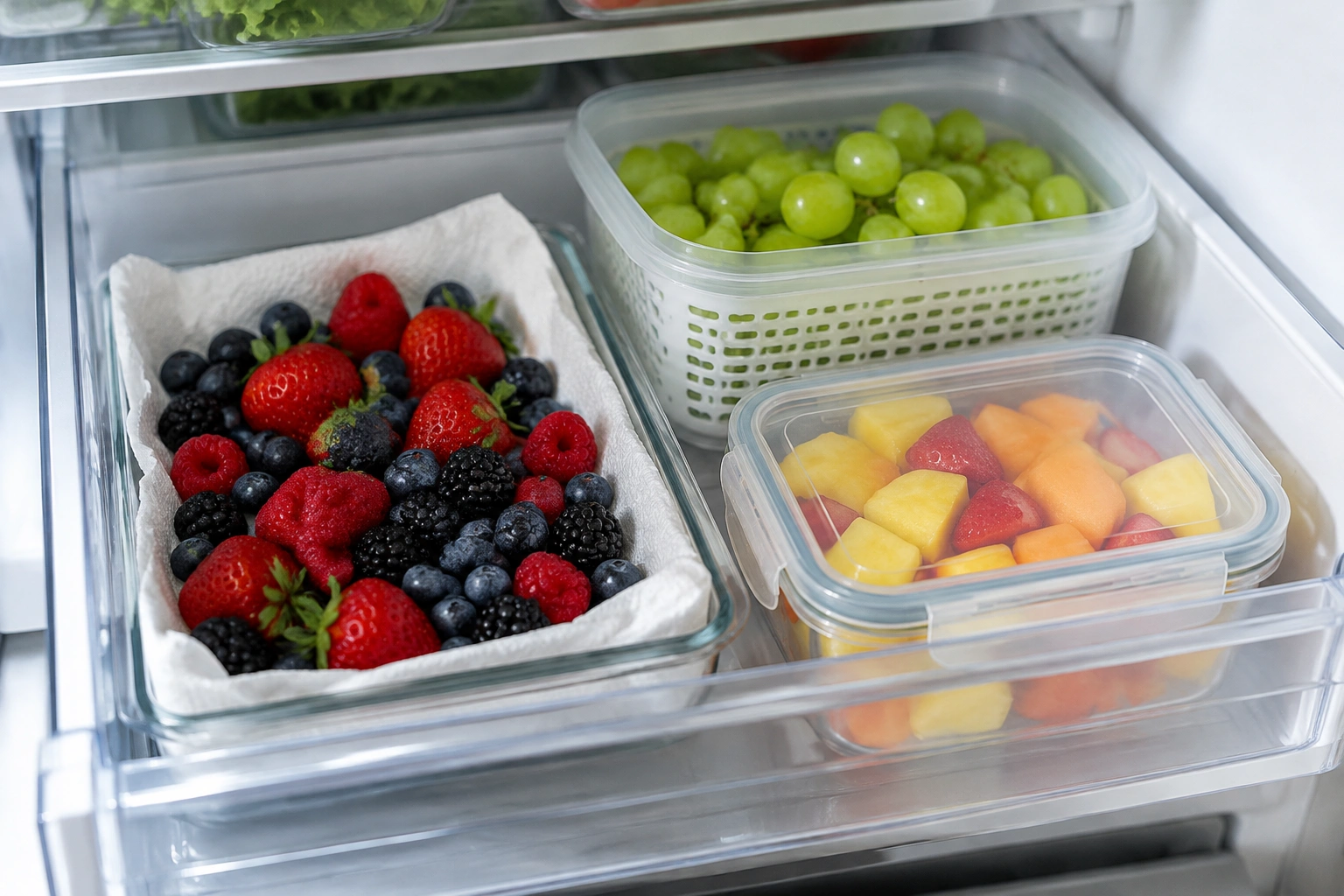
- Produce drawer: Good for berries, grapes, citrus, and other fruit that benefits from cold storage with a bit of humidity.
- Paper towels: Useful for lining berry containers, absorbing condensation, and keeping cut fruit drier.
- Breathable containers or vented produce bags: Best for grapes, citrus, and some whole fruit that should not sit in trapped moisture.
- Airtight containers: Best for cut fruit, fruit salad, and meal-prep portions that need to stay sealed.
- Shallow containers or lined bowls: Helpful for berries and stone fruit so fruit does not get crushed.
- A marker or masking tape: Handy for labeling cut fruit or meal-prep containers with the date.
If you already have a clean fridge drawer and a few reusable containers, you have enough to do this well.
Why Fruit Spoils Faster: Moisture, Bruising, and Ethylene Gas
Fruit usually fails for one of three reasons.
Moisture feeds mold and softening
Wet fruit is more likely to mold, especially soft fruit like berries. Water trapped in a container creates a damp environment that speeds decay. That is why a wet carton of berries often turns bad before the fruit itself is truly old.
Bruising opens the door to faster spoilage
A bruise is damaged tissue. Even if the fruit still looks mostly fine, that soft spot breaks down faster and can spread spoilage to nearby pieces. This is one reason crowded bowls of fruit age poorly.
Ethylene gas speeds ripening
Some fruits release ethylene gas as they ripen. Others are sensitive to it. When you store them together, the sensitive fruit may ripen or soften faster than you planned. Apples and bananas are common examples of fruits that can affect nearby produce.
If you only remember one principle, make it this: dry fruit lasts longer than damp fruit, and separated fruit usually lasts better than crowded fruit.
Step-by-Step: How to Keep Fruit Fresh Longer at Home
1) Sort fruit as soon as you bring it home
Set aside anything bruised, overripe, or already leaking juice. Use those pieces first. One soft berry can shorten the life of the whole container if it sits there unnoticed.
2) Decide what needs room-temperature ripening
Fruit that is still hard or under-ripe often does best on the counter until it develops flavor and aroma. Bananas, avocados, and some stone fruit are common examples. Once they reach the ripeness you want, move them to the fridge if you want to slow further softening.
3) Keep fruit dry before storing it
Do not pack away wet fruit unless the container is designed for it and the moisture is controlled. If fruit looks damp from rinsing or condensation, let it air-dry first on a clean towel.
4) Separate fruit by ripeness and type
Keep ripening fruit away from delicate fruit when you can. A bowl of apples next to berries is not ideal if you are trying to stretch the berries’ life. Likewise, overripe bananas should not sit beside fruit you want to keep firm.
5) Choose the right container
Use breathable storage for whole fruit that benefits from airflow. Use airtight storage for cut fruit so it does not dry out or pick up fridge odors. For berries, a shallow lined container is often a practical middle ground.
6) Refrigerate ripe fruit that benefits from cold
Once fruit is ripe, the fridge is often the best place to slow further breakdown. The produce drawer is especially useful when you want a bit of humidity without leaving fruit exposed on a shelf.
7) Rotate by ripeness
Put the ripest fruit in front. That simple habit reduces waste because you are more likely to use the fruit that needs attention first.
Should You Wash Fruit Before Storing It?
Usually, no. For most fruit, washing right before eating is the safer default because extra moisture can shorten shelf life.
Use this simple rule:
- Do not wash berries, grapes, cherries, or other delicate fruit before storage unless you plan to dry them very thoroughly and eat them soon.
- Wash apples, citrus, and sturdier fruit only if you are preparing them for immediate use or meal prep.
- Wash cut fruit only after cutting, then refrigerate it promptly in a sealed container.
If fruit is visibly dirty, wipe it gently or rinse it only when you are ready to dry and use it. The main goal is to avoid storing damp fruit.
Which Fruits Belong in the Fridge and Which Should Stay on the Counter
The easiest way to decide is to ask two questions: Is it ripe yet? and Will cold storage help slow spoilage once it is ripe?
| Fruit type | Best first step | Fridge or counter? | Best storage approach |
|---|---|---|---|
| Berries | Check for moldy or crushed berries | Fridge after purchase; counter only briefly while sorting | Shallow container or clamshell lined with a paper towel; keep dry and unwashed until use |
| Grapes | Remove damaged grapes | Fridge | Breathable or loosely covered container, or the original clamshell if it stays dry |
| Apples | Keep away from delicate fruit | Fridge for longer keeping, counter for short use | Separate from berries and other sensitive fruit; store in a crisper drawer or lined bowl |
| Citrus | Keep whole and dry | Counter for short term, fridge for longer keeping | Loose storage, mesh bag, or crisper drawer |
| Bananas | Let ripen on counter | Counter until ripe, then fridge if desired | Separate from delicate fruit; use a counter bowl or hang them if possible |
| Stone fruit | Ripen on counter | Counter until ripe, then fridge if you are not eating them right away | Single layer in a shallow bowl or lined tray |
| Melons | Whole melon can stay out briefly; cut melon needs chill | Counter for whole, fridge for cut | Refrigerate cut fruit in a sealed prep box or airtight container |
| Avocados | Ripen on counter | Counter until ripe, then fridge | Move to fridge once softened to your liking; keep whole fruit uncut |
| Cherries | Sort and remove damaged fruit | Fridge | Shallow, lined container or original clamshell if dry |
| Pineapple | Keep whole until ready to cut | Counter briefly, fridge once cut | Whole on counter for short term; cut pieces in sealed container |
This table gives the practical rule: counter for ripening, fridge for slowing down once ripe, and cold storage for anything cut.
How to Store Specific Fruits for Better Shelf Life
Berries
Berries are fragile and moisture-sensitive. Keep them dry, and do not wash them until you are ready to eat them. If you buy berries in a clamshell, inspect the bottom layer first; hidden mold often starts there. If the container is damp, line it with a paper towel and transfer the berries to a shallow container so they are not crushed.
A good berry routine is simple: sort, dry, chill, and use the weakest berries first. In the fridge, berries are usually best used within a few days, so plan to eat them early in the week.
Grapes
Grapes last better when they stay dry and chilled. Leave them unwashed until serving time if you can. Store them loosely covered, in the original clamshell, or in a breathable container so trapped moisture does not build up. If a few grapes split or soften, remove them right away. Grapes are a good fruit to buy for midweek snacks because they often hold up better than berries.
Apples
Apples are sturdy, but they can influence nearby fruit through ethylene. Keep them separate from berries and other sensitive fruit if your fridge space allows. For meal prep, whole apples are usually the easiest fruit to hold for lunches because they handle cold storage well and do not need special wrapping. If you want apples to last longer, the fridge is usually the better choice; for same-day use, the counter is fine.
Bananas
Bananas ripen quickly on the counter, which is helpful when you want them soft and sweet, but not when you bought too many at once. Let them ripen at room temperature. Once they are ripe, refrigeration can slow further softening even though the peel may darken. That is a texture trade-off, not necessarily a sign the banana inside is bad. If you want bananas for the workweek, keep some on the counter and refrigerate the ripest ones once they reach your preferred stage.
Avocados
Avocados are similar: ripen on the counter first, then refrigerate once they are ready. If you refrigerate them too early, they may never develop the texture you want. If you leave ripe avocados out too long, they can go from perfect to over-soft quickly. For meal prep, whole ripe avocados usually last longer in the fridge than on the counter.
Citrus
Whole citrus usually holds up well because the peel protects the fruit. If you will use it within a few days, the counter is fine. If you bought a large bag or want it to last longer, the fridge is usually the better choice. Keep it dry and do not let it sit in a wet produce bag. A crisper drawer, mesh bag, or loosely lined bowl works well for lemons, limes, oranges, and similar fruit.
Stone fruit
Peaches, plums, nectarines, and similar fruit often need time on the counter to ripen fully. Once they are fragrant and slightly yielding, move them to the fridge if you are not ready to eat them yet. Cold storage slows the final stages of softening. For best results, keep stone fruit in a single layer so the ripe ones do not bruise the others. If they are already ripe, plan to use them within a few days.
Melons
Whole melons are bulky and their storage depends on ripeness and cut state. A whole melon can sit at room temperature for a while, but once cut, it should go into the fridge promptly in a sealed container. Cut melon dries out quickly and also absorbs fridge odors if left uncovered. For lunch packing, pre-cut melon is best used within a few days rather than held for the full week.
How to Store Cut Fruit and Fruit Salad for Meal Prep
Cut fruit is convenient, but it also spoils faster because the protective skin is gone. For lunch prep and grab-and-go snacks, use these rules:
- Store cut fruit in an airtight container or sealed prep box.
- Refrigerate it right away.
- Keep pieces as dry as possible before packing.
- Use shallow containers so fruit does not get smashed.
- Pack only what you expect to eat soon.
If you are making fruit salad, choose fruits that hold up reasonably well together. Softer fruits release juice and can make the whole mix watery. For best quality, keep especially delicate fruit separate until serving if you can.
For browning-prone fruit, a little acid can help slow surface discoloration, but the bigger win is still cold storage and an airtight container. If the fruit looks wet or syrupy, it is usually past its best texture even if it still smells fine.
For a typical workweek, pre-cut sturdier fruit like melon, pineapple, and some apples earlier in the week, then save berries and very soft fruit for the first day or two. Cut fruit is best treated as a short-term prep item, not something to keep all week.
Common Mistakes That Make Fruit Spoil Faster
Washing too early
Washing before storage often adds moisture that fruit does not need. Unless the fruit is heavily soiled or you have a very specific prep workflow, wash it right before eating instead.
Using the wrong container
Airtight containers help cut fruit, but whole fruit often does better with some airflow. A sealed container full of damp berries is a mold invitation.
Crowding fruit together
When fruit is stacked tightly, bruising increases and damaged spots spread faster. Shallow layers are better than deep piles.
Mixing ripe and unripe fruit without a plan
Ripening fruit can speed up nearby fruit. That is useful when you want avocado or banana to soften, but not when you are trying to preserve berries.
Ignoring one bad piece
One moldy berry or squashed grape can become the first domino. Remove damaged fruit promptly.
Troubleshooting: What to Do When Fruit Is Ripening Too Fast or Starting to Go Bad
If fruit is ripening too quickly, move it to the fridge if it is a type that benefits from cold once ripe. Separate it from apples or bananas if those are nearby. If it is still firm but close to ripe, use it in the next meal instead of waiting.
If berries are starting to soften, sort them immediately. Eat the best ones first and discard any moldy or leaking berries. Do not assume a little mold can always be trimmed off safely from soft fruit.
If bananas are getting too ripe, peel and freeze the fruit for later use if that fits your meal plan. That is often the most practical way to avoid waste.
If cut fruit looks dry on the edges, it may still be usable, but the texture is already declining. Pack it into smaller portions sooner next time so less sits exposed in the fridge.
How Long Fruit Usually Lasts in the Fridge
Storage life depends on ripeness, handling, and how dry the fruit stayed, but practical planning ranges help.
- Berries: usually best within about 2 to 4 days.
- Grapes: often keep about 1 to 2 weeks.
- Apples: commonly last several weeks in the fridge, often around 3 to 6 weeks for good quality.
- Citrus: often keeps about 1 to 3 weeks, sometimes longer if very fresh and dry.
- Bananas: once ripe, they are usually best used within a few days; refrigerated bananas are mainly for slowing the peel’s over-ripening, not for long storage.
- Avocados: ripe avocados are usually best within a few days in the fridge.
- Stone fruit: once ripe, plan on about 2 to 5 days.
- Cut fruit: usually best within 1 to 3 days, depending on the fruit and how well it was sealed.
- Melons: cut melon is usually best within about 3 to 4 days.
- Whole citrus, apples, and grapes are generally better choices when you want fruit to last across the week.
For weekly shopping, buy the most delicate fruit for early-week use and sturdier fruit for later in the week.
Signs Fruit Is No Longer Safe or Worth Saving
Throw fruit out if you notice:
- visible mold
- a slimy surface
- an off or fermented smell
- leaking juice from soft spots
- severe mushiness
- fruit that tastes fermented or unpleasant
For soft fruit, especially berries and cut fruit, mold is usually a strong reason to discard the fruit rather than try to salvage it. When in doubt, use caution. Saving a few cents is not worth risking a stomach issue.
A Simple Weekly Fruit Routine That Reduces Waste
If you want a system that works in a busy kitchen, try this:
- Put ripening fruit on the counter in a single layer.
- Move ripe fruit to the fridge.
- Keep berries dry and visible near the front of the fridge.
- Store cut fruit in sealed containers for lunch or snacks.
- Check fruit once a day and remove anything bruised.
That routine is easy to maintain, and it keeps fruit moving toward use instead of toward the compost bin.
When to Ask a Food Safety Expert
If fruit has been stored under questionable conditions, has widespread mold, or was left cut and unrefrigerated for an extended time, do not guess. General food safety resources such as FoodSafety.gov and the USDA are reliable places to check.
For more kitchen storage help, you may also like our guides on how to keep bread rolls soft overnight and why your air fryer takes longer than expected.