
How to Organize a Fridge for Food Safety: A Practical Shelf-by-Shelf System

If your refrigerator feels crowded, the safest fix is not “more bins.” It is a simple storage system that keeps the coldest, most stable spots for the foods that need them most, and the warmer, less stable spots for items that can handle them.
The goal is straightforward: keep your fridge at 40°F (4°C) or below, separate raw foods from ready-to-eat foods, and make it easy to use older items before they spoil. That combination protects your family, reduces waste, and makes meal prep much easier to manage.
Quick Answer: The Safest Fridge Layout at a Glance
Here is the copyable version:
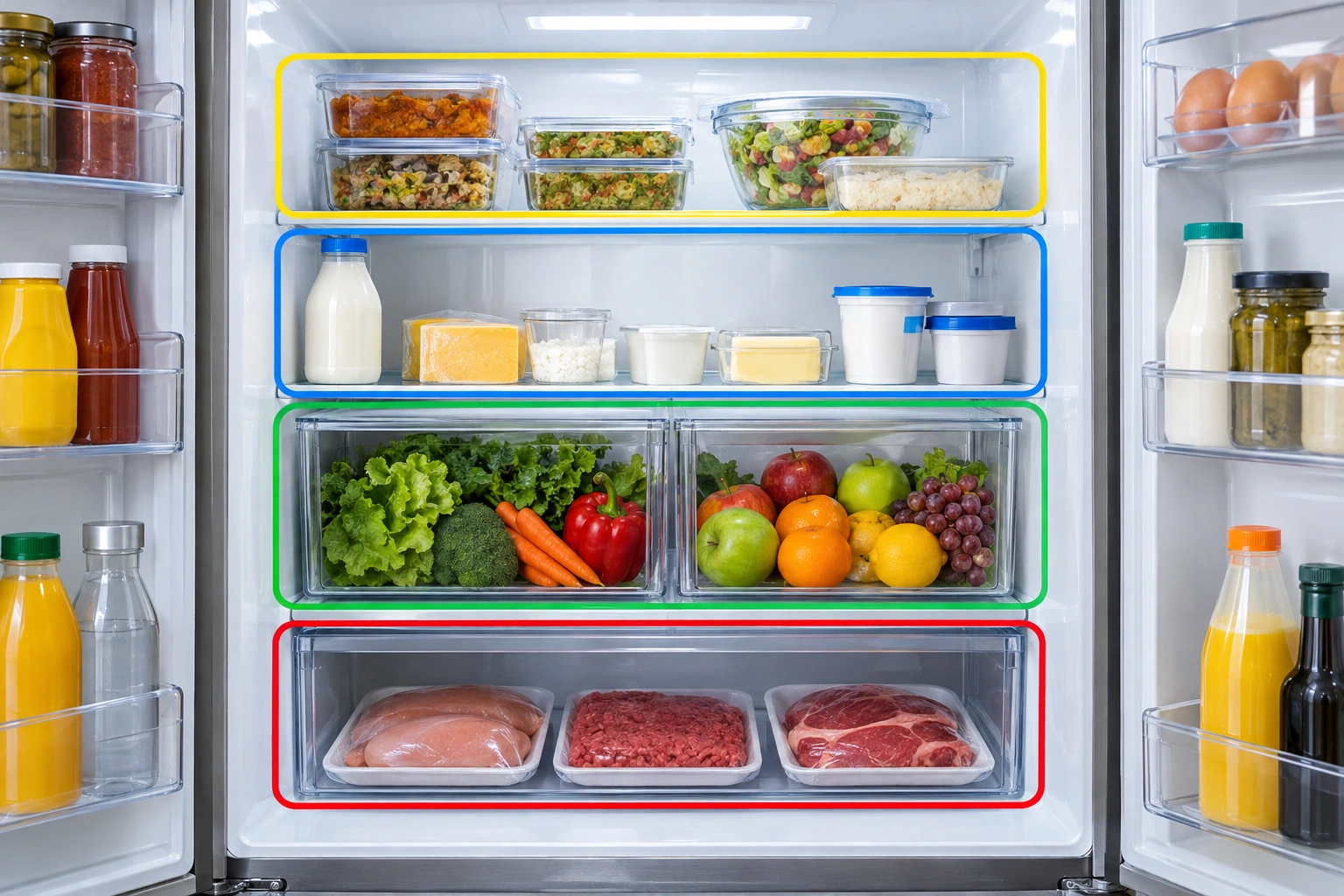
- Top shelf: leftovers, cooked foods, ready-to-eat meals
- Middle shelves: dairy, eggs, opened foods, meal prep containers
- Bottom shelf: raw meat, poultry, seafood in sealed leak-proof containers
- Crisper drawers: fruits and vegetables
- Fridge door: condiments, sauces, drinks, and other less temperature-sensitive items
One-glance example:
Top: leftovers and ready-to-eat foods → Middle: dairy, eggs, opened foods → Bottom: raw meat in a sealed tray/bin → Drawers: produce → Door: condiments and drinks
That layout follows the basic food safety rule of keeping foods that need the least cooking above foods that need the most cooking. It also keeps raw juices from dripping onto foods that will not be cooked again.
Set the Right Refrigerator Temperature First
A well-organized fridge still fails if the temperature is off. The USDA says refrigerators should be set to maintain 40°F or below. If your fridge does not have a built-in thermometer, keep an appliance thermometer inside it so you can verify the temperature directly. USDA refrigeration guidance is the standard worth following here.
Why this matters: cold air slows bacterial growth, but it does not stop it completely. A fridge that runs too warm can make even neatly stored food unsafe faster than you expect.
A practical temperature check routine
Check the temperature when:
– you first set up the fridge,
– groceries go in after a big shop,
– the door has been opened a lot,
– the power has gone out,
– or the fridge seems warmer than usual.
If you rely only on the front display, you may miss a problem. An inside thermometer gives you the actual food-storage temperature, not just the appliance setting.
How to Organize Fridge Shelves from Top to Bottom
Think of the refrigerator as a vertical safety system, not just a set of flat shelves. The safest arrangement puts the most vulnerable foods in the most protected spots.
| Shelf / Zone | Best Foods | Why It Belongs There |
|---|---|---|
| Top shelf | Leftovers, cooked foods, ready-to-eat foods | These foods will not be cooked again, so they need to stay away from raw-food drips |
| Middle shelves | Dairy, eggs, opened foods, meal prep containers | Easy to reach, but still inside the most stable part of the fridge |
| Bottom shelf | Raw meat, poultry, seafood | Lowest shelf reduces the chance of juices dripping onto other foods |
| Crisper drawers | Fruits and vegetables | Helps control moisture and keeps produce separate |
| Door | Condiments, jams, pickles, drinks | Warmest part of the fridge, so use it for foods that tolerate temperature swings better |
This top-to-bottom setup is the simplest way to reduce cross-contamination without turning your fridge into a puzzle every time you bring groceries home.
Where to Store Raw Meat, Poultry, and Seafood
Raw meat belongs on the bottom shelf, always in a sealed, leak-proof container or on a tray that can catch drips. That placement matters more than any label or bin color. If raw chicken sits above yogurt, salad, or leftovers, one leak can contaminate several foods at once.
For a deeper breakdown of meat placement and packaging, see where meat should be stored in the fridge.
Best practice for raw proteins
- Keep raw meat in original packaging only if it is intact and secure.
- If the package leaks, rewrap it or place it in a sealed container immediately.
- Store poultry and seafood the same way: low, contained, and separated from ready-to-eat foods.
In general, foods that will be cooked later should be stored below foods that will not be cooked again, but the key is still containment and separation rather than a rigid “poultry above fish” rule in every kitchen.
Where to Keep Leftovers, Meal Prep Containers, Dairy, and Eggs
Leftovers and ready-to-eat foods belong on the top shelf because they are most vulnerable to contamination from anything below them. North Carolina Cooperative Extension recommends putting leftovers on the top shelf and using clear containers with labels and dates so you can see what needs to be used first.
That advice is practical for busy households because leftovers are easy to forget once they move behind newer groceries. A clear container makes them visible, and a date label keeps them from becoming mystery food.
A good shelf strategy for meal prep
Use one shelf for:
– cooked grains,
– roasted vegetables,
– cooked proteins,
– lunches in portioned containers.
That creates a grab-and-go zone. The trade-off is space: a dedicated meal prep shelf is convenient, but if it gets overcrowded, cold air cannot move freely. Leave a little room around containers so the fridge can cool evenly.
Dairy and eggs
Dairy and eggs usually do best on an interior shelf rather than the door, where temperatures change more often. If you use them every day, place them on a middle shelf where they are easy to reach but still kept in a more stable zone.
One note from extension guidance: milk and eggs are often shown on the bottom shelf beside wrapped raw meat or sealed containers in home fridge diagrams. The key safety point is not that they must live there, but that they must be kept away from contamination and not in the door.
How to Use Crisper Drawers for Produce
Crisper drawers are not just extra storage. They help manage moisture, which affects how long produce stays usable.
Use the drawers to separate:
– vegetables in one drawer
– fruits in the other, if your fridge has two drawers
That separation helps because fruits and vegetables do not always age the same way. If you only have one drawer, group produce by type and use produce bags or containers to keep things from being crushed or wet.
Some fridges have one high-humidity drawer and one low-humidity drawer; others do not. If your drawers are labeled, follow those labels first. If they are not labeled, use the general rule below.
Humidity settings, in plain English
- Higher humidity: better for leafy greens and vegetables that wilt easily
- Lower humidity: better for fruits that release more moisture or are more prone to mold in damp conditions
The exact setting names vary by fridge model, so use the drawer labels if your appliance has them. If not, the practical test is simple: if greens are wilting fast, the drawer may be too dry; if berries are getting slimy, too much moisture may be part of the problem.
What Belongs in the Fridge Door—and What Does Not
The door is convenient, but it is the least stable temperature zone in the fridge because it warms every time the door opens. That makes it fine for some foods and a poor choice for others.
Good door storage
- ketchup
- mustard
- soy sauce
- salad dressings
- jams
- pickles
- bottled drinks
Avoid door storage
- milk
- raw meat
- leftovers
- eggs if you want the most stable storage
- anything highly perishable or already opened and delicate
The decision rule is simple: if the food is very perishable, keep it inside the fridge, not in the door. Convenience is not worth the temperature swings.
Containers, Bins, and Labels That Make Fridge Organization Safer
Clear containers and labels are not just about looking neat. They help you see what you have without opening every lid, and they make it easier to tell what needs to be used soon.
Use:
– airtight containers for leftovers and meal prep
– leak-proof bins for raw meat or items that might drip
– clear containers when visibility matters
– date labels on leftovers and opened foods
Clear containers help with organization, but they do not replace safe placement. A see-through container of raw chicken still belongs on the bottom shelf. Visibility is useful only when the food is also stored in the right zone.
A simple bin system that works
If your fridge is crowded, assign bins by category:
– one for leftovers,
– one for breakfast items,
– one for meal prep,
– one for produce.
That reduces searching and keeps similar foods together. Just do not mix raw and ready-to-eat foods in the same bin unless they are fully separated and sealed.
How to Prevent Cross-Contamination in the Refrigerator
Cross-contamination usually happens when raw food juices touch food that will not be cooked again. In the fridge, that often means drips, leaks, or stacked containers.
Use these rules:
1. Keep raw meat on the bottom shelf.
2. Store leftovers above raw foods.
3. Put raw meat in a separate tray or bin that can catch leaks.
4. Never place raw meat directly on a shelf, even if the package looks sealed.
5. Seal anything wet, leaky, or messy.
6. Wipe spills immediately.
7. Do not reuse a container that held raw meat unless it has been washed thoroughly.
A fridge can look tidy and still be unsafe if raw chicken is sitting above salad greens or if a leaky tray is hidden in the back.
FIFO Rotation and Date Labeling for Less Waste
FIFO means first in, first out. In home kitchens, that simply means older food should be easier to reach than newer food.
How to use FIFO in a real fridge
- Put newly bought items behind older ones.
- Move older leftovers to the front.
- Label opened foods and meal prep containers with the date.
- Check the front of the shelf first when planning dinner.
North Carolina Cooperative Extension notes that leftovers should be refrigerated within 2 hours of sitting out, and it also recommends using them within 2 to 3 days as general food safety advice. That makes date labels more than an organization trick; they help you stay inside a safe window.
For a visual system that ties the zones together, see this fridge storage diagram.
Common Fridge Organization Mistakes That Look Neat but Aren’t Safe
A tidy fridge is not automatically a safe one. These are the mistakes that create problems:
- Putting raw meat above ready-to-eat food
- Using the door for milk or leftovers
- Overpacking shelves so cold air cannot circulate
- Skipping labels on leftovers
- Letting old food disappear behind new groceries
- Mixing raw and cooked foods in one bin
- Ignoring spills because “the container is closed”
The biggest hidden risk is overpacking. A fridge needs airflow to stay at a safe temperature throughout, not just near the back wall.
A Simple Weekly Fridge Reset Routine
You do not need a major reset every day. A short weekly routine is enough to keep the system working.
Weekly reset checklist
- Remove spoiled or expired food.
- Move older leftovers to the front.
- Wipe shelves and bins if there are spills.
- Check that raw meat is still sealed and on the bottom shelf.
- Confirm the thermometer still reads 40°F or below.
- Toss anything you know you will not use in time.
This takes less effort than trying to “deep clean” a chaotic fridge once a month. Small resets prevent the buildup that leads to waste and contamination.
How to Adapt This System for Small or Crowded Fridges
Small fridges can still be safe, but they need stricter priorities.
Use this order when space is tight
- Protect raw foods first.
- Keep leftovers visible and reachable.
- Reserve door space for condiments.
- Group similar foods in small bins.
- Avoid storing anything loose that can leak or roll around.
If your fridge is packed after a big shopping trip, resist the urge to squeeze raw meat beside ready-to-eat foods “just for tonight.” Rework the layout first. Safety beats convenience every time.
A crowded fridge also benefits from smaller containers. Flat, stackable meal prep boxes often work better than bulky bowls because they use vertical space without blocking airflow.
When to Ask a Food Safety Expert
If your fridge frequently runs above 40°F, food is spoiling unusually fast, or you are unsure whether food stayed cold enough after a power outage, ask a food safety expert or your local extension office for guidance. When in doubt, use the thermometer reading and official storage guidance rather than guessing.
A Safe Fridge Is a System, Not a One-Time Cleanout
The best refrigerator organization is simple enough to maintain on a busy week. Keep the coldest, most stable space for food that will not be cooked again, keep raw proteins sealed on the bottom, and use labels so older food gets used before it is forgotten. That is what makes the fridge safer, easier to shop from, and less wasteful over time.