Yes, but only when the recipe has enough acid to activate baking soda and the amount is adjusted carefully. In neutral recipes, baking powder is usually the safer choice.
If you are wondering can you use baking soda instead of baking powder, the short answer is: sometimes, but not in equal amounts and not in every recipe. Baking soda needs acid to work properly, while baking powder already contains the acid it needs, so the swap changes both the rise and the flavor.
- Not equal swaps: Baking soda is stronger than baking powder and needs acid to work.
- Texture changes: A bad swap can cause flat, dense, or overly browned baked goods.
- Flavor risk: Too much baking soda can leave a soapy or metallic aftertaste.
- Best candidates: Buttermilk, yogurt, cocoa, lemon, and molasses recipes handle soda better.
- Freshness matters: Test both leaveners before baking if results suddenly change.
Can You Use Baking Soda Instead of Baking Powder Safely? Understanding the Core Difference
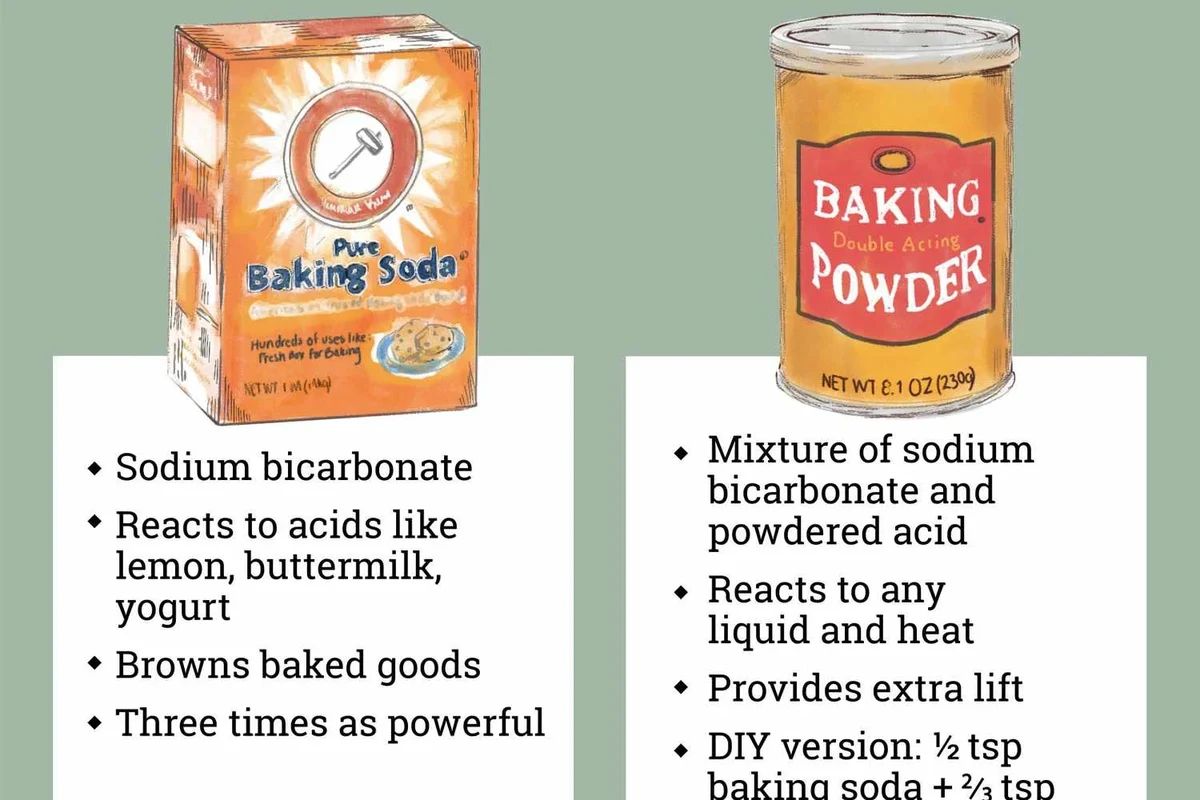
Baking soda is sodium bicarbonate, a single alkaline ingredient. Baking powder is a blend that includes baking soda plus one or more acid salts and usually a starch to keep it dry and stable.
That difference matters because baking soda cannot create a reliable rise on its own unless the batter or dough already contains enough acid. If you replace baking powder with baking soda one-for-one, the recipe usually loses lift and may taste off.
Why baking soda and baking powder are not interchangeable in equal amounts
Baking powder is weaker by volume because it is diluted with acid and starch. Baking soda is much more concentrated, so using the same spoonful would overreact in some batters and leave a strong alkaline taste.
In practical terms, baking powder gives a more controlled, neutral rise. Baking soda gives a faster, stronger reaction, but only when the recipe has the right acidic ingredients to balance it.
How acid, moisture, and heat trigger leavening in baking
Leavening starts when baking soda meets acid and moisture. That reaction releases carbon dioxide gas, which expands in the batter and helps create a lighter crumb.
Heat then sets the structure around those gas bubbles. If the batter is too alkaline, too dry, or too weak in structure, the bubbles can collapse or the finished bake can brown too quickly before the center sets.
Many quick breads rely on a balance of acid and alkali for both rise and flavor. The same chemistry that lifts the batter can also affect browning and crumb color.
What Happens If You Swap Baking Soda for Baking Powder in a Recipe
When the swap is not balanced, the change is usually obvious in the finished texture. You may see more spread, less height, a denser crumb, or uneven browning around the edges.
This is one reason bakers treat leaveners as structural ingredients, not just “extra powder.” They influence how the batter expands, how the gluten sets, and how the final product tastes.
Common texture changes: spread, rise, crumb, and browning
Without enough acid, baking soda may not produce enough gas for a tall rise. Cookies can spread wider, muffins can dome less, and cakes can turn heavier or slightly gummy in the center.
Because baking soda is alkaline, it can also speed browning. That may sound useful, but too much browning before the inside is done often leads to a dry edge and an underbaked middle.
Flavor risks: soapy taste, bitterness, and uneven aftertaste
Too much baking soda leaves excess alkali in the batter. That can create a soapy, bitter, or metallic note that lingers after the first bite.
The flavor problem is often more noticeable in delicate recipes like vanilla cakes, sugar cookies, or lightly flavored muffins. Strong ingredients such as chocolate, spices, or citrus can hide some of it, but they do not fix the chemistry.
Examples of recipes where the swap is especially risky
Recipes that depend on baking powder for lift but contain little acid are the riskiest. Think plain pancakes, vanilla layer cakes, biscuits, and many boxed-style quick breads.
For a broader look at heat and airflow in baking appliances, you may also find it helpful to read about air fryer preheating and how uneven heat can change browning. The same general idea applies here: even heat and balanced ingredients matter for predictable results.
Do not assume a recipe will “self-correct” if you add extra baking soda. Too much alkali can damage flavor and texture even if the bake looks finished on the outside.
When a Baking Soda Substitute Can Work and When It Cannot
Baking soda can work as a substitute when the recipe already contains enough acid to activate it. In those cases, you may be able to reduce or replace some baking powder, but the amount depends on the formula.
If the recipe is neutral or only lightly acidic, baking soda alone is usually not a safe replacement. The result is often flat, coarse, or oddly colored.
Recipes with enough acidic ingredients to activate baking soda
Ingredients like buttermilk, yogurt, sour cream, lemon juice, vinegar, natural cocoa, molasses, and brown sugar can all contribute acidity. These are the kinds of recipes where baking soda often performs well.
Still, the amount of acid must be enough for the amount of baking soda used. A recipe may have one acidic ingredient but not enough of it to support a full swap.
Recipes that depend on baking powder for a neutral lift
Baking powder is the better choice when the batter has little or no acid. That includes many butter cakes, sugar cookies, and neutral-flavored batters where the goal is a clean, even rise.
These formulas are designed around baking powder’s built-in acid. Removing it changes the balance, so the recipe can lose both structure and tenderness.
How to tell whether a formula already contains acid
Look at the ingredient list for acidic dairy, cocoa, citrus, vinegar, honey, molasses, or brown sugar. Also consider whether the recipe includes both baking soda and baking powder, which often signals that the author is balancing acid and lift.
If you are unsure, compare the recipe style to other similar formulas. For example, buttermilk muffins usually use baking soda, while standard vanilla muffins often rely on baking powder.
Cocoa powder can be tricky because natural cocoa is acidic, while Dutch-process cocoa is less acidic. That difference can change whether baking soda will work as expected.
How to Convert Baking Powder to Baking Soda Without Ruining the Batch
Converting the other way around is usually more manageable than replacing baking powder with baking soda. Even so, you still need to account for acid, because baking soda needs something to react with.
A good rule is to treat substitutions as recipe adjustments, not simple swaps. The final result depends on the total acidity, batter thickness, and how much lift the recipe truly needs.
Basic measurement logic for partial substitutions
Because baking soda is stronger, you usually need much less of it than baking powder. The exact conversion varies by recipe, but the key idea is to use a smaller amount and add acid only if the formula needs it.
If a recipe already includes acidic ingredients, you may be able to replace part of the baking powder with a smaller amount of baking soda. If the recipe is not acidic, you generally need to add an acid source before the substitution can work.
What additional acidic ingredient may be needed and why
If you use baking soda instead of baking powder, the batter may need buttermilk, yogurt, sour cream, lemon juice, vinegar, or natural cocoa to activate it. Without that acid, the baking soda can remain partly unused and leave a harsh taste.
That does not mean you should add acid randomly. Extra liquid changes batter thickness, and too much acid can affect flavor and structure. The goal is balance, not just reaction.
Practical conversion examples for muffins, cookies, and quick breads
For muffins, baking soda can work well when the batter contains buttermilk, yogurt, or fruit puree. The rise is usually best when the batter is mixed just until combined and baked promptly, since the gas starts forming right away.
For cookies, the swap is more delicate. A chocolate cookie with natural cocoa or brown sugar may handle some baking soda, but a plain butter cookie usually needs baking powder or another leavener strategy to stay soft and rounded.
For quick breads, the batter is often thicker and more forgiving, but only if the acid balance is right. A banana bread with yogurt or sour cream is more likely to succeed than a plain loaf made with milk and no acid.
The baked goods rise unevenly or taste bitter after substituting baking soda.
The recipe likely needed more acid, less baking soda, or both. Recheck the formula for acidic ingredients and use a smaller amount of soda next time.
Ingredient Roles That Affect the Swap: Acid, Salt, Fat, and Flour
Leavening does not work in isolation. Salt, fat, flour, sugar, and moisture all change how the batter behaves and how much lift you actually see in the oven.
That is why one recipe can tolerate a substitution and another can fail with the same amount of baking soda.
How cocoa, yogurt, buttermilk, lemon, and brown sugar change the outcome
Yogurt and buttermilk are classic partners for baking soda because they are acidic and moist. Lemon juice and vinegar can also activate baking soda, though they are usually used in small amounts for flavor and chemistry together.
Natural cocoa and brown sugar can help create a more soda-friendly batter, while chocolate-heavy recipes may also hide a slight alkaline note. For more on ingredient behavior in baked snacks, see how moisture loss changes texture in cooking, since dryness and structure affect the final bite in similar ways.
Why fat-heavy or low-acid batters often fail with baking soda alone
High-fat batters can feel tender, but fat also slows water movement and can reduce how quickly the soda reacts. If there is not enough acid, the batter may look smooth and rich yet still bake up flat.
Low-acid batters are even harder to rescue because there is nothing to neutralize the soda. In those recipes, baking powder is usually the safer and more predictable choice.
How flour type and batter thickness influence rise
All-purpose flour, cake flour, and whole wheat flour absorb water differently. That changes how quickly gases expand and how much the batter can hold before it sets.
Thicker batters often trap bubbles better, but they also need enough leavening power to lift them. Thin batters may spread faster, so a soda swap can make them brown too quickly and rise unevenly.
- Check whether the recipe already contains an acid source.
- Use fresh, accurately measured leavener.
- Match the substitution to the recipe style, not just the ingredient name.
- Bake promptly after mixing if baking soda is activated by acid.
Common Mistakes Home Bakers Make When Substituting Baking Soda
Most substitution problems come from using too much soda, ignoring acid balance, or blaming the wrong ingredient when the bake fails. These mistakes are common because the visual difference between baking soda and baking powder is small, but their chemistry is not.
A careful baker looks at the full formula, not just the label on the container.
Using too much baking soda and creating a metallic taste
Too much baking soda is one of the fastest ways to ruin flavor. Even if the crumb looks fine, the aftertaste can be sharp, soapy, or metallic.
If you have ever tasted a cookie that seemed strangely bitter at the end, excess soda is a common reason. Reducing the amount is usually better than trying to mask the flavor later.
Skipping the acid adjustment and getting flat baked goods
When soda is used without enough acid, the batter may not produce enough gas at the right time. The result is often a flat top, dense center, or coarse crumb.
Some bakers try to fix this by adding more liquid, but liquid alone does not replace acid. The reaction needs both moisture and acidity.
If you are testing leaveners or mixing acidic ingredients like vinegar or lemon juice, avoid splashing near your eyes and keep hot pans away from the work area. Clean spills promptly so the batter does not react on the counter instead of in the oven.
Confusing freshness problems with substitution problems
Sometimes a recipe fails because the baking soda or baking powder is old, not because the swap was wrong. Old leaveners can lose strength, which leads to poor rise even when the formula is correct.
If a recipe used to work and suddenly does not, test the ingredients before changing the method. Freshness matters just as much as measurement.
Storage, Safety, and Freshness Checks Before You Bake
Before you troubleshoot a recipe, make sure the leaveners are still active. Baking soda and baking powder are pantry staples, but they do not last forever in peak condition once exposed to moisture or heat.
Good storage also helps prevent clumping, which can make measuring less accurate and lead to uneven results.
How to test whether baking soda or baking powder is still active
To check baking soda, add a small amount to vinegar or another acidic liquid. A strong fizz usually means it is still active.
To check baking powder, add it to warm water. It should bubble quickly if it is fresh enough to use. If the reaction is weak, replace the product before baking.
Proper storage conditions to prevent moisture and clumping
Keep both leaveners sealed tightly in a cool, dry cabinet away from steam and direct heat. Do not store them near the stove if the area gets humid during cooking.
Moisture can trigger premature reaction or create hard clumps that are difficult to measure accurately. A dry spoon also helps keep the container in better shape.
Food safety and quality concerns when using expired leaveners
Expired baking soda or baking powder is usually a quality issue rather than a major food safety issue, but the results can still be disappointing. Flat texture, poor browning, and off flavors are common signs that the product is past its best use.
For broader food safety guidance on pantry storage and ingredient handling, it is always smart to follow recognized official advice from sources such as the USDA or FDA when in doubt.
Measure the leavener carefully, check for acid in the recipe, and mix the batter only as much as needed.
Get the batter into the oven promptly if baking soda is activated by acid, so the gas does not escape before the structure sets.
Let the bake set fully before slicing, because a soft crumb can seem underdone until it cools.
Final Verdict: When to Use Baking Soda Instead of Baking Powder and When to Avoid It
So, can you use baking soda instead of baking powder safely? Yes, but only when the recipe contains enough acid to activate it and when you reduce the amount appropriately. If the recipe is neutral, baking powder is usually the safer choice.
For everyday baking in 2026, baking soda is best in acidic recipes like buttermilk muffins, cocoa-based cakes, and yogurt quick breads. Baking powder is best for neutral batters that need a predictable, balanced lift without changing flavor.
Use baking soda when the recipe already has acid and you are confident about the balance. Avoid the swap in neutral recipes, and when in doubt, keep the original leavener or adjust the formula carefully instead of guessing.
If you want the most reliable result, read the ingredient list first, confirm the acid source, and test your leaveners for freshness before you bake. That small habit prevents most substitution failures and helps you get the rise, crumb, and flavor the recipe was designed to deliver.
Frequently Asked Questions
No. Baking soda is much stronger and needs acid to work, so equal amounts usually cause poor texture or a bitter taste.
Recipes with acidic ingredients like buttermilk, yogurt, lemon juice, vinegar, natural cocoa, or molasses are the best candidates. These ingredients help activate baking soda properly.
Too much baking soda can leave a soapy, metallic, or bitter flavor. It can also make baked goods brown too fast and rise unevenly.
Check for ingredients such as buttermilk, yogurt, sour cream, citrus, vinegar, natural cocoa, molasses, or brown sugar. If the recipe is mostly neutral, baking powder is usually the safer leavener.
Baking soda should fizz strongly when mixed with vinegar, and baking powder should bubble in warm water. Weak reaction usually means it should be replaced.
Expired leavener is usually a quality problem more than a food safety problem, but it can cause flat or dense baked goods. Replace it if the reaction is weak or the product is clumped and old.
