1 tsp baking soda in grams is about 4.6 grams for a level teaspoon. Use grams when you want the most accurate, repeatable baking results.
If you need to know 1 tsp baking soda in grams, the standard kitchen conversion is usually about 4.6 grams. That small measurement can change texture, rise, and flavor, so it helps to measure it carefully and understand when grams are the better choice.
- Exact conversion: A level teaspoon of baking soda is about 4.6 grams.
- Best method: A digital scale gives the most consistent results.
- Recipe balance: Baking soda needs enough acid to work properly.
- Common error: A heaping teaspoon can cause bitter flavor and uneven browning.
- Best practice: Use grams for scaled or delicate recipes and level teaspoons for simple home baking.
1 tsp baking soda in grams: the exact conversion and why it matters in modern baking
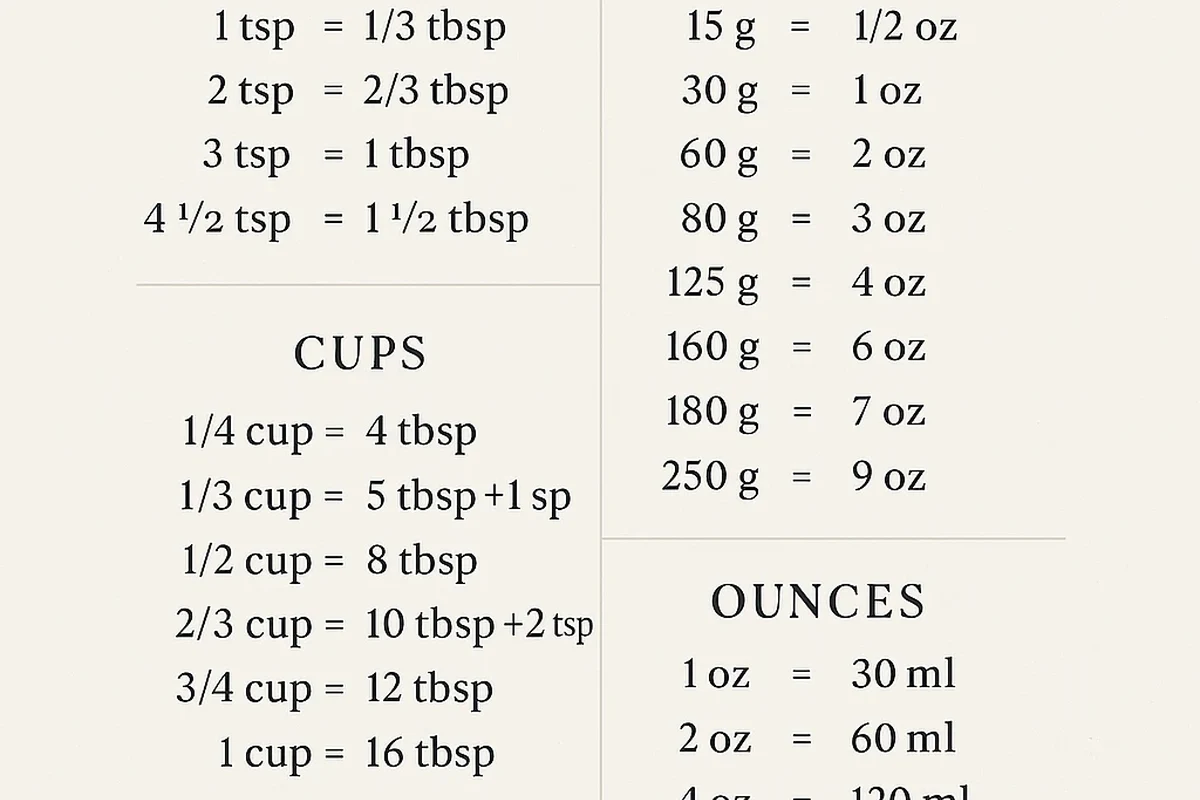
In most home and professional baking references, 1 teaspoon of baking soda equals about 4.6 grams. Some bakers round that to 5 grams for convenience, but 4.6 grams is the more precise starting point when you want repeatable results.
That matters because baking soda is not just a filler ingredient. It is a strong alkaline leavener, so even a small measuring difference can change how a batter rises, browns, and tastes.
How many grams are in 1 teaspoon of baking soda
The best practical answer is 4.6 grams per level teaspoon. If your measuring spoon is packed, heaped, or scooped loosely, the gram weight can shift enough to affect the recipe.
Baking soda is denser than many dry ingredients, so a teaspoon can vary more than people expect if it is not leveled the same way each time.
Why precision matters more in 2026 recipe testing and scaled baking
Modern recipe testing often relies on repeatable results across different kitchens, ovens, and ingredient brands. When recipes are scaled for content creation, school labs, or production baking, gram measurements reduce guesswork and make it easier to compare batches.
This is especially useful when recipes are adapted for different pan sizes, humidity levels, or altitude. A teaspoon measured one way in one kitchen can behave differently in another, even if the recipe looks identical on paper.
When a “level teaspoon” changes the result in cakes, cookies, and quick breads
A level teaspoon is the standard assumption behind most conversion charts. If the spoon is rounded, the recipe may get too much baking soda, which can push flavor into bitter or soapy territory.
In cakes, that can mean a coarse crumb or odd color. In cookies and quick breads, it can mean extra spread, a rough texture, or a darker finish than the recipe intended.
How baking soda behaves in doughs and batters
Baking soda works differently from baking powder because it needs acid to react well. Once mixed with moisture and an acidic ingredient, it creates carbon dioxide gas that helps the batter rise.
That reaction also changes the batter’s pH, which affects browning, flavor, and color. For a simple breakdown of the acid-base reaction, see our guide on the baking soda and vinegar reaction explained simply.
The chemical role of baking soda as an alkaline leavener
Baking soda is sodium bicarbonate. In baking, it acts as an alkaline ingredient that neutralizes acids and releases gas, which helps lift the batter.
Because the reaction starts as soon as liquid and acid are present, timing matters. If a batter sits too long before baking, some of the gas can escape before the oven sets the structure.
What happens when the amount is too low or too high
Too little baking soda can leave a batter dense and under-aerated. You may also notice weaker browning because the batter stays more acidic than expected.
Too much baking soda can create a sharp, salty, or soapy aftertaste. It can also make baked goods look overly dark or yellow-brown in spots, especially when the recipe does not have enough acid to balance it.
If a recipe uses baking soda but has little or no acidic ingredient, do not increase the baking soda to force more rise. The result is often a bad flavor and uneven texture, not a better bake.
How acidity from yogurt, buttermilk, cocoa, molasses, or citrus affects the conversion
Acidic ingredients help baking soda do its job. Yogurt, buttermilk, natural cocoa, molasses, sour cream, and citrus juice all contribute acidity, but not always in the same strength or amount.
That means the best conversion is not only about grams. It is also about whether the recipe has enough acid to activate the soda fully. If you are unsure whether a recipe needs soda or powder, our guide on using baking soda instead of baking powder safely explains the difference in practical terms.
Measuring 1 teaspoon correctly for accurate gram conversion
Accurate measuring starts with a consistent method. A digital scale gives the most reliable result, but measuring spoons can still work well if you level them the same way every time.
Level teaspoon versus heaping teaspoon
A level teaspoon is measured flush with the top of the spoon. A heaping teaspoon contains more than the standard amount, which can easily push the weight above 4.6 grams.
For baking soda, that difference matters more than many beginners expect. Since the ingredient is potent, even a small overfill can change the final taste and appearance.
Using measuring spoons, digital scales, and spoon-and-level methods
The spoon-and-level method is the most common home approach. Scoop the baking soda lightly, then level it with the straight edge of a knife or spatula.
A digital scale is better when you need accuracy for repeated testing or larger batches. If your recipe is written in grams, use the scale and avoid converting back and forth unless you have to.
When you measure baking soda by spoon, fluff the powder first if it has compacted in the container, then level it cleanly. This helps you avoid accidental overpacking.
Common measuring mistakes that create inconsistent bakes
One common mistake is dipping the spoon directly into a crowded container and packing the powder down. Another is estimating a “small spoonful” instead of actually leveling the measure.
Moisture is another issue. If baking soda has absorbed humidity, it may clump and measure unevenly, which can make results less consistent from batch to batch.
Practical conversion examples for everyday baking
In everyday recipes, 1 tsp baking soda in grams is most often treated as 4.6 grams, or sometimes rounded to 5 grams for convenience. The important part is to stay consistent within the same recipe and kitchen.
Converting 1 tsp baking soda in grams for cookies, muffins, and pancakes
For cookies, the exact amount affects spread, color, and flavor. Too much can make cookies taste harsh or leave a coarse crumb, while too little may reduce browning and lift.
In muffins and pancakes, the batter is often mixed lightly, so baking soda should be evenly distributed before the batter hits the heat. Uneven mixing can leave pockets of strong flavor or uneven rise.
Useful when the recipe has brown sugar, molasses, or another acid source that helps the soda react.
Good for quick batters that need fast lift and even browning without heavy mixing.
How to scale the measurement for half batches and double batches
Scaling is simple when you use grams. Half of 4.6 grams is about 2.3 grams, and double is about 9.2 grams.
That approach is much easier than trying to eyeball fractions of a teaspoon. It also helps when a recipe is being tested in a school kitchen or production setting where consistency matters across multiple pans.
Using gram measurements in international and professional recipes
Many international recipes already list ingredients in grams because the system is more precise and easier to standardize. Professional pastry kitchens also prefer grams because they reduce variation between staff members and shifts.
If you are converting a recipe from teaspoons to grams, keep the rest of the ingredients in the same measurement style whenever possible. That makes troubleshooting much easier if the bake does not turn out as expected.
Some recipe writers round baking soda to 5 grams per teaspoon for convenience. That is close enough for many home recipes, but the exact conversion is still about 4.6 grams.
Signs your baking soda measurement is off
When baking soda is mismeasured, the clues usually show up in flavor, color, and texture. These signs are often easier to spot after the bake than before it.
Bitterness, soapy flavor, or yellowing from excess baking soda
Too much baking soda can leave a bitter or soapy taste. You may also see a yellowish cast or uneven browning, especially in lighter cakes and cookies.
If the recipe has little acid, the extra soda may remain unneutralized. That is when the off-flavor is most noticeable.
Dense texture, poor rise, or weak browning from too little baking soda
Too little baking soda often shows up as a tight crumb, flat cookies, or a muffin top that does not dome well. The baked good may also look pale because the batter stayed too acidic.
If the recipe depends on soda for lift, the final texture can feel heavy even when the bake is fully cooked.
The recipe rises unevenly or tastes sharp after baking.
Check whether the spoon was leveled, whether the ingredient was fresh, and whether the recipe has enough acid to balance the soda.
How to troubleshoot a recipe that calls for baking soda but lacks enough acid
First, confirm that the recipe truly needs baking soda rather than baking powder. If it does, look for acidic ingredients already in the formula, such as yogurt, brown sugar, cocoa, or citrus.
If the recipe still seems unbalanced, do not simply add more soda. It is usually better to adjust the leavening system carefully or choose a more suitable recipe structure.
Storage, freshness, and safety for baking soda in the home kitchen
Baking soda is stable, but it still needs dry storage. If it picks up moisture or odors, it can clump and may not measure as cleanly.
Keep baking soda in a sealed container away from strong-smelling foods and cleaning products. Do not use the same scoop for cleaning tasks and baking ingredients.
How to store baking soda so it stays dry and effective
Store it in a tightly closed container in a cool, dry pantry. If you keep it in the refrigerator for odor control, label it clearly so it is not confused with baking soda used for baking.
Cross-use between cleaning and baking is a common kitchen mistake. Food ingredients should stay separate from non-food uses.
How to test whether baking soda is still active
You can test baking soda by adding a little to an acidic liquid like vinegar or lemon juice. If it fizzes strongly, it is still active enough for kitchen use.
For more storage and freshness guidance, see our article on whether baking soda expires and when to replace it.
Food safety and labeling considerations when using baking soda in large-batch baking
In large-batch baking, label containers clearly and keep ingredient records updated. That matters for allergen control, recipe tracing, and staff communication in shared kitchens.
For food safety questions involving storage, sanitation, or ingredient handling, follow recognized guidance from official food safety sources such as the USDA or FDA when relevant to your kitchen setup.
When to use grams instead of teaspoons in baking school and professional kitchens
In baking school and professional pastry work, grams usually give better consistency. They reduce variation from spoon shape, packing pressure, and individual measuring habits.
Why gram-based measurement improves consistency in pastry production
Gram-based formulas make it easier to reproduce the same texture across multiple batches. That is especially important when students, instructors, or production staff are working from the same recipe.
It also makes scaling cleaner. If a formula needs to be doubled or halved, the math stays straightforward and less error-prone.
Situations where teaspoons are still acceptable for home bakers
Teaspoons are still fine for casual home baking, especially when the recipe is simple and not highly sensitive. They are also practical when a scale is not available.
Even then, level the spoon carefully and keep your method consistent. That gives you the best chance of repeating the same result next time.
How students and instructors standardize measurements across recipes
Many baking programs standardize recipes by converting all small ingredients to grams. That helps students compare formulas and understand how leavening, acidity, and moisture interact.
If you are studying pastry professionally, always verify program requirements, lab expectations, and measurement standards on official school materials. That is more reliable than relying on informal recipe notes or social media versions.
Final recap: the best way to convert 1 tsp baking soda in grams for reliable results
The safest working conversion for 1 tsp baking soda in grams is about 4.6 grams for a level teaspoon. If you prefer a rounded kitchen number, 5 grams is close, but use one system consistently within the same recipe.
Choosing the right measurement method for your skill level and recipe type
If you bake often, a digital scale is the most dependable option. If you are measuring by spoon, use a level teaspoon and avoid packing the powder.
For delicate cakes, professional formulas, or scaled batches, grams are the better choice. For simple home recipes, teaspoons can still work well when measured carefully.
Common conversion errors to avoid before mixing your next batter
Do not confuse a heaping teaspoon with a level teaspoon. Do not assume baking soda and baking powder are interchangeable without adjusting the recipe.
Also avoid using old, clumped, or contaminated baking soda. Fresh, dry ingredient handling is part of getting the conversion right.
What to remember when reading, adapting, or scaling baking soda recipes
Remember that baking soda only works properly when the recipe has enough acid and the measurement is consistent. The gram conversion is useful, but the formula still depends on the full ingredient balance.
If you want the most reliable results, measure carefully, keep your method consistent, and trust grams when precision matters most. That approach gives you better control over rise, texture, and flavor in nearly every baking soda recipe.
Frequently Asked Questions
One level teaspoon of baking soda is about 4.6 grams. Some bakers round it to 5 grams, but 4.6 grams is the more accurate conversion.
Use grams when you want the most consistent results, especially in scaled recipes. Teaspoons are still acceptable for home baking if you level them carefully.
Too much baking soda can leave a bitter or soapy taste and cause uneven browning. It can also affect texture and make baked goods look yellow or dark in spots.
Not directly, because baking soda needs acid to react properly. If you swap them, the recipe usually needs other adjustments too.
Test it with an acidic liquid like vinegar or lemon juice. Strong fizzing usually means it is still active enough for baking.
Baking soda is an alkaline leavener, so it works best with acidic ingredients like buttermilk, yogurt, cocoa, or citrus. Without enough acid, the rise and flavor can suffer.
