
Are Air Fryer Baskets Dishwasher Safe? What to Check Before You Wash
If you want the short answer: sometimes, but not always. Whether an air fryer basket is dishwasher safe depends on the exact brand, model, and part. The basket may be fine in the dishwasher while the tray or crisper plate has different instructions, and the air fryer base should never go in the dishwasher.
The safest habit is simple: check the manual first, then the label on the part, then the manufacturer’s website if needed. If you can’t confirm dishwasher safety, hand washing is the lower-risk choice.
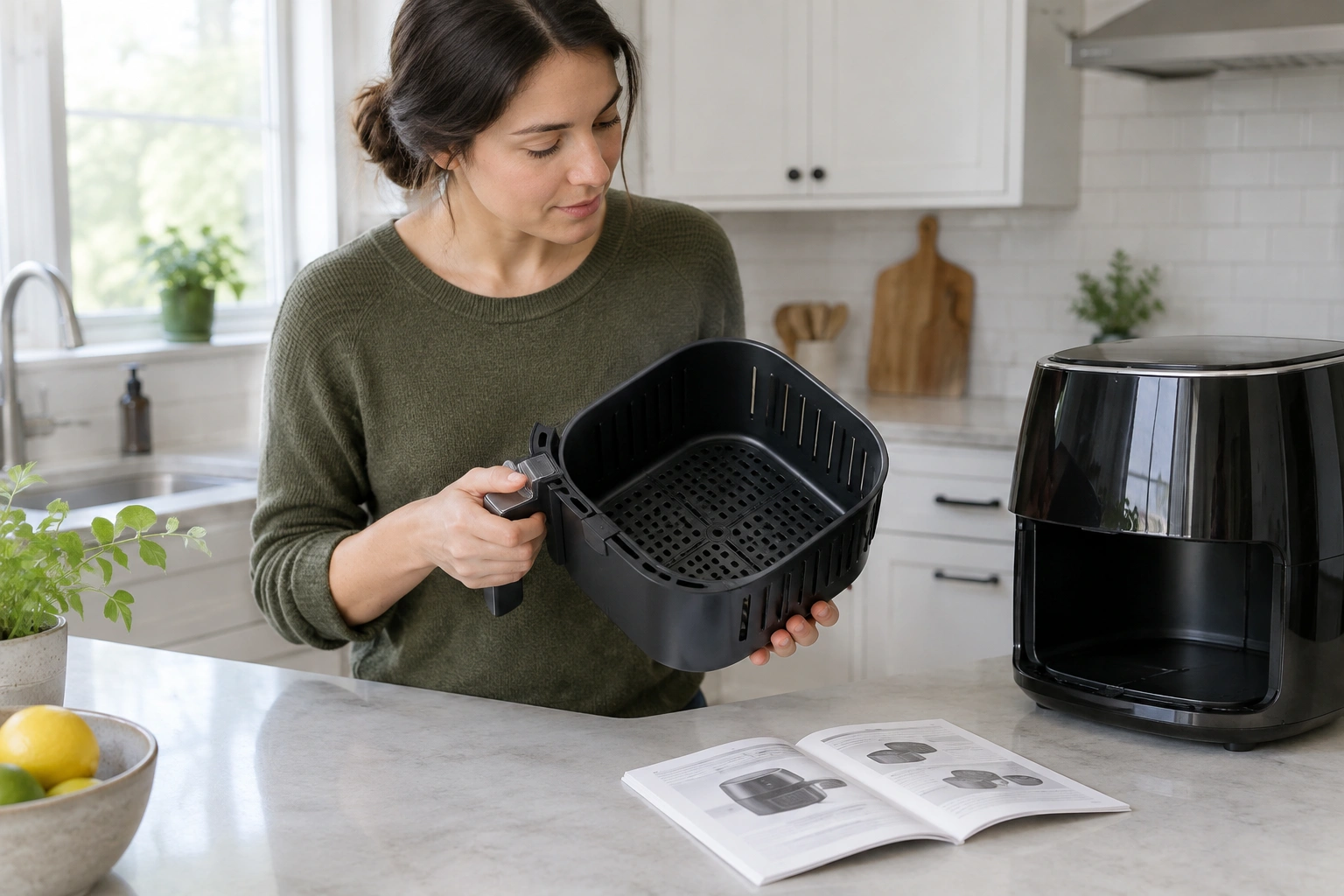
Quick Answer: Are Air Fryer Baskets Dishwasher Safe?
Many air fryer baskets are dishwasher safe, but that is not a universal rule. Some brands allow the basket, tray, and crisper plate to go in the dishwasher. Others say to hand wash those parts to protect the coating or finish.
That distinction matters because the convenience of the dishwasher can come with a trade-off. Even when a basket is technically dishwasher safe, repeated cycles may wear down the nonstick coating over time. Some manufacturers and retailers also caution that dishwasher use can affect finishes, so it is best to follow the care instructions for your exact model rather than rely on general advice.
Practical rule: if the manual does not explicitly say the part is dishwasher safe, treat it as hand-wash only until you confirm otherwise.
Check Your Manual or Manufacturer Label First
The user manual is the best source because cleaning instructions can vary even within the same brand. A basket from one model may be dishwasher safe while a similar-looking basket from another model is not.
Here’s what to look for:
- Dishwasher-safe wording in the care section
- Top-rack only instructions
- A dishwasher-safe symbol on the basket, tray, or crisper plate
- Model-specific cleaning notes on the manufacturer’s website
If you lost the manual, use the model number printed on the air fryer base or on a sticker under the appliance. Search that exact model number on the manufacturer’s support page. If you still can’t find the manual, contact the brand’s support team and ask for the cleaning instructions for that exact model.
A useful example: a basket may be dishwasher safe, but the tray or crisper plate might have separate instructions. Treat each removable part as its own item until you confirm otherwise.
How to Read Dishwasher-Safe Symbols and Labels
If your basket or tray has a symbol or label, it usually gives a quick clue about cleaning safety, but it still helps to verify the manual.
Common markings include:
- Dishwasher-safe text: usually means the part can go in the dishwasher, but check whether there are limits such as top-rack only.
- Dishwasher-safe symbol: often a plate or glass icon with water droplets or lines above it.
- Top-rack only label: means the part should go only on the upper rack, not the bottom rack.
In practice, the label tells you the manufacturer’s intent, but the manual is still the final word if the two seem unclear or conflict. If there is no label, do not assume the part is dishwasher safe.
Why Dishwasher Safety Varies by Brand, Model, and Part
Air fryers are not built the same way. Different brands use different coatings, finishes, handle materials, and basket designs. That means one model can handle dishwasher cleaning while another needs a gentler approach.
The main parts also don’t always share the same cleaning rules:
| Part | Often dishwasher safe? | What to check |
|---|---|---|
| Basket | Sometimes | Manual, label, top-rack guidance, coating type |
| Tray | Sometimes | Whether it has a coating or removable finish |
| Crisper plate | Sometimes | Manufacturer instructions and rack placement |
| Main unit/base | No | Electrical parts must stay dry |
The base/main unit should never go in the dishwasher because it contains electrical components. Clean the outside only with a damp cloth after unplugging the appliance.
That’s the key difference: removable cooking parts may be washable, but the appliance body is not.
What Dishwasher Cleaning Can Do to Nonstick Coatings
Dishwashers clean with a mix of heat, water pressure, and detergent. That works well for many dishes, but it can be rough on some air fryer parts over time.
The biggest concerns are:
- High heat, which can stress coatings and finishes
- Dishwasher detergent, which can be harsher than hand dish soap
- Repeated cycles, which slowly wear the surface
- Contact with other dishes, which can cause chips or scratches
This does not mean every dishwasher-safe basket will be damaged quickly. Occasional dishwasher use is often less concerning than repeated washing, especially if the part is specifically labeled dishwasher safe. The risk tends to be higher when the coating is already worn, scratched, or starting to peel.
For that reason, many people reserve the dishwasher for an occasional deep clean and use hand washing for routine cleanup. That is a practical trade-off: maximum convenience versus maximum coating care.
Good habit: if you use the dishwasher, do so only when the manual allows it and avoid making it the default if the coating looks delicate.
If the Basket Is Dishwasher Safe: How to Load It Correctly
Even when the manual says yes, loading the part the right way matters.
Use the top rack if the manual says top-rack only
If the instructions say top rack only, follow that exactly. The top rack is usually farther from the heating element and may expose the basket to less intense heat.
If the manual says any rack, the top rack is still a reasonable choice for coated parts because it is generally gentler.
Keep the basket separated from heavy items
Place the basket so it won’t be knocked around by pots, pans, or sharp utensils. Baskets can get scratched if they rattle against metal items during the cycle.
Avoid high-heat dry settings if possible
If your dishwasher has a heated dry option, consider skipping it for coated parts unless the manufacturer says otherwise. Lower heat is easier on finishes.
Don’t overload the dishwasher
A crowded dishwasher can cause parts to bump into each other and trap grease or food residue. If the basket is packed in too tightly, hand washing may actually be faster.
Simple decision rule: if the basket fits loosely on the top rack and the manual approves it, dishwasher cleaning is reasonable. If you have to force it in, hand wash instead.
If the Basket Is Not Dishwasher Safe: Safest Hand-Washing Method
Hand washing is usually the gentlest option and often takes less time than people expect.
A reliable cleaning routine
-
Let the basket cool completely.
Cleaning a hot basket can be uncomfortable and may increase the chance of warping or damage. -
Remove loose crumbs first.
Shake out debris over the sink or trash can. -
Soak in warm, soapy water.
Use a few drops of dish soap and let it sit for several minutes if grease is stuck on. -
Wipe with a soft sponge or microfiber cloth.
Use the soft side only. A nylon scrub pad is sometimes acceptable if the manual allows it, but avoid anything abrasive. -
Rinse well and dry fully.
Drying helps prevent water spots and residue from building up around seams or corners.
For most everyday messes, this is enough.
What not to use
- Steel wool
- Metal scrubbers
- Abrasive powders
- Sharp tools for scraping
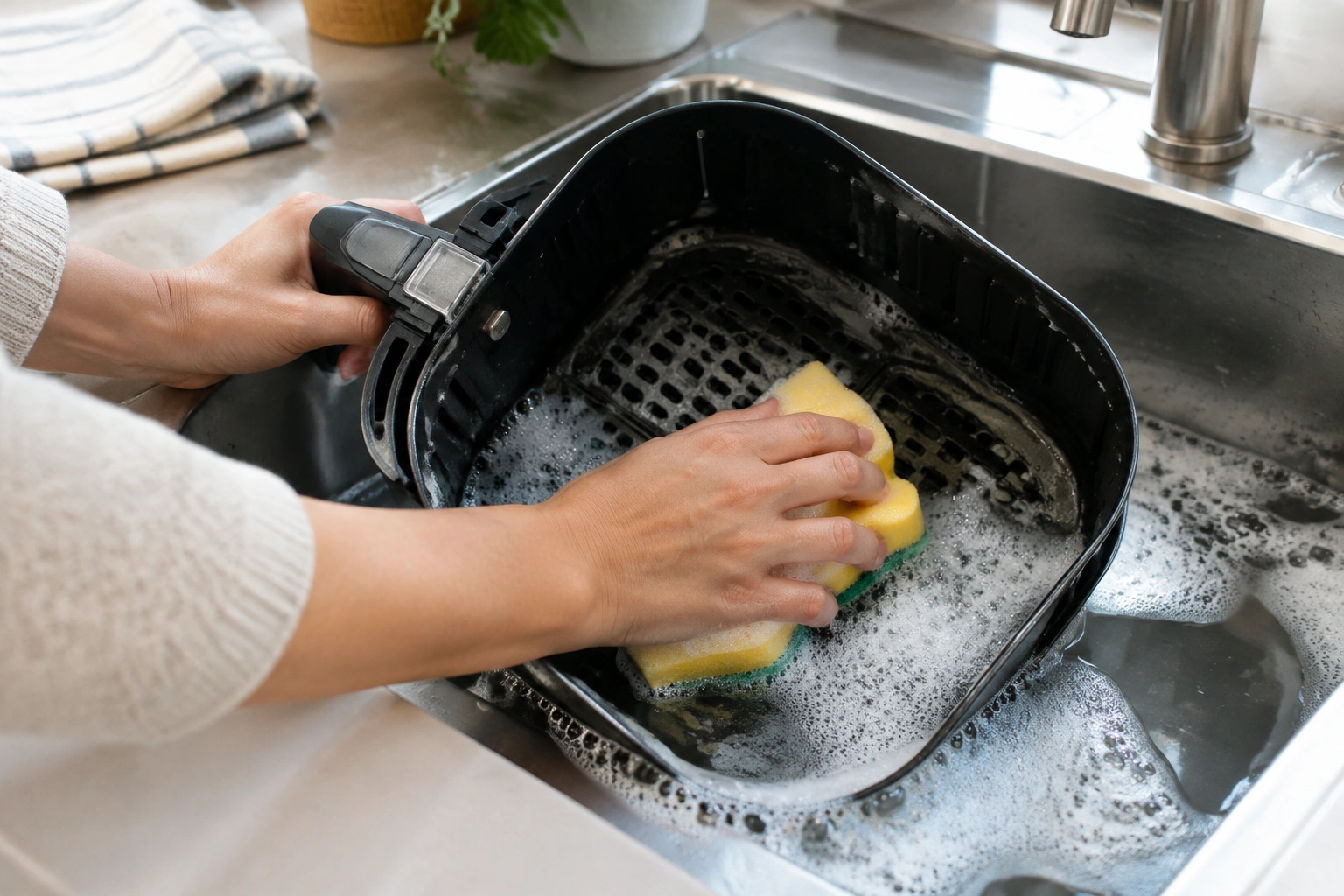
Those can damage the nonstick surface even if the basket looked sturdy before.
How to Tell Whether Basket Material or Coating Changes the Advice
The material and coating matter because not all baskets age the same way in the dishwasher.
Stainless steel baskets or inserts
Stainless steel is often more durable than coated nonstick surfaces, but that does not automatically make it dishwasher safe. The manufacturer’s instructions still matter because handles, joints, and finishes may have different limits.
Ceramic-coated parts
Ceramic-coated baskets or trays can be easier to clean, but the coating can still wear if it is washed repeatedly in a dishwasher. If the manual allows dishwasher use, follow any rack and detergent guidance closely.
PTFE-style nonstick coatings
PTFE-style nonstick surfaces are especially worth checking carefully because the coating is meant to reduce sticking, not necessarily to handle repeated harsh washing. Occasional dishwasher use may be allowed on some models, but repeated cycles can shorten the life of the finish.
How to Remove Stubborn Grease Without Damaging the Surface
Baked-on grease is the part that tempts people to scrub harder. That usually causes more damage than the grease itself.
Try a longer soak first
Fill the basket with warm water and dish soap, then let it sit. A longer soak softens residue so it lifts off with less pressure.
Use a baking soda paste for stuck spots
Mix a small amount of baking soda with water to make a soft paste. Apply it to stubborn areas, let it sit briefly, then wipe gently with a soft sponge.
This method works well when grease has browned on the surface but the coating is still intact. The goal is to loosen residue, not scour it off.
Use a plastic or silicone scraper only if needed
If food is stuck hard, a nonmetal scraper can help lift it without gouging the coating. Use it lightly and stop if the surface starts to feel rough.
Rinse and inspect before repeating
If one round doesn’t solve it, repeat the soak instead of increasing pressure. That usually preserves the coating better than aggressive scrubbing.
What to Do If You Already Put It in the Dishwasher
If you accidentally washed a basket in the dishwasher, don’t panic. The first step is to inspect it before using it again.
Look for:
- Peeling or flaking coating
- Dull, rough patches
- Warping
- Loose handles or hardware
- New discoloration that wasn’t there before
If the basket still looks smooth and functions normally, it may be fine. If the coating changed noticeably after the cycle, hand washing from now on is the safer move.
If the part has significant peeling or flaking, replacement is usually the better choice. A damaged coating is harder to clean and may continue to deteriorate.
Signs the Coating Is Wearing Out and Needs Replacement
A basket does not need to be replaced at the first scratch, but some signs mean it is past routine care.
Watch for these warning signs
- Food starts sticking much more than before
- The surface feels rough instead of slick
- Coating is visibly peeling or flaking
- Dark spots or discoloration keep spreading
- The basket looks warped or misshapen
When nonstick performance drops, people often try stronger cleaners or harder scrubbing, which usually makes the problem worse. At that point, replacing the basket is often more practical than fighting with it every time you cook.
If you are unsure, check the manufacturer’s replacement parts page. Some brands sell baskets, trays, and crisper plates separately, which can be cheaper than replacing the whole appliance.
Dishwasher Cleaning vs Hand Washing: Which Is Better?
Here’s the simplest way to compare the two:
| Cleaning method | Best for | Pros | Cons |
|---|---|---|---|
| Dishwasher | Confirmed dishwasher-safe parts | Hands-off, convenient, useful for deep cleaning | Possible coating wear, takes space, may be too harsh for some finishes |
| Hand washing | Most baskets and delicate coatings | Gentler, fast for light grease, more control | Requires a few minutes of effort |
If convenience is your top priority and the manual approves dishwasher use, that is a reasonable choice. If you want the basket to last as long as possible, hand washing is usually the better everyday habit.
Fast Cleaning Decision Checklist
Use this quick check before you wash:
- Does the manual say the basket, tray, or crisper plate is dishwasher safe?
- Does it specify top rack only?
- Is there a dishwasher-safe symbol or label on the part?
- Is the part coated with nonstick material that looks worn already?
- Are you cleaning a light mess or heavy baked-on grease?
- Do you want the fastest cleanup, or are you trying to extend the coating’s life?
Choose the dishwasher only when the manual clearly allows it and the part is in good condition.
Choose hand washing when the instructions are unclear, the coating is delicate, or the part already shows wear.
Choose replacement when the coating is peeling, flaking, or no longer performs well.
When to Contact Manufacturer Support
If the basket is warped, the handle is loose, or the coating is peeling badly enough that pieces are coming off, contact the manufacturer or check for a replacement part. Manufacturer support can also help you confirm whether a specific basket, tray, or crisper plate is still covered under warranty and whether replacement parts are available for your exact model.
If the appliance body has been exposed to water and no longer powers on correctly, stop using it and follow the brand’s support guidance.
Final Take
So, are air fryer baskets dishwasher safe? Sometimes — but only if your exact model says so. The basket, tray, and crisper plate may each have different rules, and the air fryer base should stay out of the dishwasher entirely.
If you want the safest default, hand wash with warm water, dish soap, and a soft sponge. If the manual clearly approves dishwasher use, place the part on the top rack when possible and treat it as an occasional convenience, not a requirement.
For related guidance on what else is safe to use in an air fryer, see our guides on aluminum foil in an air fryer, ceramic dishes in an air fryer, and glass in an air fryer.
FAQ
Can I put an air fryer basket in the dishwasher if it looks sturdy?
Not necessarily. Appearance alone does not confirm dishwasher safety. Check the manual, the label on the part, or the manufacturer’s support page for the exact model.
Is top rack always best for air fryer baskets?
Only if the manufacturer allows dishwasher use and says top rack only, or if it does not specify a rack but you want a gentler placement for a coated part.
What if my air fryer manual is missing?
Search the exact model number on the manufacturer’s support page. If you still cannot find the manual, contact support and ask for the cleaning instructions for that model.
Do stainless steel baskets need the same caution as nonstick ones?
Yes, because other parts of the basket, such as handles or finishes, may still have cleaning limits. Always check the manufacturer’s instructions.
What should I do if the coating is peeling?
Stop using the dishwasher and consider replacing the part. A peeling coating usually means the basket is no longer in good condition for routine use.

