
Baking Powder and Vinegar: What the Reaction Means for Baking, Fizzing, and Real-World Use
If you mix baking powder and vinegar, you will usually see an immediate fizz. That fizz comes from gas being released quickly, which is why the combination is often used in simple science demonstrations.
For baking, though, the reaction is less useful than it first appears. Baking powder already contains the ingredients it needs to create lift, so vinegar is usually not necessary and can even make a recipe harder to balance.
Understanding that difference helps you choose the right leavening for the job: baking powder for recipes that call for it, baking soda plus an acid when a recipe is designed that way, and vinegar-and-baking powder only when you want a short, visible reaction.
What Happens When Baking Powder and Vinegar Are Mixed?
When baking powder and vinegar come together, the mixture starts to bubble and foam. That visible reaction is caused by carbon dioxide gas being released.

In plain terms, vinegar supplies extra acid, and baking powder contains components that can react and release gas when moisture is present. The result is a fast, short-lived fizz rather than a long, steady rise.
That is why the reaction looks dramatic in a cup or bowl but does not automatically translate into better cake, muffins, or quick bread. In baking, timing and sustained gas production matter just as much as the amount of gas created at the surface.
How Baking Powder Works on Its Own
Baking powder is a complete leavening system. It already includes both an acid and a base, so it does not need vinegar to “turn on” in the way many beginners assume.
Most baking powders are double-acting, which means they react once when moistened and again when heated in the oven. Single-acting baking powders behave differently and release most of their gas during the first reaction, so timing matters more with those types.
This also explains a common mistake. If a recipe already uses baking powder, adding vinegar usually does not improve the rise. Instead, it can shift the balance of the batter and change flavor or texture in ways you did not intend.
Baking powder is also not a substitute for yeast. Yeast contributes fermentation and flavor, not just lift, so it serves a different purpose in breads and other doughs.
Why the Mixture Fizzes but Usually Does Not Improve Baking
The key difference is between a visible reaction and useful leavening.
A fizzing reaction is easy to see, but baking needs gas production that lasts long enough for the batter or dough to set around it. With baking powder and vinegar, the reaction is usually quick and front-loaded. That means the gas may escape before the batter has a chance to trap it effectively.
In a bowl, that can look impressive. In a muffin batter, it may not help much at all. In some cases, it may even work against the recipe if the added vinegar throws off the intended balance of acid and base.
A simple way to think about it:
- Visible fizz = immediate reaction
- Good rise in baking = gas released at the right time, in the right amount, while the structure is still forming
That second part is what matters most in the oven.
Baking Powder vs. Baking Soda with Vinegar
This is where many home bakers get tripped up. Baking powder and baking soda are not interchangeable, and vinegar does not affect them in the same way.
Here is the practical difference:
| Ingredient pair | What happens | Best use |
|---|---|---|
| Baking powder alone | Creates lift on its own when moistened and heated | Recipes that already call for baking powder |
| Baking soda + vinegar | Reacts strongly because baking soda needs an acid | Quick demonstrations or recipes specifically built around that acidity |
| Baking powder + vinegar | Fizzes, but usually does not improve baking performance | Simple experiments or visual demos |
If your recipe already includes an acidic ingredient such as buttermilk, yogurt, sour cream, or citrus, it may be designed for baking soda rather than extra vinegar. If it calls for baking powder, the recipe already accounts for the leavening it needs.
When Baking Powder and Vinegar Are Useful
There are a few situations where baking powder and vinegar can be useful, even if they are not ideal for everyday baking.
1. Classroom or home science demonstrations
If your goal is to show a fast acid-base reaction, the combination can create a clear visual effect. That makes it useful for a simple experiment where the fizz itself is the point.
2. Teaching ingredient differences
The reaction can help beginners see that not all leaveners work the same way. It is a practical way to compare “instant fizz” with “real baking lift.”
3. Quick curiosity tests
Sometimes a baker just wants to see what happens. A small test can answer that question without committing to a full recipe.
What it is not especially good for is replacing a proper leavening strategy in a recipe. If the goal is a tender cake, tall muffins, or a reliable rise, the recipe should be built around the correct leavener from the start.
How Much to Use for a Safe, Visible Demonstration
For a simple demonstration, the goal is a clear fizz without a messy overflow. A small amount is usually enough to show the reaction.
A practical example is to use about 1 teaspoon of baking powder with 1 tablespoon of vinegar in a small bowl or cup with extra headroom. The exact amount depends on the container size, so use less if you are working in a very small cup and more space if you want a bigger, easier-to-see reaction.
A practical approach is to use:
– a small bowl or cup with extra headroom
– a little baking powder
– a small splash of vinegar
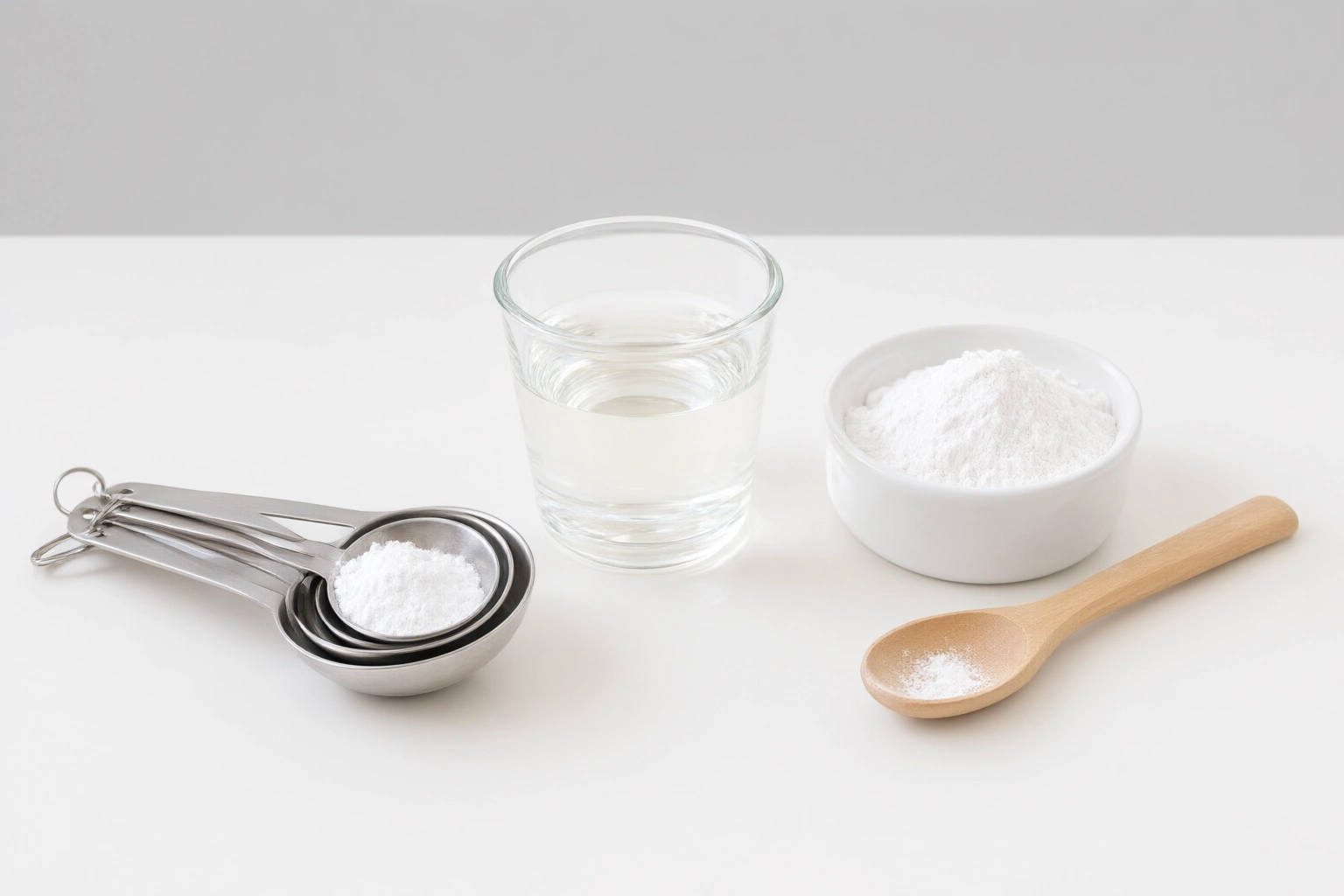
Add the vinegar slowly so you can watch the reaction instead of forcing the mixture to foam all at once. If you want a stronger visual effect, use a wider container rather than simply adding more of both ingredients.
That approach is better than trying to scale up the reaction. More ingredients can mean more foam, not a better demonstration. In a classroom or kitchen, control matters more than volume.
Safety and Food-Use Considerations
Mixing baking powder and vinegar is generally safe in normal kitchen or classroom amounts. The main issue is not danger; it is control.
A few practical cautions help keep things tidy and usable:
- Use a container with enough space for foam.
- Add the vinegar gradually if you want to observe the reaction.
- Do not assume the mixture will behave the same way in batter as it does in a bowl.
- If you put vinegar into a recipe, account for the flavor and acidity it adds.
That last point matters in food. Too much vinegar can leave a noticeable tang and may alter the balance of a delicate batter. In a dessert, that can be distracting. In a savory bake, it may still be unnecessary unless the recipe is built for it.
The safest food-use rule is simple: if the recipe does not call for vinegar, do not add it just to force a reaction.
Common Mistakes and Misconceptions
A few misunderstandings come up again and again.
“Baking powder needs vinegar to work.”
Usually, no. Baking powder already contains what it needs. Vinegar is not a required activator for most baking powder.
“More fizz means more rise.”
Not necessarily. A dramatic reaction in a bowl does not guarantee a better crumb or taller bake.
“Baking powder and vinegar can replace yeast.”
They cannot replace yeast in recipes that depend on fermentation and slow gas development. Yeast brings a different texture, flavor, and rise pattern.
“Any acid will make the same result.”
Acid matters, but the entire recipe matters more. The type of leavener, the liquid content, the mixing method, and the oven all affect the final result.
“If baking soda and vinegar works, baking powder and vinegar must work the same way.”
They do not. Baking soda needs acid to react, while baking powder is already formulated as a complete leavening system.
Should You Use Baking Powder and Vinegar in Your Recipe?
Here is the simplest decision rule:
- Use baking powder alone if the recipe calls for baking powder.
- Use baking soda plus an acid if the recipe is designed for that combination.
- Use yeast if you need slow fermentation and a more developed rise.
- Use baking powder and vinegar only if your goal is a quick fizzing demonstration, not better baking performance.
That rule saves time and prevents a lot of guesswork. It also keeps you from adding vinegar where it does not belong.
If you are troubleshooting a recipe, ask one question first: Was this recipe designed for an acid-base reaction, or does it just need a reliable leavener? If it is the second case, extra vinegar is usually a detour, not a fix.
A Simple Example to Keep in Mind
Imagine two batters.
The first uses baking powder exactly as written. It rises because the recipe is built around that leavener.
The second adds vinegar to the same batter just to create fizz. You may see bubbles right away, but the final texture is not guaranteed to improve. In fact, the batter may become less balanced.
That is the central lesson: visible reaction is not the same as baking performance.
Final Takeaway
Baking powder and vinegar do react, and the fizz is real. But in most baking, that reaction is more interesting than useful. Baking powder already contains the acid-base system it needs, so vinegar is usually unnecessary unless you are making a demonstration.
If you need a quick, visible experiment, a small amount such as 1 teaspoon of baking powder with 1 tablespoon of vinegar is enough to show the effect in a small container, though the exact amount depends on the container size. If your goal is a better bake, use the leavener the recipe was written for.
Frequently Asked Questions
Does baking powder and vinegar make batter rise?
It may create a brief release of gas, but that does not usually translate into dependable rise in baked goods.
Can I use baking powder and vinegar instead of baking soda and vinegar?
Not as a direct substitute. Baking soda is the ingredient that most clearly depends on added acid like vinegar.
Is baking powder and vinegar safe to mix?
In normal kitchen or classroom amounts, it is generally safe. Use a container with enough room for foaming.
Why does the mixture fizz so fast?
Because the reaction releases gas quickly once the ingredients are combined and moistened.
Can I use this reaction in a recipe?
Only if the recipe is specifically designed around it. For most baking, baking powder alone or baking soda with the right acid is the better choice.

